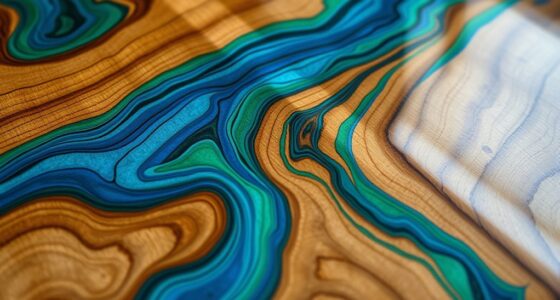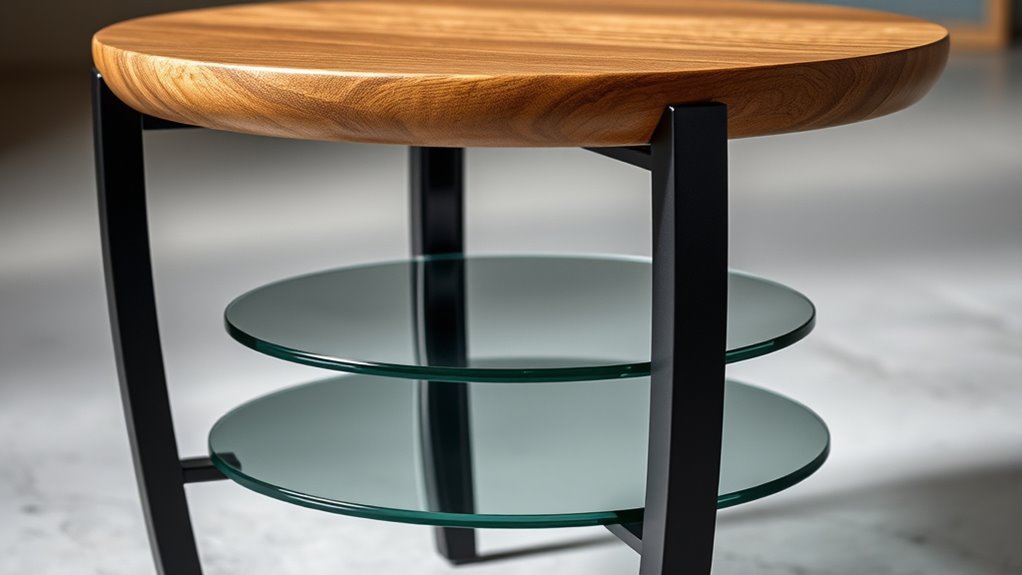
Mixing wood with metal and glass creates stunning, durable designs that blend warmth, industrial edge, and transparency. You’ll notice contrasting textures—smooth glass, textured wood, and cool metal—that add visual interest and tactile engagement. These combinations are not only aesthetic but sustainable, often using reclaimed or recycled materials. As these materials age, they develop character, adding authenticity to your space. If you keep exploring, you’ll discover how to craft timeless, eco-friendly interiors using these versatile materials.
Key Takeaways
- Combining wood, metal, and glass creates a dynamic aesthetic that balances warmth, industrial edge, and transparency.
- Reclaimed or recycled materials enhance sustainability while adding character and authenticity to mixed-material designs.
- Contrasting textures and finishes, such as textured wood with smooth glass and matte metal, create visual tension and interest.
- Natural aging processes like rusting or patina development on metals and wood contribute to an authentic, evolving look.
- Thoughtful material pairing supports eco-conscious practices and fosters timeless, artistic, and functional interior or furniture designs.
Have you ever wondered how combining different materials can create striking and functional designs? When you blend wood with metal and glass, you’re not just adding visual interest—you’re forging a style that balances rawness with refinement. This approach, often rooted in industrial aesthetics, emphasizes a rugged yet polished look that appeals to modern sensibilities. The key is understanding how these materials complement each other and how they can be integrated seamlessly to produce both form and function.
Incorporating sustainable materials into mixed-material designs isn’t just a trend; it’s a responsible choice that adds depth and authenticity. Reclaimed wood, for instance, brings warmth and character to a space, while metal components—preferably recycled or locally sourced—offer durability and a sleek, industrial vibe. Glass, with its transparency and light-reflecting qualities, enhances openness and brightness. When you combine these elements thoughtfully, you create a balanced aesthetic that’s both eco-friendly and visually compelling. It’s about choosing sustainable materials that age gracefully and reduce environmental impact, ensuring your design remains timeless and responsible.
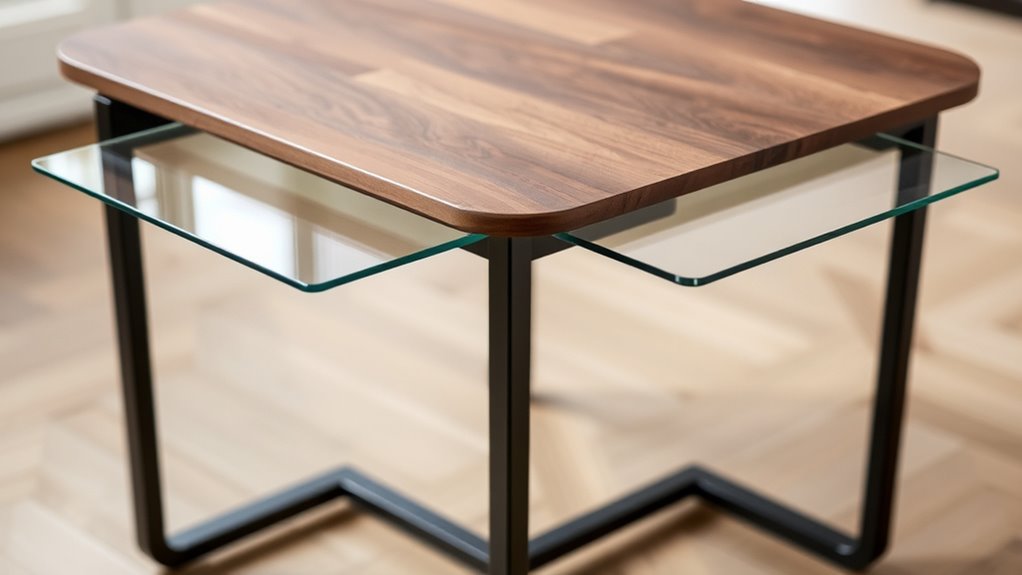
The beauty of mixed-material designs lies in their versatility. You might opt for a reclaimed wood tabletop paired with matte black steel legs, or a glass shelving unit supported by metal brackets. These combinations challenge the traditional boundaries of design, allowing you to craft spaces that are both functional and artistic. The contrast between the warmth of wood and the coolness of metal or glass creates visual tension, drawing the eye and adding layers of interest. Plus, the tactile qualities of each material invite interaction—smooth glass, textured wood, cool metal—making your space more engaging.
Another aspect worth considering is how these materials age and develop character over time. Wood gains a richer patina, metal can develop a subtle rust or patina if left untreated, and glass remains pristine or can be etched for decorative effects. This natural aging process enhances the authenticity of your design, emphasizing its industrial aesthetic. When you select sustainable materials, you’re also supporting eco-conscious practices, ensuring your project contributes positively to the environment. Understanding the rusting process of metals and how it can be part of the design adds an extra layer of authenticity and character.
reclaimed wood dining table
As an affiliate, we earn on qualifying purchases.
As an affiliate, we earn on qualifying purchases.
Frequently Asked Questions
How Do I Maintain Mixed-Material Furniture?
To maintain your mixed-material furniture, focus on proper care and cleaning tailored to each material’s needs. Use gentle, non-abrasive cleaners compatible with wood, metal, and glass to prevent damage. Regularly dust and wipe surfaces, avoiding excess moisture that can harm wood or cause rust on metal. Check for material compatibility issues and address any signs of wear promptly. This approach keeps your furniture looking great and ensures its longevity.
Are Mixed-Material Designs Suitable for Outdoor Use?
Mixed-material designs can be suitable for outdoor use if you consider weather resistance and material compatibility. You should choose weather-resistant metals like aluminum or stainless steel, and treated or sealed wood to withstand the elements. Glass panels need to be durable and weatherproof. Regular maintenance, such as sealing wood and checking metal coatings, helps guarantee your outdoor mixed-material furniture stays beautiful and functional over time.
What Are the Best Color Combinations for Mixed Materials?
You won’t believe how stunning your space can look with the right color pairing! For mixed materials, opt for neutral tones like whites, blacks, or grays to create sleek contrast techniques that highlight different textures. Earthy shades like deep browns or greens add warmth. Bright accents, such as metallics or bold reds, can make your design pop. Experiment with contrast techniques to find the perfect harmony that elevates your style.
Can Mixed Materials Be Customized for Small Spaces?
Yes, you can definitely customize mixed materials for small spaces. Opt for space-saving solutions like multi-functional furniture that combines wood, metal, and glass, adding both style and practicality. These materials offer aesthetic versatility, making your space feel open and modern without clutter. By choosing sleek, compact pieces, you enhance your small space’s functionality while maintaining a cohesive and stylish look through thoughtful mixed-material customization.
How Do I Ensure Durability in Mixed-Material Designs?
To make certain durability in mixed-material designs, you first investigate material compatibility to prevent deterioration over time. Use structural reinforcement where materials meet, like metal brackets or glass supports, to strengthen joints. Regular maintenance, such as sealing wood and inspecting metal for rust, also prolongs lifespan. By combining these strategies, your design remains resilient and visually appealing, even in high-use or small spaces.
industrial metal and glass bookshelf
As an affiliate, we earn on qualifying purchases.
As an affiliate, we earn on qualifying purchases.
Conclusion
By combining wood with metal and glass, you create spaces that are both stylish and functional. Did you know that homes featuring mixed-material designs see a 25% increase in perceived value? This approach not only elevates your interior’s aesthetic but also adds durability and versatility. So, next time you’re designing or renovating, consider blending these materials—you’ll enjoy a unique, modern look that stands out and enhances your space’s overall appeal.
mixed material coffee table
As an affiliate, we earn on qualifying purchases.
As an affiliate, we earn on qualifying purchases.
glass and metal wall shelves
As an affiliate, we earn on qualifying purchases.
As an affiliate, we earn on qualifying purchases.