
When designing for knock-down and flat-pack, focus on creating simple, secure joints like dowels, cam locks, and snap-fits that are easy to assemble with minimal tools. Use lightweight, durable materials such as MDF or engineered woods and optimize their placement for strength and efficiency. Keep parts straightforward, with clear instructions and intuitive assembly steps to enhance user experience. By mastering these techniques, you can make your designs more practical and accessible—continues to explore for more insights.

Get business pricing on tools and workshop supplies
- Business-only prices and quantity discounts
- Tax-exempt purchasing
- Multiple users, one account, clear invoices
Key Takeaways
- Use standardized joints like dowels, cam locks, and snap-fit connections to simplify assembly and minimize tools.
- Design parts with pre-drilled holes, slots, or connectors to guide easy assembly and ensure stability.
- Optimize material layout to reduce waste, enhance strength, and keep components lightweight and cost-effective.
- Create flat-pack-friendly panels that are easy to pack, transport, and handle during assembly.
- Provide clear, step-by-step instructions with visual cues to improve user experience and assembly confidence.

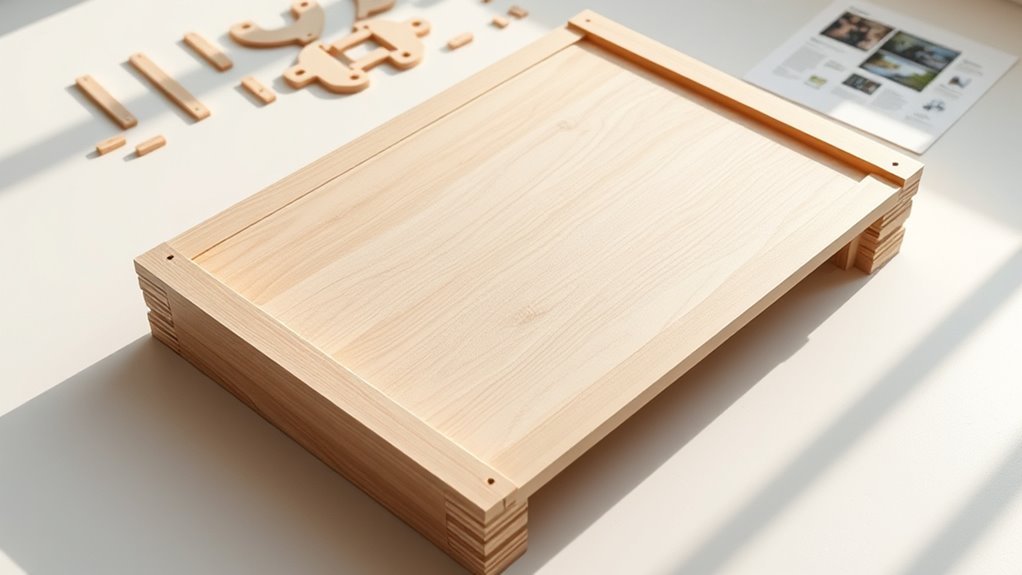
Designing for knock-down and flat-pack furniture requires careful planning to guarantee ease of assembly while maintaining durability and aesthetic appeal. Your goal is to create pieces that users can assemble confidently without specialized tools or skills, which depends heavily on effective assembly techniques. Choosing the right assembly methods ensures stability and longevity, reducing the likelihood of damage or frustration during setup. Techniques such as dowel joints, cam locks, and snap-fit connections are popular because they simplify assembly while providing strong, secure bonds. Incorporating these methods into your design helps streamline the process for consumers, making your furniture more appealing. Additionally, understanding the dog names that resonate with different breeds can inspire creative and personalized design elements for your furniture, appealing to pet owners and enthusiasts alike. Material optimization plays a vital role in achieving a balance between lightweight construction and structural integrity. You need to select materials that are easy to handle, cut, and assemble, but also durable enough to withstand daily use. For example, engineered woods like MDF or particleboard are common choices because they offer a combination of affordability, workability, and stability. When designing for flat-pack production, you should consider how materials respond to cutting, drilling, and fastening to avoid issues such as warping or splitting. Optimizing material placement within your design can also enhance strength without adding unnecessary weight or complexity. In your design process, think about how panels will be joined and how parts will fit together. You want to minimize the number of components while maximizing the ease of assembly. This often involves designing parts with pre-drilled holes, slots, or connectors that guide the user during setup. Clear, intuitive assembly instructions are just as important as the design itself; they should highlight the assembly sequence and explain how each component fits together. By focusing on assembly techniques that reduce the number of steps and tools required, you create a more user-friendly product that appeals to a broad audience. Material optimization isn’t just about selecting the right substances; it also involves thoughtful planning of component sizes and shapes to reduce waste and manufacturing costs. Using standardized parts or modular components can help streamline production and simplify inventory management. When designing for flat-pack, consider how the pieces will be packed and transported, ensuring that the design minimizes space without sacrificing strength. This holistic approach to material optimization supports sustainability and cost-efficiency while providing customers with durable, attractive furniture that’s easy to assemble.
knock-down furniture assembly kit
As an affiliate, we earn on qualifying purchases.
As an affiliate, we earn on qualifying purchases.
Frequently Asked Questions
How Do I Choose the Right Materials for Flat-Pack Furniture?
To choose the right materials for flat-pack furniture, focus on material durability and aesthetic appeal. You want sturdy options like high-quality engineered wood or metal that withstand assembly and daily use. Consider how the materials look and feel, ensuring they match your style. Lightweight yet durable materials make transportation easier, while finishes can enhance aesthetics. Balancing durability with visual appeal helps you create functional, attractive flat-pack furniture that lasts.
What Tools Are Necessary for Assembling Knock-Down Furniture?
Did you know that 85% of flat-pack furniture users find assembly easier with the right tools? To assemble knock-down furniture, you’ll need a screwdriver—often a Phillips or flat-head—along with the assembly instructions. Having the correct screwdrivers needed guarantees you can tighten screws securely and avoid damage. Keep these tools handy, follow the instructions carefully, and you’ll have your furniture assembled quickly and efficiently.
How Can I Ensure Stability in Flat-Pack Designs?
You can guarantee stability in flat-pack designs by incorporating interlocking joints that lock components securely together, preventing wobbling. Pay attention to weight distribution, making sure heavier items are placed lower to maintain balance. Use reinforced connectors and proper fastening techniques to enhance firmness. Additionally, consider the overall structural integrity during the design phase, testing various assembly methods to identify the most stable configuration for your flat-pack furniture.
What Are Common Mistakes to Avoid in Flat-Pack Furniture Design?
To avoid assembly frustrations and aesthetic compromises, you should steer clear of overly complex joints and tiny parts that are hard to handle. Make sure your designs are intuitive, with clear instructions, and use durable, visually appealing fasteners. Don’t sacrifice style for ease—balance both. Also, test your designs thoroughly to identify potential issues early, ensuring a smooth assembly process and a polished final appearance.
How Do I Optimize Packaging to Reduce Shipping Costs?
Sure, because stuffing your packaging with excess material is the way to cut costs, right? Actually, you should focus on sustainable packaging that minimizes size and weight, which cuts shipping costs and benefits the environment. Combine this with ergonomic design to guarantee easy handling. Shrink your packaging to its essentials, optimize for space, and you’ll reduce costs while making your product more eco-friendly and user-friendly.
Conclusion
You now see how designing for knock-down and flat-pack needs careful planning, but it’s worth it. Did you know that flat-pack furniture accounts for over 70% of global furniture sales? This shows how popular and practical these designs are, making shipping easier and reducing waste. By prioritizing simplicity and ease of assembly, you not only improve user experience but also contribute to a more sustainable future. Embrace these principles and make your designs stand out.
Evergreen bestsellers Picks
bestsellers
As an affiliate, we earn on qualifying purchases.