Color psychology in wood furniture design helps you create the right mood and atmosphere in your space. Warm tones like cherry and walnut make rooms feel cozy and sophisticated, while lighter woods such as maple promote openness and freshness. Darker woods add seriousness, and cooler-toned woods foster tranquility. By choosing finishes and contrasts wisely, you can evoke emotions like comfort, calm, or energy. Explore further to learn how specific colors can transform your environment through furniture choices.
Key Takeaways
- Warm wood tones like cherry and walnut evoke comfort, sophistication, and intimacy in furniture design.
- Lighter woods such as maple and birch promote openness, freshness, and a sense of space.
- Matte finishes soften wood’s appearance, creating relaxed and calming atmospheres.
- High-gloss surfaces energize a space, adding vibrancy and dynamic visual interest.
- Combining contrasting or harmonious wood tones strategically influences emotional perception and mood.

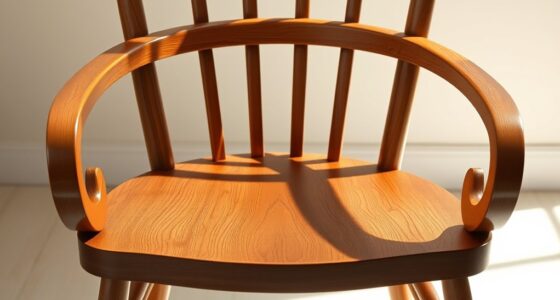
Color plays a pivotal role in wood furniture design because it influences mood, perception, and the overall ambiance of a space. When selecting furniture pieces, understanding color associations can help you evoke specific emotions and create the atmosphere you desire. For example, warm wood tones like cherry or walnut often evoke feelings of comfort and sophistication, making a room feel cozy and inviting. Conversely, lighter woods such as maple or birch can promote a sense of openness and freshness, perfect for spaces that aim to feel airy and energetic. Recognizing these color associations allows you to choose furniture that aligns with the mood you want to foster, whether it’s relaxation, productivity, or celebration.
Warm woods evoke comfort and sophistication; lighter tones promote openness and freshness in your space.
Beyond the aesthetic appeal, color influences your mood in subtle but powerful ways. Darker woods tend to create a more grounded, serious vibe, ideal for formal settings or areas meant for reflection. Lighter hues, on the other hand, tend to brighten a room and lift spirits, making them suitable for casual living spaces, bedrooms, or children’s areas. When you’re aware of these mood influences, you can select furniture that enhances your emotional well-being and complements your lifestyle. For instance, if you want your living room to feel warm and welcoming, choosing furniture with rich, warm tones can foster intimacy and comfort. If you prefer a minimalist, calming environment, opting for cool-toned woods like ash or light oak can help you achieve that tranquil effect.
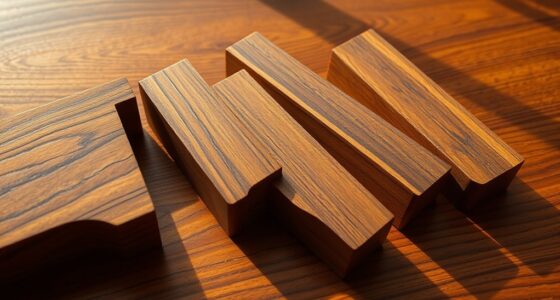
Color psychology in wood furniture design isn’t just about the color itself; it’s also about how the finish interacts with the wood’s natural hues. A matte finish might soften the look, making it feel more relaxed, while a high-gloss surface can add energy and vibrancy to a space. The texture and sheen of your furniture influence how color is perceived and, consequently, how it impacts the room’s mood. Additionally, pairing different wood tones strategically can create visual contrast or harmony, amplifying the intended emotional response. Understanding these dynamics and how visual contrast can influence perception empowers you to craft environments that support your goals, whether that’s boosting productivity in a home office or creating a calming sanctuary in your bedroom.
In essence, by paying close attention to color associations and mood influences, you can harness the psychological power of wood furniture to shape your environment intentionally. Every piece becomes more than just functional; it becomes a tool for emotional resonance, comfort, and aesthetic harmony. When you choose your wood furniture thoughtfully, considering how its color affects perception and mood, you’re not only decorating a space—you’re cultivating an atmosphere that reflects and enhances your personality and needs.
Frequently Asked Questions
How Does Colour Psychology Influence Customer Purchasing Decisions in Wood Furniture?
Color psychology influences your customers’ purchasing decisions by shaping their perceptions of your wood furniture. When you choose effective color combinations, you evoke specific emotions that can make your furniture more appealing. For example, warm tones create a cozy feel, while cool shades suggest calmness. You should consider how customer perceptions are affected by color choices, as these perceptions can directly impact their decision to buy your furniture.
Are Certain Wood Finishes Better Suited for Specific Psychological Effects?
Certain wood finishes are better suited for specific psychological effects because they influence mood and perception. For example, matte finishes can promote calmness and relaxation, while glossy finishes create a sense of energy and sophistication. Your finish choices can considerably enhance mood and ambiance, making your furniture more inviting. By selecting finishes thoughtfully, you can effectively support the desired psychological effects and elevate your space’s overall atmosphere.
How Can Colour Psychology Be Used to Enhance Small Space Furniture Design?
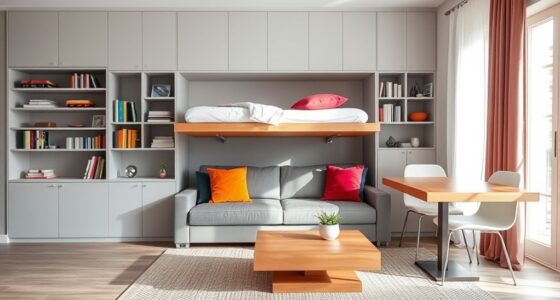
You can use color schemes strategically to enhance small space furniture design by creating a sense of openness and depth. Opt for light, neutral tones like soft beiges or pale woods, which improve spatial perception. Incorporate subtle color accents to add personality without clutter. By choosing the right colors, you make your space feel larger and more inviting, while still reflecting your style.
Do Cultural Differences Affect Colour Perception in Wood Furniture?
Oh, sure, cultural differences totally don’t influence how you see colour—said no one ever. In reality, cultural symbolism and regional preferences shape your perception of wood furniture colours. What’s calming in one culture might be vibrant or even taboo in another. So, when designing, you must consider these cultural nuances to create pieces that resonate globally, not just locally. Ignoring them risks disconnecting your furniture from its intended audience.
Can Colour Psychology Help in Designing Furniture for Therapeutic Environments?
Yes, colour psychology can help you design furniture for therapeutic environments. By applying principles of color therapy, you can select hues that promote mood enhancement and emotional comfort. For example, calming blues and greens foster relaxation, while warm tones like yellows and oranges boost positivity. Using these insights, you create spaces that support mental well-being and foster a sense of tranquility for those who use the furniture.
Conclusion
By understanding colour psychology in wood furniture design, you hold the brush to paint moods and memories across your space. Each hue becomes a whisper of emotion, weaving a tapestry that reflects your personality like a masterful artist. When you choose colours thoughtfully, your furniture transforms from mere objects into soulful storytellers. Embrace these hues, and watch your home become a harmonious symphony where every piece resonates with your inner world’s vibrant melody.