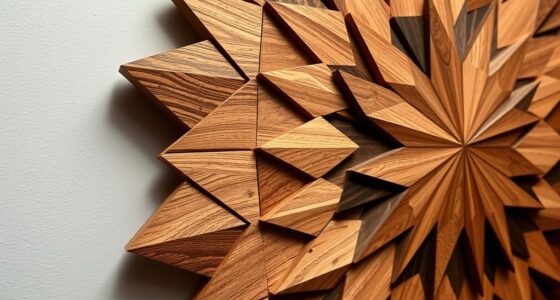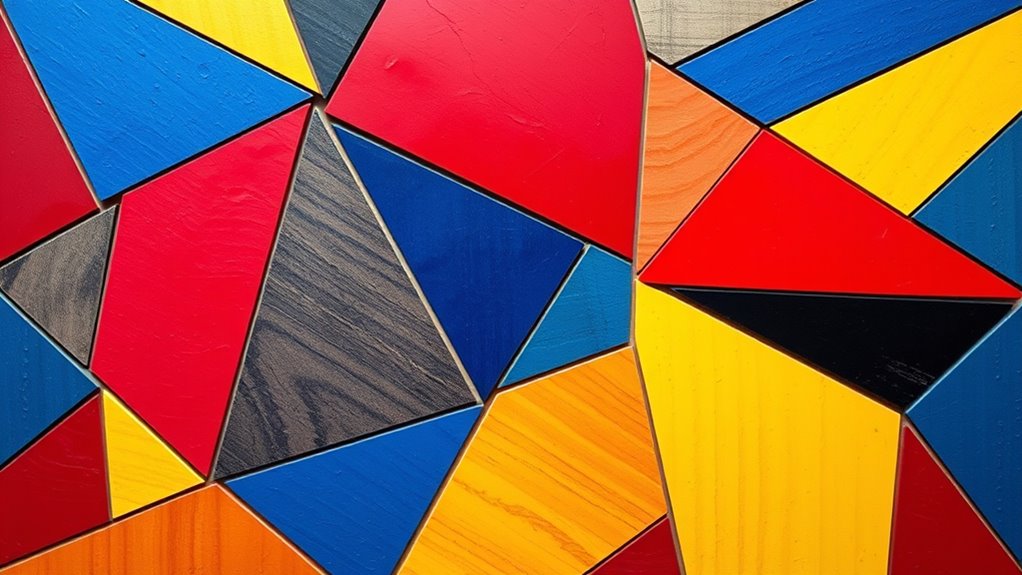

To create a segmented geometric art panel from offcuts, start by selecting colorful and textured leftover materials like plywood, acrylic, or recycled plastics. Design your geometric pattern with shapes such as triangles, rectangles, or hexagons, then cut and assemble the pieces carefully. Mount your finished panel directly onto the wall for a striking focal point. Keep experimenting with colors and textures—more tips and ideas await to help you design an eco-friendly, eye-catching decor piece.
Key Takeaways
- Use leftover materials like plywood, acrylic, or recycled plastics to create lightweight, textured geometric shapes for the panel.
- Plan a geometric design with triangles, rectangles, or hexagons, ensuring precise layout and seamless fitting.
- Select colors that complement existing decor to enhance harmony and set the desired mood in the space.
- Assemble the geometric segments, paying attention to size and thickness for a balanced, cohesive pattern.
- Mount the finished panel directly onto the wall, utilizing eco-friendly offcuts to create a sustainable, eye-catching art piece.

Have you ever wondered how to transform a plain wall into a striking focal point? A segmented geometric art panel crafted from offcuts offers a creative and eco-friendly solution that can elevate your space instantly. This approach not only adds visual interest but also demonstrates how thoughtful design can make the most of leftover materials. When planning your project, the first step is to contemplate your desired color palette. Choosing colors that complement your existing decor creates harmony and ensures your art piece enhances the room rather than clashes with it. Bright, vibrant hues can energize a dull space, while muted tones lend a calming effect. Your color choices will influence the overall mood, so think about the atmosphere you want to evoke. Equally important is material selection. You’ll want to use offcuts from materials that are durable and lightweight, such as plywood, acrylic, or even recycled plastics. These materials are easy to cut into geometric shapes and assemble into a cohesive pattern. The beauty of using offcuts is that they often come in a variety of textures and finishes, allowing you to mix matte, gloss, or textured surfaces for added depth. As you begin assembling your segmented panel, consider how different materials and colors will interact when placed side by side. The contrast between smooth and textured surfaces, or between different shades, can create a stunning visual effect. Be mindful of the thickness and size of each segment, ensuring they fit together seamlessly and form a balanced composition. You can experiment with various geometric shapes—triangles, rectangles, hexagons—to find the pattern that best suits your space. The key is to keep your layout organized and precise, which might involve sketching out a design beforehand. Once you’ve assembled your panel, you can mount it directly onto the wall, creating a dynamic, textured focal point that captures attention. The beauty of this project is that it’s customizable—adjust colors and materials to match your style and the room’s aesthetic. Plus, by using offcuts, you’re reducing waste and giving new life to scraps that might otherwise be discarded. This sustainable approach combines creativity with practicality, making your wall art both meaningful and environmentally conscious. As you explore different design options, keep in mind that electricity production from bike generators can be a sustainable inspiration for your project’s theme, emphasizing eco-friendly concepts. In the end, your segmented geometric art panel isn’t just decor; it’s a statement piece that showcases your ingenuity, taste, and commitment to sustainability. It transforms a simple wall into a conversation starter, drawing admiration for its craftsmanship and thoughtful design.

BINCUE Geometry Boho Wood Wall Art 3 Panel with 3D Hollow Craft Art for Kitchen Bathroom Living Room Office Decor Lightweight Hanging Wall Art Decor
GEOMETRY WOOD WALL ART HANGING DECOR: The design adopts 3D precision carving technology, matches the appearance of log…
As an affiliate, we earn on qualifying purchases.
As an affiliate, we earn on qualifying purchases.
Frequently Asked Questions
What Materials Are Best for Creating Offcut-Based Art Panels?
You should use sustainable materials like reclaimed wood, recycled plastics, or leftover metal pieces for creating offcut-based art panels. These materials support recycling techniques, reducing waste and environmental impact. Opting for eco-friendly options not only enhances your artwork’s sustainability but also adds unique textures and colors. By choosing these materials, you contribute to eco-conscious art practices, making each piece both beautiful and environmentally responsible.
How Long Does It Typically Take to Complete a Panel?
Like crafting a masterpiece in Da Vinci’s studio, your creative process for a segmented geometric art panel can take anywhere from a few hours to several days. Time estimation depends on complexity, size, and your skill level. You’ll find that focusing and dedicating uninterrupted blocks of time help you finish efficiently, while enjoying the process. Patience and precision turn offcuts into a stunning, cohesive artwork that showcases your artistic journey.
Can These Art Panels Be Customized in Size and Design?
Yes, you can customize these art panels in size and design. They offer great design flexibility, allowing you to choose dimensions that fit your space and select patterns or colors that match your style. With various customization options available, you can create a unique piece that reflects your personal taste. Just communicate your preferences, and the artisans can tailor the panel to meet your specific needs.
Are Offcut-Based Panels Suitable for Outdoor Installation?
Did you know that 85% of outdoor art installations last over five years? Offcut-based panels can be suitable for outdoor use if they’re treated for weather resistance. You should consider installation considerations like sealing edges and choosing durable materials to withstand the elements. Proper weatherproofing guarantees your panels stay vibrant and intact, making them a smart, eco-friendly choice for outdoor spaces.
How Should I Care for and Maintain These Geometric Art Panels?
To care for and maintain your geometric art panels, start with regular cleaning using gentle tips like a soft cloth and mild soap. Avoid harsh chemicals that may damage the surface. For repair techniques, inspect for cracks or chips and use appropriate fillers or adhesives to fix minor damage. Keep the panels protected from extreme weather and direct sunlight, and periodically check for signs of wear to make sure they stay vibrant and intact.

Gerrii 1000 Pcs Natural Wood Shapes Assortment Blank Wooden Craft Shapes Bulk Unfinished Wood Pieces Materials Cutouts Variety for Arts and Crafts Painting DIY Projects
Assorted Shapes and Adequate Quantity: harness your creativity with 1000 pieces of wood slices in various styles including…
As an affiliate, we earn on qualifying purchases.
As an affiliate, we earn on qualifying purchases.
Conclusion
By repurposing offcuts into a segmented geometric art panel, you turn waste into stunning decor. Imagine transforming leftover wood pieces into a vibrant wall feature that sparks conversations. For example, a homeowner used scrap wood to create a striking geometric design, giving their living room a unique, personalized touch. With a little creativity, you can craft a beautiful, eco-friendly art piece that reflects your style and reduces waste—making your space truly one-of-a-kind.

flangairy 2 Piece Gold Geometric Wall Mirrors, 11.8 Inch Wooden Frame Acrylic Mirror Decor for Bathroom Bedroom Living Room Modern Farmhouse Home Decorations
Geometric design: Gold reflective geometric mirrors create a stunning lighting effect that coordinates with all gold, black, and…
As an affiliate, we earn on qualifying purchases.
As an affiliate, we earn on qualifying purchases.

Throwbacktraits Canvas Motivational Wall Art – Set of 6 Inspirational Prints with Uplifting Phrases & Vibrant Images, Eco-Friendly & Framed, Ready to Hang for Office Wall Decor, Living Room & Bedroom Décor
📏 PERFECT SIZE & COLORFUL VISUALS Designed to captivate and inspire, each canvas measures about 12×16 inches (approx.),…
As an affiliate, we earn on qualifying purchases.
As an affiliate, we earn on qualifying purchases.