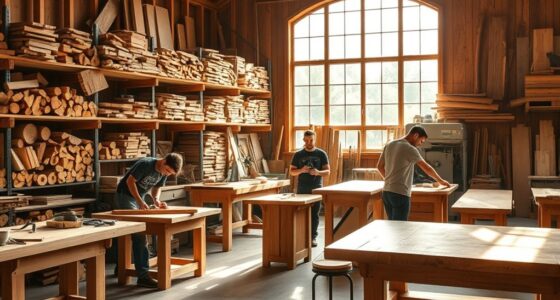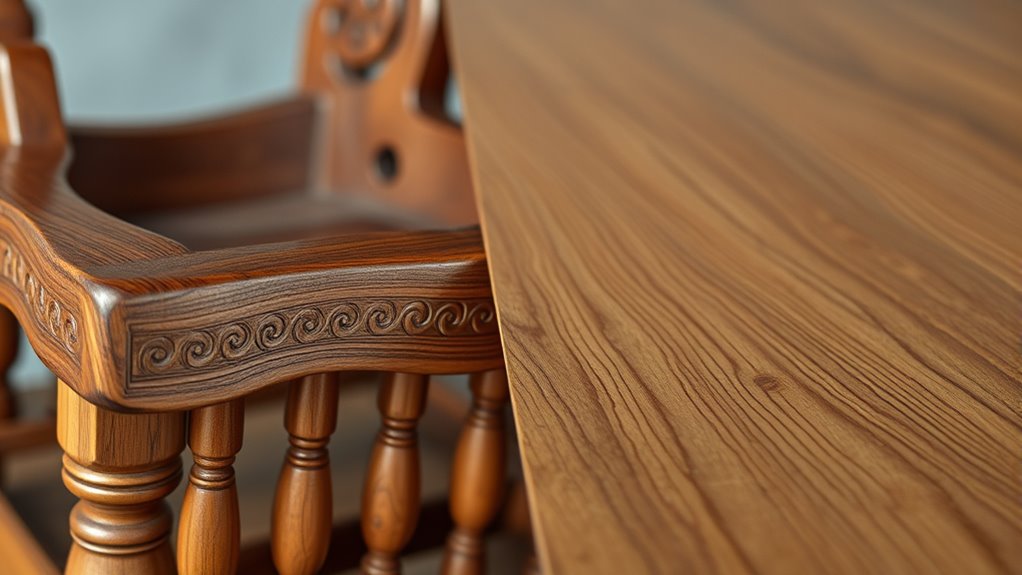

When comparing handmade to mass-produced furniture, you’ll find that artisan pieces offer unmatched craftsmanship, unique designs, and authentic details. Handmade furniture reflects cultural heritage, personal artistry, and careful material sourcing, ensuring durability and a meaningful story behind each item. Mass-produced pieces may lack this character and quality. Investing in artisan furniture means valuing craftsmanship, sustainability, and one-of-a-kind appeal. If you want to explore how these qualities truly make a difference, keep exploring further.
Key Takeaways
- Artisan furniture showcases unique craftsmanship, cultural heritage, and subtle imperfections that add authenticity and character.
- Handmade pieces are crafted with sustainable, high-quality materials, ensuring durability and environmental responsibility.
- Mass-produced furniture emphasizes uniformity and efficiency, often lacking the individual artistry and personal touch of artisan pieces.
- Artisan furniture offers a meaningful investment, reflecting tradition, skill, and storytelling through detailed, authentic design.
- The value of artisan furniture lies in its uniqueness, craftsmanship, and sustainable materials, making each piece a one-of-a-kind work of art.
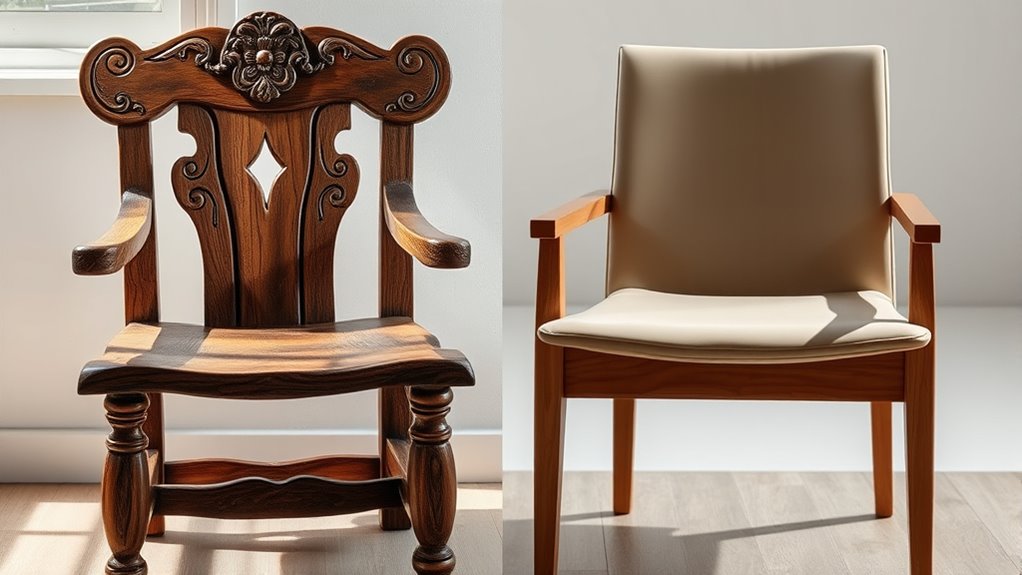
Have you ever wondered what truly sets artisan furniture apart from mass-produced pieces? The answer lies in the meticulous craftsmanship techniques and the careful material sourcing that artisans employ. When you choose handmade furniture, you’re not just getting a functional item; you’re investing in a piece of art that carries the mark of skilled hands and thoughtful processes. This attention to detail guarantees that every piece is not only durable but also visually compelling, standing out from the uniformity of mass-produced options. Additionally, artisan furniture often features unique design elements that reflect cultural heritage and individual creativity, further emphasizing its distinctiveness.
Artisan furniture showcases refined craftsmanship and unique details that mass-produced pieces can’t replicate.
Material sourcing plays an essential role in elevating the value of artisan furniture. Artisans tend to prioritize high-quality, sustainably sourced materials, often selecting locally available woods, recycled metals, or ethically harvested fabrics. This mindful approach to sourcing guarantees that each piece is built with materials that are not only beautiful but also environmentally responsible. When you buy artisan furniture, you’re supporting sustainable practices and reducing the environmental impact associated with mass production, which often depends on cheap, imported materials that may be environmentally damaging. Furthermore, the choice of materials influences the furniture’s longevity, patina, and overall aesthetic appeal, giving each piece its own distinct personality.
In addition to craftsmanship techniques and material sourcing, every artisan piece tells a story. The process of handcrafting involves a deep understanding of the materials and a commitment to quality that machines simply can’t replicate. You can often see subtle imperfections or variations that highlight the handmade nature of the piece, adding charm and authenticity. These details are what make artisan furniture more than just a commodity; they make it a reflection of tradition, skill, and personal touch. When you select handmade furniture, you’re embracing a philosophy that values quality over quantity, craftsmanship over automation, and uniqueness over uniformity. This connection to the process guarantees that your furniture isn’t just functional but also a meaningful piece that resonates with history, artistry, and a sense of purpose.
In essence, the craftsmanship techniques and material sourcing behind artisan furniture make it a worthwhile investment, offering you durability, beauty, and a story woven into every detail.
Frequently Asked Questions
How Does Quality Control Differ Between Handmade and Mass-Produced Furniture?
You’ll notice that quality control differs markedly between handmade and mass-produced furniture. With handmade pieces, craftsmanship standards are closely monitored by artisans, leading to lower defect rates and higher attention to detail. In contrast, mass-produced furniture relies on automated processes, which can increase defect rates and sometimes compromise quality. This means handmade items often offer superior durability and finish, giving you a better, long-lasting investment.
What Environmental Impacts Are Associated With Artisan Versus Factory Furniture?
Imagine you’re considering a handcrafted oak table. Artisan furniture often has a lower environmental impact because it uses sustainable sourcing, reducing deforestation. Conversely, factory-made furniture can have a higher carbon footprint due to mass production, transportation, and synthetic materials. By choosing artisan pieces, you support eco-friendly practices and minimize environmental harm, making your purchase more sustainable. This way, your furniture reflects your values and helps protect the planet.
Can Handmade Furniture Be More Affordable Than Mass-Produced Options?
Handmade furniture can sometimes be more affordable than mass-produced options, depending on your pricing strategies and material costs. If artisans source affordable, quality materials and focus on efficient production methods, they can lower prices. Additionally, buying directly from artisans or during sales can make handmade pieces more budget-friendly. While handcrafted items often have higher labor costs, strategic pricing and material choices help make them accessible without sacrificing craftsmanship.
How Does the Durability of Artisan Furniture Compare to Mass-Produced Pieces?
You’ll find artisan furniture often more durable than mass-produced pieces because of better material longevity and craftsmanship. Handmade items are built with high-quality materials, ensuring they hold up over time. Plus, their repairability ease means you can fix or restore them more easily, extending their lifespan. So, investing in artisan furniture not only offers beauty but also long-term durability, making it a smart, lasting choice for your space.
Are There Specific Styles or Designs Exclusive to Handmade Furniture?
You might think all handmade furniture looks the same, but actually, it boasts unique patterns and regional influences you won’t find in mass-produced pieces. These exclusive styles often reflect local traditions, materials, and craftsmanship, making each piece one-of-a-kind. So, if you’re after furniture with a story and character, handmade designs offer a rich tapestry of regional influences, unlike the uniformity of factory-made items.
Conclusion
Ultimately, choosing handmade or mass-produced furniture depends on what you value most. Handmade pieces offer uniqueness and craftsmanship, while mass-produced options provide affordability and consistency. Remember, “You get what you pay for”—investing in artisan furniture often means investing in quality and character that lasts. Whichever route you take, make sure it reflects your style and values. After all, furniture isn’t just about comfort, but about creating a space that feels truly yours.