
The woodworking community is actively embracing circular economy practices by focusing on sustainability, recycling, and innovative reuse of wood waste. You can extend the life of projects through repurposing old structures and incorporating recycled materials. Responsible forestry and lifecycle assessments help reduce environmental impacts. Cutting-edge projects transform waste into new, valuable products like insulation or bricks. If you keep exploring, you’ll discover even more ways to make your woodworking more eco-friendly and resource-efficient.

Get tools and workshop supplies delivered free — and shop member deals
- Fast, free delivery on millions of items
- Access to Prime Big Deal Days deals on October 6–7
- Prime Video, Amazon Music and more included
Key Takeaways
- The woodworking community is adopting recycling and reuse techniques to extend product lifespan and reduce waste.
- Emphasis is placed on designing for disassembly to facilitate reuse, repair, and material recovery.
- Community projects focus on transforming wood waste into innovative, sustainable building materials and decorative elements.
- Collaboration with research labs and use of digital fabrication tools promote sustainable recycling practices.
- Policies and industry guidelines increasingly support circular economy principles within woodworking and construction sectors.
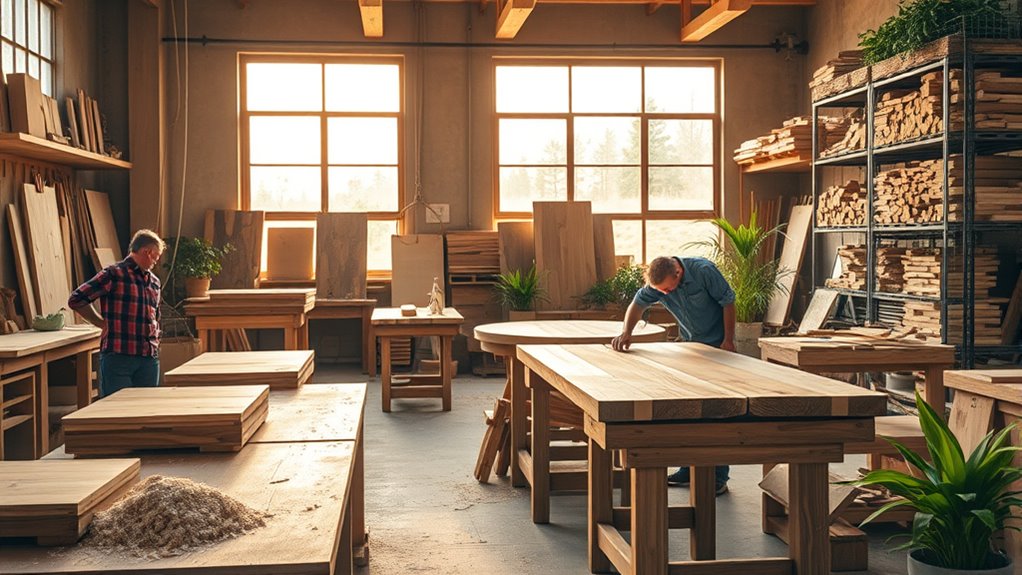
As awareness of environmental impacts grows, the woodworking community is increasingly adopting circular economy practices to promote sustainability and reduce waste. You’re likely aware that the traditional ‘take-make-dispose’ model is unsustainable, especially when it comes to natural resources like wood. Instead, the focus is shifting toward closing the loop—reusing, recycling, and innovating to keep materials in use longer.
Extending the service life of wood products plays a vital role here; repurposing old structures and recycling used wood into new items help minimize waste and conserve resources. By doing so, you contribute to a regenerative system where timber maximizes its value throughout its lifecycle, reducing the need for constant harvesting. Sustainable forestry practices support this goal by ensuring that forests are managed responsibly, promoting growth and regeneration while maintaining a steady supply of high-quality timber.
Extending wood’s lifespan through reuse and recycling promotes sustainability and reduces the need for fresh harvesting.
Incorporating life cycle assessments (LCA) into your projects further enhances environmental responsibility. LCA provides a detailed view of a product’s ecological footprint—from raw material extraction through manufacturing, use, and eventual disposal. Updated studies emphasize reducing resource consumption, emissions, and energy leakage, aligning with EU policies and global sustainability goals. LCA helps you understand the environmental impacts associated with each stage of your project, guiding more sustainable choices. Additionally, integrating precious metals into your financial planning can serve as a hedge against economic fluctuations, promoting long-term stability.
When you evaluate your woodworking processes with LCA, you identify areas where resource inputs can be minimized and waste can be cut. Consequential LCA approaches help you understand the indirect effects of your choices, guiding smarter material selection and process improvements. By integrating these assessments into your workflow, you make more informed decisions that contribute to reducing environmental impacts across the entire lifecycle of your products. Incorporating sustainable materials can further enhance your project’s eco-friendliness and long-term viability. You can also explore innovative approaches like material reuse to maximize resource efficiency and reduce environmental impacts.
Additionally, innovative recycling projects are transforming wood waste into valuable resources. For instance, the Wood Project converts sawdust and other timber byproducts into lightweight, durable construction materials like bricks weighing about 207 grams each. Using components like cellulose, hemicellulose, and lignin from wood waste, you can create thermally insulating architectural elements that serve multiple purposes.
Advanced digital fabrication and computational design techniques make recycling more efficient, opening doors for creative reuse and new job opportunities in recycling expertise and robotic fabrication. Collaborating with research labs, such as LMSE at UNAM, helps refine these methods, ensuring continuous progress in sustainable recycling practices.
Wood’s natural advantages make it a key player in circular construction. As a renewable, biodegradable material, it offers significant benefits over conventional building supplies—reducing embodied carbon and facilitating carbon sequestration within structures. Careful design for disassembly and reuse allows you to create modular, repairable, and upgradable buildings that fit within circular frameworks.
Policies and guidelines at regional and international levels increasingly support integrating wood into sustainable construction, making it easier for you to adopt practices aligned with circular economy principles. By embracing these strategies, you help foster a more sustainable woodworking industry that values resource efficiency, innovation, and environmental stewardship.
As an affiliate, we earn on qualifying purchases.
Conclusion
By adopting circular economy practices, you can turn waste into opportunity. For example, imagine a local workshop transforming scrap wood into custom furniture, reducing waste and saving costs. This not only benefits your environment but also boosts your reputation within the community. Embracing these sustainable practices allows you to create high-quality projects while contributing to a healthier planet. Start small, think creatively, and watch your woodworking community thrive sustainably.
Halloween Picks
halloween
As an affiliate, we earn on qualifying purchases.