
When choosing between oil and wax finishes, consider your project’s durability, look, and maintenance. Oils penetrate deeply, offering better moisture resistance and enhancing natural wood tones, but they take longer to cure and need regular reapplication. Waxes sit on the surface, providing a soft, natural shine with easier, quicker application, but they wear faster and require more frequent touch-ups. To make the best choice for your project, explore how each finish performs under different conditions.

Get business pricing on tools and workshop supplies
- Business-only prices and quantity discounts
- Tax-exempt purchasing
- Multiple users, one account, clear invoices
Key Takeaways
- Oils penetrate deeply, offering enhanced protection and moisture resistance, ideal for raw or dense woods.
- Waxes create a surface barrier, giving a soft, natural look but require more frequent reapplication.
- Oils take longer to cure but provide long-lasting durability; wax finishes dry quickly but wear faster.
- Maintenance for oils involves periodic reapplication every 6 months; wax needs regular buffing and touch-ups.
- Choose oils for water resistance and durability; select waxes for ease of application and a natural, matte appearance.
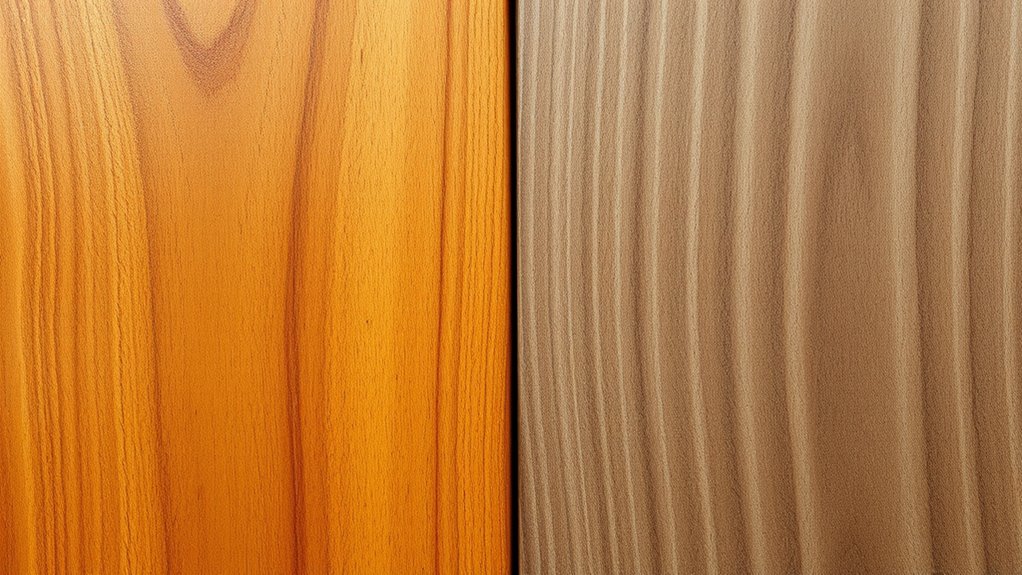
When deciding between oil and wax finishes for your woodworking projects, understanding their distinct characteristics is essential. Oil finishes penetrate deeply into wood fibers, offering water resistance that’s ideal for raw or dense woods like butcher blocks and cutting boards. Unlike surface coatings, oils soak into the wood, enhancing its natural beauty and bringing out rich, deep colors, especially in hardwoods. Most oils cure through evaporation rather than drying, meaning it can take from a week for light use up to 30 days for full curing. This curing process can be influenced by environmental factors like humidity and temperature, which affect how evenly the oil penetrates and sets. Proper application techniques ensure durability and patience during curing are key to maximizing their benefits.
This slow process requires patience but results in a durable, water-resistant surface. Keep in mind that lower-quality oils might darken the wood unevenly and may need reapplication every six months to maintain their look and protection. Some oils, like Pure Tung Oil, are formulated to be non-marring, making them more resistant to scratches and dents, which is a plus for everyday use. Proper application and maintenance can extend the lifespan of oil finishes, ensuring consistent protection over time. Additionally, regular cleaning helps to prevent buildup that can compromise the finish’s effectiveness.
Wax finishes, on the other hand, sit on the surface of the wood rather than soaking in. They create a protective barrier that helps prevent oxidation, but they’re less effective against moisture. Waxes come in various forms—liquid, paste, or solid—and a range of colors, but even the hardest waxes are softer than varnishes or lacquers. Additionally, waxes tend to attract dust and dirt more readily due to their surface nature, which can require more frequent cleaning. They are often used as a finishing touch rather than primary protection, especially on decorative pieces.
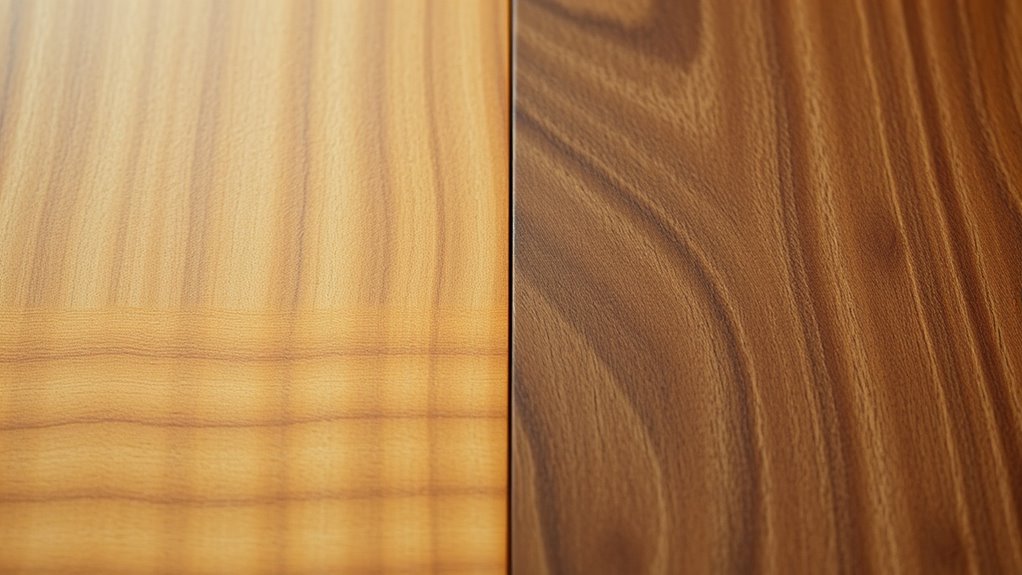
As a result, they offer limited scratch resistance and tend to dull over time, especially on high-use surfaces. Wax finishes preserve the natural look of wood, making it appear freshly cut and unfinished, but they don’t markedly enhance the grain or color. Because wax wears down faster than oil, it requires more frequent reapplication to keep up its protective and aesthetic qualities. Reapplication can sometimes be simplified by buffing, which restores shine and smoothness.
Applying either finish is straightforward. Oils usually need three to four thin coats, which should be applied until the wood stops absorbing the oil. Waxes demand fewer layers but need regular reapplication to maintain their protective qualities. Both finishes are easily applied with a cloth or soft rag, making them popular choices for beginners and small projects. The choice of finish can also be influenced by the environment in which the piece will be used, including exposure to moisture or heat.
Drying times vary: oils cure slowly, necessitating careful planning before heavy use, while waxes dry quickly but wear down faster, especially on surfaces with frequent contact. Repairing oil finishes can be tricky because they cure over time, sometimes unevenly, whereas wax repairs are simpler but only restore surface protection. Maintaining the finish by cleaning and reapplying as needed helps prolong the life of the project. Proper surface preparation before applying either finish plays a crucial role in achieving an even and durable coating.
In general, oils provide better moisture resistance and durability than wax, but neither offers the same chemical or heat resistance as varnishes or lacquers. Frequent maintenance is essential for both, especially in environments exposed to moisture or heavy wear. Your choice ultimately depends on the level of protection you need, the look you prefer, and how much maintenance you’re willing to undertake. Considering protective qualities and ease of application can help you select the best finish for your project.
best wood oil finish for furniture
As an affiliate, we earn on qualifying purchases.
As an affiliate, we earn on qualifying purchases.
Conclusion
Ultimately, your choice between oil and wax finishes is like choosing the path of the sun or moon—each offers its own glow and mystery. Oil reveals the depth beneath, like the steady warmth of daylight, while wax adds a soft sheen, whispering secrets in the moonlight. Trust your instinct to guide you, knowing that whichever finish you pick, it’s your touch that will breathe life into your project, making it uniquely yours.
Fall yard work Picks
leaf blowers
As an affiliate, we earn on qualifying purchases.