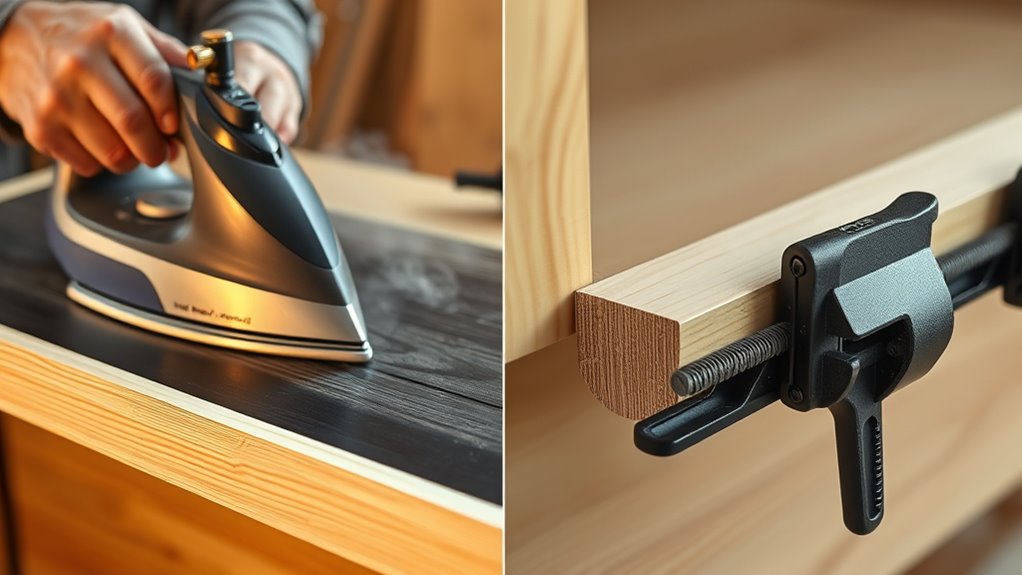

For professional-edge banding on plywood shelves, choose between the easy iron-on method and the more durable glue clamp approach. The iron-on process is quick, simple, and perfect for DIY projects, using heat to activate adhesive. The glue clamp method involves applying liquid glue and clamping until it cures, offering a stronger, seamless finish. Both techniques have their advantages; exploring more details will help you select the best fit for your project’s durability and finish quality.
Key Takeaways
- Iron-on edge banding is faster and easier, ideal for quick DIY projects with minimal tools.
- Glue clamp method offers a stronger, more durable bond suitable for high-quality, long-lasting shelves.
- Proper surface preparation and technique are crucial for a professional finish with either method.
- Iron-on is better for covering large areas quickly, while glue clamps provide precise, seamless edges.
- Choosing the right method depends on project scope, desired durability, and available tools.
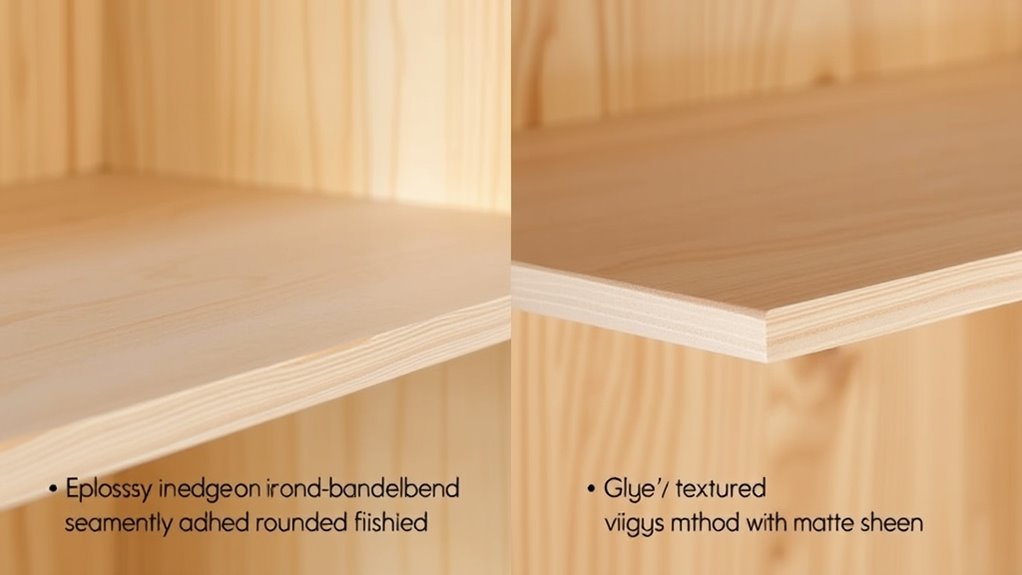
Edge banding plywood shelves offer an easy way to improve both the appearance and durability of your storage solutions. When choosing how to finish and protect your shelves, you’ll want to explore different edge banding techniques and shelf finishing options. These decisions can substantially impact the overall look and longevity of your project. Two popular methods for applying edge banding are iron-on and glue clamp techniques, each with its own set of advantages and considerations.
If you opt for the iron-on method, you’ll appreciate its simplicity and speed. It involves applying heat using a household iron to activate the adhesive on the edge banding. You place the band over the edge of the plywood, then run the iron along the length to melt the glue, ensuring it bonds securely. This technique is user-friendly and ideal for DIY enthusiasts. It’s also efficient for covering large surface areas quickly. However, achieving a perfectly smooth finish requires careful attention to temperature and pressure. You might need to use a roller or a J-roller afterward to press out air bubbles and ensure even adhesion. This shelf finishing option is great for those who want a clean look without investing in elaborate tools.
On the other hand, the glue clamp method involves applying a liquid adhesive to the edge banding and then clamping it to the plywood until the glue dries. This approach allows for a more precise application and is often preferred for thicker or more robust edge bandings. It gives you better control over the bond and can result in a more seamless finish. The main drawback is that it takes longer because you need to wait for the glue to cure fully. Plus, clamps are essential, and you’ll need to have them on hand. This method is typically favored when you want a very durable, long-lasting bond or when working with custom or specialty edge bandings.
Glue clamp method offers precise, durable edges but requires more time and clamps for curing.
Both techniques are valid shelf finishing options, and your choice depends on your project scope, equipment availability, and desired finish. Iron-on edge banding is quick and convenient, making it suitable for most standard applications, while glue clamp application is more involved but offers a stronger, more precise bond. Additionally, proper surface preparation can greatly influence the final outcome and durability of your edge banding. Whichever method you choose, mastering these edge banding techniques will elevate the professional look of your plywood shelves, ensuring they not only look good but also stand the test of time.

BEVTEE Birch Edge Banding 3/4 Inch x 50 ft Wood Veneer Roll Pre-glued, Flexible, Birch Iron-on Veneer Edge Band for Plywood & Furniture Edging, Natural Wood Color for DIY & Professional Projects
【Birch Edge Banding Set】Includes one 50 ft x 3/4 inch roll of edge band with 0.6 mm thickness;…
As an affiliate, we earn on qualifying purchases.
As an affiliate, we earn on qualifying purchases.
Frequently Asked Questions
Can Edge Banding Be Applied to Curved Plywood Shelves?
Yes, you can apply edge banding to curved plywood shelves using bendable edging for a smooth, professional look. To do a curved application, heat the edge banding with an iron or use a flexible adhesive that molds easily to the curve. Carefully follow the bend of the shelf, ensuring the edging adheres evenly. With patience, you’ll achieve a clean, seamless finish that enhances your curved plywood’s appearance.
How Long Does Iron-On Edge Banding Last?
Your iron-on edge banding can last longer than a lifetime if applied correctly, giving your shelves incredible durability. It’s a strong, lasting bond that withstands daily wear and tear. Compared to glue clamp methods, iron-on offers a sleek, seamless look with excellent aesthetic appeal. With proper heat and pressure, you’ll enjoy this finish for years, making your project both beautiful and resilient—truly an investment in quality.
Is There a Difference in Cost Between Methods?
You wonder if there’s a cost difference between iron-on and glue clamp edge banding methods. In an expense analysis, iron-on banding generally costs less upfront because it requires fewer tools and less setup time. However, glue clamp methods might be more expensive initially but could save you money in the long run if you need durable, long-lasting results. Overall, your choice depends on your budget and project needs.
Can I Remove Edge Banding Without Damaging the Wood?
You can remove edge banding without damaging the wood if you’re careful during the edge banding removal process. Use a heat gun or an iron to soften the adhesive, then gently peel the edge banding away. Be cautious to avoid pulling too hard, which could cause surface damage or gouges. Taking your time and working slowly helps preserve the surface integrity and prevents any surface damage to your plywood shelves.
Which Method Is Better for High-Humidity Environments?
You should choose the method that offers better moisture resistance and passes durability tests for high-humidity environments. Iron-on edge banding usually provides a seamless, water-resistant seal, making it ideal for humid areas. Glue clamp methods, while strong, might not be as moisture-resistant over time. Test both options if possible, but generally, iron-on edge banding offers superior durability and moisture resistance, ensuring your shelves stay protected and look great longer.
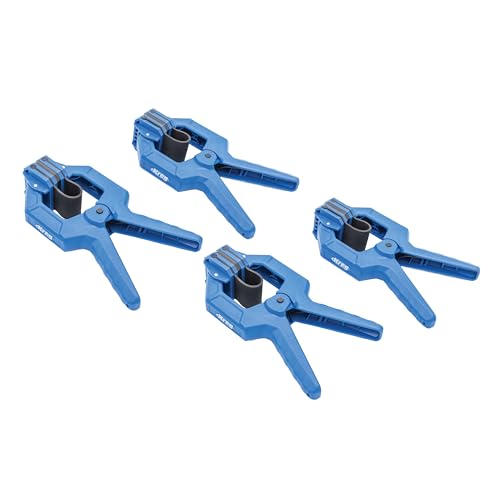
Kreg Edge Band Spring Clamp – One-Handed Edge Banding Clamp with Stretch Band – Non-Marring with Pivoting Jaws for Uniform Pressure Glue-Ups – For Cabinetry, Trim & More – Set of 4
Stretchable Band Grip: The Kreg Edge Band Spring Clamp is equipped with a stretchable band that securely grips…
As an affiliate, we earn on qualifying purchases.
As an affiliate, we earn on qualifying purchases.
Conclusion
Now that you know the differences between iron-on and glue clamp edge banding, you’re ready to choose what suits your project best. Think of it like picking the right tool for the job—each has its own strengths, just like a craftsman’s trusted tools. With patience and practice, you’ll master the technique, and your shelves will look as polished as a pro’s work. Remember, the right finish is the key to a stunning, professional look.

NECAMOCU Edge Banding Trimmer – 2025 Upgraded Mini Edge Band Trimmer & Cutter, Stainless Steel Blade Veneer Edge Trimmer for Woodworking, Durable Edgebanding Trimming Tool for Wood, Veneer, PVC, ABS
【Precision & Smooth Trimming】 NECAMOCU upgraded edge banding cutter features thicker blade with larger cutting edges and more…
As an affiliate, we earn on qualifying purchases.
As an affiliate, we earn on qualifying purchases.

Edge Supply Birch Pre-Finished 3/4 in x 50 ft Roll with a Clear Lacquer UV Finish – Pre-Glued Iron On Real Wood Veneer Edging – Edge Banding Tape with Hot Melt Adhesive, Ideal for Furniture & DIY.
PRE-FINISHED UV COATED PREMIUM REAL WOOD VENEER: Highest grade veneer edging with a clear lacquer UV finish. The…
As an affiliate, we earn on qualifying purchases.
As an affiliate, we earn on qualifying purchases.