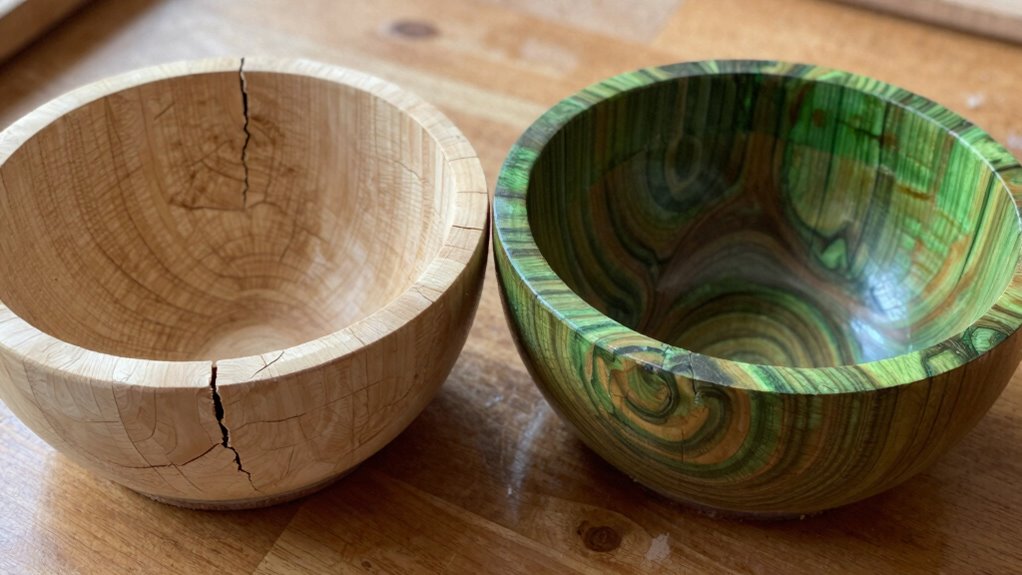

When you choose green wood for bowl turning, you’ll notice it’s easier to shape at first, but it’s more prone to warping, cracking, and changing shape as it dries. Dry wood offers a more stable surface, reducing future deformation and giving you a smoother finish. However, it’s harder to work with initially. To get the best results, understanding these differences will help you decide when to use green or dry wood for your project’s outcome.
Key Takeaways
- Green wood is softer and easier to shape but prone to warping and cracking during and after turning.
- Dry wood offers a more stable, predictable surface, reducing distortions and ensuring consistent results.
- Turning green wood may cause shape changes as it continues to dry post-turning.
- Dry wood minimizes cracking risks and maintains shape over time, ideal for precision projects.
- Proper drying before turning ensures better surface quality and long-term stability of the finished bowl.

Turning bowl blanks is a fundamental step for woodturners aiming to create beautiful, functional bowls. One of the most important considerations during this process is understanding how moisture content affects your wood. Green wood, freshly cut from a tree, contains a high level of moisture, which can be over 50%. This moisture makes the wood less stable because it retains water and continues to dry as you work. If you attempt to turn green wood, you’ll notice it’s softer, more prone to warping, cracking, and distortions during and after the turning process. The high moisture content means the wood hasn’t yet settled into a stable form, which can lead to issues down the line, especially if you plan to finish or use the bowl soon after turning. Proper drying techniques are essential to ensure the wood reaches an optimal moisture level before turning.
On the other hand, dry wood has a much lower moisture content, typically around 6-12%, depending on your environment. When you work with dry wood, you benefit from increased wood stability, meaning the surface is less likely to warp or crack as it cools and adjusts to its new shape. This stability makes dry wood easier to turn smoothly and produces a more predictable and cleaner surface finish. However, it also requires patience because drying wood properly can take months, especially for larger blanks. Rushing the drying process or using green wood can result in unpredictable changes in shape and size, which can ruin your project.
When choosing between green and dry wood, think about the final result you want. Green wood is ideal if you’re looking to create natural, live-edge bowls or want to work on a piece that will be seasoned later. It’s also more forgiving during initial shaping because it’s softer, but you need to work quickly to prevent cracking. Dry wood, by contrast, is best for projects where precision and stability are critical. It minimizes the risk of future cracking or warping, ensuring your bowl retains its shape over time.

Olivewood Bowl Blank, 6 x 6 x 3 inches, for Woodturning Projects Holy Corsses Cutlery Making
Unique Material: Handcrafted from premium olivewood, this bowl blank offers a stunning grain pattern and warm hues.
As an affiliate, we earn on qualifying purchases.
As an affiliate, we earn on qualifying purchases.
Frequently Asked Questions
How Does Moisture Content Affect Bowl Blank Stability During Turning?
Moisture content greatly impacts bowl blank stability during turning. When moisture variability is high, the wood is prone to warping, cracking, or twisting as it dries. Green wood with high moisture can shift shape, making it harder to achieve precise results. Dry wood is more stable, reducing warping risks. To guarantee better stability, control moisture levels and allow the wood to dry gradually before turning.
What Are the Best Drying Methods to Minimize Cracking?
Imagine guiding your bowl blank through a gentle rain rather than a thunderstorm; that’s what proper drying feels like. To minimize cracking, you should start with air drying in a shady, ventilated spot for several months, allowing moisture to escape slowly. For quicker results, kiln drying offers controlled heat and humidity, reducing stress. Both methods help preserve your wood’s beauty, preventing cracks and ensuring a smooth turn.
Can Green Wood Be Safely Turned Without Cracking?
You can turn green wood safely, but it’s risky without proper seasoning techniques. Green wood is more prone to cracking because it still contains a lot of moisture. To minimize issues, apply wood treatment methods like sealing the ends and using moisture barriers. If you choose to turn green, work quickly and carefully, but for best results, consider drying your wood first through air drying or kiln seasoning before turning.
How Does Wood Species Influence Drying Time and Final Results?
Did you know that denser woods, like hickory, take up to twice as long to dry as softer woods like cedar? Your choice of species impacts drying time and final results because wood density and grain orientation influence how quickly moisture escapes. Harder woods with tight grain require more patience, but they yield a more durable, stable bowl, whereas softer woods dry faster but may warp more easily.
What Tools Are Recommended for Working With Dry Versus Green Wood?
You should use sharp tools like gouges and chisels for dry wood, which cuts smoothly and reduces tear-out. For green wood, opt for tools with sharper edges and softer cuts to handle its moisture content. Always check moisture levels with a moisture meter before working, and use drying racks to store green wood properly, preventing warping and cracking. Proper tools and storage make your turning smoother and more successful.

HBlife Bamboo Dish Plate Bowl Cup Book Pot Lid Cutting Board Drying Rack Stand Drainer Storage Holder Organizer Kitchen Cabinet(Keep Dry)
Made of sturdy, eco-friendly, and easy-to-clean bamboo. Surface special treatment. No crack, no deformation.
As an affiliate, we earn on qualifying purchases.
As an affiliate, we earn on qualifying purchases.
Conclusion
Whether you choose dry or green wood for your bowl blanks, remember that each has its own charm and challenges. Green wood might crack more as it dries, but it’s often easier to work with initially. If you’re worried about cracks, just take your time and let the wood dry slowly. Either way, with patience and care, you’ll end up with a beautiful finished piece—so don’t let the drying process scare you away from trying both!

General Tools MMD4E Digital Moisture Meter, Water Leak Detector, Moisture Tester, Pin Type, Backlit LCD Display With Audible and Visual High-Medium-Low Moisture Content Alerts, Grays
HUMIDITY SENSOR: Our handy meter tool can quickly determine what level of remediation is needed to keep your…
As an affiliate, we earn on qualifying purchases.
As an affiliate, we earn on qualifying purchases.
stainless steel woodturning tools
As an affiliate, we earn on qualifying purchases.
As an affiliate, we earn on qualifying purchases.