
TL;DR

Get business pricing on tools and workshop supplies
- Business-only prices and quantity discounts
- Tax-exempt purchasing
- Multiple users, one account, clear invoices
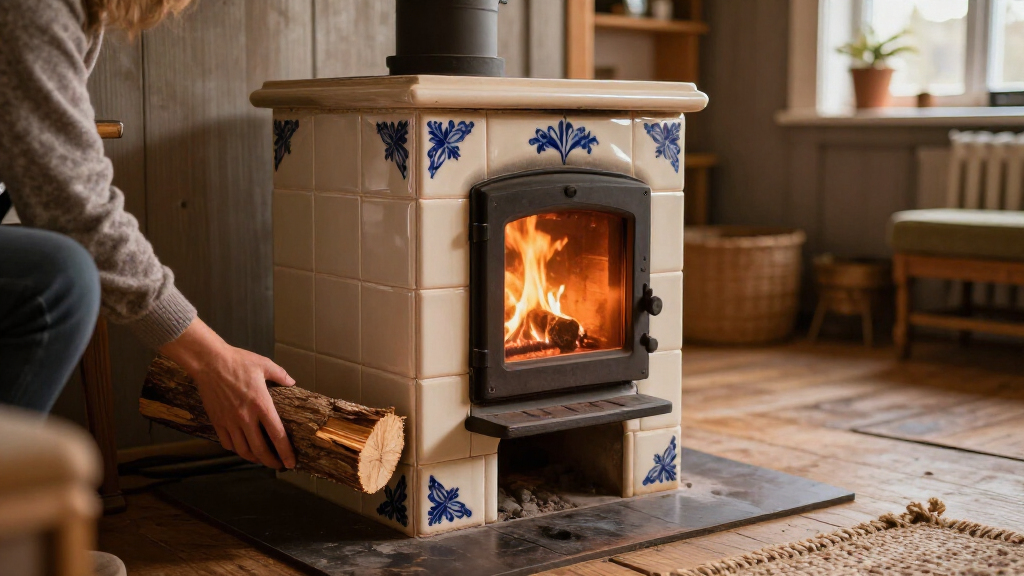
A Livingetc report examines renewed interest among British designers in Swedish ceramic stoves, known as kakelugnar, and related European tiled heaters. Designers and a stove company representative say the stoves can provide hours of radiant heat after one burn while acting as room focal points. The report does not provide independent emissions or efficiency data, and costs, installation needs and local rules vary.
British interior designers are bringing ceramic stoves—including the Swedish kakelugn—into contemporary homes, according to a Livingetc report that describes the tiled heaters as both room focal points and sources of long-lasting warmth. The report presents the trend through designer projects and industry comments, but does not independently verify claims about efficiency or emissions.
Ceramic stoves store heat in their masonry and tiled structure. Alan Hills, director of The Ceramic Stove Company, told Livingetc that one hot burn can provide heat for 12 to 24 hours and use fewer logs than a conventional wood burner. Hills also said the hotter fire can combust more particulates in the firebox, producing fewer emissions. The article does not cite comparative testing or specify the conditions behind those estimates.
The report describes installations in homes and design projects, including a custom pink stove at Villa Luella in Finland and a tiled stove in an East London home designed by Olivia Outred. Outred’s installation was gas-fitted, which she said was chosen to meet London air-quality rules. The examples show that the category includes different fuels and designs; they do not establish that every ceramic stove is suitable for every home or location.
Installation can involve building a masonry structure and applying ceramic tiles, according to Outred’s account. Hills advised planning the work after wet trades such as plastering are finished and said some models are modular and can be assembled in a couple of days. The report says prices start at several thousand pounds, while noting that costs depend on the stove and project. It gives no itemized price range or estimate of running-cost savings.
Heat Storage Meets Interior Design
The stoves’ appeal rests on two functions: retaining heat after the fire goes out and serving as a substantial decorative feature. For households considering a heating upgrade, that combination may be attractive, particularly where an open hearth is inefficient or where a sculptural focal point is part of a renovation. Those benefits remain dependent on the model, installation and how the home is used.
The environmental case needs more qualification. Hills’ comments about fewer logs and particulates are attributed industry claims, not independently verified results in the report. Fuel type, appliance design, maintenance and local air-quality rules all matter. A gas-fired example also differs from a wood-burning one, so the projects should not be treated as evidence that all ceramic stoves have the same emissions profile.
The upfront cost and building work may put the option beyond some budgets. The report’s examples show a range of settings, from a modest East London terrace to architect-designed homes, but do not establish typical installation costs, payback periods or the suitability of the technology for an existing property.
As an affiliate, we earn on qualifying purchases.
A Northern European Heating Tradition
Livingetc describes the kakelugn as the Swedish form of a ceramic stove and uses the German term kachelofen for the broader tradition. Such heaters have been used in northern Europe for centuries, while the article characterizes their adoption in British interiors as relatively new. It says designers including Adam Bray, Beata Heuman and Veere Grenney have used ceramic stoves in client projects.
The report connects the renewed design interest with scrutiny of open fires under clean-air rules. It does not provide a detailed account of current regulations, nor does it say that every open fire is prohibited. The East London gas installation is one specific response to local restrictions, not a general recommendation for other homes.
“Ceramic stoves work by generating heat for 12 to 24 hours from one hot burn, using far fewer logs than a conventional wood burner.”
— Alan Hills, director of The Ceramic Stove Company, speaking to Livingetc
Efficiency Claims Need Testing
The Livingetc report does not identify independent studies measuring heat output, fuel consumption or emissions against conventional wood burners. Hills’ figures and comparisons are attributed to him, and the article does not explain the testing methods, stove models or operating conditions behind them.
It is also unclear how much a typical installation costs beyond the report’s statement that prices start at several thousand pounds. The source does not detail structural requirements, maintenance, expected lifespan, fuel availability or household savings. Rules differ by location, and the article does not provide a full regulatory guide. Prospective buyers would need project-specific advice and confirmation that a proposed stove and fuel comply with local requirements.
What Buyers Should Check
The report describes a design trend rather than a new product launch or a change in regulation, so it names no scheduled next milestone. For anyone considering an installation, the practical next steps are to compare the specifications of particular models, obtain a full quote and check planning, building and air-quality requirements for the property.
Claims about emissions, efficiency and savings should be assessed against reliable data for the exact appliance and fuel. Installation plans may also need to account for weight, the supporting base and the sequence of renovation work. Livingetc’s examples suggest that designs can be tailored to a room, but the final cost, performance and compliance remain project-specific.
Key Questions
What is a Swedish ceramic stove?
A kakelugn is a Swedish ceramic stove, part of a wider northern European tradition of tiled heaters. The report describes these stoves as structures that store heat and release it after the fire has burned.
How long can a ceramic stove provide heat?
Alan Hills of The Ceramic Stove Company told Livingetc that a single hot burn can provide heat for 12 to 24 hours. The source does not provide independent tests or details about the models and conditions behind that estimate.
Are ceramic stoves more efficient and cleaner than wood burners?
Hills said they use fewer logs than a conventional wood burner and produce fewer emissions because a hotter fire combusts particulates in the firebox. Livingetc did not provide comparative test data, so those claims should be checked against specifications and independent evidence for a particular model.
How much does a ceramic stove cost?
The report says prices start at several thousand pounds. It does not give a typical total installation cost, and the final amount will depend on the stove, design and building work.
Can a ceramic stove be installed in any home?
Not necessarily. Installation may involve substantial weight, a suitable base, construction work and compliance with local rules. The East London project used a gas-fitted stove, but that example does not establish what is allowed or suitable elsewhere.
Source: rss
Halloween Picks
halloween
As an affiliate, we earn on qualifying purchases.