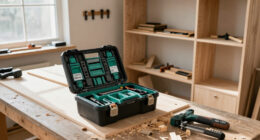

Makita XTR01Z is my best overall pick among these cordless wood routers for its established 18V platform and brushless design. The DEWALT DCW600B stands out for buyers already using 20V MAX batteries, while the WORKPRO 20V kit suits shoppers who want a more complete starting package. The main tradeoffs are battery compatibility, control features, and whether a kit includes useful accessories or leaves you to supply them. Compact cordless routers favor edge work and light routing over sustained heavy cuts. Read on for how the 12 options compare and which one fits your setup.

Get business pricing on tools and workshop supplies
- Business-only prices and quantity discounts
- Tax-exempt purchasing
- Multiple users, one account, clear invoices
Complete the kit



Key Takeaways
- Established battery platforms lead the shortlist: Makita, DEWALT, Milwaukee, RYOBI, and CRAFTSMAN make the most sense when you already own compatible batteries and chargers.
- Tool-only value depends on what you own: the ZEXAPE, DEWALT, and other bare-tool options can reduce duplication for existing platform users, but they are less convenient as a first cordless tool.
- Kit contents change the beginner equation: JEXUGK and WORKPRO include batteries and bits, while many major-brand picks require separate battery purchases.
- Compact routing rewards careful control: variable speed and depth adjustments can help match the cut to the bit and material, but a cordless palm router is still aimed at trim-scale work.
- Battery compatibility is not interchangeable: choose a router that matches your actual battery family; a similar voltage label alone does not make packs compatible.


| cordless wood router | Motor | Speed range | Voltage |
|---|---|---|---|
| JEXUGK Brushless Cordless Wood | Brushless | — | 21V DC |
| BATOCA 12V Cordless Palm Trim | Brushless | — | 12V |
| ZEXAPE Cordless Compact Palm R | 800W brushless | 12,000–30,000 RPM | — |
| Cordless Compact Router Compat | 800W brushless | 12,000–30,000 RPM | — |
| WORKPRO 20V Cordless Compact R | Brushless | 10,000–30,000 RPM | 20V |
| Makita XTR01Z 18V LXT Lithium- | Brushless | 10,000–30,000 RPM | 18V |
| Milwaukee 18V Cordless Compact | — | — | 18V |
| SEESII 21V Cordless Brushless | Brushless | 0–33,000 RPM | 21V |
| RYOBI ONE+ 18V Cordless Compac | — | 20,000–30,000 RPM | — |
| DEWALT 20V MAX XR Cordless Rou | Brushless | — | — |
| CRAFTSMAN V20 Cordless Variabl | Brushless | 16,000–30,000 RPM | — |
| BATOCA 12V Cordless Palm Trim | Brushless | — | — |
More Details on Our Top Picks
JEXUGK Brushless Cordless Wood Router, 21V Compact Palm Trimmer with 2×4.0Ah Batteries and 10-Piece 1/4″ Bit Set
The JEXUGK stands out for buyers who want two included 4.0Ah batteries and a broad bit selection in one kit. Its brushless motor reaches 35,000 RPM, while six speed settings give more control across trimming, carving, and slot cutting than the lighter BATOCA 12V Cordless Palm Trim Router Kit. The aluminum fixed base is intended to steady cuts by reducing vibration, though the listed 4.39 kg weight makes this a less nimble palm router for overhead work or long sessions. Makita-style battery compatibility can also help owners of matching packs, but the batteries are included and the kit’s stated compatibility is limited. I’d choose it for longer stretches of routing; buyers prioritizing low weight should look at BATOCA instead.
Pros:- Two 4.0Ah batteries support longer work between swaps
- Brushless motor reaches 35,000 RPM with six speed settings
- Aluminum base is designed to reduce vibration
- Includes ten 1/4-inch router bits
Cons:- At 4.39 kg, it is heavy for a compact palm router
- Battery compatibility is limited to Makita-style packs
- Fixed base offers less routing versatility than the WORKPRO kit’s multiple bases
Best for: Woodworkers doing extended trim and edge-routing sessions who want two batteries and a 1/4-inch bit set in the kit.
Not ideal for: Buyers who need a lightweight router for overhead work or who rely on battery platforms outside Makita-style packs.
- Voltage:21V DC
- Motor:Brushless
- Maximum speed:35,000 RPM
- Speed settings:6
- Batteries:2 × 4.0Ah, Makita compatible
- Base:Fixed aluminum, 3.54-inch diameter
- Weight:4.39 kg
- Included bits:10, 1/4-inch shank
Our verdict“Choose the JEXUGK for longer cordless sessions and included batteries, provided its weight suits your work.”
BATOCA 12V Cordless Palm Trim Router Kit
For small DIY jobs, the BATOCA puts low weight and simple charging ahead of cutting speed. At 1.75 lb with battery, it is easier to guide for laminate trimming, shallow grooves, and edge profiles than the heavier JEXUGK 21V router. Its 19,500 RPM brushless motor and 0–40 mm depth adjustment suit controlled light work, while Type-C charging makes topping up less dependent on a dedicated charger. The kit includes two batteries and three bits, so a beginner can start with common trim tasks. Its limits are clear: the lower speed and stated suitability for softwood, MDF, plywood, and PVC make it a poor choice for dense stock or demanding cuts. I’d pick it for approachable projects, not as a substitute for a more powerful router.
Pros:- Weighs 1.75 lb with battery for easier handling
- Type-C charging works with standard compatible cables
- Includes two 2.0Ah batteries and three bits
- Depth adjustment spans 0–40 mm with 1 mm micro-tuning
Cons:- 19,500 RPM and light-duty design limit work in dense materials
- Better suited to shallow cuts than demanding routing
- Only three bits are included, fewer than the JEXUGK kit
Best for: DIY beginners who want a light router for laminate edges, shallow grooves, and small projects in softwood or sheet goods.
Not ideal for: Woodworkers routing dense hardwood, making deep cuts, or expecting one tool to handle heavier production work.
- Voltage:12V
- Motor:Brushless
- Maximum speed:19,500 RPM
- Base:Fixed
- Weight:1.75 lb with battery
- Collet:1/4 inch
- Depth adjustment:0–40 mm with 1 mm micro-tuning
- Batteries:2 × 2.0Ah
- Charging:Type-C; approximately 40 minutes
Our verdict“Pick this BATOCA for lightweight, small-scale trim work if you do not need the power of a larger router.”
ZEXAPE Cordless Compact Palm Router, Compatible with Makita 18V Batteries (Bare Tool)
The ZEXAPE pairs an 800W brushless motor with a useful spread of included guides, making it a flexible bare-tool option for owners of compatible Makita 18V batteries. Its six settings cover 12,000–30,000 RPM, a wider practical range than the BATOCA 12V kit’s single listed maximum speed, and the edge guide, roller guide, shield, and dust port support varied routing setups. At 4.2 lb, it is far lighter than the JEXUGK, though it still weighs more than BATOCA’s 1.75 lb model. The main catch is the purchase decision: no battery or charger is included, and the brand is third-party rather than Makita. I’d favor it when existing batteries make the bare-tool format useful; newcomers will need to account for the missing power source.
Pros:- 800W brushless motor with six settings from 12,000 to 30,000 RPM
- Includes six bits, edge and roller guides, safety shield, and dust port
- Compatible with a range of Makita 18V batteries
- Low-voltage protection and overheat shutdown are specified
Cons:- Battery and charger are not included
- Third-party product rather than an original Makita tool
- Heavier than the BATOCA 12V router
Best for: Makita 18V battery owners who want variable speed and a guide-rich compact router without duplicating batteries.
Not ideal for: New cordless-tool buyers without compatible batteries, or shoppers who prefer a router from the battery-platform manufacturer.
- Motor:800W brushless
- Battery platform:Makita 18V compatible; battery not included
- Speed range:12,000–30,000 RPM
- Speed settings:6
- Collet:1/4 inch
- Base:Fixed aluminum alloy
- Weight:4.2 lb
- Included accessories:6 bits, edge guide, roller guide, safety shield, dust collection port
Our verdict“Choose the ZEXAPE if you already own a compatible Makita 18V battery and want a variable-speed router with guides.”
Cordless Compact Router Compatible with DeWalt 20V Batteries
This router makes most sense as a DeWalt 20V-compatible bare tool for someone who already has batteries on hand. Its 800W brushless motor and six settings from 12,000 to 30,000 RPM mirror the ZEXAPE’s stated power and speed range, and both include six bits, edge and roller guides, a shield, and a dust port. That gives this model a capable accessory package for trimming wood and laminate without requiring a cord. The key difference from the WORKPRO 20V kit is that this router’s battery is sold separately and the provided data lists no alternate bases; WORKPRO includes fixed, plunge, and tilting bases plus a battery and charger. I’d choose this one for platform continuity, but not if you need a complete kit out of the box.
Pros:- Brushless 800W motor
- Six speed settings span 12,000–30,000 RPM
- Includes six bits, edge and roller guides, shield, and dust port
- Aluminum alloy base is designed to reduce vibration
Cons:- Battery and charger are not included
- Requires a compatible DeWalt 20V battery
- Fewer base options are listed than for the WORKPRO kit
Best for: DeWalt 20V tool owners who want a compatible compact router for wood and laminate routing.
Not ideal for: Buyers without a DeWalt 20V battery or those seeking multiple bases and a complete battery kit.
- Motor:800W brushless
- Battery platform:DeWalt 20V series; battery not included
- Speed range:12,000–30,000 RPM
- Speed settings:6
- Base:Precision-machined aluminum alloy
- Included bits:6
- Included guides:Edge guide and roller guide
- Safety features:Low-voltage protection and overheat auto-shutdown
Our verdict“Pick this router if you already own DeWalt 20V batteries and want a compatible tool with variable speed and guides.”
WORKPRO 20V Cordless Compact Router Kit
The WORKPRO earns its place through three base styles in one kit: fixed for routine edge work, plunge for controlled entry cuts, and tilting for angled routing. That breadth makes it more adaptable than the fixed-base JEXUGK or the DeWalt-compatible router, whose supplied data lists a single base. Its brushless motor offers six settings across 10,000–30,000 RPM, and the included 4.0Ah battery, charger, guides, and bits make this a ready-to-use package. That versatility adds setup choices and accessories to manage, while its minimum speed is lower than the other 800W routers’ listed 12,000 RPM floor. I’d favor the WORKPRO for varied shop tasks where base changes matter; a buyer who mainly trims edges may find a simpler fixed-base tool easier to justify.
Pros:- Includes tilting, fixed, and plunge bases
- Brushless motor with six settings from 10,000 to 30,000 RPM
- 4.0Ah battery and fast charger are included
- Kit includes guides, dust hose, and six router bits
Cons:- Base changes and accessories add setup complexity
- No compatibility with another battery platform is specified
- Its 10,000 RPM lower limit is below the listed minimum on the ZEXAPE and DeWalt-compatible routers
Best for: Woodworkers who want one cordless kit for edge trimming, plunge cuts, and angled routing with included battery and charger.
Not ideal for: Buyers who only need a compact fixed-base trimmer or who want to use an existing battery platform.
- Voltage:20V
- Motor:Brushless
- Speed range:10,000–30,000 RPM
- Speed settings:6
- Fixed-base adjustment:0–24 mm
- Plunge depth:Up to 38 mm
- Battery:4.0Ah included
- Bases:Tilting, fixed, and plunge
- Included accessories:Dust hose, guides, 6 bits, fast charger
Our verdict“Choose the WORKPRO for a self-contained kit that handles more routing setups than a fixed-base compact router.”
Makita XTR01Z 18V LXT Lithium-Ion Brushless Cordless Compact Router
The Makita XTR01Z is a strong fit for woodworkers who want to tune router speed to the cut. Its 10,000–30,000 RPM range and electronic speed control help it maintain a steady pace under load, giving it more control across varied routing jobs than the RYOBI PCL424B, whose stated range starts at 20,000 RPM. The brushless motor and switch lock add useful control and protection during setup and use. This is a bare tool, though, so buyers need an 18V LXT battery and charger already on hand. The SEESII offers batteries and more included accessories, while the Makita’s lower minimum speed makes it the more adjustable choice. Its compact format still makes it a poor substitute for a corded router on sustained heavy cuts.
Pros:- Brushless motor supports efficient, consistent cutting
- 10,000–30,000 RPM range accommodates more speed-sensitive tasks
- Electronic speed control helps hold speed under load
- Switch lock helps prevent accidental startup
Cons:- Battery and charger are sold separately
- Compact cordless format may not sustain demanding heavy-duty work
Best for: Woodworkers already using Makita 18V LXT batteries who want a compact router with a broad speed range for varied cuts.
Not ideal for: Buyers without Makita LXT batteries or anyone routing heavy material for long sessions who needs sustained corded power.
- Voltage:18V
- Battery platform:Makita LXT Lithium-Ion
- Motor:Brushless
- Speed range:10,000–30,000 RPM
- Speed control:Variable speed dial with electronic speed control
- Switch feature:Separate lock button
- Model:XTR01Z
Our verdict“Choose the Makita if you own LXT batteries and value a wide, controlled speed range for varied compact routing tasks.”
Milwaukee 18V Cordless Compact Router
The Milwaukee 18V Cordless Compact Router has a clear potential role for buyers building around Milwaukee’s cordless tools: it offers a compact router format on an 18V platform. The supplied product details, however, provide little basis for comparing its cutting control or setup with the Makita XTR01Z or DEWALT DCW600B. They do not specify motor type, speed range, depth adjustment, or included accessories, so I would not rank it ahead of those models for feature-led routing work. Its listed 4.9-pound package weight describes the package, not necessarily the tool in use. This is the least documented pick in this group; buyers should verify the exact tool configuration and available controls before choosing it for a particular routing task.
Pros:- Cordless format supports portable routing
- Compact router type suits trim-scale work
- 18V power source fits buyers seeking an 18V cordless option
Cons:- Supplied details do not specify speed range or speed adjustment
- Motor type and depth adjustment details are not provided
- Listed package weight may not reflect the tool’s working weight
Best for: Milwaukee cordless-tool owners seeking a compact router and willing to confirm the model’s controls and included components before buying.
Not ideal for: Buyers who need documented speed settings, depth controls, or tool weight to compare routing performance and handling.
- Voltage:18V
- Power source:Cordless
- Product type:Compact router
- Manufacturer:Milwaukee
- Country of manufacture:China
- Package weight:4.9 lb
Our verdict“Consider this Milwaukee only if its platform fit matters to you and you can verify the tool’s controls and configuration first.”
SEESII 21V Cordless Brushless Compact Palm Wood Router
The SEESII 21V stands out for buyers who want a cordless routing setup with batteries and accessories in the box. Its dual 4,000mAh batteries address runtime better than the bare-tool Makita XTR01Z and DEWALT DCW600B, which require compatible batteries and chargers separately. Six speed settings reach 33,000 RPM, while the aluminum base, LED display, work light, and dust collection add practical help for small-shop and DIY work. The included eight quarter-inch collets give the kit a broad accessory selection, though the product details do not identify their individual sizes. Its palm-router format and battery-powered runtime still limit it for large workpieces or long, demanding cuts; the Makita’s specified lower minimum speed may suit applications where slower routing is needed.
Pros:- Includes two 4,000mAh batteries for cordless use
- Six speed settings reach up to 33,000 RPM
- Aluminum base provides a stable support surface
- Built-in LED light, display, and dust collection support visibility and cleanup
Cons:- Battery runtime still requires charging during extended work
- Palm-router size is limiting for larger routing tasks
- Speed is offered in six settings rather than a continuously described dial
Best for: DIY woodworkers who want a battery-included compact router kit with lighting, dust collection, and multiple collets.
Not ideal for: Woodworkers handling large workpieces or long heavy cuts who need a larger, sustained-power router.
- Voltage:21V
- Motor:Brushless
- Speed range:0–33,000 RPM
- Speed settings:6
- Battery capacity:Two 4,000mAh batteries
- Base material:Aluminum
- Collet size:1/4 inch
- Included collets:8
- Other features:Integrated dust collection, LED screen, built-in LED light
Our verdict“Pick the SEESII if you want a feature-rich, battery-included kit for portable DIY and compact routing jobs.”
RYOBI ONE+ 18V Cordless Compact Fixed-Base Router (Tool Only), PCL424B
At a listed 3.2 pounds, the RYOBI PCL424B is the lightest clearly specified tool in this group, making it a sensible choice for trim work where easy positioning matters. Its fixed base, micro depth adjustment, quick-release lever, dust port, and LED light cover useful setup and visibility needs. The 20,000–30,000 RPM range is narrower at the low end than the Makita XTR01Z’s, so the Makita gives buyers more room to slow down for speed-sensitive work. In return, the RYOBI’s ONE+ battery compatibility can make it an easy addition for existing platform owners. It is sold without a battery, and its compact fixed-base design is aimed at trimming and routing rather than demanding, sustained cuts.
Pros:- Light 3.2-pound tool weight aids positioning
- Micro depth adjustment supports precise bit-height changes
- Quick-release lever simplifies setup
- LED light and dust port support visibility and cleanup
Cons:- Battery is not included
- 20,000 RPM minimum offers less low-speed range than the Makita XTR01Z
- Fixed-base compact format is not aimed at heavy-duty routing
Best for: RYOBI ONE+ owners doing trim and light routing who value low tool weight and straightforward depth adjustment.
Not ideal for: Buyers without ONE+ batteries or woodworkers who need lower-speed control or a router for sustained heavy cuts.
- Model:PCL424B
- Power source:18V cordless
- Battery compatibility:RYOBI ONE+ 18V
- Battery included:No
- Speed range:20,000–30,000 RPM
- Weight:3.2 lb
- Base type:Fixed
- Features:Micro depth adjustment, quick-release lever, dust port, LED light
Our verdict“Choose the RYOBI for light trim work if you already own ONE+ batteries and want a lightweight fixed-base tool.”
DEWALT 20V MAX XR Cordless Router, Brushless, Tool Only (DCW600B)
The DEWALT DCW600B pairs a brushless motor with features aimed at predictable operation: soft start reduces the abrupt feel at startup, electronic feedback helps maintain speed during cuts, and an electronic brake slows the motor after shutdown. That combination gives it a distinct control-focused role beside the Makita XTR01Z, which offers a broader stated speed range and a switch lock. Dual LEDs and a depth adjustment ring also help with bit placement and height changes. The tradeoff is that this is a tool-only purchase, so a compatible 20V MAX battery and charger are needed. The supplied details do not list a numerical speed range or tool weight, making direct comparisons on those points difficult.
Pros:- Brushless motor with electronic feedback supports steady cutting
- Soft start helps moderate startup
- Electronic brake slows the motor after shutdown
- Dual LEDs and depth adjustment ring aid visibility and setup
Cons:- Battery and charger are sold separately
- Supplied product data does not specify a numerical speed range
- Electronic controls add features some basic trim users may not need
Best for: DEWALT 20V MAX owners who want soft start, electronic speed feedback, and a brake in a compact router.
Not ideal for: Buyers who need a battery-included kit or want a published speed range and weight for direct comparisons.
- Power source:20V MAX battery
- Battery included:No; tool only
- Motor:Brushless
- Speed control:Variable-speed dial with full-time electronic feedback
- Depth adjustment:Depth adjustment ring
- Lighting:Dual LED work lights
- Startup feature:Soft start
- Stopping feature:Electronic brake
Our verdict“Choose the DEWALT if you already own 20V MAX batteries and value controlled startup, speed feedback, and stopping.”
CRAFTSMAN V20 Cordless Variable Speed Fixed Base Router (CMCW400B, Bare Tool Only)
The CRAFTSMAN V20 CMCW400B is a practical fit for woodworkers who already own V20 batteries and want a cordless router for edge work and general trimming. Its 16,000–30,000 RPM variable speed gives more control over different bits and materials than the BATOCA 12V router’s fixed 19,500 RPM, while the brushless motor is designed to make better use of each charge. The depth adjustment knob, LED, edge guide, and dust port adapter support setup and visibility without requiring as many add-ons. The tradeoff is a fixed base, so it does not offer plunge routing, and this bare-tool listing includes no battery or charger. Choose it over the lighter BATOCA when V20 compatibility and adjustable speed matter more than a ready-to-use kit.
Pros:- Brushless motor is designed for performance and longer runtime
- Variable 16,000–30,000 RPM range supports different routing applications
- Depth adjustment knob makes height changes straightforward
- Includes an edge guide, dust port adapter, and LED work light
Cons:- Battery and charger are sold separately
- Fixed base does not provide plunge capability
Best for: Woodworkers with CRAFTSMAN V20 batteries who want variable speed for edge routing, trimming, and guided cuts.
Not ideal for: New cordless-tool buyers without V20 batteries, or woodworkers who need plunge routing for stopped cuts.
- Brand:CRAFTSMAN
- Model:CMCW400B
- Power source:CRAFTSMAN V20 battery, not included
- Motor:Brushless
- Base type:Fixed
- Speed range:16,000–30,000 RPM
- Included accessories:Edge guide and dust port adapter
- Tool configuration:Bare tool; battery and charger not included
Our verdict“Choose this router if you already have V20 batteries and want adjustable speed with useful routing accessories in a fixed-base tool.”
BATOCA 12V Cordless Palm Trim Router with Brushless Motor, Battery, and Type-C Charging
The BATOCA 12V palm trim router suits small jobs where easy handling and a complete kit matter more than extended runtime or cutting capacity. At about 1.8 lb with its battery, it is easier to guide one-handed or overhead than the CRAFTSMAN V20, and its included battery means you can start without buying into a separate platform. The 19,500 RPM brushless motor, 0–40 mm rack-and-pinion depth adjustment, and Type-C charging fit laminate trimming, edge profiling, and shallow decorative grooves. Its roughly 30-minute runtime and stated limits on hard or dense material make it a poor match for long sessions or demanding cuts. Compared with the CRAFTSMAN’s wider variable-speed range, this BATOCA favors portability and included essentials over speed flexibility.
Pros:- Lightweight build supports one-handed and overhead handling
- Includes a 2.0Ah battery and accessories for a ready-to-use kit
- Type-C charging takes about 40 minutes
- Rack-and-pinion adjustment provides a stated 0–40 mm depth range
Cons:- About 30 minutes of runtime per charge limits longer work sessions
- Not suited to structural cutting or hard and dense materials
- Fixed 19,500 RPM offers less speed flexibility than the CRAFTSMAN V20
Best for: DIY woodworkers doing short laminate, edge-profiling, and shallow-groove jobs who value a light tool and included battery.
Not ideal for: Users routing dense hardwood, making structural cuts, or needing long uninterrupted sessions or variable-speed control.
- Brand:BATOCA
- Model number:B08TL21-1Y-US-K1
- Power source:12V battery powered
- Motor:Brushless
- Maximum speed:19,500 RPM
- Collet size:1/4 inch
- Depth adjustment range:0–40 mm (0–1.5 inches)
- Weight:1.8 lb
- Battery and charging:2.0Ah battery; about 30-minute runtime and Type-C charge time of about 40 minutes
Our verdict“Pick this BATOCA for light trim work and short DIY sessions when low weight and an included battery matter more than power or runtime.”

How We Picked
I compared these 12 routers on the factors that change day-to-day ownership: motor design, battery platform, control and adjustment features, included batteries and accessories, and the likely fit for common trim-routing jobs. I gave more weight to established tool platforms when they offer a practical path for buyers who already own compatible packs, while complete kits earned consideration for reducing the extra purchases a newcomer faces.
The ranking reflects those differences rather than treating every compact router as equivalent. Makita leads as a balanced platform choice; DEWALT and Milwaukee are strong alternatives for their respective battery ecosystems. Kit-focused and lower-voltage models have distinct appeal, but battery limitations, fewer platform advantages, or less established support keep them from outranking the leading options for broad use. Each pick has a drawback, so the best choice depends on the work and batteries already in your shop.
Factors to Consider When Choosing Cordless Wood Routers
Before choosing a cordless router, start with the work you expect it to do and the batteries already on your shelf. These decisions often matter more than a small difference in listed features.
Match the router to the scale of your cuts
Compact cordless routers are designed around edge profiling, trimming laminate, rounding corners, and light dado or groove work with an appropriate bit. They are convenient where a cord would snag or limit access, but a palm router is not a substitute for a larger fixed-base or plunge router in sustained, deep cuts. Think about the largest bit and deepest pass you actually need before prioritizing portability. Making several shallow passes can improve control and reduce strain on the tool. A common mistake is buying a compact router for heavy stock removal simply because its motor is brushless. For repeated demanding cuts, a corded full-size router may be the better companion.
Treat battery platform as a long-term choice
A bare tool is most attractive when you already own compatible batteries, a charger, and perhaps other tools from the same system. Check the exact battery family and model compatibility; voltage labels do not make packs from different brands interchangeable. If you are starting from scratch, compare the full setup you need, including battery and charger, rather than judging the router alone. Battery capacity affects how long you can work between charges, while larger packs can add weight and change balance. For small trim jobs, a lighter pack may feel easier to control. Avoid buying into an unfamiliar platform for one tool without checking whether its other tools suit your future plans.
Prioritize adjustment and control for your material
Speed control can help tailor a router to different bit sizes and materials, and depth adjustment affects how accurately you can repeat a cut. Those controls matter most when your projects call for varied bits or carefully matched profiles. A fixed-base router can be straightforward for edge work, but it does not offer the same approach as a plunge router for starting cuts inside a board. Before buying, consider whether you will mostly follow an edge or need to enter a cut away from one. Do not assume that a higher top speed alone means cleaner results. Sharp bits, a steady base, and shallow passes have a large effect on finish quality.
Check what the kit really includes
Included batteries, a charger, and starter bits can make a kit usable sooner, especially for a first-time cordless-tool buyer. Still, accessory count is not the same as accessory usefulness: check shank size, bit quality, and whether the bits suit your planned work. A bare tool may be the smarter purchase if you already have good bits and batteries. Collet size and compatible bit shanks should match your existing collection, or you may need additional bits. Also account for a case or other storage if you move tools between sites. Comparing the complete setup prevents a kit from seeming more ready than it is.
Plan for dust, visibility, and safe handling
Routing creates fine chips and dust, and compact bases can leave the cutting area partly hidden by your hands or the workpiece. Consider how you will see the cut line and manage dust in your workspace; an extraction port is useful only if it fits your vacuum setup. A bright work light can help in dim areas, but it does not replace good lighting and a clear view of the bit. Clamp the work securely and guide the router with both hands where the design allows. Wear suitable eye and hearing protection, and wait for the bit to stop before setting the tool down. These habits matter regardless of brand or battery system.
Frequently Asked Questions
Should I choose a router that matches the cordless tools I already own?
Usually, matching your current battery system is the simplest path if you already have compatible packs and a charger. It can make a bare tool practical and avoids adding a second charging setup. Confirm compatibility with the exact battery family, since similar voltage ratings do not make different brands’ packs interchangeable. If your existing battery is heavy, see whether the tool remains comfortable to guide with it. A new platform may still make sense if you need a complete kit or expect to buy more tools in that system.
Is a cordless compact router suitable as my only wood router?
That depends on your projects. For edge profiles, trimming, and light grooves, a compact model can cover many small-shop tasks with less cord management. If you regularly need deep cuts, large bits, or plunge starts in the middle of a panel, a full-size or plunge router is a better fit. Trying to remove too much material in one pass can hurt control and finish quality. Many woodworkers treat a cordless palm router as a convenient complement to a larger router.
Does brushless matter more than variable speed for trim work?
Neither feature wins for every buyer. A brushless motor can be appealing for efficiency and motor design, while variable speed gives you a way to adapt rotation speed to the bit and task. If you use a narrow range of small bits for basic edge work, straightforward adjustment and a stable grip may matter more than either label. For larger bits or varied materials, speed control can give you more flexibility. Compare the actual controls and intended work instead of treating one feature as a guarantee of better cuts.
Are included router bits good enough for furniture projects?
Included bits can be handy for learning or occasional trim work, but the set’s presence alone does not tell you how well it will cut or last. Check that the shank fits the router’s collet and that the profiles match your project. For visible furniture edges, bit sharpness and cut quality matter, so a suitable quality bit may be a better choice than relying on every included piece. Take light passes and inspect the edge before routing the full workpiece. Keep bits clean and replace damaged ones.
Should I buy a bare tool or a kit if I am new to cordless routing?
A kit is often easier if you lack a compatible battery and charger, since it can get you routing without assembling a separate setup. Check what the package actually includes and whether its bits match the jobs you have in mind. A bare tool can be a better fit if you already own the correct batteries and prefer to select your own bits. Also consider whether the included battery capacity and weight suit controlled edge work. The least complicated choice is the one that leaves you with the compatible essentials you will actually use.
Conclusion
For most buyers already invested in a major cordless system, I recommend the Makita XTR01Z as best overall for its balanced 18V brushless platform. The best value depends on your battery shelf: WORKPRO offers a kit-oriented route for shoppers seeking included essentials, while DEWALT DCW600B makes more sense for owners of compatible 20V MAX packs. For a premium established-platform pick, compare the Makita with Milwaukee based on the batteries and tools you already use. Beginners should favor a complete kit such as JEXUGK or WORKPRO and verify its bits and battery contents before buying. For specific needs, choose the ZEXAPE if you want a Makita-battery-compatible bare tool, or the lighter-duty BATOCA 12V option if compact handling and its included charging setup fit your projects. Match the router to your work and battery system, then let those needs decide the shortlist.
Halloween Picks
halloween
As an affiliate, we earn on qualifying purchases.