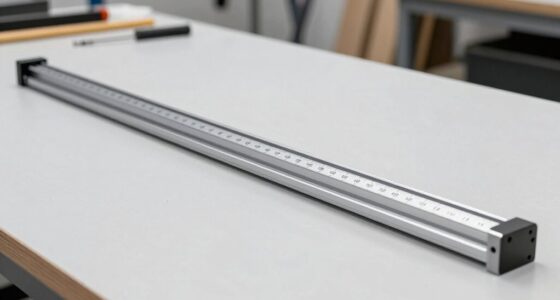

The best hi-fi storage cabinet must do more than hold a stack of components. I want safe weight support, steady airflow, tidy cable routing, and dimensions that suit the system rather than forcing awkward compromises. Based on those priorities, the CHOEZON Media Cabinet takes my top spot because its ventilated door, adjustable shelves, onboard outlets, and casters form the most balanced package for a living-room system.
Buyers with large component collections should look at the 7-Tier Heavy Duty Audio Component Rack, while the Heavy Duty 4-Tier AV Media Stand is my preferred choice for especially weighty amplifiers and receivers. The main tradeoff is between enclosed presentation and open cooling: the CHOEZON hides visual clutter, but the three open racks provide easier access and fewer airflow restrictions. I ranked these four options by how well each one balances equipment protection, usable capacity, heat management, vibration control, and room compatibility.
Complete the kit


Key Takeaways
- The CHOEZON ranks first because it combines cabinet-style concealment with ventilation, adjustable storage, cable routing, power access, and mobility.
- The 7-tier rack offers the most separate storage levels, making it the strongest choice for buyers with many source components or gaming devices.
- The black 4-tier stand has the clearest total weight rating at 352 pounds, so it is better suited to concentrated loads from heavy amplifiers and receivers.
- The walnut 4-tier stand pairs 304 stainless steel with a 132-pound rating per layer, but its weight and open appearance make it less convenient in compact shared rooms.
- Open racks cool equipment more freely, while the CHOEZON provides a cleaner furniture-like appearance and a mesh barrier against casual contact.
| CHOEZON Media Cabinet with Charging Station, Walnut |  | Best Overall | Primary material: Engineered wood | Finish: Walnut-colored veneer | Door: Ventilated mesh with soft-close hinges | VIEW LATEST PRICE | See Our Full Breakdown |
| 7-Tier Heavy Duty Audio Component Rack, 140cm Tall |  | Best for Large Component Collections | Frame material: Steel | Shelf material: High-density wood boards | Dimensions: 50 × 40 × 140 cm | VIEW LATEST PRICE | See Our Full Breakdown |
| Heavy Duty 4-Tier AV Media Stand, 352 lb Load Capacity, Black |  | Best for Heavy Equipment | Total load capacity: 352 pounds | Number of shelves: Four | Shelf thickness: 0.7 inches | VIEW LATEST PRICE | See Our Full Breakdown |
| 4-Tier AV Media Stand with Shock-Absorbing Foot Pegs, Walnut |  | Best Premium Open Rack | Frame material: 304 stainless steel | Shelf material: High-density MDF | Number of tiers: Four | VIEW LATEST PRICE | See Our Full Breakdown |
| hi-fi storage cabinet | Finish | Mobility | Frame material | Shelf material |
|---|---|---|---|---|
| CHOEZON Media Cabinet with Cha | Walnut-colored veneer | Four smooth casters | — | — |
| 7-Tier Heavy Duty Audio Compon | — | Universal wheels with brakes | Steel | High-density wood boards |
| Heavy Duty 4-Tier AV Media Sta | — | — | — | — |
| 4-Tier AV Media Stand with Sho | Walnut | — | 304 stainless steel | High-density MDF |
More Details on Our Top Picks
CHOEZON Media Cabinet with Charging Station, Walnut
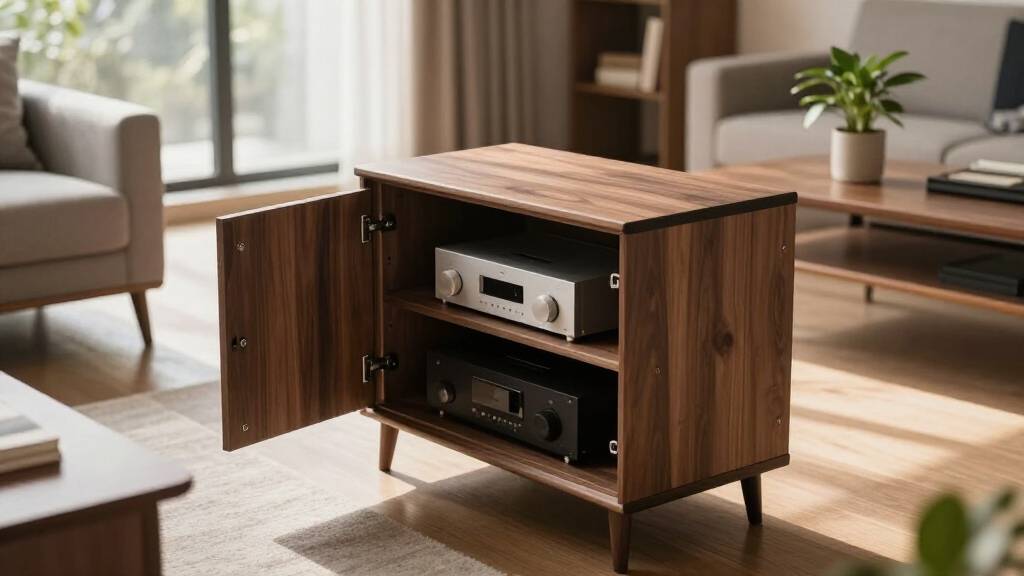
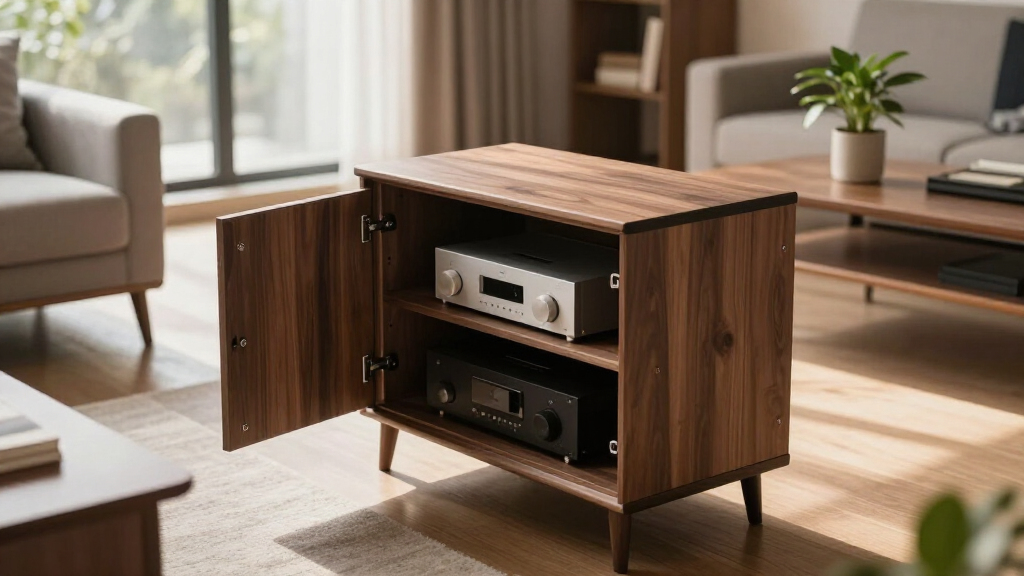
I rank the CHOEZON Media Cabinet first because it offers the best mixture of furniture styling and equipment-friendly design. Its ventilated mesh door hides some visual clutter without sealing warm electronics behind a solid panel. Two adjustable shelves give a buyer more freedom to accommodate a receiver, streamer, game console, or compact amplifier than a fixed-spacing cabinet would. An open back also creates a direct path for cables and rising heat.
Compared with the 7-tier rack, this cabinet holds fewer individual components, but it is less visually imposing and better suited to a multipurpose living room. The onboard outlet reduces the distance between equipment plugs and the power source, while cable management helps keep signal and power leads from spilling around the sides. Four casters make rear-panel access easier than it is with the heavier walnut 4-tier stand. The tradeoff is that wheels introduce movement, so a buyer pursuing a fixed audio installation may prefer the supplied EVA-pad arrangement.
This is also the only selection here with a soft-close mesh door, giving it a clear advantage in homes where exposed buttons and cables would be distracting. It cannot match the black 4-tier stand’s stated 352-pound total capacity, and engineered wood is less confidence-inspiring for very heavy separates than steel-supported open racks. Assembly calls for patience because door alignment, shelf placement, and caster installation all affect daily usability. Even so, its balanced feature set makes it the easiest recommendation for a conventional home system.
Pros:- Mesh door balances component concealment with airflow.
- Two adjustable shelves accommodate equipment of different heights.
- Built-in power outlet and cable management simplify wiring.
- Smooth casters make rear-panel access and room cleaning easier.
Cons:- Assembly requires careful door, shelf, and caster alignment.
- Engineered-wood construction may not suit extremely heavy components.
- Casters are less stable than a fully stationary rack unless the fixed-pad setup is used.
Best for: Living-room listeners who want ventilated equipment storage with a door, integrated power access, and easy rear-cable access.
Not ideal for: Owners of numerous full-size separates or exceptionally heavy amplifiers that demand a clearly stated high load rating.
- Primary material:Engineered wood
- Finish:Walnut-colored veneer
- Door:Ventilated mesh with soft-close hinges
- Shelf count:Two adjustable shelves
- Rear design:Open back
- Mobility:Four smooth casters
- Stationary setup:EVA pads included
- Power and wiring:Built-in outlet and cable management
Our verdict“The CHOEZON is my best overall choice for buyers who value a tidy, furniture-like cabinet without giving up ventilation or wiring convenience.”
7-Tier Heavy Duty Audio Component Rack, 140cm Tall
The defining advantage of this 7-tier audio component rack is separation. Seven levels let a buyer give an amplifier, receiver, disc player, streamer, console, and other devices their own platforms instead of stacking equipment. The shelf spacing adjusts in 10 cm increments, which makes the rack more adaptable than either four-tier model when components vary widely in height.
I rank it behind the CHOEZON because its capacity comes with a larger visual and physical commitment. At 140 cm tall, it behaves more like an equipment tower than a low media cabinet. That height saves floor area relative to spreading components across several pieces of furniture, but a fully loaded rack needs thoughtful placement on a level surface. The steel frame and high-density boards offer a sturdier foundation than lightweight decorative shelving, while braked wheels help during cable changes.
Against the black 4-tier stand, this model provides more organization but lacks the same clearly listed 352-pound total rating. Buyers with a few very heavy components may prefer that lower, load-focused stand; buyers with many moderate-size devices gain more from seven adjustable levels. Assembly is likely the longest in this group, and the casters may require protection or replacement on delicate floors. Its open access and vertical efficiency still make it the most capable option for an expanding system.
Pros:- Seven tiers separate a large collection of components.
- Shelf spacing adjusts in 10 cm increments.
- Steel frame and high-density boards support a serious equipment setup.
- Braked wheels aid cable access and controlled repositioning.
Cons:- Tall profile can dominate a small or understated room.
- Seven-tier assembly may be time-consuming.
- Casters may not suit every hard floor or thick carpet.
Best for: Enthusiasts who own many separate audio, video, or gaming components and want adjustable vertical storage.
Not ideal for: Minimal systems, rooms with low visual sightlines, or buyers who want a closed furniture-style cabinet.
- Frame material:Steel
- Shelf material:High-density wood boards
- Dimensions:50 × 40 × 140 cm
- Approximate imperial size:19.7 × 15.7 × 55 inches
- Number of tiers:Seven
- Shelf adjustment:10 cm or 4-inch increments
- Mobility:Universal wheels with brakes
- Available colors:Black, brown, and wood color
Our verdict“I recommend this 7-tier rack when component count matters more than concealment, compact height, or a furniture-like appearance.”
Heavy Duty 4-Tier AV Media Stand, 352 lb Load Capacity, Black
I place the Heavy Duty 4-Tier AV Media Stand third, but it is my first choice for systems built around weighty amplifiers or receivers. Its headline advantage is a 352-pound stated load capacity, a clearer total figure than the 7-tier rack provides. The combination of high-density MDF and metal spreads that capacity across four open shelves while allowing heat to escape from every side.
Its lower 33.4-inch height may feel more grounded than the tall 7-tier model, and four levels are enough for many amplifier, source, and turntable combinations. Compared with the CHOEZON, however, it offers no door or integrated outlet. Cables and component fronts stay visible, which favors a dedicated listening room or studio over a living room where visual calm matters. The listed cable-management provisions help, but they cannot hide an entire wiring bundle as effectively as enclosed furniture.
Vibration isolation gives this rack another reason to choose it over a generic shelving unit, especially when a turntable shares the setup. I would still avoid promising an audible improvement without knowing the room, floor, and equipment involved; the practical benefit is a more stable component platform. At 23.6 inches wide and 18.8 inches deep, it also occupies meaningful floor space. Buyers should measure both the room and component ventilation clearances. For a concentrated, heavy system, its capacity-first design outweighs those limitations.
Pros:- Stated 352-pound capacity suits demanding equipment collections.
- Open construction provides strong passive ventilation.
- Vibration-isolation features support sensitive components.
- Cable management keeps wiring closer to the frame.
Cons:- Its footprint may be too large for a tight listening area.
- Open shelves leave equipment and wiring visible.
- Assembly takes more effort than using a prebuilt cabinet.
Best for: Buyers with heavy amplifiers, receivers, or turntables who want a low, open, load-rated equipment rack.
Not ideal for: Small rooms, child-accessible systems, or living areas where components and cables need to be concealed.
- Total load capacity:352 pounds
- Number of shelves:Four
- Shelf thickness:0.7 inches
- Dimensions:18.8 × 23.6 × 33.4 inches
- Item weight:11 pounds
- Materials:High-density MDF and metal
- Color:Black
- Mounting style:Floor mount
- Intended rooms:Living room, studio, or office
Our verdict“This black 4-tier stand is my capacity-focused choice for buyers who prioritize heavy-component support over concealment and mobility.”
4-Tier AV Media Stand with Shock-Absorbing Foot Pegs, Walnut
The walnut 4-tier AV stand takes the premium-material role through its 304 stainless-steel structure and high-density MDF shelves. A listed maximum of 132 pounds per layer gives each platform ample headroom for many full-size audio components. Unlike the mobile CHOEZON and 7-tier rack, this model favors a planted, stationary installation with shock-absorbing foot pegs.
That fixed stance helps distinguish it from the other walnut option. The CHOEZON is easier to roll forward and better at hiding equipment, whereas this rack provides unrestricted side access and a more equipment-centered appearance. Open spacing also lets heat disperse without relying on a mesh opening. Buyers who frequently swap cables may value that access; households wanting a barrier between people and controls may not.
I rank it fourth because its strengths target a narrower buyer. It has fewer levels than the 7-tier model, lacks the black rack’s stated total-capacity figure, and may be difficult to move once loaded. The walnut finish is warmer than an all-black utility rack, yet the limited color selection may clash with some rooms. Vibration-resistant feet are useful for maintaining a steady platform, but placement on a solid, level floor still matters. This pick makes the most sense when premium frame materials and per-shelf strength matter more than mobility or concealment.
Pros:- 304 stainless-steel and high-density MDF construction feels purpose-built.
- Each layer is rated for as much as 132 pounds.
- Shock-absorbing feet help create a stable equipment platform.
- Open layout supports cooling and quick cable access.
Cons:- Heavy construction can make repositioning difficult.
- Only four levels are available for components.
- Limited finish choice reduces room-matching flexibility.
Best for: Buyers building a stationary four-component system who want stainless-steel support, walnut styling, and a high per-layer rating.
Not ideal for: Anyone who frequently moves the rack, needs more than four equipment levels, or wants a closed cabinet.
- Frame material:304 stainless steel
- Shelf material:High-density MDF
- Number of tiers:Four
- Maximum load per layer:132 pounds
- Finish:Walnut
- Design:Open, multi-layer rack
- Feet:Shock-absorbing foot pegs
Our verdict“I favor this walnut rack for a stationary premium setup where per-layer strength and open cooling outrank easy movement or hidden storage.”
How We Picked
I treated this as a comparison of purpose-built hi-fi storage, not a contest based on appearance alone. My ranking gives the greatest weight to load information, shelf flexibility, ventilation, cable access, vibration management, and the practical space required around each unit. I also examined whether wheels, brakes, doors, outlets, and adjustable shelves solve genuine setup problems or simply add complexity.
I placed the CHOEZON first for balance, since it answers the widest range of everyday needs without becoming a tall equipment tower. The 7-tier model ranks second because its vertical capacity is unmatched here, though it demands more assembly and careful stability planning. The black 4-tier stand earns third place through its stated 352-pound capacity and vibration-focused design. I rank the walnut stainless-steel model fourth: its per-layer rating and materials are compelling, but its heavy construction, fixed four-level format, and limited finish choice narrow its audience. My judgments rely on the listed product details, so I recommend checking current dimensions, shelf clearances, and seller load guidance before ordering.
| hi-fi storage cabinet | Finish | Mobility | Shelf material | Number of tiers |
|---|---|---|---|---|
| CHOEZON Media Cabinet with Cha | Walnut-colored veneer | Four smooth casters | — | — |
| 7-Tier Heavy Duty Audio Compon | — | Universal wheels with brakes | High-density wood boards | Seven |
| Heavy Duty 4-Tier AV Media Sta | — | — | — | — |
| 4-Tier AV Media Stand with Sho | Walnut | — | High-density MDF | Four |
Factors to Consider When Choosing Best Hi-fi Storage Cabinets
I would choose a hi-fi cabinet by matching its structure to the equipment, room, and wiring plan rather than buying the model with the most shelves. These are the differences that change how a rack works after the initial setup.Match the Load Rating to the Equipment
I start by adding the weight of every component and deciding how that load will be distributed. A large power amplifier can place more stress on one shelf than several lightweight source devices combined. The black 4-tier stand supplies a 352-pound total rating, while the walnut 4-tier rack lists 132 pounds per layer. Those figures answer different questions: one describes the whole unit, and the other helps with individual-shelf planning. I would leave reasonable capacity headroom and place the heaviest component low to reduce top-heaviness.
Choose Ventilation Before Appearance
Amplifiers and receivers can generate substantial heat, so I would never select storage solely because it matches a sideboard. The three open racks allow air movement on multiple sides, making them natural fits for hotter equipment. The CHOEZON uses a mesh front and open back, a useful compromise for buyers who dislike fully exposed gear. Shelf clearance still matters: open construction cannot help much if a component sits almost flush against the platform above it.
Decide Between Concealment and Access
A door creates a calmer living-room presentation and provides a modest barrier against casual contact. That advantage makes the CHOEZON the strongest shared-room choice. Open racks make input changes, cleaning, and cable swaps faster, which suits studios and systems that evolve often. I would also account for remote-control signals, front-panel visibility, and the need to reach power switches. The best layout is the one that supports normal use without repeatedly pulling components off their shelves.
Plan Shelf Count and Component Clearance
I would list every current component and reserve at least one position for likely additions. The 7-tier model offers the most expansion room, while both four-tier stands encourage a more focused system. Adjustable spacing is especially useful when a tall receiver sits alongside slim streamers or disc players. Exterior dimensions do not reveal usable shelf clearance, so I recommend comparing each component’s height, width, and depth with the seller’s current internal measurements before purchase.
Treat Wheels and Isolation as Different Tools
Casters help me reach rear connections and clean around a crowded setup, but they are not automatically the best base for every hi-fi system. The CHOEZON and 7-tier rack favor mobility and service access; the two fixed four-tier stands favor a more planted arrangement. Shock-absorbing or vibration-focused feet can reduce physical disturbance, especially around a turntable, but they cannot correct an unstable floor. I would pick wheels for frequent access and fixed feet for a system that will remain in one position.
Frequently Asked Questions
Is an open rack or enclosed cabinet better for hi-fi equipment?
I prefer an open rack for maximum passive cooling and frequent cable access, especially around powerful amplifiers. An enclosed cabinet is better when the system shares a living space and visual clutter needs to be reduced. The CHOEZON splits the difference with a mesh door and open back, but every buyer should still follow the equipment maker’s clearance guidance.
How many shelves does a hi-fi cabinet need?
I count each component, allow breathing room above heat-producing units, and reserve space for one likely addition. Four tiers suit many streamlined systems, while the 7-tier rack is better for broad collections containing several sources, gaming devices, or processors. Stacking components directly can block vents and make individual devices harder to service.
Should a turntable go on the same rack as an amplifier?
A turntable can share a rack when the structure is stable, the shelf fits it fully, and vibration is controlled. I would place it on the highest practical level for easier record handling and keep speakers off the same furniture. The two vibration-focused four-tier stands are better aligned with this task than a freely rolling rack, though floor movement and speaker placement also affect stability.
Are wheels useful on an audio cabinet?
Wheels are useful when I need regular access to rear connections or must move the cabinet for cleaning. Brakes or stationary pads matter because an equipment rack should not shift during normal operation. The CHOEZON offers the friendliest mobile setup for a modest living-room system, while the 7-tier rack’s greater height calls for extra care whenever it is moved.
What should I measure before buying a hi-fi rack?
I measure the room footprint, every component’s width, depth, and height, the space needed for connectors, and the clearance required above ventilation slots. I also check whether a turntable lid can open fully. A rack’s exterior size alone is not enough: usable shelf clearance and cable depth determine whether the system will fit without bent connectors or restricted airflow.
Conclusion
For most living-room systems, I would buy the CHOEZON Media Cabinet. It offers the strongest balance of concealment, cooling, adjustable storage, integrated power, and mobility. Buyers with many separate devices should choose the 7-tier rack for its vertical capacity and adjustable spacing.
For heavy amplifiers and receivers, my choice is the black 4-tier stand because its 352-pound total rating makes the ranking logic clear. I would reserve the walnut stainless-steel rack for buyers who want a stationary premium frame, high per-layer capacity, and open access. The final choice comes down to whether the room benefits most from a tidy cabinet, a tall component tower, a load-focused stand, or a heavier premium rack.