
The best woodworking hand tools match the work you plan to do rather than filling a bench with rarely used gear. My best overall pick is the RUITOOL Japanese Hand Saw because its dual-edge SK5 blade handles both faster ripping and cleaner crosscuts, giving it the widest practical range here. The HURRICANE 4 Piece Wood Chisel Set offers the strongest value for basic joinery, while the SakerNeo Deluxe Wood Carving Kit is the better specialist choice for whittling and detailed carving. Buyers must weigh versatility against specialization, along with blade maintenance, storage, control, and the difference between core tools and supporting accessories. Continue reading for the full breakdown of which option fits each type of woodworking.
Complete the kit

Key Takeaways
- The RUITOOL Japanese Hand Saw ranks first because its 14/17 TPI double edge covers more cutting jobs than either the Frocopo saw or the simpler 6-inch Japanese pull saw.
- The HURRICANE chisel set offers the best value for general bench work, although buyers should budget time for sharpening rather than expecting four blades to be ready for fine joinery immediately.
- The SakerNeo kit is the strongest specialist package: its 25-piece format and leather storage suit carving better than the HURRICANE chisels, but it contributes less to furniture-scale construction.
- The Jorgensen plane and compact saws solve narrower problems; the plane favors controlled surface refinement, the Frocopo favors small craft cuts, and the basic Japanese pull saw favors simplicity.
- The book and Nicpro pencil set are supporting purchases, not substitutes for cutting tools: one develops technique, while the other improves layout accuracy and deep-hole marking.
| Jorgensen No.101 Mini Wood Planer |  | Best Overall | Blade material: O1 tool steel | Body material: Ductile iron | Lever-cap material: Zinc alloy | VIEW LATEST PRICE | See Our Full Breakdown |
| Woodworking with Hand Tools: Tools, Techniques & Projects |  | Best Learning Guide | ASIN: 1631869396 | Product type: Instructional book | Primary subject: Woodworking with hand tools | VIEW LATEST PRICE | See Our Full Breakdown |
| SakerNeo Deluxe Wood Carving Kit |  | Best Carving Kit | Number of tools: 25 | Blade materials: Stainless steel and Mo.V alloy | Handle material: Walnut | VIEW LATEST PRICE | See Our Full Breakdown |
| Frocopo 6-Inch Double-Edge Hand Saw | 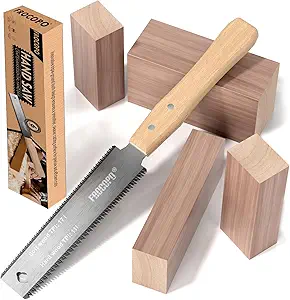 | Best Lightweight Saw | Blade length: 6 inches | Tooth patterns: 17/11 TPI | Blade material: SK5 steel | VIEW LATEST PRICE | See Our Full Breakdown |
| 6 Inch Japanese Pull Saw |  | Best for Precision Cuts | Blade material: SK5 high-carbon steel | Blade length: 6 inches | Hardwood tooth count: 17 TPI | VIEW LATEST PRICE | See Our Full Breakdown |
| HURRICANE 4 Piece Wood Chisel Set for Woodworking |  | Best Starter Chisel Set | Tool Count: 4 chisels | Blade Material: CR-V steel | Blade Treatment: Heat-treated | VIEW LATEST PRICE | See Our Full Breakdown |
| RUITOOL Japanese Hand Saw 6 Inch Double Edge Sided Pull Saw Ryoba |  | Best Precision Pull Saw | Blade Length: 6 inches | Blade Material: SK5 high-carbon steel | Cutting Edges: Double-sided | VIEW LATEST PRICE | See Our Full Breakdown |
| Nicpro Carpenter Pencil with Sharpener Mechanical Pencil Set |  | Best for Deep-Hole Marking | Number of Pencils: 2 | Number of Refills: 26 | Lead Thickness: 2.8 mm | VIEW LATEST PRICE | See Our Full Breakdown |
| woodworking hand tool | Blade material | Handle material |
|---|---|---|
| Jorgensen No.101 Mini Wood Pla | O1 tool steel | — |
| Woodworking with Hand Tools: T | — | — |
| SakerNeo Deluxe Wood Carving K | — | Walnut |
| Frocopo 6-Inch Double-Edge Han | SK5 steel | Wood |
| 6 Inch Japanese Pull Saw | SK5 high-carbon steel | Wood |
| HURRICANE 4 Piece Wood Chisel | CR-V steel | PVC |
| RUITOOL Japanese Hand Saw 6 In | SK5 high-carbon steel | Beechwood |
| Nicpro Carpenter Pencil with S | — | — |
More Details on Our Top Picks
Jorgensen No.101 Mini Wood Planer
I rank the Jorgensen No.101 Mini Wood Planer highest because it handles trimming, edge work, polishing, and surface cleanup with more range than the specialist tools here. Its O1 tool-steel blade should hold a useful edge, while the adjustable cutting depth lets buyers favor light finishing passes or more assertive stock removal. Compared with the SakerNeo Deluxe Wood Carving Kit, this plane is less suited to sculpted details but more practical for flattening and fitting everyday project parts. The ductile-iron body also offers greater rigidity than a lightweight saw, helping the blade produce a controlled shaving. That sturdy build adds weight for such a small tool, and the compact sole becomes inefficient on broad panels. I would also expect the blade to need careful setup and sharpening before precision work.
Pros:- O1 tool-steel blade supports clean, efficient material removal
- Adjustable cutting depth covers fine finishing and heavier trimming
- Rigid ductile-iron body helps maintain stable blade contact
- Compact size works well on edges and small components
Cons:- Short sole is poorly suited to flattening large or long surfaces
- Blade setup and sharpening demand care from new users
- Exposed sharp edge requires cautious handling and storage
Best for: Furniture makers and DIY woodworkers who need a compact plane for fitting joints, easing edges, and cleaning small surfaces
Not ideal for: Woodworkers flattening tabletops or long boards, since the short body offers limited reference length
- Blade material:O1 tool steel
- Body material:Ductile iron
- Lever-cap material:Zinc alloy
- Depth adjustment:Adjustable
- Included component:Blade
- Model number:70700
- UPC:044295707008
- Tool type:Block plane
Our verdict“I recommend this as the most versatile working tool in the group for buyers focused on fitting and finishing smaller wooden parts.”
Woodworking with Hand Tools: Tools, Techniques & Projects
Woodworking with Hand Tools earns a place here as the lineup’s instructional choice rather than another implement. I see the greatest value for readers who need to understand tool selection, technique, and project sequencing before buying individual gear. Compared with the Jorgensen No.101 Mini Wood Planer, the book cannot make a shaving or complete a repair, but its technique-led guidance can help a beginner use planes, saws, and other hand tools with better intent. The inclusion of projects gives the material a practical destination instead of leaving readers with disconnected explanations. Its weakness is equally clear: no physical tools or materials are included, and the supplied data offers no page count, edition details, or breakdown of the covered projects. Experienced craftspeople seeking specialized instruction may find its broad audience less useful than a focused reference.
Pros:- Connects hand-tool selection with techniques and project work
- Useful to beginners building a foundation before purchasing more tools
- Broad enough to support continued reference as skills develop
Cons:- Includes no physical tools or project materials
- Provided data gives no page count, edition, or project list
- Broad coverage may lack depth for advanced specialists
Best for: New and developing woodworkers who want structured hand-tool instruction paired with project ideas
Not ideal for: Experienced makers seeking a physical tool or an advanced reference devoted to one narrow technique
- ASIN:1631869396
- Product type:Instructional book
- Primary subject:Woodworking with hand tools
- Content coverage:Tools and techniques
- Project content:Woodworking project ideas
- Intended audience:Enthusiasts and professionals
Our verdict“I would choose this for learning how hand tools fit into a workflow, not as a substitute for the tools themselves.”
SakerNeo Deluxe Wood Carving Kit
I assign the SakerNeo Deluxe Wood Carving Kit the specialist carving slot because its 25-piece package covers far more of the carving workflow than any single tool in this group. Chisels, whittling and detail knives, a hammer, sharpening supplies, gloves, and a scriber support both shaping and upkeep. Compared with the Jorgensen No.101 Mini Wood Planer, it trades broad surface control for far greater detail capability, making it the better route for spoons, figures, and decorative cuts. The walnut handles and portable leather roll add comfort and organization, while included edge-care tools reduce the need for immediate accessory purchases. More pieces also mean more maintenance and a steeper learning curve. Some edges may need extra sharpening, and buyers wanting joinery chisels alone may prefer the simpler HURRICANE four-piece set.
Pros:- Twenty-five-piece selection supports shaping, detail work, and edge maintenance
- Leather roll keeps numerous sharp tools organized for storage or travel
- Safety gloves and ergonomic walnut handles support controlled carving
- Multiple blade styles suit spoons, figures, and decorative projects
Cons:- Some tools may require sharpening before fine carving
- Large assortment creates more maintenance and choice complexity for beginners
- Restricted to users aged 18 or older
Best for: Adult hobbyists starting spoon carving, whittling, or detailed decorative work who want tools, safety gear, and sharpening supplies together
Not ideal for: Joinery-focused woodworkers who need a small set of bench chisels rather than numerous carving knives and accessories
- Number of tools:25
- Blade materials:Stainless steel and Mo.V alloy
- Handle material:Walnut
- Cutting tools:Chisels, whittling knives, and detail knives
- Edge-care supplies:Sharpening stone, polishing paste, and leather strop
- Storage:Double-layer leather roll with handles and shoulder strap
- Age restriction:18+
Our verdict“I recommend this to adult carvers who want a broad starter workshop in one portable roll and accept the added sharpening workload.”
Frocopo 6-Inch Double-Edge Hand Saw
The Frocopo 6-Inch Hand Saw stands out when portability and low hand fatigue matter more than cutting capacity. At 2.82 ounces, it is easy to carry for craft work, quick trimming, or occasional garden cuts. Its double-edged SK5 blade combines 17 and 11 TPI tooth patterns, giving buyers a finer edge for controlled cuts and a coarser edge for faster removal. Compared with the Jorgensen No.101 Mini Wood Planer, it separates stock rather than refining a surface; compared with the 6 Inch Japanese Pull Saw, it has similar stated blade fundamentals but adds a listed lifetime warranty. That warranty helps distinguish two otherwise close options. A six-inch blade will be slow or restrictive on thick stock, however, and the plain wooden handle lacks a stated non-slip treatment, making it a weaker choice in damp working conditions.
Pros:- Very low 2.82-ounce weight reduces fatigue during light cutting
- Coarse and fine tooth edges support different cut speeds and finishes
- SK5 steel blade balances flexibility with wear resistance
- Lifetime warranty adds purchase protection
Cons:- Six-inch blade is inefficient on thick or wide stock
- Wooden handle has no stated non-slip surface for wet conditions
- Light construction is less suited to forceful jobsite cutting
Best for: Mobile DIY users and craft woodworkers who need an ultralight saw for small stock, flush trimming, and short controlled cuts
Not ideal for: Builders cutting thick beams or wide boards, since the six-inch blade limits reach and cutting capacity
- Blade length:6 inches
- Tooth patterns:17/11 TPI
- Blade material:SK5 steel
- Handle material:Wood
- Dimensions:12.2 x 1.8 x 0.62 inches
- Weight:2.82 ounces
- Blade configuration:Double-edged
- Warranty:Lifetime
Our verdict“I favor this saw for buyers who value low weight and warranty coverage over the capacity needed for heavy woodworking.”
6 Inch Japanese Pull Saw
I place the 6 Inch Japanese Pull Saw in the precision role because its pull-cut action and dual tooth counts are aimed at controlled trimming rather than heavy stock removal. The 17 TPI edge for hardwood favors a smoother cut, while the 11 TPI edge moves through softer wood more quickly. That makes one compact blade useful for both rip and crosscut work around small boxes, joints, and craft pieces. The Frocopo 6-Inch Hand Saw shares SK5 steel, the same blade length, and similar tooth choices, but Frocopo supplies clearer weight, dimension, and warranty information. This model’s case rests more heavily on its stated wear-resistant pull-saw design. I would skip it for large boards, and buyers should expect careful blade handling because thin, sharp pull-saw teeth can be damaged by twisting. No accessories or storage protection are listed.
Pros:- Pull-cut action supports controlled cuts with relatively low effort
- Seventeen-TPI edge is suited to smoother hardwood cuts
- Eleven-TPI edge provides faster cutting in softer stock
- Double-edged format handles both rip and crosscut tasks
Cons:- Six-inch blade restricts work to smaller components
- Thin blade and sharp teeth can be damaged by twisting or rough handling
- No sheath, accessories, weight, or warranty details are listed
Best for: Box makers, model builders, and joinery beginners seeking smooth rip and crosscuts in small hardwood or softwood components
Not ideal for: Jobsite users cutting large structural lumber or buyers who require documented warranty and storage accessories
- Blade material:SK5 high-carbon steel
- Blade length:6 inches
- Hardwood tooth count:17 TPI
- Softwood tooth count:11 TPI
- Handle material:Wood
- Blade type:Double-edged pull saw
Our verdict“I would pick this for precise small-scale joinery when cut quality matters more than blade capacity or documented extras.”
HURRICANE 4 Piece Wood Chisel Set for Woodworking
I rank the HURRICANE 4 Piece Wood Chisel Set as the starter choice because its four widths cover common jobs such as cleaning joints, trimming edges, and removing moderate amounts of waste. The heat-treated CR-V steel blades offer more joinery utility than the specialized knives in the SakerNeo Deluxe Wood Carving Kit, while the 25-degree beveled edges can reach corners that the Jorgensen No.101 Mini Wood Planer cannot. PVC handles and safety caps make the set approachable for a first workshop. I would not choose it for advanced cabinetmaking, though: the range stops at one inch, some cuts need a mallet, and no lifetime warranty is listed. This is a practical basic set, but buyers seeking carving variety or premium long-term support should move elsewhere.
Pros:- Four useful widths cover common beginner joinery and cleanup tasks
- Heat-treated CR-V steel blades provide durable cutting edges
- Beveled 25-degree edges improve access around joints and corners
- PVC handles and safety caps support comfortable handling and safer storage
Cons:- Four straight chisels offer less project variety than a dedicated carving kit
- Some cuts require a separate mallet
- No lifetime warranty is specified
Best for: New DIY woodworkers who need four common chisel widths for basic joinery, edge cleanup, and occasional laminated-wood projects
Not ideal for: Advanced furniture makers who need wider blades, specialty profiles, or documented lifetime warranty coverage
- Tool Count:4 chisels
- Blade Material:CR-V steel
- Blade Treatment:Heat-treated
- Blade Profile:Beveled edges
- Bevel Angle:25 degrees
- Handle Material:PVC
- Chisel Sizes:1/4, 1/2, 3/4, and 1 inch
- Storage Protection:Safety caps
Our verdict“I recommend this set to beginners who want useful chisel coverage without paying for specialist carving tools.”
RUITOOL Japanese Hand Saw 6 Inch Double Edge Sided Pull Saw Ryoba
The RUITOOL Japanese Pull Saw earns my precision-saw role through a flexible SK5 blade with separate 14- and 17-TPI edges, letting one compact tool handle rip and cross cuts. Compared with the Frocopo 6-Inch Hand Saw, RUITOOL publishes a HRC60–63 hardness rating, giving buyers a clearer picture of blade construction. Its 0.11-kilogram weight and beechwood handle suit controlled cuts in small stock, where a full-size Western saw would feel cumbersome. The tradeoff is capacity: a six-inch blade is slower and less stable on broad boards or heavy construction cuts. Those exposed teeth also demand careful storage and handling. I place it above less-documented compact saws for detail work, but behind larger saws whenever reach and rapid material removal matter more than finesse.
Pros:- Double-edged blade supports both rip and cross cuts
- SK5 high-carbon steel combines flexibility with HRC60–63 hardness
- Compact, lightweight format supports controlled detail work
- Beechwood handle provides a traditional, secure gripping surface
Cons:- Six-inch blade is inefficient on wide boards and large workpieces
- Flexible blade can punish poor pull-saw technique
- Sharp exposed teeth require careful handling and storage
Best for: Joinery hobbyists, model makers, and small-project woodworkers who need controlled rip and cross cuts in compact stock
Not ideal for: Furniture builders or site carpenters cutting broad boards and thick framing, because the six-inch blade limits reach and cutting speed
- Blade Length:6 inches
- Blade Material:SK5 high-carbon steel
- Cutting Edges:Double-sided
- Teeth per Inch:14/17 TPI
- Blade Hardness:HRC60–63
- Handle Material:Beechwood
- Dimensions:12.2 x 1.77 x 0.59 inches
- Weight:0.11 kilograms
Our verdict“I recommend this Ryoba-style saw for small-scale joinery where cut control matters more than reach or heavy cutting speed.”
Nicpro Carpenter Pencil with Sharpener Mechanical Pencil Set
I give the Nicpro Carpenter Pencil Set a specialized place in this roundup because accurate layout comes before sawing, chiseling, or planing. Its elongated deep-hole tip can mark through hardware openings and narrow recesses that a conventional carpenter pencil cannot easily reach. Compared with the HURRICANE chisel set, this is not a cutting-tool purchase; it complements that set by helping users place joints before removing wood. Two mechanical bodies, 26 refills, a sharpener, and a case make it better equipped for repeated workshop marking than a disposable pencil. Yet the 2.8 mm lead is less suited to hairline joinery marks, and black and red provide limited visibility choices on dark or finished stock. I rank it as a useful companion tool, not a substitute for a marking knife.
Pros:- Elongated tip reaches into holes and narrow recesses
- Twenty-six refills support extended workshop use
- Thick lead can mark wood, metal, and plastic
- Included sharpener and case keep the set organized
Cons:- 2.8 mm lead is too broad for the finest joinery layout
- Black and red leads offer limited contrast on some surfaces
- Only two pencil bodies may be restrictive for larger crews
Best for: Cabinet installers, carpenters, and DIY builders who regularly mark through screw holes, brackets, or other narrow recesses
Not ideal for: Fine-furniture makers who rely on hairline layout marks, because the 2.8 mm lead is broader than a marking-knife line
- Number of Pencils:2
- Number of Refills:26
- Lead Thickness:2.8 mm
- Lead Colors:Black and red
- Tip Design:Elongated deep-hole marker
- Included Sharpener:Yes
- Included Storage:Carrying case
Our verdict“I recommend this set for tradespeople who value hard-to-reach marking more than marking-knife-level line fineness.”

How We Picked
I ranked these products by how much useful woodworking capability each one adds, giving the most weight to cutting performance, control and usability, and range across common tasks. Blade or edge material, tooth configuration, adjustment, handle design, storage, and maintenance demands all affected placement. I also looked at whether a product solves a broad workshop need or a narrow specialty, since a versatile first purchase deserves a higher general ranking than an accessory with limited reach.
My ordering favors the RUITOOL saw’s dual-purpose design over the two less differentiated compact saws, while the HURRICANE set ranks highly for placing four useful chisel widths in one purchase. The SakerNeo kit earns a premium specialist role because it offers a more complete carving system, though its narrow focus keeps it below the leading general-purpose choices. I placed the Jorgensen plane in the middle because adjustable depth adds control but a mini plane cannot replace a full-size bench plane. The book and marking set rank as companions because they support skill and accuracy without shaping or cutting wood themselves.
| woodworking hand tool | Blade material | Handle material |
|---|---|---|
| Jorgensen No.101 Mini Wood Pla | O1 tool steel | — |
| Woodworking with Hand Tools: T | — | — |
| SakerNeo Deluxe Wood Carving K | — | Walnut |
| Frocopo 6-Inch Double-Edge Han | SK5 steel | Wood |
| 6 Inch Japanese Pull Saw | SK5 high-carbon steel | Wood |
| HURRICANE 4 Piece Wood Chisel | CR-V steel | PVC |
| RUITOOL Japanese Hand Saw 6 In | SK5 high-carbon steel | Beechwood |
| Nicpro Carpenter Pencil with S | — | — |
Factors to Consider When Choosing Woodworking Hand Tools
I would build a hand-tool kit around the work on the project list, not around the number of pieces in a package. A furniture maker, a whittler, and a model builder may all search for woodworking hand tools, yet they need very different cutting actions and levels of control. The best purchase balances task fit, maintenance demands, and room for later additions.
Start With the Cutting Action You Need
I separate woodworking jobs into sawing, paring, surfacing, carving, and marking before choosing a tool. A pull saw removes material along a line, while a chisel works inside joints and a plane refines a face or edge. Buying several saws does little for a project that needs mortises or flattened surfaces. For furniture repairs and basic joinery, a saw-and-chisel pairing usually creates more capability than a large single-purpose carving kit. Whittlers gain more from specialized carving profiles because controlled detail matters more than long, straight cuts. Matching the purchase to the actual cutting action prevents overlap without coverage.
Read Blade Geometry, Not Just Tool Size
Tooth count and edge shape change how a tool behaves more than a small difference in overall length. Coarser saw teeth remove wood quickly but leave a rougher surface, while finer teeth trade speed for control. A Japanese pull blade can be thinner because tension is created during the cut, which often produces a narrow kerf with less effort. Double-edge ryoba designs combine rip and crosscut patterns, but the exposed second edge calls for careful grip placement and storage. Chisels and plane irons need a bevel suited to the wood and the work, since edge geometry affects resistance and durability. I would favor usable blade design over a higher piece count or decorative extras.
Match Tool Scale to the Workpiece
A compact tool gives excellent control only when the stock and cutting distance are equally small. Six-inch saws fit dowels, trim, model work, and confined spaces, yet they become slow and tiring on wide boards. Mini block planes are handy for easing edges and correcting small high spots, but their short soles follow broad surface undulations instead of bridging them. Full-size work may call for longer saw plates, wider chisels, or heavier planes outside this roundup. I treat compact dimensions as a specialization, not an automatic advantage. Buyers working across project sizes should choose one broadly useful core tool before adding compact problem-solvers.
Plan for Sharpening and Blade Care
Most edge tools eventually depend on sharpening skill, even when the factory edge arrives serviceable. Chisels and plane irons can be renewed many times, making sharpening stones or plates part of their real ownership cost. Thin Japanese saw blades may be replaceable rather than practical to resharpen, so replacement availability matters more than a sharpening setup. Carving tools need frequent light honing because a dull edge asks for more force and reduces control around fingers. Dry storage, resin removal, and protection from loose contact preserve fine teeth and polished edges. I would compare maintenance cost over time, not only the purchase price.
Judge Kits by Useful Pieces and Storage
A large kit represents good value only when most pieces serve work the buyer actually plans to do. Repeated profiles, rarely used accessories, and weak storage can turn a high piece count into clutter. Smaller sets often make size selection easier and leave budget for sharpening gear or a complementary saw. A fitted roll or case protects edges and makes missing pieces visible, which matters more for carving tools than for a single bench saw. I compare cost per useful function rather than cost per item. Paying more makes sense when a package supplies coherent tool coverage, safe storage, and fewer immediate add-on purchases.
Frequently Asked Questions
Should I buy a saw, chisel set, or plane first?
I would start with the tool tied to the next project rather than follow a universal order. A saw is the broadest first choice for sizing stock and making basic joinery cuts, while chisels become more valuable when joints, recesses, or hardware fitting enter the plan. A plane should move ahead of both only when surface correction and edge refinement are the main jobs. For a new general workshop, a pull saw followed by chisels creates a practical sequence. The mini Jorgensen plane works better as a later addition than as the sole cutting tool.
Is the RUITOOL ryoba worth choosing over a basic 6-inch pull saw?
The RUITOOL makes more sense when one compact saw must handle both rip and crosscut work. Its two tooth patterns provide broader cutting coverage, while the basic 6-inch Japanese pull saw offers a simpler format for occasional straight cuts. A double-edge blade demands more care during handling because the unused edge remains exposed. Buyers who mainly make one type of small cut may prefer the simpler pull saw and avoid paying for unused versatility. For mixed joinery, the RUITOOL’s 14/17 TPI arrangement supports its higher placement.
Will a four-piece chisel set be ready for fine joinery out of the box?
I would not base a fine-joinery deadline on any budget chisel set arriving perfectly prepared. Factory edges can cut, but flattening the backs and honing the bevels usually improves accuracy and reduces the force needed. The HURRICANE set’s four sizes provide useful width coverage, yet sharpening supplies affect its true starting cost. Buyers unwilling to maintain edges may find replaceable-blade tools easier, though those tools cannot perform the same joint work. A modest honing setup turns serviceable chisels into more controlled tools and pays off across future purchases.
When does the SakerNeo carving kit make more sense than general woodworking tools?
The SakerNeo kit fits buyers who expect carving, whittling, relief details, or small sculptural work to dominate their projects. Its assortment offers more specialized cutting shapes than the HURRICANE chisels, and the leather storage keeps many small tools organized. It is a weaker first purchase for breaking down boards, cutting joinery, or flattening stock. A general furniture builder will gain more from a saw and bench chisels before buying carving profiles. The kit earns its premium role when detail work is the main activity, not an occasional experiment.
Are the woodworking book and Nicpro pencil set worth buying before another cutting tool?
They can be, but only when knowledge or layout accuracy is the current bottleneck. Woodworking with Hand Tools can help a beginner understand technique and project order, though it cannot replace practice with a saw or chisel. The Nicpro marking set is more useful for construction-style marks and deep holes than for knife-line joinery demanding very fine precision. Buyers who already own basic cutting tools may gain more from either companion than from a duplicate compact saw. Someone building a first kit should still direct most of the budget toward a core cutting tool.
Conclusion
For the widest mix of common cuts, I recommend the RUITOOL Japanese Hand Saw as the best overall pick; its dual tooth patterns separate it from the other compact saws. The HURRICANE 4 Piece Chisel Set is my best-value choice for buyers who want several useful joinery widths and accept the need for sharpening. Carvers should choose the SakerNeo Deluxe Kit as the best premium package, since its 25-piece assortment and storage serve detailed work better than general bench tools.
Beginners focused on technique can start with Woodworking with Hand Tools, but I would pair the book with an actual cutting tool rather than treat it as a workshop substitute. The Jorgensen mini plane fits buyers refining small edges, the Frocopo suits compact DIY craft cuts, and the simpler 6-inch Japanese pull saw fits those who do not need the RUITOOL’s dual-edge range. For layout and construction marking, the Nicpro pencil set is the specific-needs pick. The right choice comes down to whether the next project needs broad cutting ability, joint work, carving detail, surface refinement, or more accurate marks.