When choosing a wood lathe, matching the swing and bed length to your projects is essential. The swing determines the maximum diameter you can turn, while the bed length dictates how long your workpiece can be. If these dimensions don’t align with your ambitions, you might limit your creativity and potential projects. Investing in the right lathe now guarantees you won’t face constraints later on. Discovering the nuances of these specifications can greatly enhance your woodturning experience.
Key Takeaways
- The lathe swing determines the maximum diameter of workpieces, directly impacting the types of projects you can undertake.
- Bed length dictates the maximum length of the workpiece, essential for larger projects like table legs and furniture.
- Planning for future projects ensures you won’t be limited by your lathe’s specifications as your skills and ambitions grow.
- Proper lathe dimensions enhance creative flow, reducing frustration and allowing you to explore larger or more complex designs.
- Informed decisions on swing and bed length prevent future upgrades, saving time and resources for a more productive woodturning experience.
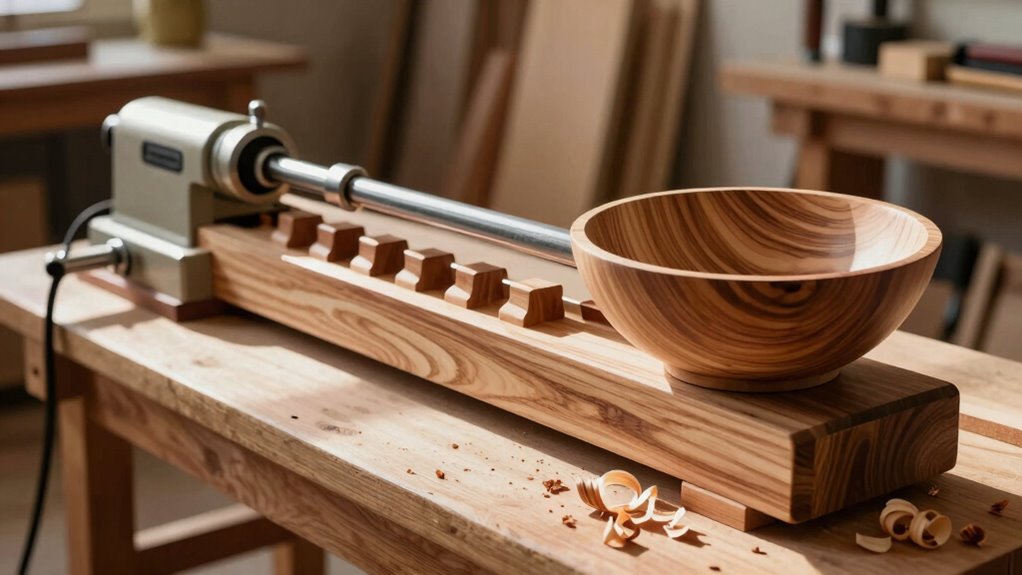
When you’re diving into the world of woodturning, understanding lathe swing and bed length is vital. These lathe dimensions play a critical role in determining what projects you can tackle. If the swing isn’t right, you might find yourself limited in the size of pieces you can create. Likewise, if the bed length doesn’t match your project needs, you could run into frustrating limitations that halt your creative flow.
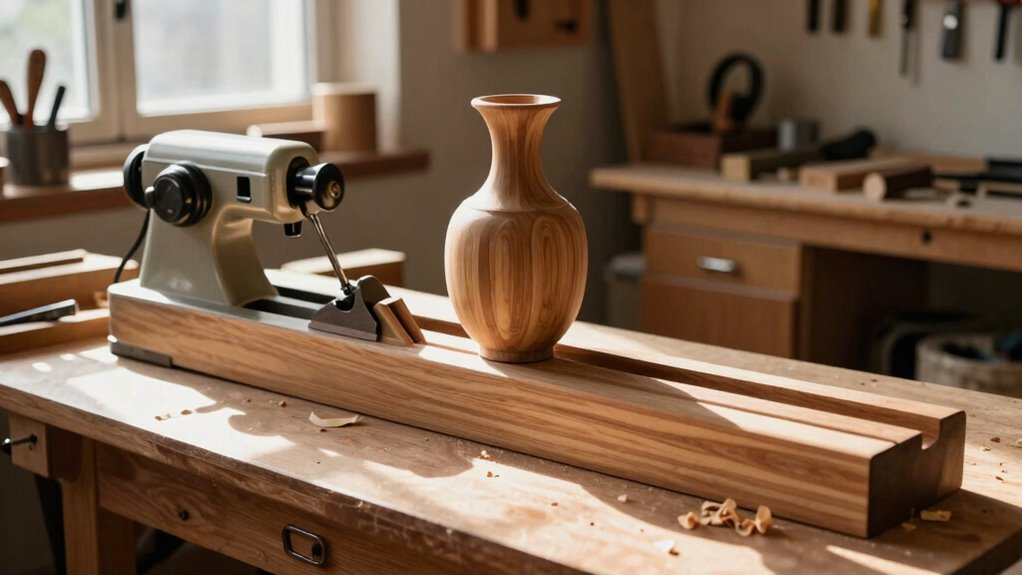
Lathe swing refers to the maximum diameter of the workpiece that can be turned over the bed of the lathe. For instance, if you’ve got a lathe with a swing of 12 inches, you can work on pieces that are up to 12 inches in diameter. It’s simple math, but it makes a huge difference in project compatibility. You wouldn’t want to invest time and materials into a project only to realize that your lathe can’t accommodate the size. So, before you choose a lathe, consider the types of projects you’re interested in. Are you looking to turn bowls, spindles, or larger furniture components? Understanding your goals will help guide you in selecting the right lathe dimensions.
Lathe swing defines the maximum workpiece diameter, crucial for ensuring your projects fit your lathe’s capabilities.
Bed length is equally important. It dictates how long a workpiece can be mounted and turned. If you’re planning to work on longer items, like table legs or large bowls, you’ll need a lathe with a sufficient bed length. A short bed might limit you to small projects, which can be frustrating if you dream of creating larger pieces. Think about the future; if your aspirations include bigger projects, investing in a lathe with an extended bed length can save you from needing an upgrade down the line. Additionally, considering the lathe’s dimensions can help ensure your equipment remains suitable as your skills and project scope grow.
In essence, the swing and bed length should align with your woodturning ambitions. If you’re starting with a specific project in mind, measure it out and verify your chosen lathe can handle it. Don’t just think about what you can do now—consider what you might want to create down the road. The right lathe dimensions will not only enhance your current projects but also open up new possibilities.
Ultimately, when you match lathe swing and bed length with your real projects, you empower yourself to explore your creativity without the constraints of inadequate equipment. So, take your time in choosing the perfect lathe, and you’ll enjoy every moment of your woodturning journey.
As an affiliate, we earn on qualifying purchases.
Frequently Asked Questions
What Types of Projects Require Different Lathe Swing Sizes?
Different project types require various lathe swing sizes. For small items like pens or small bowls, a lathe with a swing size of 12 inches or less works well. If you’re tackling larger pieces, like furniture legs or big bowls, you’ll need a swing size of 14 inches or more. Matching the swing size to your project types guarantees you can work efficiently and achieve the desired results without restrictions.
How Do I Determine My Ideal Lathe Bed Length?
To determine your ideal lathe bed length, consider your project requirements, think about the maximum length of pieces you’ll turn, and assess your workspace. If you plan to create longer items, opt for a longer bed length. If you’re focusing on smaller projects, a shorter bed will suffice. By aligning your lathe bed length with your project needs, you’ll enhance your turning experience and achieve better results.
Can I Modify My Lathe for Larger Projects?
Yes, you can modify your lathe for larger projects, but it comes with some project limitations. Consider making lathe modifications like extending the bed or increasing the swing. However, make certain that any changes maintain the lathe’s stability and safety. You’ll want to balance the benefits of larger capabilities against the potential for reduced precision or increased vibration. Always think through how these adjustments will impact your work before diving in.
What Materials Can I Use on a Wood Lathe?
Your wood lathe is a magic wand, transforming raw materials into art. You can use hardwoods like maple and oak, softwoods like pine, and even exotic woods for stunning results. Material compatibility plays an essential role in your turning techniques; some woods yield smoother finishes while others might splinter. Experimenting with different materials helps you discover unique textures and patterns, making each project a new adventure in creativity. Happy turning!
How Do I Maintain My Lathe for Optimal Performance?
To maintain your lathe for ideal performance, follow these lathe maintenance tips: regularly clean the bed and components to remove dust and debris, lubricate moving parts with appropriate oils, and check for any loose screws or parts. Keep the drive belt tensioned correctly and replace it if it shows signs of wear. Finally, periodically inspect the electrical components to guarantee everything’s functioning smoothly, preventing potential issues down the line.
Conclusion
Just as a bird needs both wings to soar, your wood lathe requires a perfect match of swing and bed length to truly take flight. When these components align, creativity flows effortlessly, allowing your visions to materialize into stunning projects. If they don’t, it’s like trying to fly with one wing—frustrating and limiting. Embrace the harmony of your lathe’s design, and watch as your craftsmanship reaches new heights, transforming mere wood into art with every turn.