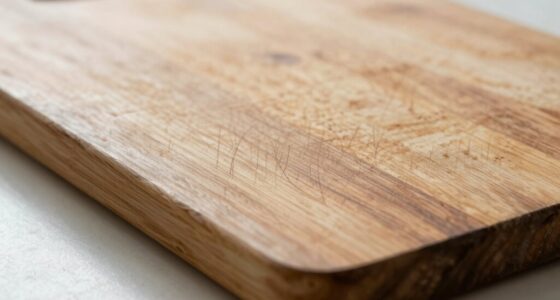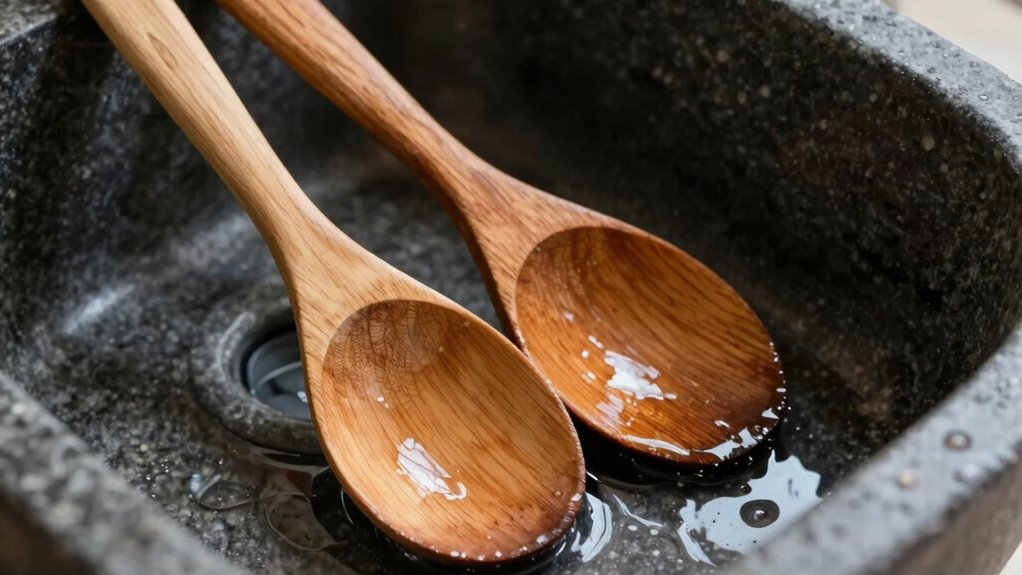

To clean your wood kitchen tools without drying them out, use warm water and a mild dish soap to gently wash away food particles and grease. Avoid soaking or air drying, which can cause swelling or splitting. Dry them immediately with a clean towel, and regularly apply a food-safe mineral oil to restore moisture and keep them looking their best. Continue exploring for more tips to keep your tools hygienic and in great shape.

Get business pricing on tools and workshop supplies
- Business-only prices and quantity discounts
- Tax-exempt purchasing
- Multiple users, one account, clear invoices
Key Takeaways
- Use warm water and mild dish soap, then rinse thoroughly without soaking the wood.
- Dry immediately with a clean towel to prevent moisture absorption and swelling.
- Apply food-safe mineral oil after cleaning to restore and maintain moisture.
- Avoid air drying; instead, wipe and store in a dry, well-ventilated area.
- Periodically sanitize with vinegar or lemon juice to keep the wood hygienic without stripping oils.
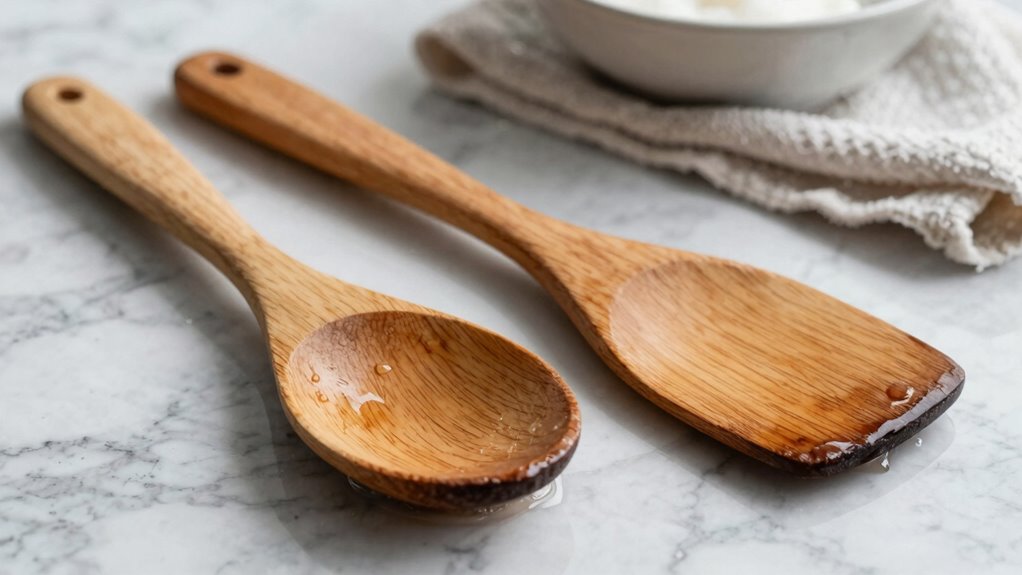
Wood kitchen tools add rustic charm and functionality to your cooking, but they require proper cleaning to stay in good condition. When it comes to cleaning, understanding the right approach to wood treatment is essential. Unlike plastic or metal utensils, wood absorbs moisture easily, which can lead to cracking or warping if not handled carefully. To keep your tools in top shape, you need to find a balance between cleanliness and preserving their natural oils.
Start by considering how often you should clean your wood utensils. Generally, cleaning frequency depends on usage. For everyday tools like spoons and spatulas used for cooking or stirring, a quick wash after each use is sufficient. For items used with raw ingredients or in high-moisture environments, more frequent cleaning helps prevent bacteria buildup. However, avoid over-washing, as excessive cleaning can strip away the wood’s natural oils, leading to dryness and potential cracking.
Clean your wood utensils after each use, but avoid over-washing to preserve their natural oils and prevent cracking.
When cleaning, opt for gentle methods that preserve the wood’s integrity. Warm water and a mild dish soap are usually enough to remove food particles and grease. Avoid soaking your wood tools for long periods, as this introduces excess moisture that can damage the wood. Instead, scrub them gently with a soft brush or sponge, paying attention to crevices where food may hide. After washing, rinse thoroughly to remove any soap residue, then dry immediately with a clean towel. Never leave your wood utensils to air dry on a rack, as standing water can seep into the wood and cause swelling or splitting. Using proper cleaning techniques not only extends the lifespan of your utensils but also helps maintain a hygienic environment for food preparation. Incorporating appropriate cleaning practices can further enhance the longevity and safety of your wooden tools. Additionally, to prevent mold and bacteria growth, it’s beneficial to sanitize your wooden utensils periodically with natural solutions like vinegar or lemon juice.
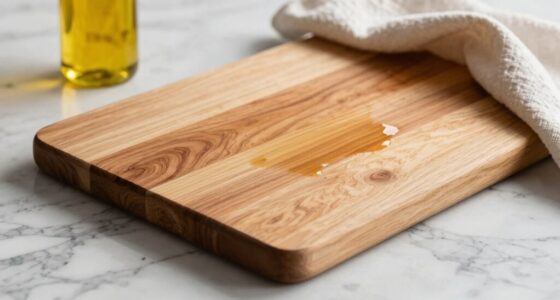
To prevent your wood tools from drying out, apply a food-safe wood treatment regularly. Mineral oil is a popular choice because it penetrates the wood, restoring moisture and creating a barrier against moisture loss. After cleaning and drying, rub a small amount of mineral oil into the surface using a clean cloth. Let it sit for a few hours or overnight, then wipe off any excess. This routine not only keeps the wood hydrated but also helps maintain its appearance and durability. Additionally, choosing appropriate maintenance practices helps extend the lifespan of your wooden utensils and protects the wood’s natural oils.
wood kitchen utensil cleaning brush
As an affiliate, we earn on qualifying purchases.
As an affiliate, we earn on qualifying purchases.
Frequently Asked Questions
Can I Put Wooden Tools in the Dishwasher?
You shouldn’t put wooden tools in the dishwasher because it’s not dishwasher-safe and can cause damage. The high heat and water pressure may cause the wood to crack or warp. Instead, clean them by hand regularly, ensuring proper cleaning frequency to prevent bacteria buildup. Use mild soap and warm water, then dry immediately to keep your wooden tools in good shape without risking damage from dishwasher safety concerns.
How Often Should I Oil My Wooden Kitchen Tools?
Oh, definitely, oil your wooden kitchen tools daily—because who doesn’t love endless maintenance? Honestly, for proper wood maintenance and tool preservation, oil them every few weeks or after washing. This keeps the wood from cracking, drying out, or becoming a culinary disaster. Regular oiling forms a protective barrier, ensuring your tools stay beautiful and functional. So, stay vigilant, and your wooden utensils will thank you with a long, happy life.
Are There Natural Stains or Odors on Wooden Tools?
Yes, natural stains or odors can develop on wooden tools over time. To tackle wood stain removal and odor elimination, try rubbing the tools with a mixture of baking soda and water or vinegar. Let them sit for a few minutes before rinsing. Regular cleaning and occasional oiling help prevent stains and odors, keeping your wooden tools fresh and in good condition without drying them out.
What Signs Indicate My Wooden Tools Need Replacing?
You’ll know your wooden tools need replacing when they show signs of splintering, cracking, or excessive wear, indicating compromised wooden durability. When they become difficult to clean, lose their smoothness, or develop persistent odors, it’s time to contemplate replacing them. These signs signal that your tools’ lifespan has been reached, and their structural integrity is no longer reliable. Prioritize safety and effectiveness by swapping out worn wooden tools promptly.
Can I Use Vinegar to Disinfect Wood Tools?
Yes, you can use vinegar to disinfect wood tools, but keep vinegar safety in mind. Vinegar is a natural disinfectant and an effective alternative to harsher chemicals. To use it, dilute white vinegar with water and wipe down your tools thoroughly. Let them air dry afterward. However, avoid soaking wood tools in vinegar for too long, as prolonged exposure can damage the wood. Disinfectant alternatives like diluted vinegar are gentle yet effective.
Conclusion
By gently tending to your wooden kitchen tools, you preserve their natural charm and longevity. With a delicate touch and thoughtful care, you make sure they remain a refined part of your culinary repertoire. Embrace these simple practices, and your tools will continue to serve you beautifully, echoing the timeless elegance of well-maintained craftsmanship. In nurturing them, you uphold a tradition of subtle sophistication that elevates every meal preparation.
Fall yard work Picks
leaf blowers
As an affiliate, we earn on qualifying purchases.