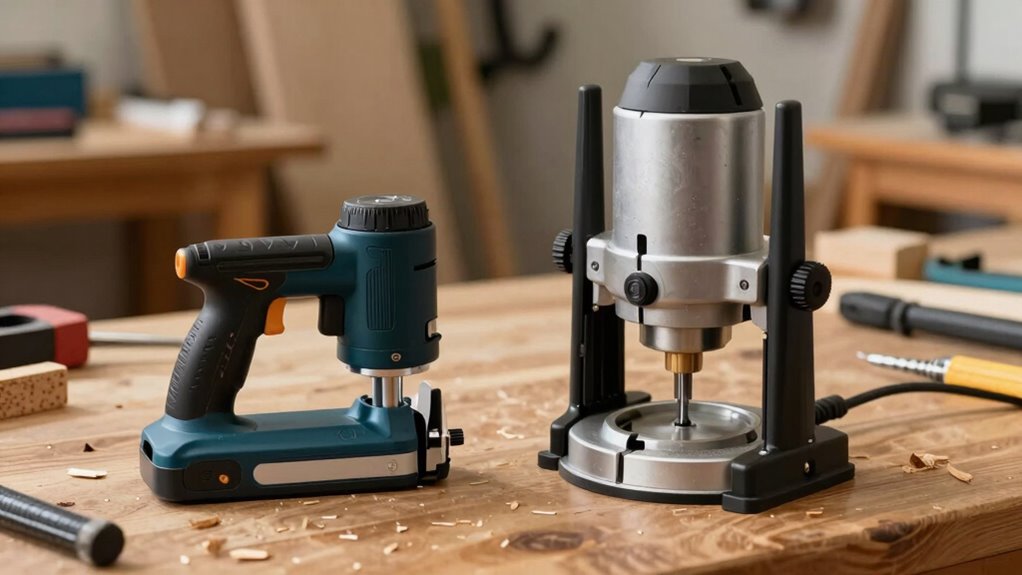

To choose a router for handheld work versus table use, consider the size and type of your projects. Handheld routers are lightweight and great for smaller tasks, while table routers offer stability for larger, precise jobs. Think about power needs—handhelds are usually less powerful, but table models excel for heavy-duty tasks. Don’t forget dust collection capabilities, as table routers keep your workspace cleaner. Explore these features further to find the best fit for your woodworking needs.
Key Takeaways
- Choose handheld routers for lightweight tasks and maneuverability in tight spaces, while table routers excel in stability for larger, precision projects.
- Consider power ratings: handheld routers suit lighter jobs, while table-mounted routers provide the power needed for heavy-duty tasks and hardwoods.
- Evaluate dust collection options; table routers connect to systems for cleaner workspaces, reducing harmful dust exposure compared to handheld models.
- Look for speed adjustments in routers; they enhance control and compatibility with various materials, making tasks easier and more efficient.
- Factor in cost: handheld routers are budget-friendly for casual users, while investing in high-quality table routers offers long-term performance benefits.

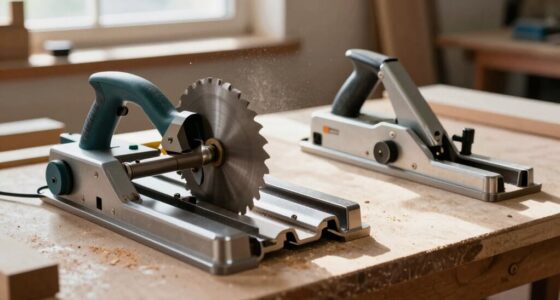
When you’re deciding between a router for handheld or table use, it’s essential to reflect on how you plan to tackle your projects. Each option has distinct advantages, so understanding your needs will help you make the right choice. If you often work on smaller, detailed tasks, a router with handheld features might suit you better. These routers are typically lightweight, easy to maneuver, and allow for greater flexibility in tight spots.
On the other hand, if you’re focused on larger projects that require precision, table settings can provide a more stable work environment. With a router mounted on a table, you can achieve consistent results, especially for repetitive tasks like edge shaping or dado cuts. Stability factors are critical here; a well-mounted router minimizes vibrations, which can lead to cleaner, more accurate cuts.
Power requirements also play a significant role in your decision. Handheld routers usually have lower power ratings, making them suitable for lighter tasks. However, if you’re tackling heavy-duty jobs, a more powerful router is necessary, especially when using larger bits or handling hardwoods. In a table setup, the router can draw more power without the risk of fatigue during extended use.
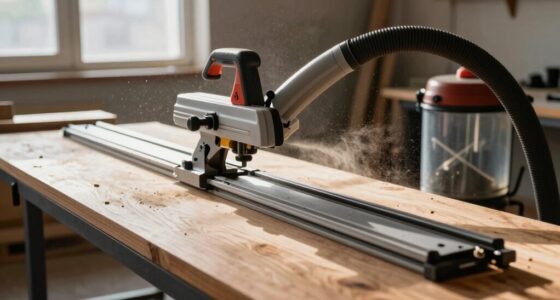
Dust collection is another factor to keep in mind. Handheld routers often have limited dust collection capabilities, which can lead to a messy workspace. Table routers, however, can be connected to a dust collection system, keeping your environment cleaner and reducing the risk of breathing in harmful dust particles. Additionally, dust management is crucial for maintaining a safe and efficient workspace.
Speed adjustments are important for both handheld and table routers. A router that allows you to easily change speeds will give you better control over your cuts, especially when working with different materials. It’s also worth checking bit compatibility; verify your router can accommodate a wide range of bits for maximum versatility.
Finally, price considerations can’t be overlooked. Handheld routers tend to be more affordable, making them accessible for hobbyists. In contrast, a high-quality table router may require a larger investment, but the enhanced performance and stability often justify the cost.
Ultimately, whether you choose a router for handheld work or table use, understanding your specific needs will help you make an informed decision that suits your woodworking projects.
handheld woodworking router
As an affiliate, we earn on qualifying purchases.
As an affiliate, we earn on qualifying purchases.
Frequently Asked Questions
What Is the Difference Between a Plunge Router and a Fixed-Base Router?
A plunge router lets you adjust the depth while cutting, making it great for creating grooves or intricate designs. Its advantages include versatility and the ability to start cuts in the middle of a workpiece. On the other hand, a fixed-base router offers precision for consistent depth settings, ideal for edge work and repeatable cuts. Choosing between them depends on whether you need flexibility or accuracy for your projects.
How Important Is the Router’s Weight for Handheld Use?
Imagine you’re a bird, soaring effortlessly through the sky. Just like that bird, your router’s weight matters for smooth, controlled movements. In handheld work, lighter routers enhance ergonomics, letting you glide through tasks without fatigue. Good weight distribution guarantees stability, keeping your cuts accurate and reducing strain on your arms. If you’re looking to fly through projects, consider a router that balances comfort and control, so you can craft with ease.
Can I Use a Table Router for Handheld Applications?
Yes, you can use a table router for handheld applications, but it’s not always ideal. While router versatility allows for different techniques, handheld work requires specific features like weight and grip for better control. If you’re experienced with handheld techniques, you can manage it, but be cautious. Make certain the router’s power and design suit your needs to guarantee safety and precision in your projects. Adjust your approach based on the task at hand.
What Safety Features Should I Look for in a Router?
When you’re picking a router, you might think safety features are just for the overly cautious—wrong! Look for models with dust collection to keep your workspace tidy and your lungs happy. Speed control is another must; you don’t want to turn your project into a chaotic wood-chipping session. Trust me, a little foresight saves you from turning your workshop into a scene from a horror movie. So gear up and stay safe!
How Can I Maintain My Router for Longevity?
To guarantee your router lasts, focus on regular router care. Start by cleaning it after each use; remove dust and debris from the motor and bits. Check and tighten all screws and connections to prevent any wobble. Lubricate moving parts as needed, and inspect the power cord for damage. Finally, store your router in a dry, cool place. These maintenance tips will keep your router in top shape for years to come.
table mounted router for woodworking
As an affiliate, we earn on qualifying purchases.
As an affiliate, we earn on qualifying purchases.
Conclusion
When you choose a router, whether for handheld work or table use, it’s essential to contemplate your specific needs. Coincidentally, the perfect router can make all the difference in your projects, enhancing precision and ease. You’ll find that a lightweight, compact model shines in handheld scenarios, while a more robust option excels on the table. So, take a moment to evaluate what you really need, and watch how the right choice transforms your woodworking experience!
dust collection system for routers
As an affiliate, we earn on qualifying purchases.
As an affiliate, we earn on qualifying purchases.
variable speed woodworking router
As an affiliate, we earn on qualifying purchases.
As an affiliate, we earn on qualifying purchases.