
When you’re choosing a bandsaw blade for resawing, material and design matter a lot. High-speed steel blades are durable, but carbide-tipped ones offer better longevity, especially with hardwoods. You’ll want blades with fewer teeth per inch for efficient chip removal. Proper blade tension keeps things straight and accurate, while the right width provides stability. Don’t forget about lubrication and maintenance to enhance performance. There’s more to discover about optimizing your resawing experience ahead.

Get business pricing on tools and workshop supplies
- Business-only prices and quantity discounts
- Tax-exempt purchasing
- Multiple users, one account, clear invoices
Key Takeaways
- Blade Material: Carbide-tipped blades outperform high-speed steel in durability and efficiency, especially when cutting hardwoods.
- Tooth Geometry: Fewer teeth per inch enhance chip removal and maintain cutting speed, crucial for resawing thicker stock.
- Blade Tension: Proper tension minimizes drift and ensures straight cuts, directly impacting the accuracy of resawed dimensions.
- Width Selection: Wider blades provide stability for thick materials but must balance kerf thickness with desired outcomes.
- Lubrication and Maintenance: Regular lubrication and upkeep reduce friction, prolong blade life, and ensure consistent performance during resawing.
When you need to make precise cuts in thick materials, choosing the right bandsaw blade for resawing can make all the difference. The blade materials you select play an essential role in the blade’s performance. High-speed steel (HSS) blades are great for their durability, while carbide-tipped blades excel in longevity and cutting efficiency, especially when dealing with hardwoods. You’ll want to take into account the type of material you’ll be cutting; this choice can dramatically affect the overall outcome.
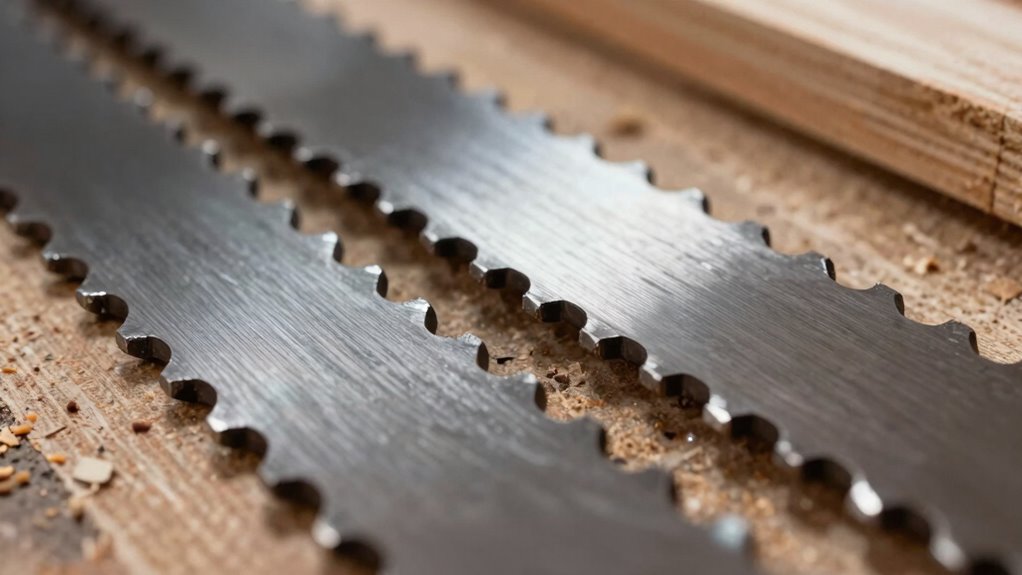
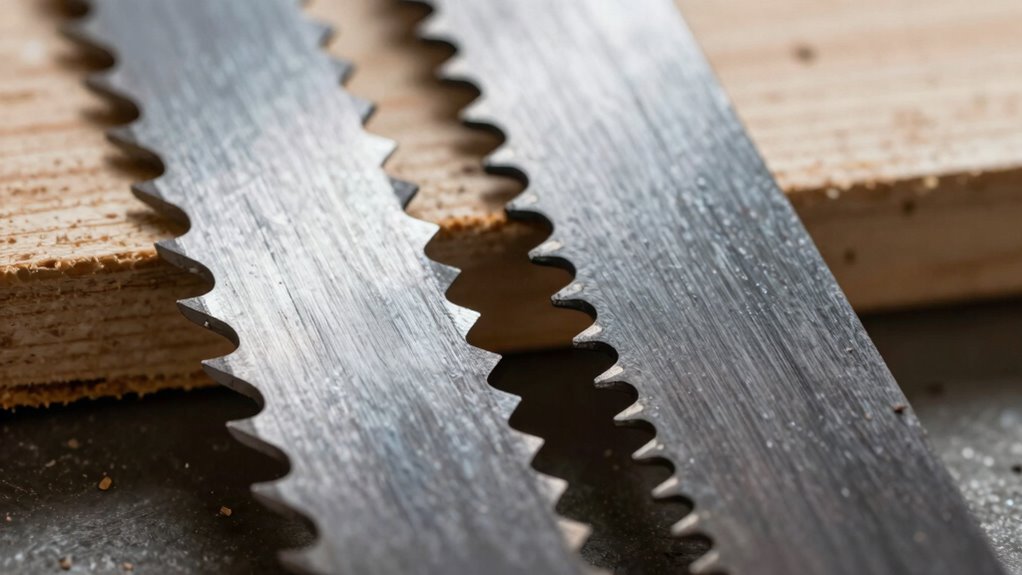
Tooth geometry is another important factor. For resawing, you generally want a blade with fewer teeth per inch (TPI) and a design that allows for efficient chip removal. This geometry helps maintain cutting speed, allowing you to slice through thick stock without bogging down. Pay attention to the angle of the teeth as well; a hook or positive rake can improve cutting efficiency, making your work smoother and more precise.
Blade tension is something you shouldn’t overlook. Proper tension keeps the blade straight during cuts, minimizing the risk of drift, which is essential for achieving accurate dimensions. If the blade isn’t tensioned correctly, you’ll find yourself battling against inaccuracies that can ruin your project. Adjusting blade tension is a simple but often overlooked step that can yield significant benefits.
Width selection is also important for resawing. A wider blade provides more stability, especially in thicker materials, while still allowing for precise control. However, you’ll need to balance width with kerf thickness, as a wider blade will generally create a thicker kerf. Take into account your material’s characteristics and the desired outcome when making this decision.
Incorporating lubrication techniques during your cuts can enhance performance and prolong blade life. A little bit of lubricant can help reduce friction and heat build-up, which are common culprits for premature wear. Proper blade maintenance is also crucial to keep your blades in top condition, ensuring consistent results and extending their lifespan. Don’t forget that regular blade maintenance is important, too. Clean your blade after use and check for any signs of wear or damage. A well-maintained blade not only performs better but also saves you time and money in the long run.
carbide-tipped bandsaw blades for resawing
As an affiliate, we earn on qualifying purchases.
As an affiliate, we earn on qualifying purchases.
Frequently Asked Questions
How Do I Maintain My Bandsaw Blade for Optimal Performance?
To maintain your bandsaw blade for peak performance, focus on regular blade cleaning and tension adjustment. Clean the blade after each use to remove sawdust and resin build-up, which can cause binding. Check the tension frequently; a properly tensioned blade enhances cutting accuracy and longevity. Keep the guide bearings adjusted to minimize friction. By following these steps, you’ll guarantee your bandsaw blade runs smoothly and lasts longer.
What Materials Can I Effectively Resaw With a Bandsaw Blade?
You can effectively resaw hardwoods like oak with a bandsaw blade. Imagine slicing through a thick oak log to create beautiful, thin veneer sheets. The wood type you choose matters; denser species require a thicker blade for stability and precision. A 3/4-inch blade works well for such tasks, allowing you to navigate the grain without splintering. With the right setup, you’ll be amazed at the quality of your resawn pieces!
Are There Specific Brands Known for High-Quality Resawing Blades?
Yes, several brands are known for high-quality resawing blades. Look for blade types like carbide-tipped or bi-metal, which offer durability. Popular brands include Timber Wolf and Olson, renowned for their cutting widths and tooth designs that enhance efficiency. You’ll also want to take into account blade materials; high-carbon steel is great for softer woods, while carbide is ideal for tougher materials. Choosing the right combination guarantees smoother cuts and better performance in resawing tasks.
How Often Should I Replace My Bandsaw Blade for Resawing?
Imagine your bandsaw slicing through wood like a hot knife through butter. You should replace your bandsaw blade for resawing every 3 to 6 months, depending on your cutting frequency and blade longevity. If you’re using it daily, you might want to check it more often. Dull blades can lead to poor cuts and damage your material, so keep an eye on performance to guarantee you’re always getting the best results.
Can I Use a Resawing Blade for General Cutting Tasks?
Yes, you can use a resawing blade for general cutting tasks, but it’s not always ideal. Resawing techniques focus on cutting thick wood, so the blade’s design may not perform well on smaller, intricate cuts. Blade compatibility matters here; a resawing blade can struggle with curves and tight turns. If you often switch between tasks, consider having a dedicated general-purpose blade for better results and efficiency.
Conclusion
When it comes to resawing, choosing the right bandsaw blade can make all the difference between a smooth glide and a bumpy ride. Think of it as picking the perfect dance partner; the right blade will lead you to effortless cuts and beautiful results. So, don’t settle for just any blade – invest in one that’s designed for resawing, and watch your woodworking projects flourish like never before. After all, your creations deserve the best!
Fall yard work Picks
leaf blowers
As an affiliate, we earn on qualifying purchases.