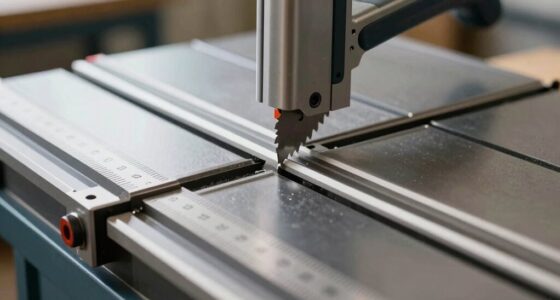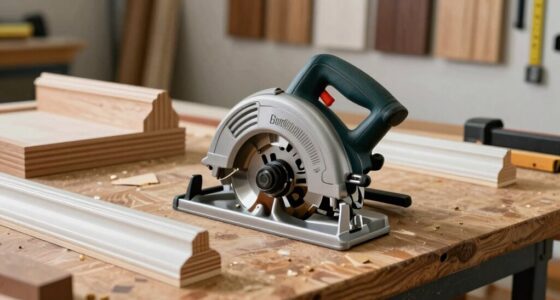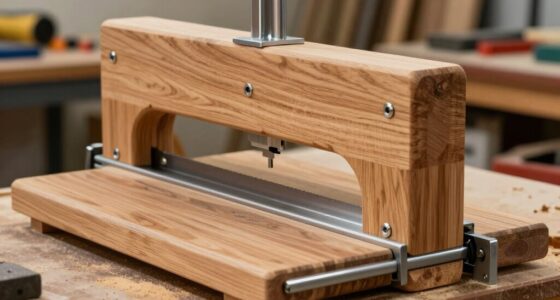
Track saws feel different from table saws in real workflows mainly due to portability and cutting accuracy. You can easily transport a track saw to tight spaces without much setup, making it perfect for on-the-go projects. The guided system guarantees precise cuts, minimizing waste. In contrast, table saws excel in batch processing and offer quicker setups but are confined to one workspace. If you explore further, you’ll discover more about how each tool enhances specific tasks.

Get business pricing on tools and workshop supplies
- Business-only prices and quantity discounts
- Tax-exempt purchasing
- Multiple users, one account, clear invoices
Key Takeaways
- Track saws prioritize portability, making them ideal for various job sites and tight spaces, unlike stationary table saws.
- The guided system of track saws enhances cutting accuracy, resulting in cleaner cuts and reduced material waste compared to table saws.
- Track saws often require more setup time, while table saws facilitate quicker setups for batch processing in a workshop.
- Safety features in track saws, like reduced kickback risk, make them more beginner-friendly compared to table saws, which demand more user vigilance.
- Track saws typically offer better dust collection, keeping workspaces cleaner and minimizing post-project cleanup compared to the mess generated by table saws.
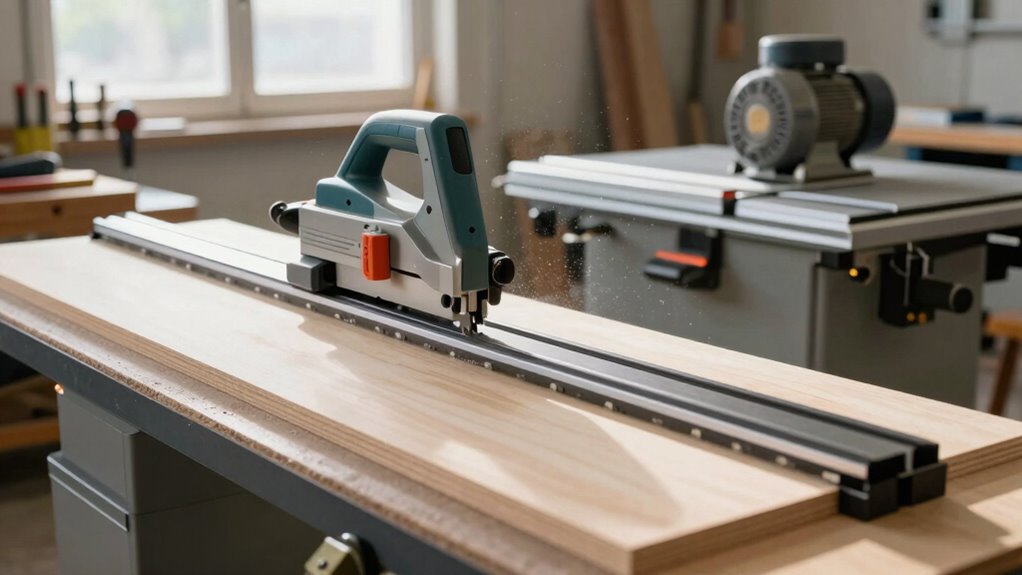
When it comes to choosing between track saws and table saws, how do you know which one’s right for your projects? Each tool has its own unique feel and workflow that can profoundly influence your cutting experience. Track saws excel in portability advantages, allowing you to tackle projects in various locations without the need for a dedicated workspace. If you’re often on the go or working in tight spaces, you’ll appreciate how easily you can transport a track saw. Just grab your saw, some tracks, and you’re ready to cut wherever you need.
In terms of cutting accuracy, track saws shine with their guided system. The track keeps the saw aligned, letting you make precise cuts, even on large sheets of plywood. This level of accuracy is hard to match with a table saw, where you often have to measure and align multiple components. Plus, depending on the blade types you use, you can tackle a wide range of materials with a track saw—be it laminate, hardwood, or even softer materials. The guided system also helps reduce material waste by ensuring cleaner, more consistent cuts. Additionally, the cutting precision offered by guided systems can significantly improve the quality of your finished work. A workspace setup also plays a crucial role in maximizing the effectiveness of each saw type. Proper setup and organization can further enhance safety and efficiency during cutting tasks.
Table saws, on the other hand, offer their own benefits. They tend to have a faster setup time, especially for repeated cuts. If you’re in a workshop setting where you can leave your equipment set up, a table saw can be more efficient for batch processing. However, you’ll sacrifice some portability. Once it’s set up, you’re generally working in one place, which can be limiting if you need to move around frequently.
Safety features also differ remarkably between these two saws. Track saws tend to have built-in safety mechanisms, like riving knives and blade guards, which can help prevent kickback and other accidents. This makes them a great choice for those who are new to woodworking or prefer an added layer of safety. With table saws, while they also have safety features, the risk of kickback can be higher if you’re not vigilant.
Dust collection is another area where track saws often outperform table saws. Many models come with effective dust collection systems that help keep your workspace clean, which is a major plus. In contrast, table saws can create a considerable mess, requiring more cleanup time afterward. Additionally, the versatility of a track saw allows you to handle different types of cuts more easily than a fixed table saw. Overall, the choice depends on your workspace, project scope, and safety preferences, but understanding these differences will help you make an informed decision that enhances your workflow.
portable track saw for woodworking
As an affiliate, we earn on qualifying purchases.
As an affiliate, we earn on qualifying purchases.
Frequently Asked Questions
Can Track Saws Cut Thicker Materials Than Table Saws?
Track saws typically can’t cut thicker materials than table saws. While they offer a cutting depth that’s great for sheet goods, table saws excel in handling thicker stock due to their robust design and powerful motors. If you’re working with materials beyond the standard thickness, a table saw will give you more versatility. So, when considering your projects, keep in mind the material thickness and the specific capabilities of each tool.
Are Track Saws Portable for On-Site Work?
Yes, track saws are incredibly portable for on-site work. Their lightweight design and compact nature allow you to easily transport them to different job sites. You’ll find that this portability boosts your job site efficiency, letting you make precise cuts without needing a large setup. Plus, with the right track, you can achieve straight, clean cuts anywhere, making track saws a great choice for contractors and DIY enthusiasts alike.
How Do I Maintain My Track Saw?
To maintain your track saw, focus on blade maintenance and dust collection. Regularly clean the blade to remove pitch and resin, ensuring smooth cuts. Check the blade tension and replace it when dull for peak performance. Keep the track free of debris to enhance accuracy and prevent damage. Also, empty the dust collection bag frequently to maintain suction power. By following these steps, you’ll extend your saw’s lifespan and improve your workflow.
What Safety Features Do Track Saws Offer?
Track saws come equipped with several safety features to keep you protected. The blade guard automatically covers the blade when not in use, reducing the risk of accidental contact. Additionally, the plunge mechanism allows you to start cutting without exposing the blade until you’re ready, which minimizes hazards. Always verify these features are functioning properly before use to maintain a safe working environment while enjoying the precision a track saw offers.
Can I Use a Track Saw for Bevel Cuts?
“Measure twice, cut once” applies here! You can definitely use a track saw for bevel cuts. Most track saws come with a bevel cutting feature that allows you to adjust the angle easily. Just set your desired angle using the track adjustment, and you’re good to go. This versatility makes track saws perfect for angled cuts, giving you smooth, precise results without the hassle of traditional saws. Enjoy your project!
Conclusion
To sum up, while both track saws and table saws have their strengths, the real difference in your workflow often comes down to mobility and precision. Track saws allow you to break down materials right where they lie, minimizing setup time and mess. This flexibility might lead you to wonder if the convenience outweighs the traditional power of a table saw. Ultimately, it’s about your style and the projects you tackle—experiment to see what truly fits your needs!
Fall yard work Picks
leaf blowers
As an affiliate, we earn on qualifying purchases.