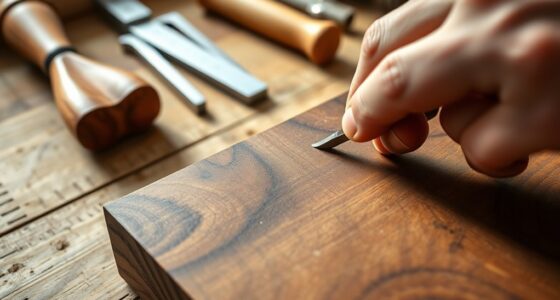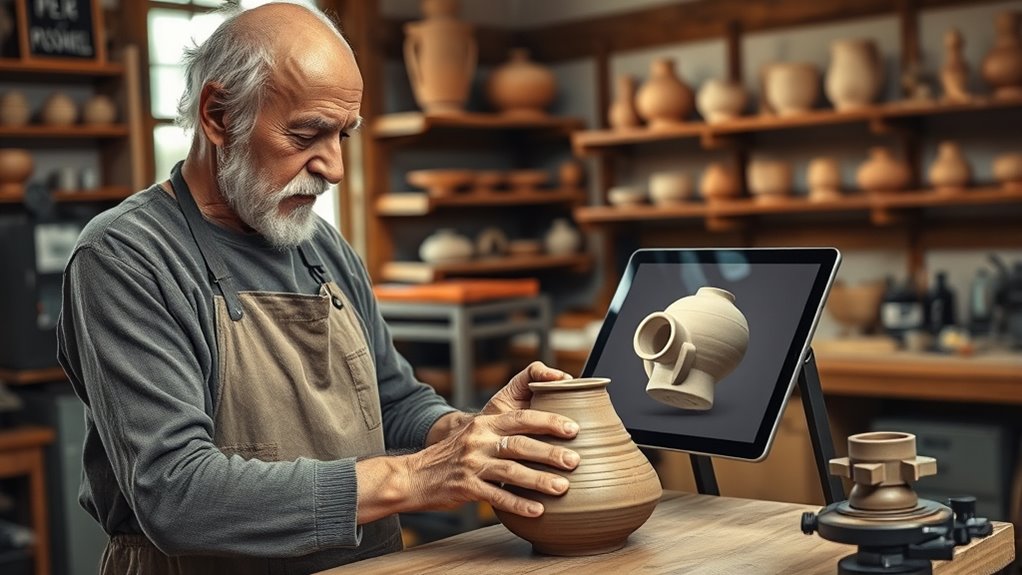

Blending traditional and modern techniques allows you to create unique, meaningful results by respecting cultural influences while embracing new technology. You combine time-honored practices with cutting-edge tools like 3D printing or digital design, fostering innovative outcomes that honor heritage. This approach encourages experimentation and flexibility, resulting in projects that are both authentic and fresh. Continue exploring these methods to discover how they can transform your creative process and enhance your work’s impact.
Key Takeaways
- Integrate cultural motifs with contemporary design tools to create authentic yet innovative visuals.
- Combine traditional craftsmanship techniques with advanced technologies like 3D printing for novel textures.
- Use cultural influences as a foundation while experimenting with modern materials and methods.
- Foster an open mindset that embraces learning and experimentation to develop distinctive, meaningful results.
- Balance respect for heritage with creative innovation to produce harmonious, culturally-rich modern works.

In today’s rapidly evolving world, blending traditional and modern techniques offers a powerful way to innovate while honoring proven practices. This approach isn’t just about combining old and new; it’s about creating something truly unique by respecting cultural influences and leveraging innovative tools. When you integrate traditional methods rooted in cultural history with cutting-edge technology, you open the door to fresh perspectives and richer results. For example, if you’re working on a design project, incorporating cultural motifs can add depth and authenticity, while modern tools like digital design software streamline your workflow and enhance creativity. This synergy allows you to craft pieces that are both meaningful and efficient. Incorporating elements from the bedroom environment, such as farmhouse-style decor and natural materials, can further ground your work in authentic rustic charm. This integration of traditional decor with modern techniques fosters a distinctive and harmonious aesthetic.
Cultural influences act as a foundation that grounds your work in tradition, providing context and emotional resonance. By understanding the history and significance behind certain techniques or motifs, you ensure that your modern adaptations remain respectful and authentic. You might, for instance, draw inspiration from indigenous patterns or age-old craftsmanship, then reinterpret them using contemporary materials or methods. This not only preserves cultural heritage but also breathes new life into it, making your work stand out. Innovative tools, such as 3D printers or augmented reality, serve as extensions of your creativity, enabling you to experiment with complex designs or visualize ideas in ways that weren’t possible before. These tools accelerate the process, reduce errors, and expand your creative possibilities.
When you blend traditional and modern techniques, you’re not just copying or overlaying styles. Instead, you thoughtfully fuse them to produce something that resonates on multiple levels. You might use traditional calligraphy as the basis for a digital logo, or combine ancient weaving techniques with modern textile technology to create innovative fabrics. This fusion demonstrates respect for cultural influences while utilizing innovative tools to push boundaries. It’s about finding harmony between the past and present, and using that harmony to forge new paths. As you do so, you’ll notice that your work becomes more meaningful, engaging, and distinctive.
Ultimately, blending traditional and modern techniques requires a mindset open to learning and experimentation. By appreciating cultural influences and embracing innovative tools, you can craft results that are truly unique—honoring history while paving the way for future innovation. This approach not only enriches your work but also contributes to a broader dialogue between tradition and progress, ensuring that both continue to evolve in tandem.

3D Technology in Fine Art and Craft: Exploring 3D Printing, Scanning, Sculpting and Milling
As an affiliate, we earn on qualifying purchases.
As an affiliate, we earn on qualifying purchases.
Frequently Asked Questions
How Do I Choose Which Techniques to Blend for My Project?
To choose which techniques to blend, consider their compatibility and how well they complement each other artistically. You want techniques that enhance each other without clashing, creating a seamless artistic harmony. Think about the project’s goals and experiment with different combinations. Trust your intuition, and don’t be afraid to try unconventional pairings—sometimes, unexpected blends produce the most unique, enthralling results.
What Are Common Challenges When Integrating Traditional and Modern Methods?
You might feel like juggling a thousand flaming torches when integrating traditional and modern methods. The biggest challenge is maintaining cultural preservation while ensuring technical consistency; it’s like trying to hold onto ancient roots while riding a lightning bolt of innovation. You risk losing authenticity or creating chaos if you don’t carefully balance these elements. Staying mindful of both helps you navigate these hurdles, blending the old and new seamlessly.
Can Blending Techniques Compromise the Authenticity of Traditional Art?
Blending techniques can raise authenticity concerns, but it doesn’t necessarily compromise cultural preservation. You can respect traditional art by thoughtfully integrating modern methods that enhance originality without erasing cultural roots. Focus on maintaining core elements while exploring innovative approaches—this way, you preserve the essence of traditional art, ensuring it remains genuine and meaningful. Your goal should be to celebrate both innovation and tradition, creating a unique yet authentic piece.
How Do I Measure Success in Blended Technique Projects?
You measure success in blended technique projects through genuine artistic innovation and audience engagement. If your work sparks curiosity, invites conversation, and offers fresh perspectives, you’re on the right track. Keep an eye on how viewers respond emotionally and intellectually, appreciating the harmony between tradition and modernity. When your art resonates deeply and encourages new interpretations, you’ve achieved meaningful success, transforming subtle influences into powerful, memorable expressions.
Are There Specific Industries That Benefit Most From Blending Techniques?
You’ll find industries like fashion, architecture, and art benefit most from blending techniques because they emphasize cultural preservation while embracing innovation integration. By combining traditional methods with modern technology, you can create unique, authentic results that resonate culturally and push boundaries. This approach helps you preserve heritage, foster creativity, and stand out in competitive markets, making it especially valuable where cultural significance and innovative expression are key drivers of success.
![WavePad Audio Editing Software - Professional Audio and Music Editor for Anyone [Download]](https://m.media-amazon.com/images/I/B1fcLEGCs6S._SL500_.png)
WavePad Audio Editing Software – Professional Audio and Music Editor for Anyone [Download]
Full-featured professional audio and music editor that lets you record and edit music, voice and other audio recordings
As an affiliate, we earn on qualifying purchases.
As an affiliate, we earn on qualifying purchases.
Conclusion
By blending traditional and modern techniques, you create truly unique results that stand out. Don’t be afraid to mix old-school methods with cutting-edge innovations—think of it as your secret recipe, like adding a dash of digital to grandma’s classic. This fusion lets you craft something fresh yet timeless, much like a vintage vinyl played on a sleek, smart speaker. Embrace the blend, and watch your work become a masterpiece that bridges past and future effortlessly.

Augmented Reality Activity Book: Occupations (planetARy)
As an affiliate, we earn on qualifying purchases.
As an affiliate, we earn on qualifying purchases.

Woodworking with Hand Tools: Tools, Techniques & Projects
As an affiliate, we earn on qualifying purchases.
As an affiliate, we earn on qualifying purchases.