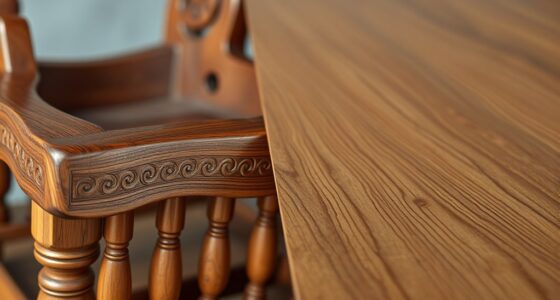

Understanding grain direction helps you predict how wood will respond to moisture changes, which affects its stability and movement. When you align grain properly—usually parallel to the length of components—you reduce warping, cracking, and splitting. Recognizing patterns and choosing the right orientation guarantees your projects last longer and stay smooth. By mastering these principles, you’ll be better equipped to handle wood’s natural tendencies. Continue exploring to uncover even more tips for working with wood’s movement.
Key Takeaways
- Wood expands and contracts mainly perpendicular to the grain, affecting stability and preventing warping or cracking.
- Grain patterns, from straight to figured, influence how wood responds to environmental changes.
- Aligning grain parallel to the length of components minimizes movement and enhances durability.
- Recognizing natural grain directions helps in planning cuts, fitting, and reducing long-term movement issues.
- Different wood species vary in movement tendencies; understanding these aids in selecting appropriate materials.
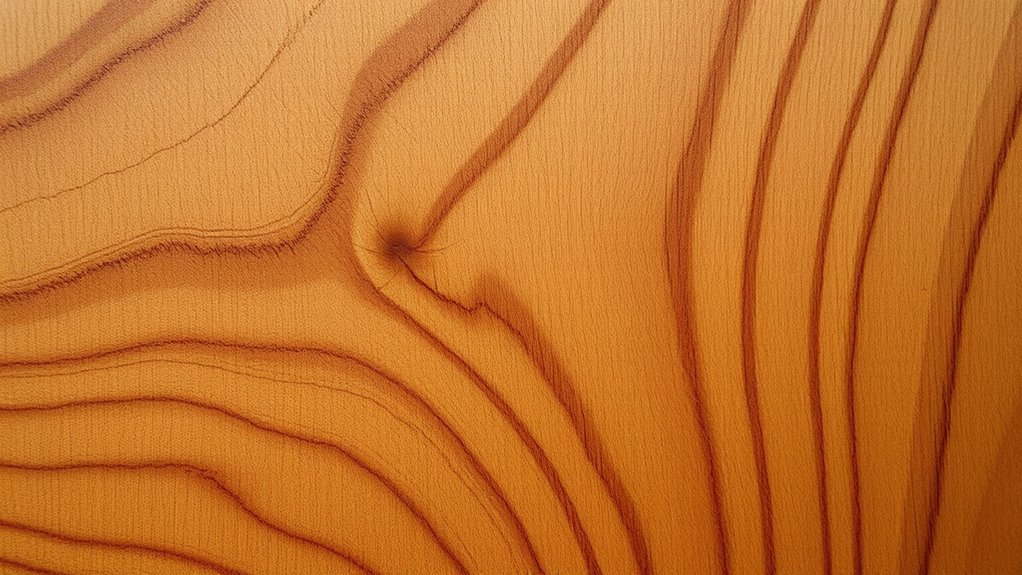
Wood grain and movement are essential factors to contemplate when working with or selecting wood for your projects. Understanding how grain patterns influence the way wood behaves can save you time, effort, and frustration. When you examine the grain, you’re looking at the natural lines and textures that run through the wood. These patterns are dictated by the tree’s growth rings and influence how the wood responds to various conditions. Grain patterns can vary widely—from straight and uniform to wavy or highly figured—each affecting how the wood expands, contracts, and reacts over time. Recognizing these patterns helps you anticipate potential issues, especially when your project involves precise cuts or fitting pieces together.
One of the most vital aspects to understand is how grain direction impacts wood movement. Wood naturally expands and contracts with changes in moisture content, and this movement typically occurs perpendicular to the grain. If you’re not mindful of the grain orientation, you risk warping, cracking, or splitting as the wood adjusts to environmental humidity. For example, if you cut a panel with the grain running in a certain direction and then expose it to moisture, it might swell along that grain, causing misalignment or gaps in your finished piece. Conversely, if the grain runs across the piece, the expansion will be less noticeable, offering more stability. This is why selecting the right grain orientation is vital for ensuring long-lasting, stable projects.
In addition to grain patterns, wood expansion is a key consideration. Different species respond differently to moisture changes, with some expanding more than others. Hardwoods like oak tend to have more stable grain patterns, while softwoods such as pine can be more susceptible to movement. When you plan your project, consider how the grain will influence the overall stability. For instance, aligning the grain parallel to the length of a table top can help reduce warping over time. Also, leaving appropriate expansion gaps in your design allows the wood to breathe, preventing unwanted stresses from developing. Proper understanding of grain patterns and wood expansion ultimately guides you in choosing the right wood for your specific application, ensuring your craftsmanship remains durable and visually appealing. Additionally, knowing the wood movement tendencies can help you develop strategies for acclimating your wood before installation, minimizing future issues.

24x197inch Wide Brown Wood Contact Paper Peel and Stick Countertop Oak Walnut Textured Wallpaper Light Wood Grain Vinyl Wrap Air Guide Slot Design Matte Thickened Self-Adhesive Waterproof Wall Sticker
- Easy Peel and Stick Installation: No extra adhesives needed, beginner friendly
- Air-Conducting Grooves Design: Prevents air bubbles for smooth application
- Durable Waterproof Vinyl: Oil-proof, dirt-proof, heat-resistant, easy to clean
As an affiliate, we earn on qualifying purchases.
As an affiliate, we earn on qualifying purchases.
Frequently Asked Questions
How Does Humidity Affect Wood Movement Over Time?
Humidity affects wood movement over time by altering its moisture content, causing seasonal expansion and contraction. When humidity rises, your wood absorbs moisture, leading to swelling and potential warping. Conversely, low humidity causes the wood to lose moisture, resulting in shrinkage and gaps. You should monitor indoor humidity levels to minimize these effects, maintaining a stable environment that reduces unpredictable wood movement and preserves your furniture or flooring.
Can Grain Direction Influence the Strength of a Wood Piece?
Did you know that grain orientation can increase a wood piece’s strength by up to 20%? When you choose the right grain direction, you enhance wood stability and make certain your project withstands stress. Properly aligning the grain helps resist splitting and warping, making your work more durable. So, pay attention to grain direction—it’s a key factor in maximizing the strength and longevity of your woodworking projects.
What Techniques Can I Use to Minimize Wood Warping?
To minimize wood warping, you should focus on proper grain orientation during cutting and assembly. Always align the grain to reduce internal stresses, which enhances joint stability and prevents movement. Use stable, kiln-dried wood and seal surfaces to control moisture absorption. Applying clamps evenly and allowing the wood to acclimate before working also helps. These techniques guarantee your project stays stable, with minimal warping over time.
Is There a Difference in Movement Between Hardwood and Softwood?
Like a river flowing differently in various terrains, hardwood and softwood move uniquely. You’ll find that hardwood generally experiences less grain expansion and wood shrinkage than softwood, making it more stable. Softwood tends to expand and contract more with humidity changes, causing more movement. So, yes, there’s a difference—hardwood is usually more stable, but always consider specific species and grain direction to prevent warping in your projects.
How Should I Plan for Seasonal Changes During Woodworking Projects?
When planning your woodworking projects, account for seasonal changes by considering grain orientation and wood movement. Always allow for expansion and contraction, especially in areas with significant temperature or humidity shifts. Use proper joinery techniques and leave gaps where needed. Incorporate wood movement into your project planning by selecting stable wood and designing flexible joints, helping your piece stay durable and looking great despite seasonal fluctuations.
Conclusion
So, next time you marvel at a beautiful piece of furniture, remember—its grain tells a story of constant movement, even when it appears perfectly still. Ironically, the very beauty you admire depends on understanding how wood shifts and bends over time. By respecting its grain directions, you can prevent future surprises. After all, what seems like a solid, unchanging masterpiece is secretly in a delicate dance with nature’s invisible forces. Embrace the movement, and your craftsmanship will stand the test of time.