To shape wood traditionally, you’ll use a drawknife for rough removal of material and a spokeshave for finer shaping and smoothing. Handle each tool with steady, controlled movements, always working with the grain to prevent tear-out. Tilt or rotate the tools to match curves for precise contours. Developing a feel for the wood’s response takes practice, but mastering these techniques results in beautifully crafted pieces. Keep exploring, and you’ll uncover even more skillful methods.
Key Takeaways
- Use a drawknife for rough shaping and material removal, then refine with a spokeshave for smooth, detailed contours.
- Maintain consistent pressure and follow the wood grain to prevent gouging and achieve precision.
- Tilt or rotate the tools to match complex curves and contours for better control.
- Focus on small, controlled shavings with a spokeshave to refine shapes and add decorative details.
- Develop an intuitive sense of wood response through patience and frequent measurements for a high-quality finish.
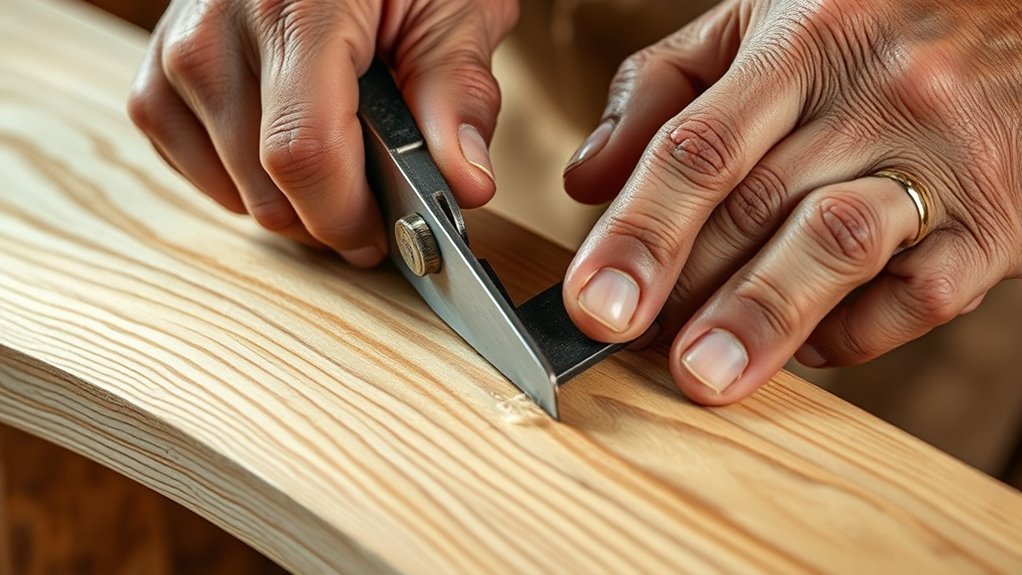
Shaping wood with a spokeshave and drawknife allows you to craft smooth, precise curves and contours that are essential for fine woodworking projects. These traditional tools excel in wood carving and hand tool techniques, giving you control over the material’s shape and texture. When you use a spokeshave, you can remove thin shavings of wood, allowing for detailed shaping and smoothing of rounded surfaces. Its curved blade conforms to the contours you’re working on, making it ideal for shaping chair legs, bows, or decorative edges. The drawknife, on the other hand, is perfect for removing larger amounts of material quickly, bringing rough logs or planks into rough shape before finer smoothing.
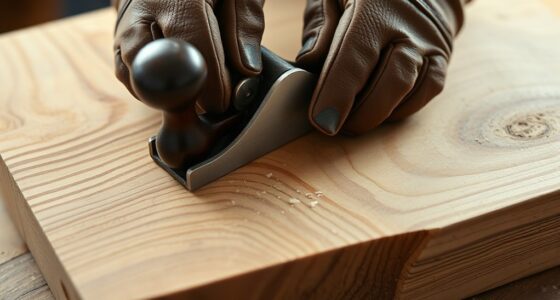
Mastering these tools starts with understanding their mechanics and proper handling. With a spokeshave, you grip the handles firmly and pull or push along the wood grain, maintaining consistent pressure. This technique helps prevent gouging or uneven surfaces. For curved or complex shapes, you tilt or rotate the tool to match the desired contour. The drawknife requires a steady, controlled pull, often with two hands, to strip away layers of wood evenly. You should position yourself so that you can work with the grain, reducing tear-out and ensuring a smooth finish.
Master spokeshave and drawknife techniques for smooth, precise shaping by maintaining consistent pressure and working with the grain.
Incorporating hand tool techniques into your workflow allows for meticulous control and a natural feel that power tools often lack. Wood carving with these tools involves carefully removing small shavings to refine the shape, add decorative details, or smooth surfaces. As you become more experienced, you’ll develop an intuitive sense of how much pressure to apply and how to follow the grain precisely. This hands-on approach enables you to create elegant, flowing curves that are difficult to achieve with modern power tools.
Using these tools also encourages patience and attention to detail. You’ll find yourself measuring and checking your work frequently, adjusting your approach to achieve the perfect contour. The process is as much about craftsmanship as it is about shaping; it demands a steady hand and an eye for proportion. Over time, you’ll learn to anticipate how the wood responds to your cuts, making your work more efficient and precise. Whether you’re crafting furniture, art pieces, or musical instruments, integrating hand tool techniques with a spokeshave and drawknife lets you embrace traditional craftsmanship, resulting in beautifully crafted, functional pieces that reflect your skill and dedication.

boeray 2pcs Adjustable SpokeShave with Flat Base, 6pcs Metal Blade and 1pcs Portable Woodworking Planes Wood Working Hand Tool Perfect for Wood Craft, Craver, Working
More Complete: Package include 2 sizes adjustable spokeshave and 4 replaceable blades and 1pcs portable woodworking planes.Our philosophy…
As an affiliate, we earn on qualifying purchases.
As an affiliate, we earn on qualifying purchases.
Frequently Asked Questions
What Safety Precautions Should I Take When Using These Tools?
When using spokeshaves and drawknives, you should always wear personal protective equipment like gloves and eye protection to prevent injuries. Practice proper tool handling techniques, keeping your hands clear of the cutting edge and maintaining a firm grip. Work in a well-lit area, and guarantee your tools are sharp and in good condition. Stay focused and avoid distractions to minimize accidents and ensure safe, effective shaping.
Can These Tools Be Used on Modern Materials Like Plastic?
Yes, you can use these tools for plastic shaping, but it’s not always ideal. Traditional tools like spokeshaves and drawknives work best on wood, so for plastic, consider modern alternatives designed for softer, non-wood materials. If you do choose to use them, make certain you use sharp blades, work carefully to avoid melting or cracking, and adjust your technique for softer materials. Always prioritize safety and proper tool maintenance.
How Do I Maintain and Sharpen a Spokeshave and Drawknife?
To maintain and sharpen your spokeshave and drawknife, start by cleaning the blades and checking for damage. Use a sharpening stone or honing guide to keep the edges razor-sharp, maintaining a consistent angle. Regular tool sharpening and proper tool maintenance guarantee ideal performance and safety. Always store your tools in a dry place, and periodically inspect and sharpen them to prolong their lifespan and keep your work precise.
Are There Alternative Tools for Shaping Similar to Spokeshave and Drawknife?
Yes, there are alternative tools for modern shaping that you can use instead of a spokeshave and drawknife. Power tools like rotary tools, oscillating multi-tools, or electric carving knives offer precision and ease. You can also try rasps, files, or contour sanders for detailed shaping. These options give you more control and speed, making your projects efficient while still achieving smooth, accurate results.
What Are Common Mistakes to Avoid During Shaping?
To avoid mistakes while shaping, guarantee your blade stays sharp to make clean cuts and prevent splintering. Keep your pressure consistent to control the shape and prevent uneven surfaces. Avoid rushing; work slowly and check your progress often. Don’t force the tool, as it can cause slips or damage. Always secure your workpiece and maintain proper posture for safety and accuracy during shaping.
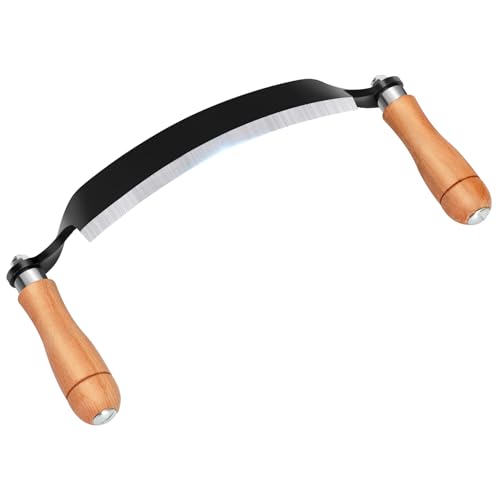
10'' Draw Knife,Draw knife debarking tool,Curved Draw Knife,Draw Shave Tool Debarking Hand Tool,ergonomic handle,simple and effortless to use,bark stripper tool
Beendou Draw Knife – Authentic on Amazon
As an affiliate, we earn on qualifying purchases.
As an affiliate, we earn on qualifying purchases.
Conclusion
As you carve with a spokeshave and drawknife, you become part of a timeless dance with wood, each stroke revealing its hidden beauty. Feel the shavings crumble beneath your fingers, like fleeting moments of craftsmanship. With patience and skill, you shape not just wood, but also your understanding of tradition. In these simple tools, you find a quiet harmony—an echo of past artisans guiding your hands toward something enduring and true.
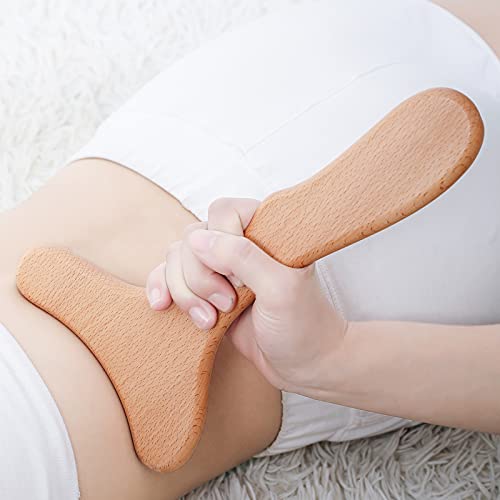
Komogir Wood Therapy Massage Tool Wooden Lymphatic Drainage Massager Body Sculpting Tools for Maderoterapy,Gua Sha,Muscle Release-11 * 6inches
[Highest Craftsmanship Standards]: When it comes to komogir wood sculpting tool, we make a point of using nothing…
As an affiliate, we earn on qualifying purchases.
As an affiliate, we earn on qualifying purchases.

Wood Carving Kit Whittling Kit: Deluxe Wood Carving Tools Knife Set with Leather Case – Woodworking Hobby Kit for Beginners Adults Kids – DIY Art Craft Gift for Men Teens
[Wood Carving Kit Deluxe Edition] Everything you need to start carving: 4 knives, 4 chisels, 7 basswood blocks,…
As an affiliate, we earn on qualifying purchases.
As an affiliate, we earn on qualifying purchases.