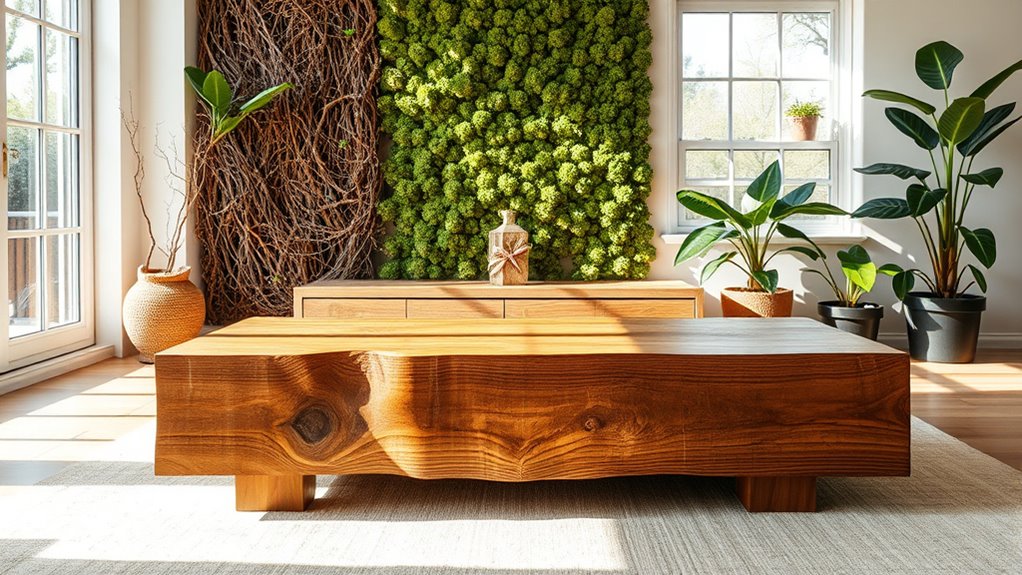

Incorporating natural wood into your daily spaces helps bring a calming, authentic vibe that connects you to nature. By choosing wooden furniture, wall art, or accents like bowls and plant stands, you create a warm, inviting atmosphere that fosters relaxation. The natural textures and grain patterns add visual depth and character to any room, making your environment feel more lively and genuine. Keep exploring for ways to seamlessly blend nature and style into your home.
Key Takeaways
- Use wooden furniture like tables and headboards to create a warm, natural ambiance in living spaces.
- Incorporate natural textures such as grain patterns and knots in decor accents to evoke calm and authenticity.
- Enhance indoor-outdoor flow with wooden wall art and organic elements that connect interiors to nature.
- Layer textures with small wooden accessories like picture frames and bowls for subtle yet impactful natural touches.
- Choose aged or handcrafted wood to foster a sense of timeless charm and deepen the connection to the natural world.
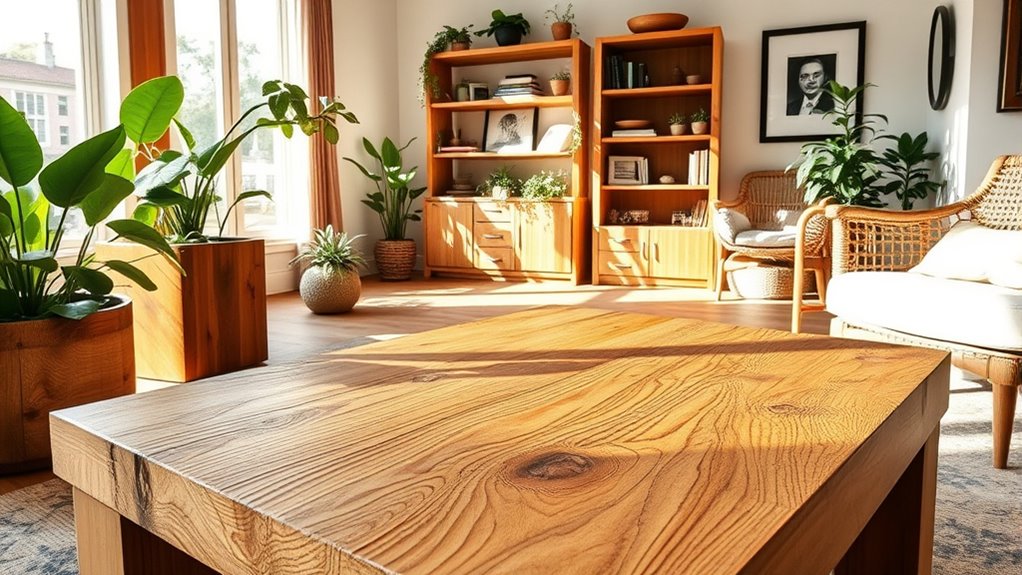
Bringing nature into your living space with wood creates a warm, inviting atmosphere that connects you to the outdoors. Wooden decor plays a essential role in achieving this effect, offering a timeless appeal that can complement any interior style. When you incorporate wooden furniture, picture frames, or accents, you’re not just adding aesthetic value—you’re also introducing natural textures that evoke a sense of calm and grounding. The beauty of natural textures lies in their ability to bring depth and character to your environment, making each space feel more authentic and alive. Whether it’s a rustic coffee table, sleek wooden shelves, or a handcrafted headboard, the organic feel of wood instantly warms up a room and makes it more welcoming.
Using wooden decor allows you to create a seamless flow between your indoor space and the outdoors. Think about how a wooden dining table becomes the centerpiece of family gatherings or how wooden wall art adds a touch of nature-inspired elegance to your living room. These elements serve as visual reminders of the natural world, helping you feel more relaxed and centered. The natural textures of wood—grain patterns, knots, and imperfections—add subtle complexity that keeps your decor interesting and unique. Unlike synthetic materials, wood ages gracefully and develops character over time, making your space feel more personal and lived-in. This evolving beauty enhances the connection you have with nature, even when you’re indoors.
Incorporating wood doesn’t mean you need a complete overhaul of your space. Small touches, like wooden picture frames, decorative bowls, or wooden plant stands, can make a significant impact. These accents enhance the natural textures present in your environment, creating a cohesive look that celebrates the organic beauty of wood. When selecting wooden decor, consider the tones that best match your overall palette—light woods like pine or maple can brighten a room, while darker woods such as walnut or mahogany add richness and depth. Combining different textures and finishes also adds visual interest, making your space feel layered and thoughtfully curated.
Ultimately, embracing wooden decor and natural textures allows you to craft a living environment that not only looks beautiful but also nurtures your well-being. It’s about creating a sanctuary where the outdoors feels close, and every detail reminds you of nature’s simplicity and resilience. Incorporating authentic wooden elements helps to reinforce the connection to nature and adds a timeless charm that ages beautifully over time. By thoughtfully integrating wood into your home, you foster a harmonious space that invites comfort, authenticity, and a deeper connection to the natural world.

3D Wooden Floral Bathroom Wall Decor (Set of 4) Lightweight, Ready-to-Hang Framed Wall Art For Living Room, Bedroom, or Office – Premium Boho Botanical Farmhouse Decorations – Gift-Boxed
- 3D Floral Cutout Design: Adds texture and depth to decor
- Versatile Room Decor: Suitable for living, kitchen, bedroom, office
- Lightweight & Ready-to-Hang: Includes hardware for easy installation
As an affiliate, we earn on qualifying purchases.
As an affiliate, we earn on qualifying purchases.
Frequently Asked Questions
How Does Wood Impact Indoor Air Quality?
Wood can positively impact your indoor air quality by naturally aiding air purification and reducing allergens. When used in furniture or flooring, it helps absorb airborne toxins and allergens, making the air cleaner. Unlike synthetic materials, wood doesn’t emit harmful chemicals, so your space stays healthier. You’ll notice less dust and allergens, creating a more comfortable environment. Incorporating wood into your home is a simple way to boost air quality naturally.
What Are Eco-Friendly Wood Sourcing Options?
You’ll be amazed how much you can do with eco-friendly wood sourcing. Opt for certified wood, which guarantees sustainable harvesting practices that protect forests for generations. Look for certifications like FSC or PEFC, ensuring your wood is responsibly sourced and environmentally friendly. By choosing these options, you help preserve nature’s beauty while enjoying durable, beautiful wood products—truly a small act that can make a world of difference!
How to Maintain Wooden Natural Decor?
To maintain your wooden natural decor, start with regular dusting and gentle cleaning using a soft cloth. Apply wood treatment like oil or wax every few months to protect and enhance the wood’s natural beauty. Follow maintenance tips such as avoiding excessive moisture and direct sunlight, which can cause damage. Keep your decor looking fresh and durable by caring for it consistently with these simple steps and proper wood treatment.
Can Wood Be Used in Humid Environments?
Yes, wood can be used in humid environments if you choose durable, moisture-resistant types like teak or cedar. While the juxtaposition of natural beauty and dampness may seem contrasting, selecting the right wood enhances its longevity and performance. You should also apply protective finishes to prevent warping or decay. With proper care, your wooden pieces will withstand humidity, blending nature’s warmth with resilience.
What Safety Precautions Are Needed for Wooden Furniture?
You should always treat your wooden furniture with proper wood treatment to prevent damage and make certain of safety. Use non-toxic finishes and avoid harsh chemicals during furniture finishing. Keep furniture away from excessive moisture and direct sunlight, which can cause warping or deterioration. Regularly inspect for splinters or loose joints, and clean with gentle, damp cloths. Properly cared-for wood remains safe, durable, and beautiful for years to come.
Conclusion
By bringing wood into your daily life, you create a warm, inviting space that connects you to nature. Imagine walking into a room filled with natural textures and earthy tones—doesn’t it make you feel more grounded and relaxed? Incorporating wood isn’t just about aesthetics; it’s about embracing the calming presence of nature every day. So, why not invite this timeless element into your home and experience the serenity it brings?