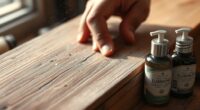
To transform your side table with painting and decorative mouldings, start by prepping the surface with sanding and priming for a smooth, durable finish. Choose paint that suits your style, applying multiple coats for vibrant, even coverage. Incorporate mouldings to add elegance and dimension, securing them well. Seal the look with a clear finish for protection. If you want to explore additional tips for a flawless transformation, there’s more to discover below.
Key Takeaways
- Properly sand and prime the table surface to ensure smoothness and paint adhesion.
- Choose high-quality, compatible paint and apply multiple coats for a vibrant, durable finish.
- Incorporate decorative mouldings to add elegance and visual interest, securing them firmly.
- Seal the painted surface with a clear protective finish for durability and a polished look.
- Pay attention to detail and patience throughout for a professional, refined transformation.
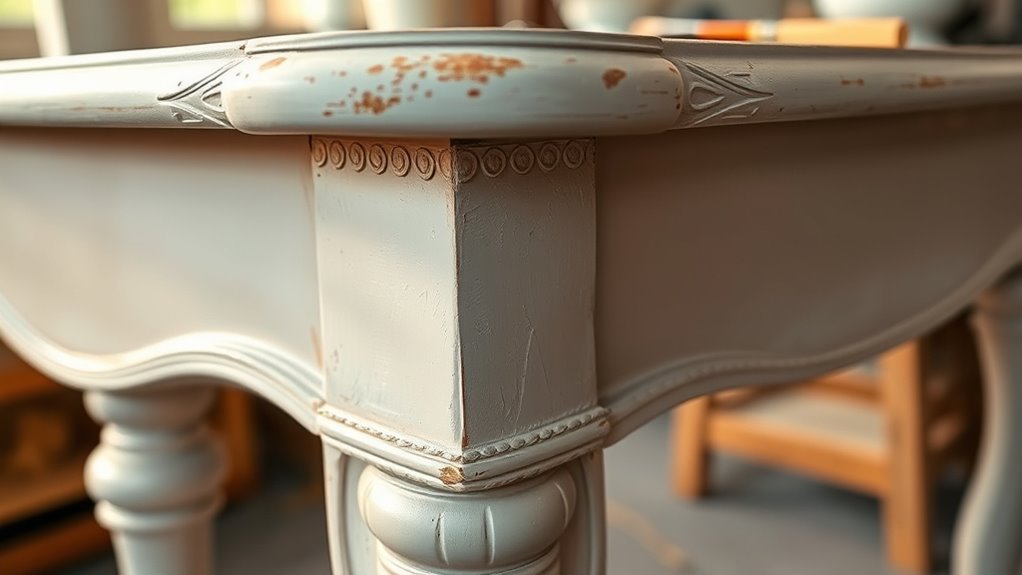
Transforming a side table through painting and the addition of decorative mouldings can significantly enhance its aesthetic appeal and functionality. Proper preparation, such as sanding and priming, is crucial to ensure a smooth finish and longevity of the paintwork. When selecting paint, consider durability and compatibility with the table’s material to achieve the desired look. Applying multiple coats and sealing with a clear finish can provide a professional appearance and protection against wear and tear. Incorporating decorative mouldings allows for customization and adds a touch of elegance to the piece. Additionally, understanding potential pitfalls in adopting new payment technologies can help in managing any unforeseen issues that arise during the renovation process.

Rust-Oleum Chiffon Cream Chalked All-in-One Ultra Matte Paint | One Coat Coverage | No Primer, Sanding, Or Topcoat Needed | Easy Clean Up | Made in USA | 30 OZ
- Easy for Beginners: Simple application with minimal prep
- Versatile for Furniture: Adheres to wood, metal, ceramic, and more
- Easy Cleanup: Soap and water for quick cleaning
As an affiliate, we earn on qualifying purchases.
As an affiliate, we earn on qualifying purchases.
Frequently Asked Questions
What Type of Paint Is Best for Furniture Transformation?
You should choose a high-quality chalk or latex paint for furniture transformation, as they offer excellent durability and a smooth finish. These paints are easy to work with and provide various finish options, such as matte, satin, or gloss, to match your style. Using the right paint guarantees your piece remains beautiful and resilient over time, making it a worthwhile investment in your furniture’s longevity and aesthetic appeal.
How Do I Choose the Right Moulding Design?
You choose the right moulding design by considering your side table’s overall style and the room’s decor. Look for moulding patterns that complement existing details, like intricate carvings or simple lines. Focus on design coordination to make certain the mouldings enhance your piece without overwhelming it. Select patterns that match your aesthetic—whether modern, vintage, or rustic—and guarantee they fit proportionally for a cohesive, polished look.
Can I Transform a Side Table Without Sanding?
While a gentle touch of refinement can sometimes be achieved without full sanding, it’s best to prepare your furniture properly. You can still transform your side table without sanding by thoroughly cleaning and lightly abrading the surface to guarantee paint adhesion. Focus on selecting the right paint, such as a primer or a versatile chalk paint, to create a smooth finish. Proper furniture prep and careful paint selection will help your project look polished and professional.
How Long Does the Entire Transformation Process Take?
The entire transformation typically takes 2 to 3 days, but timing considerations depend on your project planning. You’ll need time for cleaning, priming, painting, drying, and adding mouldings, which can vary based on paint type and drying conditions. To stay on schedule, allocate extra time for each step and avoid rushing. Proper planning guarantees a smooth process and a polished finished look, making your side table transformation successful and satisfying.
What Are Some Common Mistakes to Avoid During Painting?
When painting, avoid common mistakes like overloading your brush with paint, which can cause uneven brush strokes and drips. Take your time and use smooth, even strokes to achieve a flawless finish. Don’t rush the drying process, or you’ll risk paint drips and smudges. Always prep your surface properly, and use quality brushes to prevent streaks. This way, you’ll get a professional look without frustrating errors.
Conclusion
Now, your side table has been reborn, a blank canvas turned masterpiece. With a fresh coat of paint and delicate mouldings, it’s like giving your space a charming whisper of personality. Think of it as sculpting a tiny treasure, each stroke and detail adding a sprinkle of magic. Your transformed table isn’t just furniture — it’s a story waiting to unfold, a shining star in your home’s new chapter. Let your creativity shine bright!