When sourcing reclaimed wood, you should verify how it’s been treated—look for proper cleaning, drying, or heat treatments to eliminate pests and mold. Inspect the wood for damage, mold, or signs of rot, and verify it’s structurally sound. Ask your supplier for detailed documentation about its origin and treatment processes, and look for safety certifications. Focusing on local sources and sustainable practices helps reduce environmental impact. Keep these tips in mind to make safe, eco-friendly choices.
Key Takeaways
- Verify that reclaimed wood has been properly cleaned, dried, and heat-treated to eliminate pests and pathogens.
- Assess the supplier’s documentation and certifications confirming the wood’s origin, treatment, and safety standards.
- Conduct a visual inspection for signs of mold, damage, cracks, insect holes, or unusual odors.
- Consider the environmental impact by sourcing locally and choosing suppliers committed to sustainable practices.
- Ensure the wood’s physical condition and structural integrity meet your project requirements before use.
Reclaimed wood has become a popular choice for eco-conscious builders and homeowners, but understanding its quality and safety is essential before using it. One of the first steps is to assess how the wood has been treated. Wood treatment plays a crucial role in determining whether reclaimed wood is safe for indoor use or furniture projects. Improperly treated wood can harbor pests, mold, or bacteria, which pose health risks. Therefore, you should inquire about the treatment process, ensuring that the wood has undergone proper cleaning, drying, and chemical treatment if necessary. Ideally, the wood should be heat-treated or kiln-dried to eliminate pests and pathogens without introducing harmful chemicals. This helps preserve the wood’s integrity while safeguarding your health and the environment.
Assess reclaimed wood’s safety by verifying proper treatment, cleaning, and drying to ensure health and environmental safety.
When sourcing reclaimed wood, it’s also important to consider its environmental impact. Reclaimed wood is often touted as an eco-friendly option because it repurposes existing materials, reducing the demand for new timber and lowering deforestation. However, not all reclaimed wood has a minimal environmental footprint. Some sources may involve extensive processing or transportation that increases its carbon footprint. You should look for suppliers that prioritize sustainable practices, such as reclaiming wood from local or regional sources or using environmentally friendly treatment methods. This way, you can be confident that your project not only benefits from the character and history of reclaimed wood but also aligns with your eco-conscious values.
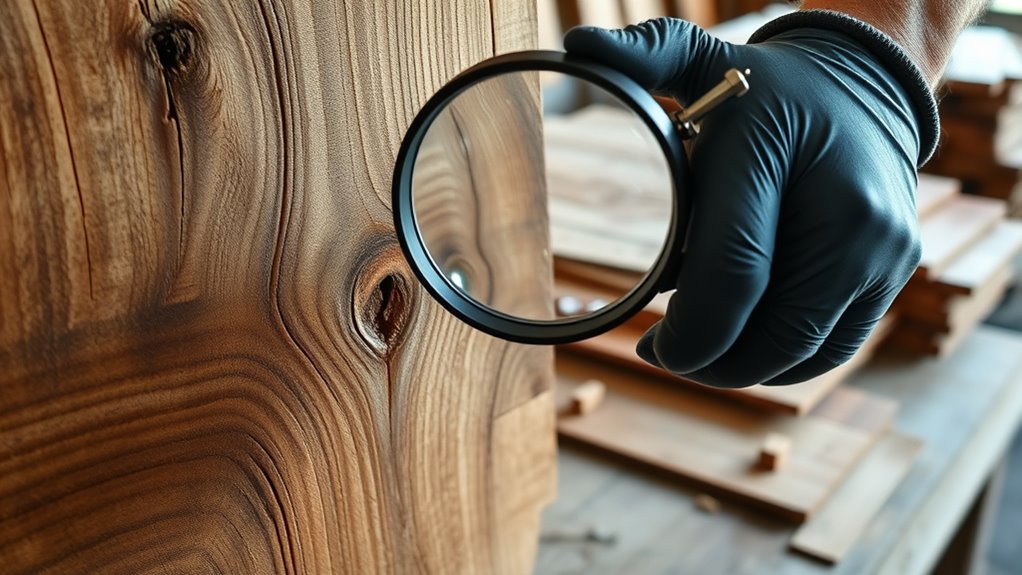
Conducting a visual inspection is another vital step in sourcing quality reclaimed wood. Check for signs of damage, such as rot, cracks, or insect holes, which could compromise its structural integrity. Look for consistent color and grain patterns, indicating that the wood has been properly stored and handled. If you notice any unusual odors or signs of mold, it’s best to avoid that batch altogether. Additionally, verify that the wood is free from nails, staples, or other fasteners that could cause injury or make working with the material difficult. Incorporating knowledge about structural integrity can help you better evaluate the wood’s suitability for your project.
Finally, always request documentation from your supplier. Reputable sources should provide details about the wood’s origin, treatment process, and safety certifications. This transparency ensures you’re making an informed choice and helps prevent the use of contaminated or unsafe materials. By carefully evaluating the treatment, environmental impact, and physical condition of reclaimed wood, you can confidently incorporate it into your projects, knowing you’re prioritizing quality, safety, and sustainability.
reclaimed wood safety certification
As an affiliate, we earn on qualifying purchases.
As an affiliate, we earn on qualifying purchases.
Frequently Asked Questions
How Do You Identify Authentic Reclaimed Wood From New Wood?
To identify authentic reclaimed wood, look for a distinct grain pattern that shows signs of aging like irregularities or nail holes. Check for color variation, which often results from natural aging and previous finishes. Reclaimed wood may also have a weathered or distressed appearance, unlike new wood’s uniformity. Feel the texture for a worn, aged feel, and inspect carefully for any signs of recent cuts or new markings that suggest it’s new.
Are There Specific Certifications for Reclaimed Wood Safety Standards?
Yes, there are specific certifications for reclaimed wood safety standards. You should look for certifications like FSC (Forest Stewardship Council) or PEFC (Programme for the Endorsement of Forest Certification), which guarantee compliance with safety protocols and sustainable practices. These certifications assure that the wood meets strict safety and environmental standards, giving you confidence in its quality and safety for your project. Always verify the certification authenticity before purchasing.
What Are the Common Contaminants in Reclaimed Wood?
Imagine walking through a rustic barn, but hidden dangers lurk in the wood. Common contaminants in reclaimed wood include lead paint and chemical residues from previous uses. These toxins can pose health risks if not properly tested and treated. Always verify that reclaimed wood has been checked for lead paint and chemical residues, ensuring it’s safe for your project and won’t introduce harmful substances into your home.
How Long Does the Safety Testing Process Typically Take?
The safety testing process usually takes about 2 to 4 weeks, depending on the complexity of testing procedures. You’ll want to factor in timing estimates for lab analysis, chemical testing, and contamination checks. During this period, labs examine for harmful substances, pests, and structural integrity. While it might seem lengthy, this guarantees the reclaimed wood meets safety standards, giving you peace of mind before use.
Can Reclaimed Wood Be Treated to Improve Durability and Safety?
Yes, you can treat reclaimed wood to improve durability and safety. Wood treatment methods, like pressure treating or applying chemical preservatives, enhance its resistance to pests, rot, and moisture. These safety improvements make the wood more durable for long-term use. Just verify you select treatments suitable for your project and follow safety guidelines during application. Proper treatment not only prolongs the wood’s life but also ensures it’s safe for indoor or outdoor use.
Conclusion
When sourcing reclaimed wood, always prioritize quality and safety checks to guarantee it’s durable and safe for your project. Did you know that reclaimed wood can reduce deforestation by up to 90%? By carefully inspecting and verifying its origin, you not only get unique, character-filled materials but also contribute to environmental conservation. So, take your time with inspections—your project’s longevity and safety depend on it. Happy sourcing!