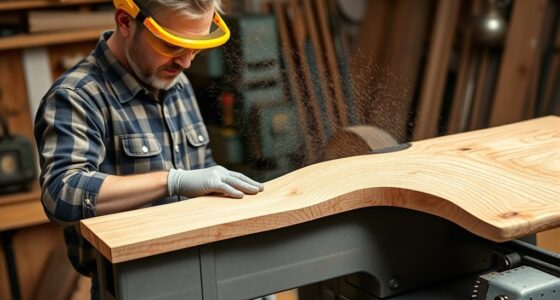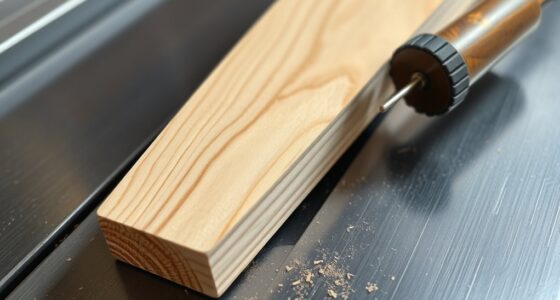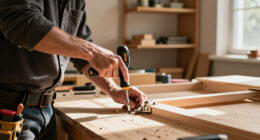
A tapering jig for the table saw helps you make precise, angled cuts easily and safely. It holds your workpiece firmly, preventing slips and ensuring consistent tapers on furniture legs or boxes. To use it effectively, secure your jig and workpiece, double-check angles, and always follow safety procedures like wearing eye protection. Proper setup leads to accurate results, and if you keep exploring, you’ll find helpful tips for mastering your tapering projects.

Get business pricing on tools and workshop supplies
- Business-only prices and quantity discounts
- Tax-exempt purchasing
- Multiple users, one account, clear invoices
Key Takeaways
- Tapering jigs secure workpieces at precise angles for accurate, consistent cuts on a table saw.
- Proper setup includes using an angle gauge and securely clamping the jig to ensure safety and accuracy.
- Securing the workpiece with a wooden clamp prevents slipping and reduces vibrations during cutting.
- Always follow safety protocols: wear eye protection, keep the workspace clear, and turn off the saw before adjustments.
- After cutting, verify the taper’s accuracy, and ensure all clamps and adjustments are properly loosened.

A tapering jig is an essential tool for making precise, angled cuts on your table saw. It helps you create smooth tapers on furniture legs, box sides, or any project where a gradual change in thickness is needed. When using a tapering jig, you’ll need to secure your workpiece firmly, and a wooden clamp is often the best choice for this task. Wooden clamps are gentle on your wood, reducing the risk of dents or scratches, and they provide a solid grip that keeps your workpiece steady during cutting. Properly securing your workpiece prevents slipping, which could otherwise lead to inaccurate cuts or accidents.
Before you start, it’s critical to follow safety precautions to avoid injury. Always wear eye protection and hearing protection when operating the table saw. Make sure your work area is clean and free of clutter, so there’s nothing to trip over or distract you while you work. Before making any cuts, double-check that the saw blade is sharp and properly aligned. A dull blade can cause uneven cuts and increase the likelihood of kickback. When attaching your tapering jig, ensure it’s securely mounted and that your workpiece is clamped tightly, using a wooden clamp if possible. This reduces vibrations and movement, helping you achieve precise angles.
When setting up the jig, pay careful attention to the angle you want to cut. Use a protractor or angle gauge to mark the correct tilt on your jig. Once everything is aligned, tighten all your clamps and adjustments securely before turning on the saw. Never attempt to make adjustments while the saw is running; always turn it off and wait for the blade to stop. During cutting, keep your hands at a safe distance from the blade, and use push sticks if necessary. Holding the workpiece securely with a wooden clamp while feeding it into the blade ensures that your cut stays accurate and reduces the risk of kickback. Additionally, understanding the diverse residency requirements in different states can help you plan your woodworking projects with proper legal compliance if you are moving or working across state lines.
After completing your cut, turn off the saw and wait for the blade to come to a complete stop before removing your workpiece. Carefully loosen the clamps and inspect your work to ensure it matches your intended taper. Remember, safety isn’t just about equipment; it’s about your awareness and preparation. Always double-check your setup, use the right clamps, and follow safety procedures. This way, you’ll not only produce clean, precise tapers but also keep yourself safe throughout the process. By respecting safety precautions and securing your workpiece properly, you’ll get the best results from your tapering jig and enjoy safe, effective woodworking.
As an affiliate, we earn on qualifying purchases.
Frequently Asked Questions
Can Tapering Jigs Be Adjusted for Different Wood Thicknesses?
Yes, tapering jigs can be adjusted for different wood thicknesses. You simply modify the jig adjustment to match the wood thickness you’re working with, ensuring a precise taper. By changing the position of the jig or adjusting its settings, you can accommodate various wood thicknesses easily. This flexibility allows you to produce consistent, accurate tapers regardless of the wood’s size, making your woodworking projects more professional-looking.
What Safety Precautions Should I Take When Using Tapering Jigs?
When using tapering jigs, you should always wear safety gear like eye protection and hearing protection to stay safe. Make sure your workspace is clear of clutter to avoid accidents, and keep your hands away from the blade. Double-check that the jig is securely attached before cutting. Stay focused, and never rush the process—safety comes first to prevent injuries while working with the table saw.
Are There Commercial Tapering Jigs Available for Purchase?
Yes, there are commercial options available for purchase, offering a variety of tapering jigs that suit different projects and skill levels. These commercial jigs often feature adjustable settings for precision cuts, making your work easier and more consistent. If you prefer, you can also explore DIY solutions, which allow you to customize the jig to your specific needs. Both options help you achieve accurate tapers efficiently.
How Do I Maintain Accuracy Over Multiple Cuts?
Think of your woodworking project as a symphony, and accuracy as the conductor’s baton. To keep it in tune, use precise clamping techniques and reliable woodworking jigs. Always double-check your measurements before each cut, and tighten clamps firmly to prevent movement. Regularly calibrate your saw, and work methodically. Staying consistent guarantees your tapering remains sharp and true across multiple cuts, turning your project into a masterpiece.
Can Tapering Jigs Be Used on Other Power Tools Besides the Table Saw?
Yes, you can use tapering jigs on other power tools like routers or bandsaws. To do this effectively, you might need alternative materials for jig customization, ensuring durability and precision. Adjusting the jig design allows for compatibility with different tools. Just make sure to secure the jig properly and follow safety guidelines for each tool. This versatility helps you achieve accurate tapers across various woodworking projects.
Conclusion
With a tapering jig in your hands, you shape your projects with precision, control, and confidence. You guide the wood smoothly, cut accurately, and create perfect tapers every time. You build stronger joints, enhance your craftsmanship, and bring your ideas to life with ease. A tapering jig transforms your table saw into a versatile tool, turning simple cuts into seamless designs. Embrace the jig, and watch your woodworking skills grow sharper with each cut you make.
Fall yard work Picks
leaf blowers
As an affiliate, we earn on qualifying purchases.