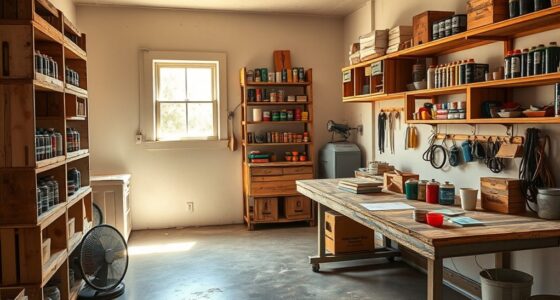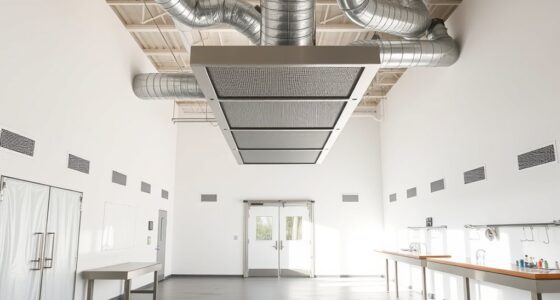
To optimize your small shop, organize it into dedicated workflow zones like cutting, assembly, and finishing, keeping tools near their primary work areas. Maintain clear pathways to guarantee safe and easy movement between zones, and set proper clearances around equipment for comfort and safety. Use smart storage solutions to maximize space and reduce clutter, and plan your layout to enhance efficiency. For tips on creating a balanced, functional small shop, keep exploring these key design principles.

Get business pricing on tools and workshop supplies
- Business-only prices and quantity discounts
- Tax-exempt purchasing
- Multiple users, one account, clear invoices
Key Takeaways
- Divide the shop into dedicated zones (cutting, assembly, finishing) for efficient workflow and task separation.
- Position tool storage near primary work zones to minimize movement and improve accessibility.
- Maintain clear pathways between zones and around machines for safety and ease of movement.
- Incorporate strategic lighting at each zone to enhance visibility and reduce eye strain.
- Optimize space with wall-mounted storage and proper organization to maximize usable area and workflow.
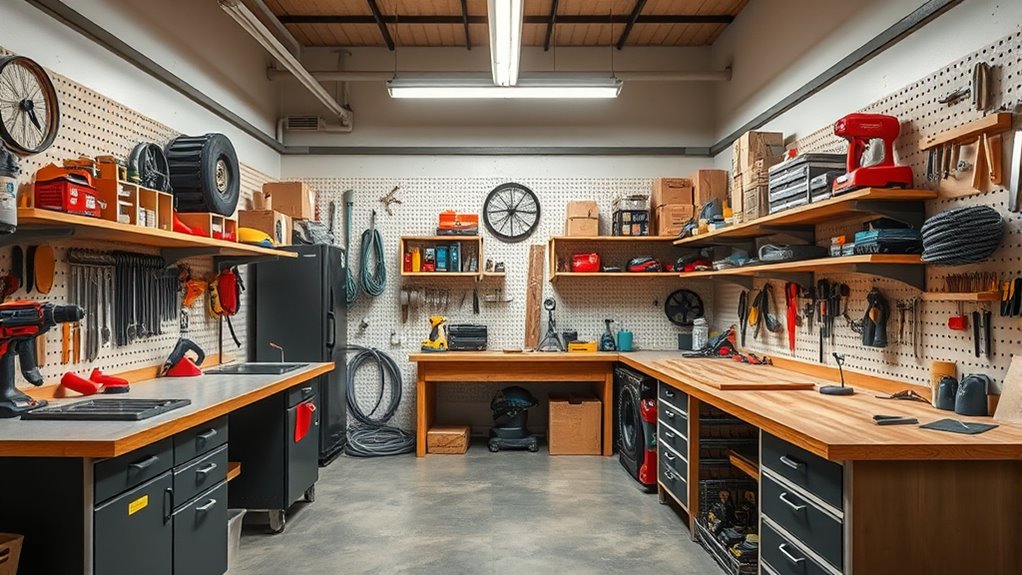
Ever wondered how to make the most of limited space in your small shop? The key lies in smart planning that maximizes every inch while maintaining an efficient workflow. One of the first steps is organizing your tool storage effectively. Instead of cluttering your workspace with scattered tools, invest in wall-mounted racks, pegboards, or rolling carts. This not only frees up valuable surface area but also guarantees that your tools are within arm’s reach when needed. Grouping similar tools together by function or frequency of use helps streamline your tasks, reducing unnecessary movement. Proper tool storage can turn chaos into order, making your shop feel more spacious and manageable.
Smart tool storage frees up space and streamlines workflow in your small shop.
Lighting design plays an equally essential role. Good lighting isn’t just about brightness; it’s about creating an environment where every corner is visible, and tasks can be performed safely and accurately. Incorporate a mix of ambient, task, and accent lighting to eliminate shadows and dark spots. Overhead LED fixtures or track lighting can provide broad illumination, while focused task lights can be directed at workbenches or specific zones. When planning your lighting, consider the placement relative to your tool storage areas. Well-lit tool storage makes it easier to find what you need quickly, especially in tight spaces. Additionally, adjustable lighting options give you flexibility, allowing you to brighten or dim areas depending on the task. Efficient lighting design reduces eye strain and enhances safety, making your small shop a more comfortable and productive space.
To truly optimize your small shop layout, you should also carefully think about workflow zones. Divide your space into distinct areas dedicated to specific tasks—such as cutting, assembly, finishing, and storage. Position these zones logically to minimize back-and-forth movement. For example, place your tool storage near your primary work zones so you can grab what you need without crossing the entire shop. Maintain clear pathways between zones to ensure easy movement and to prevent accidents. Adequate clearances are imperative; leave enough space around machines and workbenches for comfortable operation and safety. This prevents congestion and allows you to work efficiently without feeling cramped. Considering air circulation and dust management is also crucial to maintain a healthy and comfortable environment in your small shop.
In the end, a well-designed small shop combines effective tool storage, thoughtful lighting, and carefully planned zones. When these elements work together, they maximize your space, improve your workflow, and create a safer, more enjoyable environment. With strategic planning, even the smallest shop can feel spacious and functional, turning a tight area into a productive workspace tailored to your needs.
Products Worth Considering

Philips Hue Bridge Pro Smart Lighting Hub

Philips Hue Festavia Globe Outdoor String Lights, 32 Bulbs, 91 ft

iRobot Roomba Max 715 Pet Robot Vacuum with AutoEmpty Dock
As an affiliate, we earn on qualifying purchases.
Frequently Asked Questions
How Can I Maximize Storage in a Small Shop?
To maximize storage in your small shop, you should utilize vertical storage to make use of wall space and free up floor area. Incorporate modular shelving units that can be adjusted or expanded as needed, giving you flexibility for different tools and supplies. Keep frequently used items within easy reach, and store less-used materials higher up or in less accessible spots. This approach helps you stay organized and makes the most of limited space.
What Safety Considerations Are Essential for a Small Workspace?
Ironically, safety might seem like an extra task, but neglecting it risks disaster. You must wear personal protective equipment like goggles and gloves, and keep fire safety measures, such as fire extinguishers and clear escape routes, easily accessible. Regularly inspect equipment for hazards, maintain clear walkways, and stay aware of potential fire sources. Prioritizing safety guarantees your small shop stays productive and accident-free, saving you time and trouble.
How Do I Plan for Future Equipment Upgrades?
To plan for future equipment upgrades, you should consider equipment compatibility and future expansion. Guarantee your current layout can accommodate larger or additional tools by leaving extra space and flexible power sources. Keep pathways clear for easy access and upgrades. Regularly review your shop’s needs, and design with adaptability in mind, so new equipment fits seamlessly without disrupting workflow or safety. This proactive approach saves time and money down the line.
What Are Cost-Effective Ways to Improve Workflow?
Like a trusty sidekick, ergonomic tools and smart lighting solutions can dramatically boost your workflow without breaking the bank. Arrange your workspace to minimize unnecessary movement, keeping frequently used tools within easy reach. Upgrade lighting to reduce eye strain and improve precision. These simple, cost-effective tweaks help you work efficiently, stay comfortable, and avoid costly mistakes, turning your small shop into a well-oiled machine in no time.
How Can I Reduce Noise and Dust in a Small Shop?
To reduce noise and dust in your small shop, you should install soundproofing barriers around noisy equipment to dampen sound. Use effective dust extraction methods like vacuums or dust collectors at source to minimize airborne particles. Regularly maintain and clean your tools and filters, and consider sealing gaps or adding insulation to further contain noise and dust, creating a safer, more comfortable workspace.
Conclusion
Remember, a well-designed shop isn’t just about space—it’s about efficiency. By thoughtfully organizing your workflow, zones, and clearances, you’ll work smarter, not harder. Keep in mind the saying, “A place for everything, and everything in its place,” and you’ll find your projects coming together more smoothly. With a bit of planning, your small shop can become a haven of productivity and creativity, making every inch count.