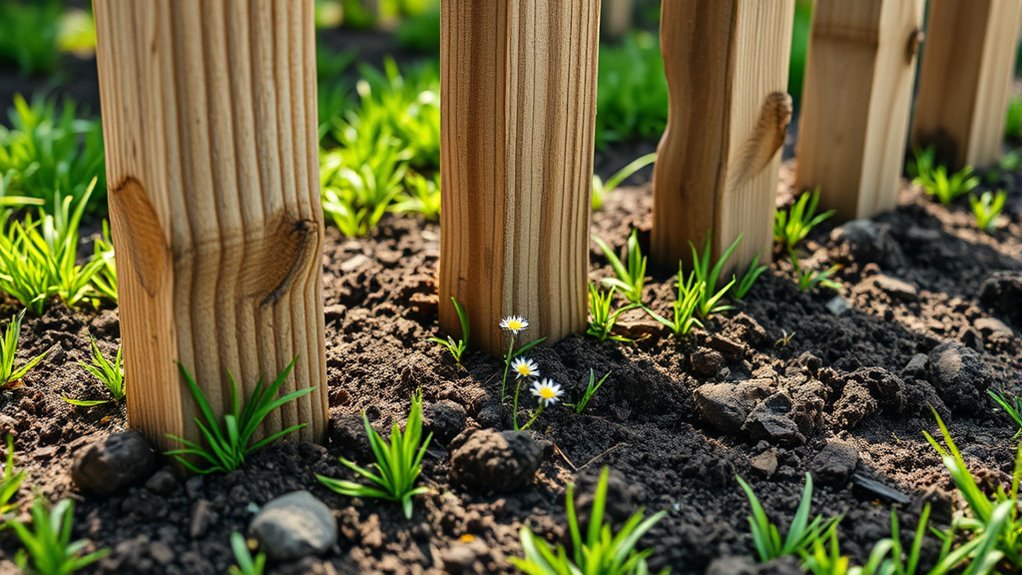

To guarantee your ground-contact posts last in tough conditions, pick decay-resistant options like pressure-treated wood, cedar, redwood, or composite materials with rot-fighting properties. Proper installation techniques, such as digging deep holes, adding gravel drainage, and setting posts with concrete or gravel, also boost durability. Consider the environment and maintenance needs when choosing materials. If you want to discover more about making your posts stand the test of time, keep exploring these options.

Get business pricing on tools and workshop supplies
- Business-only prices and quantity discounts
- Tax-exempt purchasing
- Multiple users, one account, clear invoices
Key Takeaways
- Use pressure-treated wood or naturally decay-resistant woods like cedar or redwood for ground-contact posts.
- Consider alternative materials such as composite, vinyl, or galvanized metal for enhanced durability and low maintenance.
- Ensure proper installation techniques, including deep holes, gravel drainage, and secure setting with concrete or gravel.
- Properly treat wood before installation with preservatives to improve resistance against decay, insects, and moisture.
- Regularly inspect posts and maintain protective treatments to maximize lifespan in ground-contact environments.
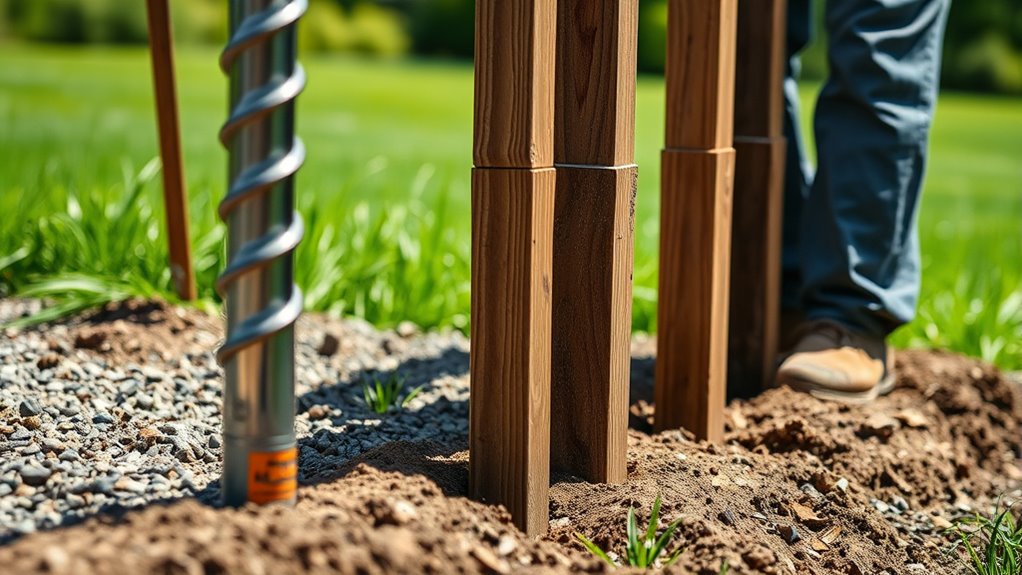
Installing ground-contact posts is a straightforward process that requires careful planning and proper techniques. Whether you’re building a fence, deck, or garden border, choosing the right material and guaranteeing it withstands the elements is essential. One of the key considerations is how to treat wood for longevity. Treating wood involves applying preservatives that help it resist decay, insects, and moisture. This step is crucial when your posts will be in direct contact with the ground, where moisture can quickly cause wood to rot. You can opt for pressure-treated wood, which is infused with chemicals to extend its lifespan, or use natural options like cedar or redwood, which contain natural oils that resist decay. Regardless of your choice, treating wood properly before installation greatly enhances its durability.
However, if you prefer to avoid chemical treatments or seek a more sustainable approach, there are alternative materials available. These alternatives include composite posts, vinyl, metal, or other synthetic options that require less maintenance and are inherently resistant to decay. For example, composite posts combine wood fibers with plastic, offering the natural appearance of wood without the susceptibility to rot or insect damage. Vinyl posts are completely immune to moisture and pests, making them a low-maintenance choice. Metal posts, such as galvanized steel or aluminum, provide excellent strength and longevity, especially when coated with protective finishes. These alternative materials eliminate the need for treatment, simplify installation, and often last longer than traditional wood.
When installing ground-contact posts, it’s essential to dig a hole that’s deep enough to provide stability, typically at least one-third of the post’s length below ground level. Fill the hole with a sturdy base like gravel to promote drainage and prevent water pooling around the post. If you’re using treated wood, make sure to set the post in concrete or gravel for added stability. For alternative materials, follow the specific installation instructions, which often involve anchoring posts with brackets or concrete footings. Whichever material you choose, guarantee the post remains plumb and secure as the concrete sets or the anchoring system is installed. Additionally, understanding the decay-resistant properties of different materials can help ensure your posts last for many years in ground-contact applications.
pressure treated wood ground contact posts
As an affiliate, we earn on qualifying purchases.
As an affiliate, we earn on qualifying purchases.
Frequently Asked Questions
What Is the Average Lifespan of Decay-Resistant Ground-Contact Posts?
You can expect decay-resistant ground-contact posts to last around 10 to 25 years, depending on post treatment methods and soil compatibility considerations. Using pressure-treated wood or composite materials extends lifespan, especially in moist or acidic soils. Regular inspections and proper installation help prevent decay. Choosing the right post treatment method for your soil type guarantees your posts resist rot longer, maximizing their durability and value over time.
Can I Install Ground-Contact Posts Without Professional Help?
You can absolutely handle DIY installation of ground-contact posts, but don’t underestimate the task—it’s like building a fortress that stands the test of time! You’ll need to follow safety precautions diligently, like wearing gloves and eye protection, and use the right tools to avoid mishaps. Take your time, read instructions carefully, and if anything feels beyond your skills, consider professional help to guarantee your posts are secure and durable.
Are There Eco-Friendly Decay-Resistant Post Options Available?
Yes, eco-friendly decay-resistant post options are available. You can choose wood alternatives like composite or recycled plastic, which don’t decay and are environmentally friendly. Additionally, look for posts treated with eco-friendly preservatives that resist decay without harmful chemicals. These options help protect the environment while ensuring your posts last longer, making your project both sustainable and durable.
How Do Temperature Changes Affect Ground-Contact Post Durability?
A stitch in time saves nine, especially when it comes to ground-contact posts. Temperature changes cause expansion and contraction, impacting durability. You should consider temperature expansion when selecting your post material, opting for options that handle these shifts well, like treated wood or composite materials. Proper installation and choosing the right material help prevent cracking or loosening, ensuring your posts stay sturdy despite weather fluctuations.
What Maintenance Is Required for Decay-Resistant Ground-Contact Posts?
You should regularly inspect your decay-resistant ground-contact posts for signs of post staining and pest infestation. Keep the posts clean and remove dirt or debris that can promote decay. Apply a protective sealant periodically to prevent moisture penetration, and verify pest barriers are intact to deter insects. This routine maintenance helps prolong their lifespan, maintains appearance, and prevents damage caused by pests or staining, keeping your posts sturdy and attractive for years.
Conclusion
So, after all that talk about decay-resistant posts, it’s funny how we often forget the simplest trick: proper installation. You might spend hours choosing the perfect material, only to ignore the importance of proper depth or drainage. Ironically, a little extra effort upfront can save you headaches—and money—down the line. So go ahead, install those posts correctly, and enjoy a sturdy, long-lasting structure. Because, in the end, small details make all the difference.
Columbus Day / Indigenous Peoples' Day Picks
long weekend sales
As an affiliate, we earn on qualifying purchases.