To make a puzzle‑piece serving board, start by designing interlocking pieces with precise edges for a secure fit. Choose quality hardwoods and use sharp saws to cut the pieces accurately. Sand all surfaces smooth, and join the pieces with food-safe glue, clamping tightly until dry. Finish with a food-safe sealant like mineral oil or beeswax for durability and to enhance appearance. If you keep going, you’ll discover step-by-step instructions to craft a beautiful, functional serving piece.

Get business pricing on tools and workshop supplies
- Business-only prices and quantity discounts
- Tax-exempt purchasing
- Multiple users, one account, clear invoices
Key Takeaways
- Design puzzle pieces with precise edges and templates for secure interlocking and aesthetic appeal.
- Select quality hardwoods, then carefully cut and sand pieces for smooth, accurate fitting.
- Assemble pieces using wood glue and clamps, ensuring tight joints and proper alignment.
- Finish with food-safe oils or beeswax, applying multiple coats for durability and a polished look.
- Use jigs or templates throughout to maintain consistency and enhance craftsmanship.

If you’re looking for a unique way to serve snacks and appetizers, the Puzzle-Piece Serving Board is an eye-catching choice that combines functionality with playful design. This creative piece turns serving into a fun experience, inviting guests to engage with the board as they pick their favorite sections. Building your own puzzle-piece serving board is not only satisfying but also allows you to customize the size, shape, and finish to match your style.
To craft this distinctive serving piece, you’ll need to understand puzzle assembly and woodworking techniques. Puzzle assembly involves fitting multiple pieces together seamlessly, which is essential when creating the interlocking sections of your board. You’ll begin by designing the puzzle pieces, ensuring each section has precise edges that lock together snugly. This step demands careful planning and measurements, especially if you want the pieces to align perfectly and create a stable, functional surface. Using jigs or templates can help maintain consistency and accuracy during the cutting process.
When it comes to woodworking techniques, you’ll want to start with selecting quality hardwoods that can withstand kitchen use and look appealing. Cutting the puzzle pieces requires a sharp saw, like a table saw or a scroll saw, to achieve clean, accurate edges. Precision is key; any gaps or uneven cuts can compromise the puzzle’s fit and the board’s stability. After cutting, you’ll sand the edges and surfaces thoroughly to remove splinters and smooth out rough spots, making the board safe for food contact. Joining the puzzle pieces involves careful alignment, often with wood glue and clamps, to ensure each piece remains securely in place while drying. Clamping is essential here, as it ensures even pressure across the joints, preventing gaps or misalignment.
Once assembled, you can enhance your puzzle-piece serving board by applying food-safe finishes such as mineral oil or beeswax. These finishes not only protect the wood but also give it a polished, attractive look. The finishing process involves applying multiple coats, buffing, and ensuring all surfaces are sealed for durability, especially around the interlocking edges where food and moisture might accumulate. Additionally, choosing the right cookie-cutter or template can help in creating consistent puzzle pieces for your design. The end result is a playful yet practical piece that adds a touch of artistry to your kitchen or dining area.
Making your own puzzle-piece serving board combines the creativity of puzzle assembly with the craftsmanship of woodworking techniques. It’s a rewarding project that results in a functional, conversation-starting piece. Whether you’re serving cheese, fruit, or finger foods, this board will surely be a centerpiece that sparks joy and interaction at any gathering.
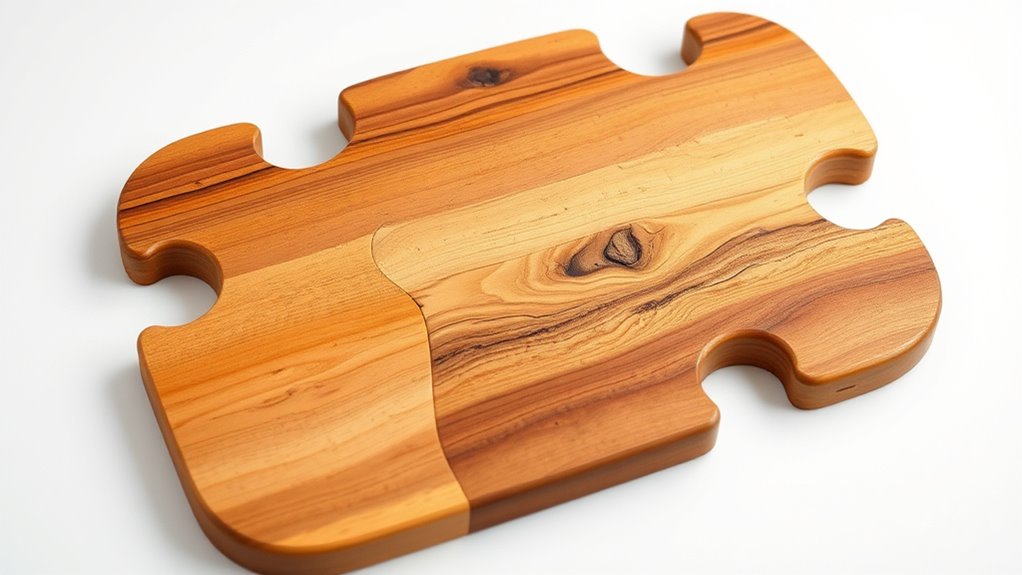
wooden serving board with interlocking puzzle pieces
As an affiliate, we earn on qualifying purchases.
As an affiliate, we earn on qualifying purchases.
Frequently Asked Questions
What Materials Are Best for Making a Puzzle-Piece Serving Board?
You should choose hardwoods like maple, cherry, or walnut for your puzzle-piece serving board because they offer excellent wood selection and durability factors. These woods resist dents, scratches, and moisture, ensuring your board lasts longer and stays beautiful. Avoid softwoods that wear quickly. By selecting high-quality, dense wood, you’ll create a sturdy, attractive serving piece perfect for everyday use and easy to clean.
How Do I Ensure the Puzzle Pieces Fit Together Securely?
To guarantee your puzzle pieces fit together securely, use interlocking mechanisms like notches and grooves to create a snug fit. Additionally, apply adhesive options such as food-safe glue or epoxy to bond the pieces firmly, especially if you want it to be functional. Make sure to align the pieces carefully before fixing them, and clamp or press them until the adhesive sets completely. This guarantees a stable, secure serving board.
Can I Customize the Shape or Size of My Puzzle-Piece Serving Board?
Like an artist shaping their masterpiece, you can customize your puzzle-piece serving board with various shape options and sizing flexibility. Many artisans offer custom shape options, allowing you to choose sizes that fit your space or style perfectly. Whether you want a compact design or an elaborate, large-scale piece, you can tailor it to your vision. Embrace your creativity and make a unique, functional work of art that’s perfectly suited to you.
How Do I Clean and Maintain a Puzzle-Piece Serving Board?
To keep your puzzle-piece serving board in top shape, follow these cleaning tips and maintenance routine. Hand wash it with warm soapy water after use, avoiding soaking. Dry it thoroughly to prevent warping or cracking. Periodically, apply a food-safe mineral oil to maintain its finish and prevent drying out. Store it in a dry place, and avoid dishwasher cleaning to preserve the quality and longevity of your puzzle-piece serving board.
Are There Safety Concerns With Using a Puzzle-Piece Serving Board?
You might be surprised, but using a puzzle-piece serving board generally isn’t a safety risk if you consider food safety and material durability. Just verify the board is made from food-safe, non-toxic materials, and avoid cracks or splinters that could harbor bacteria. Regular cleaning and proper maintenance keep it safe. As long as you follow these precautions, you can enjoy your unique serving piece worry-free, adding charm to your gatherings.
Conclusion
As you place the puzzle-piece serving board on your table, it becomes more than just a serving piece—it symbolizes connection and unity. Each piece fits perfectly, reminding you that shared moments and togetherness create a complete picture. Whether hosting friends or family, this board invites everyone to be part of something greater. Embrace its symbolism, and let it inspire you to cherish the bonds that make life truly whole.
Fall Picks
fall essentials
As an affiliate, we earn on qualifying purchases.