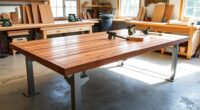
To maintain the best conditions in your workshop, you should use humidity sensors and climate control systems like heaters, dehumidifiers, or air conditioners. These help keep temperature and moisture levels steady, protecting your tools and materials from damage like rust, warping, or mold. Proper regulation guarantees your work stays consistent and your tools last longer. By applying these strategies, you’ll improve your workspace—stay tuned to learn how to optimize your climate control even further.
Key Takeaways
- Humidity sensors provide real-time data to maintain optimal moisture levels, preventing damage to tools and materials.
- Proper climate control involves automated systems that adjust heating, cooling, humidifiers, or dehumidifiers based on sensor feedback.
- Monitoring humidity helps prevent issues like rust, mold, warping, or cracking, ensuring consistent work quality.
- Continuous climate regulation stabilizes workshop environment, reducing environmental-related defects and extending tool lifespan.
- Integrating modern sensors and automation enhances efficiency, minimizes manual adjustments, and maintains ideal temperature and humidity conditions.

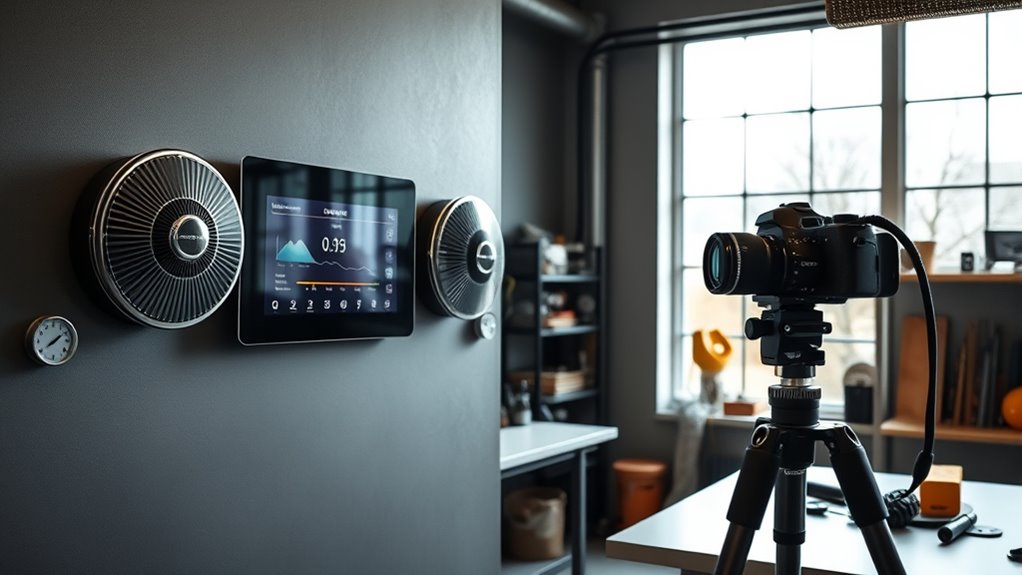
Maintaining proper temperature and humidity levels in your workshop is essential for ensuring ideal working conditions and protecting your tools and materials. If the environment is too humid or too dry, it can lead to warped wood, rusted metal, and compromised finishes. To keep everything in check, you need reliable tools like humidity sensors, which give you real-time data about your workshop’s moisture levels. These sensors are crucial for effective climate regulation because they alert you when conditions go out of the optimal range. With accurate readings, you can make necessary adjustments quickly, preventing damage before it occurs.
Proper workshop climate control relies on humidity sensors for real-time moisture monitoring and damage prevention.
Climate regulation isn’t just about installing a heater or air conditioner; it’s about creating a balanced environment. Using humidity sensors helps you monitor changes throughout the day, especially in spaces where temperature swings are common. For example, in winter, heating can dry out the air, leading to cracking or shrinking of wood; in summer, increased humidity might cause swelling or mold growth. By continuously tracking these fluctuations, you can fine-tune your climate control systems—whether that’s adding a dehumidifier, humidifier, or adjusting your HVAC settings—ensuring your workshop stays within the ideal range.
Investing in good climate regulation also means understanding the specific needs of your projects. Fine woodworking, for instance, demands a stable environment to prevent joints from shifting or finishes from bubbling. Metalworking tools and equipment are more likely to rust if humidity levels are high. Using humidity sensors regularly allows you to maintain consistent conditions, which translates into better quality work and longer-lasting tools. Additionally, a stable climate reduces the need for constant repairs or replacements, saving you time and money in the long run.
Controlling temperature and humidity isn’t a set-it-and-forget-it process. It requires ongoing vigilance, and that’s where modern technology shines. Many climate regulation systems now integrate humidity sensors to automate adjustments, maintaining ideal levels with minimal effort on your part. This automation ensures your workspace remains stable even when external weather conditions change unexpectedly. Plus, some advanced sensors provide detailed data logs, helping you analyze patterns over time and optimize your climate control strategy. Proper climate regulation systems can significantly enhance your workshop’s environment and productivity.
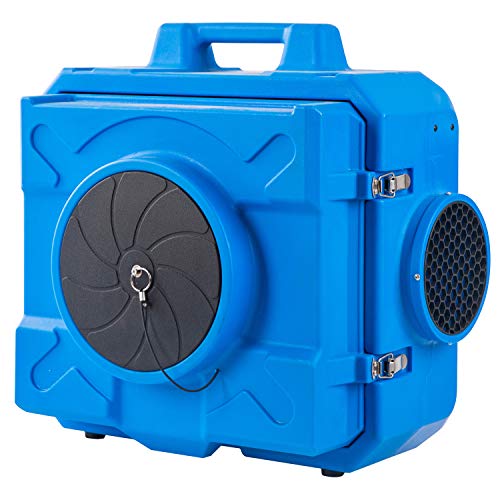
MOUNTO HEPA500 Commercial 500cfm Air Purifier Hepa Air Scrubber Negative Air Machine Roto-Molded (Blue)
MT500 has a Filter change light, daisy chain Dual GFCI outlet, Stackable, and variable speed control, quick access...
As an affiliate, we earn on qualifying purchases.
Frequently Asked Questions
How Do Temperature Fluctuations Affect Sensitive Workshop Equipment?
Temperature fluctuations can seriously impact your sensitive workshop equipment. As temperatures change, thermal expansion occurs, causing equipment components to expand or contract, which can lead to inaccuracies. These variations can also disrupt equipment calibration, making measurements unreliable. To prevent these issues, you need to maintain stable temperature conditions, ensuring your equipment stays precise and functioning properly. Proper climate control helps avoid costly errors and prolongs the lifespan of your tools.
What Are the Best Humidity Levels for Different Workshop Materials?
You need to keep humidity levels around 40-60% for most workshop materials. For wood preservation, aim for 50-60% to prevent cracking or warping, while lower humidity helps prevent mold. Use moisture barriers to stabilize conditions. Think of it as walking a tightrope—you must balance humidity carefully to protect your materials and equipment from damage and ensure longevity. Proper control maintains your workspace running smoothly.
Can Automated Systems Improve Temperature and Humidity Stability?
Yes, automated systems can markedly improve climate stability in your workshop. They continuously monitor temperature and humidity levels, adjusting heating, cooling, and humidification devices as needed. This proactive approach ensures consistent conditions, reducing material warping or deterioration. By investing in automation, you gain precise control, minimize manual adjustments, and create a stable environment that enhances your work quality and efficiency.
What Are Common Signs of Improper Climate Control in a Workshop?
You might notice uneven temperature or humidity levels, which indicate improper climate control. Ventilation issues often cause stuffiness or excessive dust buildup, while insulation problems lead to drafts or temperature fluctuations. You may also see condensation on windows or walls, and equipment could malfunction or wear out faster. These signs suggest your workshop needs better ventilation and insulation to maintain a stable environment, protecting your tools and work quality.
How Often Should Climate Control Systems Be Maintained or Calibrated?
You should schedule system maintenance and sensor calibration every three to six months to guarantee peak performance. Regular upkeep keeps climate controls consistent, preventing problems like fluctuations or failures. By maintaining your system timely, you prolong its life and preserve the workshop’s working conditions. Don’t delay—consistent calibration and maintenance are vital to keep your climate control reliable, responsive, and ready to meet your needs every season.

Xtreway Hepa Air Scrubber Commercial Air Purifier with 3-Stage Filtration Negative Air Machine Industrial Air Purifier for Heavy Duty, 550CFM
【3-Stage Filtration System】 The XTREWAY hepa air scrubber adopts advanced three-stage air filtration system. Its high-performance MERV-10 pre-filter...
As an affiliate, we earn on qualifying purchases.
Conclusion
Controlling temperature and humidity in your workshop is essential for ideal work quality and equipment longevity. By maintaining stable conditions, you reduce material warping and prevent damage. Did you know that improper humidity levels can cause up to 20% of tools to corrode prematurely? Staying vigilant with your climate control ensures a safe, efficient workspace, saving you time and money. Keep monitoring and adjusting to create the perfect environment for your projects to thrive.

Findbuytool Carbide Inserts cutters (15x15x2.5mm-30°-R150-4R0.5) Insert for Woodworking Helical Cutter Head Tools, 10 Pcs (10)
{Product Contains}:10pcs Carbide Insert Knife 15x15x2.5mm-30°-R150-4R0.5 for Helical Cutterhead.
As an affiliate, we earn on qualifying purchases.
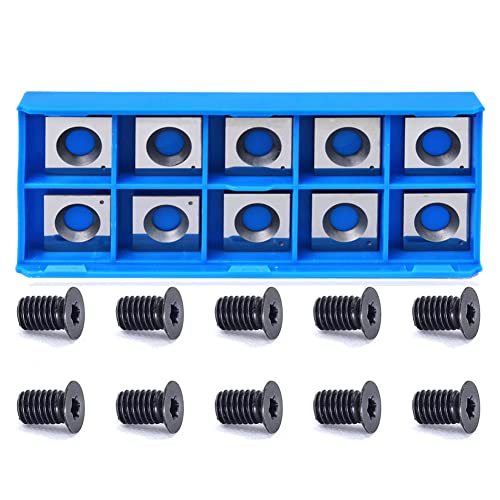
Indexable Carbide Insert Knife 14.3x14.3x2.0mm-50° 2-Edge Replacement Cutter for Cutech Tool Rikon Carbatec and Most Planer Jointer Helical Cutterheads, 10 Packs
Standard Cutter Size: 14.3mm square with straight corners 2mm thick,2 indexable cutting edges, 50 degree cutting bevel. Inserts...
As an affiliate, we earn on qualifying purchases.