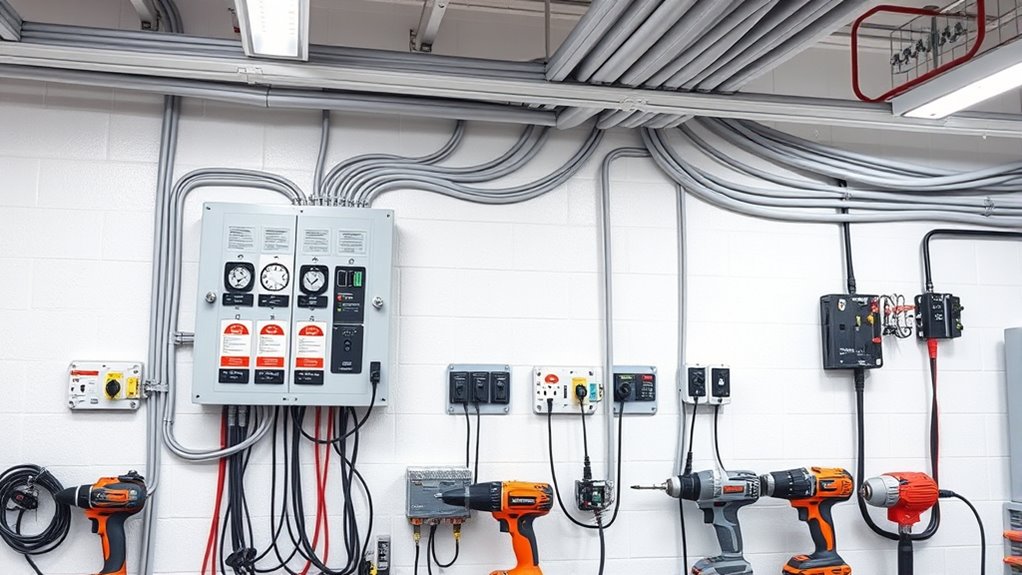

To keep your shop safe, guarantee your circuits are properly rated for your tools and avoid overloads by distributing high-power equipment across separate circuits. Use Ground Fault Circuit Interrupters (GFCIs) in moist areas and check that circuit breakers match your load demands. Regular maintenance and planning your electrical layout help prevent overheating and fires. If you want to learn more about setting up a safe electrical system, there’s important information you should explore further.
Key Takeaways
- Use properly rated circuit breakers and GFCIs to prevent overloads and ground faults.
- Distribute high-power tools across separate circuits to avoid overloading.
- Regularly inspect and maintain electrical components for safety and proper function.
- Avoid daisy-chaining extension cords; use dedicated circuits for heavy equipment.
- Plan your shop’s electrical layout to ensure safe load distribution and minimize overload risks.
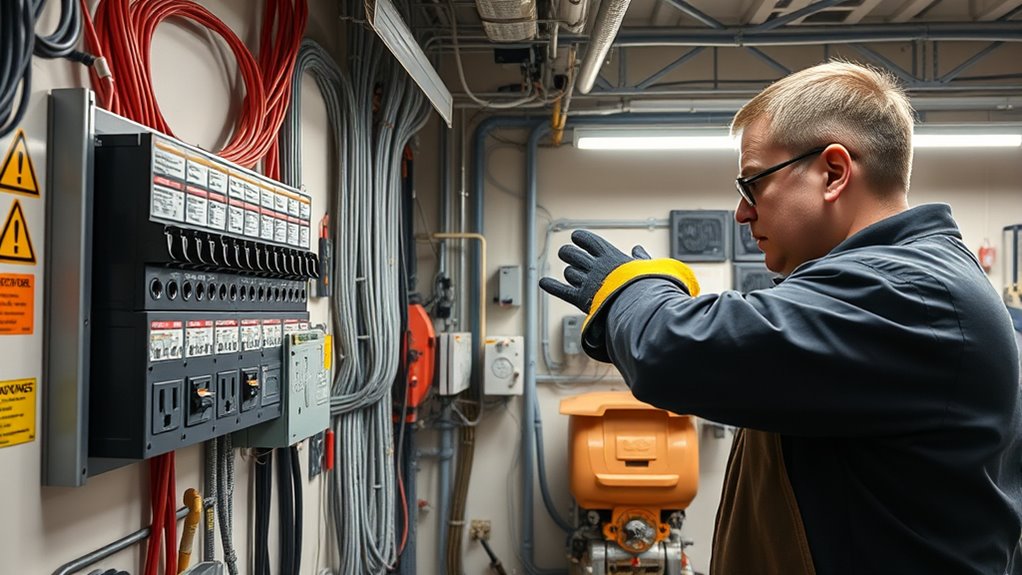
Electrical safety is essential in any shop to prevent accidents, injuries, and property damage. Understanding how to properly manage circuits and loads is fundamental for maintaining a safe working environment. One of the most important aspects of this is protecting your electrical system from ground faults, which occur when electricity unintentionally flows to the ground through an unintended path. Ground faults can cause severe shocks or fires if left unchecked. To mitigate this risk, you should verify your shop is equipped with ground fault circuit interrupters (GFCIs). These devices detect imbalances in current flow between the hot and neutral wires and automatically shut off the power if a ground fault is detected. Installing GFCIs on outlets in areas prone to moisture or where you handle conductive materials is especially essential because it offers a first line of defense against electric shocks.
Along with GFCIs, your circuit breaker plays an indispensable role in maintaining electrical safety. A circuit breaker is designed to protect your wiring and devices by shutting off power when it detects an overload or short circuit. Properly rated circuit breakers prevent wiring from overheating and reduce the risk of fires. You need to make sure your circuit breakers are suitable for the loads they’re controlling. Overloading a circuit with too many tools or machines can trip the breaker, so understanding your shop’s load demands is key. When installing new equipment, always verify that the circuit can handle the additional load without tripping. If you find yourself frequently resetting circuit breakers, it might be time to upgrade your system or add dedicated circuits for high-demand tools.
Managing your loads effectively also means paying attention to the wiring and how you distribute power throughout your shop. Avoid daisy-chaining multiple extension cords or connecting too many devices to a single outlet. Overloading circuits can cause breakers to trip frequently and increase the risk of overheating and fires. Plan your electrical layout so that high-power machines are on separate circuits whenever possible. This not only reduces the chance of tripping but also guarantees stable power supply for your tools and equipment. Additionally, understanding familiar electrical concepts can help you troubleshoot issues more effectively and ensure your system remains safe and efficient.
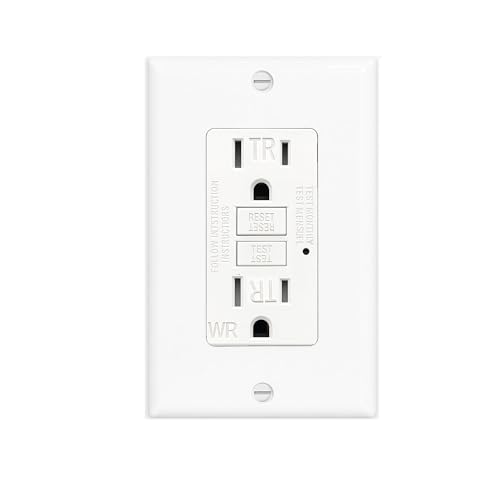
(15 AMP – 1 Pack) GFCI Outlet WR White – Tamper Resistant, Weather Resistant GFI Receptacle with Self-Test, LED Indicator,UL Listed, Easy Install – Ground Fault Outlet for Outdoor Use & Bathroom
✅1. Smart Protection, Anywhere You Need It Keep your home safe from electrical hazards with our GFCI outlet…
As an affiliate, we earn on qualifying purchases.
As an affiliate, we earn on qualifying purchases.
Frequently Asked Questions
How Often Should Shop Electrical Systems Be Inspected?
You should inspect your shop’s electrical systems at least once a year to guarantee electrical code compliance and correct circuit breaker ratings. Regular inspections help identify potential hazards, such as damaged wiring or overloaded circuits, before they cause issues. If you notice frequent breaker trips or signs of wear, increase inspection frequency. Staying proactive keeps your shop safe, efficient, and compliant with safety standards.
What Safety Gear Is Recommended When Working With Shop Circuits?
Did you know that electrical injuries account for about 4,000 hospital visits annually? When working with shop circuits, always wear appropriate personal protective equipment, including electrical gloves, to prevent shocks. You should also use insulated tools and safety goggles. These measures protect you from potential hazards and guarantee safe handling of electrical components, reducing the risk of injury. Prioritize safety to keep your workspace secure and your work efficient.
Can I Upgrade My Shop’s Electrical System Myself?
You can try DIY upgrades, but make sure to adhere to the electrical code closely. If you’re comfortable with electrical work and understand safety protocols, minor upgrades like adding outlets or switches may be doable. However, for major changes or if you’re unsure, it’s best to hire a licensed electrician. This ensures your shop remains safe and compliant with local regulations, preventing potential hazards or code violations.
What Are Common Signs of Electrical System Overload?
You might notice circuit warning signs like flickering lights, frequent breaker trips, or outlets that are hot to the touch, indicating overloads. Overload prevention techniques include avoiding plugging too many devices into a single circuit and ensuring your system’s capacity matches your power needs. Confirm these signs are true overloads by consulting an electrician, as misdiagnosing could lead to serious electrical hazards. Always prioritize safety when addressing potential overloads.
How Do I Safely Disconnect Power During Maintenance?
To safely disconnect power during maintenance, first perform circuit breaker testing to confirm the circuit is off. Then, apply a lockout tagout device to the breaker to prevent accidental re-energizing. Always make sure the switch is in the off position and verify no voltage is present with a tester. Following these steps keeps you safe and helps prevent electrical accidents during maintenance.
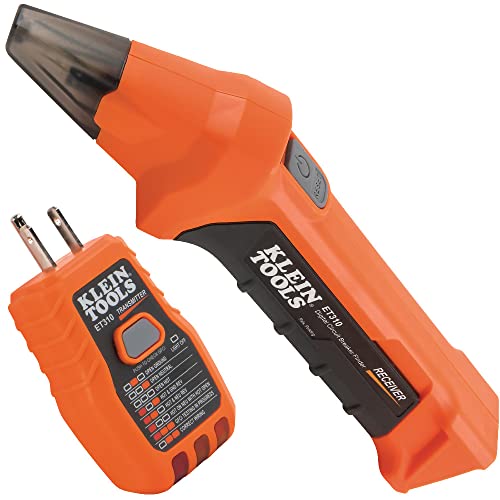
Klein Tools ET310 AC Circuit Breaker Finder, Electric and Voltage Tester with Integrated GFCI Outlet Tester
ACCURATE CIRCUIT BREAKER IDENTIFICATION: Quickly locate the correct breaker with precision using our circuit breaker finder, ensuring efficient…
As an affiliate, we earn on qualifying purchases.
As an affiliate, we earn on qualifying purchases.
Conclusion
Ensuring safe electrical setups in your shop isn’t just about avoiding fines—it’s about protecting yourself and your workspace. Are you willing to risk a fire or injury by neglecting proper circuits and loads? By following the right guidelines, you create a safer environment where your tools and talent can thrive. Remember, safety isn’t an option; it’s a necessity. Take the time now to get it right, and enjoy peace of mind every time you get to work.

Power Distribution Box, 110V Electricity Meter Electrical Box with NEMA 5-20 Power Outlet Pane,IP54 Electrical Breaker Socket Distribution Box for Construction Sites, workshops and Factories
PLEASE NOTE BEFORE PURCHASING: This product requires professional electricians to wire and install it. Non professionals are prohibited…
As an affiliate, we earn on qualifying purchases.
As an affiliate, we earn on qualifying purchases.

POWGRN 50 ft 12/3 Outdoor Extension Cord Waterproof Heavy Duty with Lighted Indicator End 12 Gauge 3 Prong, Flexible Cold-Resistant Long Power Cord Outside, 15Amp 1875W SJTW Yellow ETL Listed
Up to 1875W Applications: Outdoor extension cord waterproof 12 gauge, 15 amp, 125 volts, 1875 watts, NEMA 5-15P…
As an affiliate, we earn on qualifying purchases.
As an affiliate, we earn on qualifying purchases.