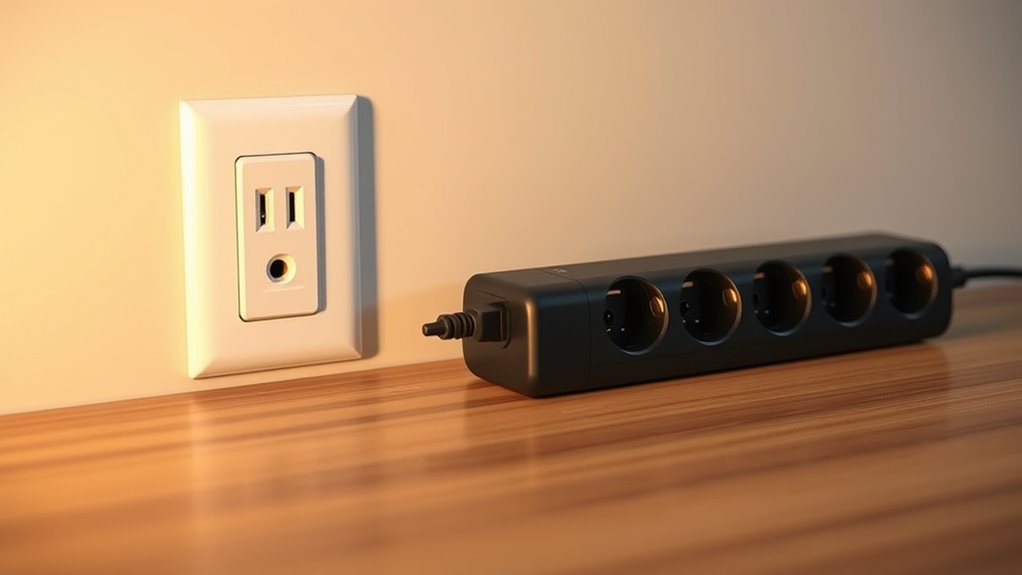

To stay safe, make certain your outlets are childproof and meet safety standards, reducing the risk of shock or injury, especially for kids. Use high-quality surge protectors with proper grounding to safeguard devices from power surges. Regularly check that your grounding system is intact, as it helps prevent electrical fires and shocks. Upgrading outdated outlets and grounding methods can make a big difference in overall safety. Keep exploring to discover more ways to protect your home and loved ones.
Key Takeaways
- Use childproof outlets with safety shutters to prevent accidental insertions and enhance safety.
- Always select surge protectors with proper ratings and safety certifications to safeguard devices and prevent overloads.
- Ensure outlets are properly grounded to reduce electrical shock risks and improve overall system safety.
- Regularly inspect outlets and power strips for damage or wear, replacing them if necessary.
- Follow electrical safety standards and maintain proper grounding to prevent fires and electrical accidents.
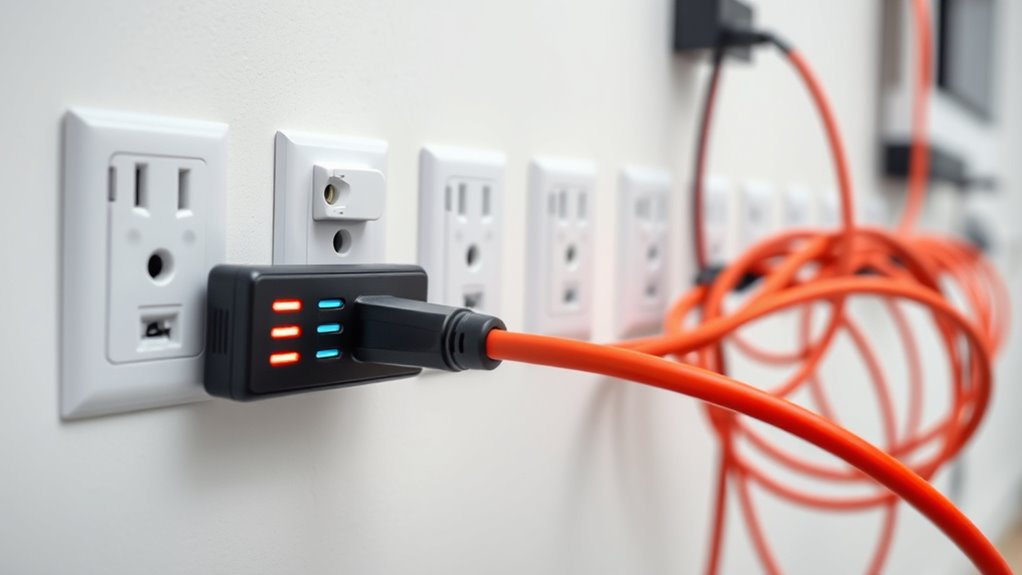
Have you ever considered how dangerous electricity can be if not handled properly? It’s easy to overlook the hazards, especially in your own home, but taking the right precautions can prevent serious accidents. One essential aspect is ensuring that outlets are safe for everyone, especially children. Childproof outlets are an excellent solution—they feature built-in safety shutters that prevent little fingers from inserting objects where they shouldn’t go. Installing these outlets is simple and affordable, yet they provide significant peace of mind. When you’re choosing outlets, don’t just settle for the standard ones. Look for childproof options that meet safety standards, and consider the overall design to guarantee they’re securely installed and properly grounded. This small upgrade can make a big difference in keeping curious kids safe.
Another critical area to focus on is the selection of surge protectors. Not all power strips or surge protectors are created equal, so it’s imperative to choose wisely. A good surge protector selection involves checking for features like energy absorption ratings, multiple outlets, and surge protection indicators. You want a device that can handle power surges caused by lightning strikes or electrical faults, which can damage your appliances and pose fire risks. When shopping for a surge protector, opt for those with built-in safety features like circuit breakers that shut off power during overloads, and ensure it’s certified by recognized safety organizations. Remember, a quality surge protector isn’t just an extension cord—it’s a safeguard for your entire electrical system. Additionally, understanding grounding principles can help you better evaluate the safety of your electrical setup.

Safety 1st Electrical Outlet Baby Proof Covers, Secure Outlet Plugs, Baby Proofing, 36 Count
CHILD PROOF YOUR HOME: Keep sharp objects and curious fingers from electrical outlets with Safety 1st's baby-proofing outlet…
As an affiliate, we earn on qualifying purchases.
As an affiliate, we earn on qualifying purchases.
Frequently Asked Questions
How Often Should I Test My Outlet Grounding?
You should test your outlet grounding at least once a year to guarantee safety. Regular grounding test frequency helps catch any grounding issues early, preventing electrical hazards. During outlet safety checks, use a grounding tester or a multimeter to verify proper grounding. If you notice any problems or inconsistent readings, it’s best to have a qualified electrician inspect and repair the outlet promptly to keep your home safe.
Can Using Multiple Power Strips Cause Electrical Fires?
Using multiple power strips is like overloading a bridge; it can cause a collapse and ignite an electrical fire. Poor power strip safety practices increase the risk of electrical fires, especially if they’re overloaded or daisy-chained. To prevent this, avoid plugging too many devices into one strip, and always follow manufacturer guidelines. Proper electrical fire prevention depends on mindful use, ensuring your home’s wiring remains safe and sparks stay out of sight.
What Are Signs of a Faulty Electrical Outlet?
You’ll notice signs of a faulty electrical outlet if it flickers frequently or if you smell a burning odor coming from it. These issues indicate a poor connection or overheating, which can be dangerous. Don’t ignore these warning signs—disconnect any devices plugged in and have a qualified electrician inspect and repair the outlet promptly. Addressing these problems early helps prevent potential electrical fires and keeps your home safe.
Are Surge Protectors Effective for Protecting Electronics?
Surge protectors are effective for protecting your electronics from power surges, but they do have limitations. They can absorb small to moderate surges, preventing damage, but may fail during major power spikes. To guarantee your electronic device safety, use high-quality surge protectors and replace them after a significant surge or every few years. Remember, they’re an important layer of protection but not foolproof—stay cautious with your valuable electronics.
How Do I Safely Dispose of Damaged Electrical Outlets?
Oh, the thrill of disposing of a damaged outlet! First, turn off the power at your circuit breaker—yes, safety first! Then, wear gloves and use insulated tools to remove the outlet. Follow outlet safety tips, like not forcing or damaging wires. Properly recycle or dispose of the damaged outlet at a designated electronic waste facility. Remember, electrical outlet replacement is best handled with care and responsibility!

CCCEI Heavy Duty Surge Protector Power Strip 20 Amp Individual Switches. 6FT 12 Gauge Extension Cord with Multiple Outlets. Kitchen, Garage, Shop, Industrial Wall Mount Electric Extender, Yellow.
Heavy duty power strip 20 amp with 4 outlets and individual switches, 5-20R, 6-20R and come with standard…
As an affiliate, we earn on qualifying purchases.
As an affiliate, we earn on qualifying purchases.
Conclusion
To stay safe, always use outlets and power strips properly and verify they’re grounded correctly. For example, imagine plugging in a high-powered appliance with an ungrounded extension cord—this could lead to electrical shock or fire. By following safety guidelines, like inspecting cords regularly and avoiding overloads, you protect yourself and your home. Remember, a small caution now can prevent big accidents later, so stay vigilant and prioritize electrical safety every day.

Outlet Tester for Grounding Products – Test Receptacles & Sockets for Proper Wiring – Simple Tool for Electrical Assessment
✅ 𝗘𝗻𝘀𝘂𝗿𝗲 𝗦𝗮𝗳𝗲 𝗚𝗿𝗼𝘂𝗻𝗱𝗶𝗻𝗴: Quickly test if your outlet is properly grounded before using grounding sheets, mats, pillowcases,…
As an affiliate, we earn on qualifying purchases.
As an affiliate, we earn on qualifying purchases.
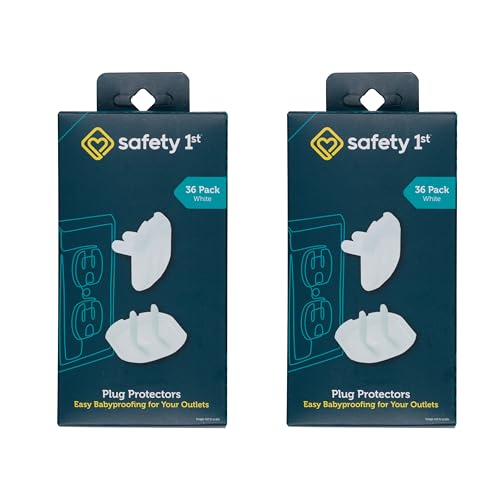
Safety 1st Electrical Outlet Baby Proof Covers, Secure Outlet Plugs, Baby Proofing, 72 Pack
CHILD PROOF YOUR HOME: Keep sharp objects and curious fingers from electrical outlets with the Safety 1st baby-proofing…
As an affiliate, we earn on qualifying purchases.
As an affiliate, we earn on qualifying purchases.