When planning your dust collection system, start by evaluating your dust types and volume to choose the right setup, like a single-stage, two-stage, or cyclone system. Design ductwork carefully to guarantee smooth airflow and easy maintenance, including proper sizing and layout. Incorporate safety features like grounding and filters, and plan for regular inspections to prevent hazards and ensure efficiency. If you keep exploring, you’ll discover key tips to optimize your system for safety and performance.
Key Takeaways
- Assess dust volume and type to select the appropriate system, such as single-stage, two-stage, or cyclone models.
- Design ductwork layout for optimal airflow, proper sizing, and ease of maintenance.
- Incorporate safety features like grounding, shut-off valves, and spark-resistant components to prevent hazards.
- Plan regular inspection and maintenance schedules for filters and ductwork to ensure efficiency.
- Implement moisture management solutions and safety protocols to enhance system performance and safety.
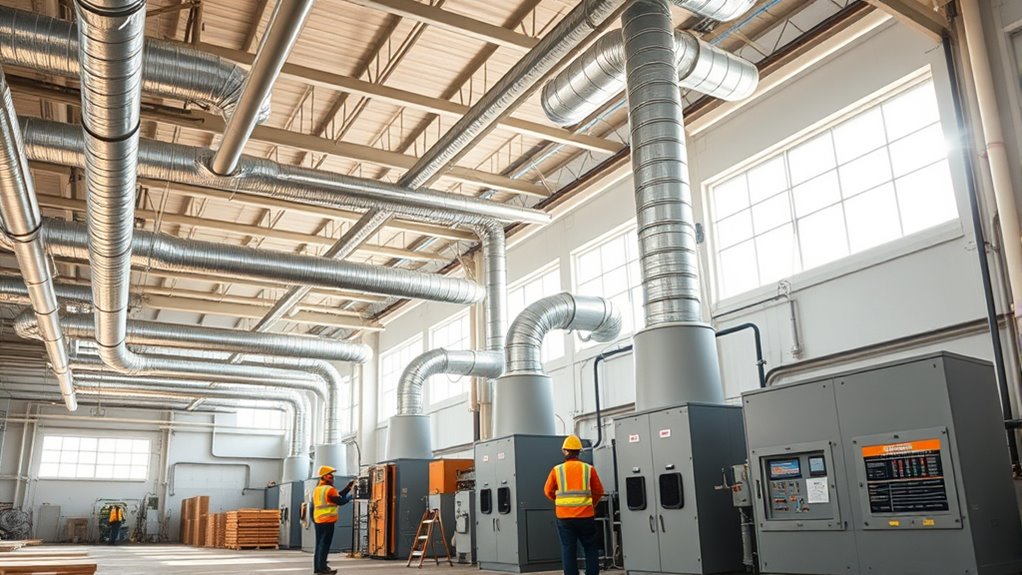
Dust collection systems are fundamental tools for maintaining a clean and safe workspace, especially in woodworking, manufacturing, and other industrial environments. When planning and installing these systems, understanding the various types and components is essential to achieve optimal performance and safety. There are several types of dust collection systems, including single-stage, two-stage, and cyclone systems. Single-stage systems are simpler and more affordable, capturing dust directly into a bag or bin. Two-stage systems incorporate a separation process, using a filter or cyclone to remove larger debris before filtering the finer dust, which enhances efficiency and reduces filter clogging. Cyclone systems use a spinning vortex to separate heavier particles from the airflow before they reach the filter, making them particularly effective for heavy-duty applications. Each type has its advantages and suited environments, so choosing the right one depends on your specific needs and the volume of dust generated.
The components of these systems typically include a blower or fan, ductwork, filters, and collection bins. The blower creates the suction needed to draw dust-laden air through the ductwork, which directs the debris toward the collection unit. Proper duct sizing and layout are critical to maintaining airflow efficiency and minimizing resistance. Filters act as the core of the dust collection process, trapping particles and preventing them from escaping back into the workspace. Depending on your system, filters can be paper, cartridge, or HEPA filters, with each offering different levels of filtration and maintenance requirements. Collection bins or bags store the collected dust and debris, and they should be easily accessible for regular disposal and replacement. When planning your system, you need to consider the layout carefully to guarantee optimal airflow and ease of maintenance. Additionally, understanding how self watering plant pots work can inspire innovative solutions for moisture management in dust collection setups, emphasizing the importance of proper system design.
Safety considerations are paramount when installing and operating dust collection systems. Dust, especially fine particles, can pose serious health risks, including respiratory issues and the potential for fire or explosion if combustible dust accumulates. You should guarantee the system is properly grounded to prevent static buildup, and use spark-resistant or explosion-proof components if working with combustible dust. Regular maintenance, including filter cleaning or replacement and duct inspection, is essential to prevent blockages and maintain safe operation. Also, make sure the system is equipped with appropriate safety features like shut-off valves and emergency stop controls. Proper training on system use and maintenance helps minimize risks and guarantees you’re operating the system safely and efficiently.
Frequently Asked Questions
What Is the Average Lifespan of a Dust Collection System?
You can expect a dust collection system to last around 10 to 15 years, depending on your system’s durability and how well you maintain its components. Regular inspections and timely replacements extend component longevity, ensuring your system operates efficiently. Proper care can even push the lifespan further, but ultimately, consistent maintenance is key. Investing in quality parts also helps maximize the durability and longevity of your dust collection system.
How Often Should Filters Be Replaced or Cleaned?
Think of filter maintenance like brushing your teeth—regular care keeps everything running smoothly. You should clean or replace filters every 1 to 3 months, depending on usage and dust levels. Follow your system’s replacement schedule closely, but don’t wait until filters are visibly dirty. Consistent maintenance guarantees ideal airflow, reduces wear, and extends your dust collection system’s lifespan, making your workspace safer and more efficient.
Can Existing Systems Be Upgraded for Better Performance?
Yes, you can upgrade your existing dust collection system for better performance. First, guarantee system compatibility with new components, such as filters or fans. Upgrades can deliver benefits like improved airflow, enhanced filtering efficiency, and reduced maintenance needs. You might also consider adding features like better filtration or automation. Upgrading is often cost-effective and boosts safety and productivity, making it a smart choice for maintaining ideal dust control.
What Are the Maintenance Costs Associated With Dust Collectors?
You’ll find that maintenance costs for dust collectors average around $200 to $500 annually, depending on usage. You should plan for regular filter replacements, which typically occur every 3 to 6 months, to keep the system running efficiently. Frequent maintenance helps prevent costly repairs and downtime, saving you money in the long run. Staying on top of filter replacement and maintenance frequency guarantees peak performance and longevity of your dust collection system.
Are There Specific Regulations for Dust Collection in Different Industries?
Yes, you need to follow industry standards and regulatory compliance for dust collection in different industries. Regulations vary depending on your sector, like OSHA in manufacturing or EPA standards for environmental protection. You must verify your dust collection systems meet these specific guidelines to stay compliant, prevent fines, and protect workers. Regularly check updates to industry standards and regulations to keep your dust collection practices current and effective.
Conclusion
Now that you understand the importance of proper dust collection systems, it’s clear they’re essential for safety and efficiency. Did you know that poorly maintained systems can lead to a 50% increase in airborne dust? By planning and installing your system correctly, you not only protect your workspace but also boost productivity. Take action today—invest in a well-designed dust collection setup and enjoy a cleaner, safer environment every day.