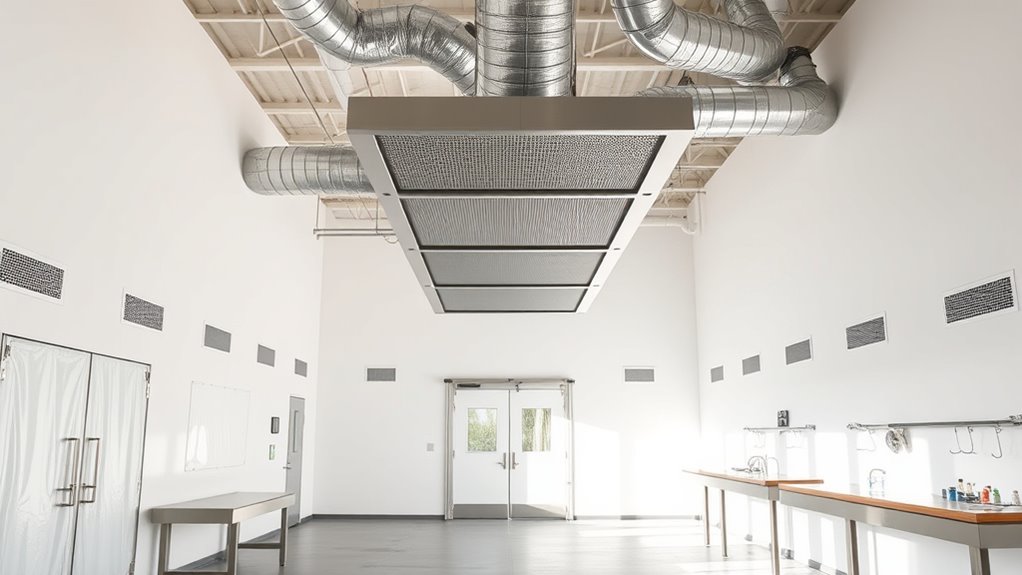

To create an effective finishing area, focus on proper ventilation by installing exhaust fans near your work surfaces, using filters, and ensuring continuous airflow to remove fumes and airborne particles. Isolate the space with physical barriers like plastic sheeting and designate specific zones to prevent contamination and overspray spread. Regularly inspect and maintain your ventilation system, and organize your workspace to support a steady airflow. Keep discovering more ways to optimize your setup for safety and professional quality.
Key Takeaways
- Install exhaust fans near work surfaces to effectively remove fumes from paints, stains, and finishes.
- Use physical barriers like plastic sheeting and drop cloths to contain overspray and dust within designated zones.
- Ensure proper placement and regular maintenance of ventilation components, including filters and exhaust vents.
- Designate separate storage areas for chemicals away from the finishing zone to prevent contamination.
- Create airtight containment with effective ventilation to isolate the finishing area while maintaining airflow and safety.

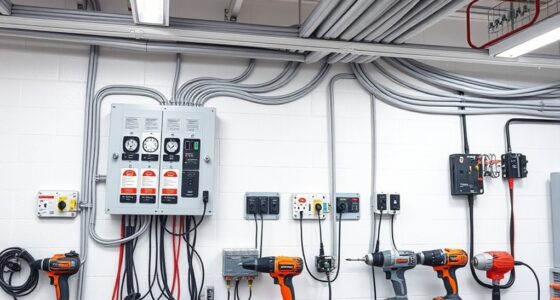
Have you ever wondered how to efficiently complete your craft or woodworking projects? Creating a dedicated finishing area is essential for achieving professional results while keeping your workspace safe and clean. One of the most important aspects of this setup is ensuring proper ventilation systems. Without adequate airflow, fumes from paints, stains, and finishes can linger, posing health risks and affecting the quality of your work. Installing a well-designed ventilation system helps remove airborne particles and VOCs, preventing buildup that could compromise both your health and your project’s finish. You should consider a combination of exhaust fans, air filters, and possibly a downdraft table to promote continuous airflow. Position the exhaust vents near your work surface and ensure that fresh air is drawn in from clean areas, creating a steady cycle that minimizes harmful fumes. Additionally, regularly inspecting and maintaining your ventilation equipment ensures it remains effective and safe to use.
Alongside ventilation, employing effective isolation techniques is crucial to protect your other projects and workspace from overspray, dust, and chemical contamination. Isolation techniques involve creating physical barriers or designated zones within your finishing area, so overspray or fumes don’t spread to adjacent spaces. You can use plastic sheeting, drop cloths, or temporary walls to section off your finishing zone. This prevents cross-contamination and helps maintain a cleaner environment. Isolating your finishing station also makes cleanup easier because you can contain the mess within a confined area. When setting up your space, make sure your isolation methods are airtight enough to contain fumes and overspray, but still allow for proper ventilation. Being aware of the presence of mold or spoilage in materials is also important to ensure only safe and fresh products are used during your projects.
Design your finishing area with both ventilation systems and isolation techniques in mind, so they work hand-in-hand for maximum safety and efficiency. For instance, use a dedicated exhaust hood over your spraying station, combined with plastic barriers that direct fumes into the vent system. Keep your workspace organized so that airflow isn’t obstructed, and make sure to regularly maintain your ventilation equipment to ensure it’s functioning properly. Also, consider adding a separate storage area for chemicals and finishes away from your main work zone. This further reduces the risk of accidental contamination and makes cleanup simpler.

10-Inch High-Velocity Portable Utility Blower Fan, Industrial Exhaust Fan with 16.4ft Flexible Duct Hose, 3150 RPM Low-Noise Ventilator for Basements, Workshops, Warehouses, and Confined Spaces
280W High-Performance AC Motor: Equipped with a powerful AC motor delivering a speed of 3150 RPM and a…
As an affiliate, we earn on qualifying purchases.
As an affiliate, we earn on qualifying purchases.
Frequently Asked Questions
What Are the Best Materials for Ventilation in Finishing Areas?
You should use high-quality, corrosion-resistant materials like galvanized steel or aluminum for ventilation in finishing areas. These materials help maintain air quality by preventing rust and contamination. Incorporate exhaust fans and vent ducts to control moisture effectively, reducing the risk of mold and mildew. Proper ventilation guarantees a safe environment, improves air circulation, and keeps moisture levels in check, which is essential for a successful finishing process.
How Do I Prevent Dust From Spreading During Finishing?
Like a modern-day alchemist, you can prevent dust from spreading during finishing by implementing effective dust control methods. Use plastic sheeting and barriers to isolate the area, and guarantee proper air filtration systems are in place. Regularly clean surfaces and vacuum with HEPA filters to capture fine dust particles. Proper ventilation helps, but focusing on containment and filtration is key to keeping dust from contaminating other spaces.
What Safety Precautions Are Necessary for Ventilation Systems?
You should guarantee your ventilation systems meet safety standards to protect air quality. Regularly inspect and maintain filters, ducts, and fans to prevent dust and fumes from circulating. Use proper exhaust hoods and ventilation rates to reduce airborne particles. Always wear personal protective equipment and keep airflow pathways clear. Following safety standards helps minimize health risks, ensuring a safer working environment during finishing activities.
Can Portable Ventilation Units Be Effective for Small Spaces?
Did you know portable ventilation units can boost airflow by up to 30% in small spaces? Yes, they can be quite effective if you focus on airflow optimization and employ advanced filter technology. These units are easy to move around, providing targeted ventilation where needed most. For small areas, they help control dust, fumes, and odors efficiently, making your workspace safer and more comfortable.
How Often Should Ventilation Systems Be Maintained?
You should maintain your ventilation system at least once every 6 to 12 months to guarantee ideal air quality and system longevity. Regular checks help identify dust buildup, filter issues, or mechanical wear that can reduce efficiency. By staying proactive with maintenance, you keep the air cleaner and extend the lifespan of your system, preventing costly repairs and ensuring a healthier environment for your workspace.
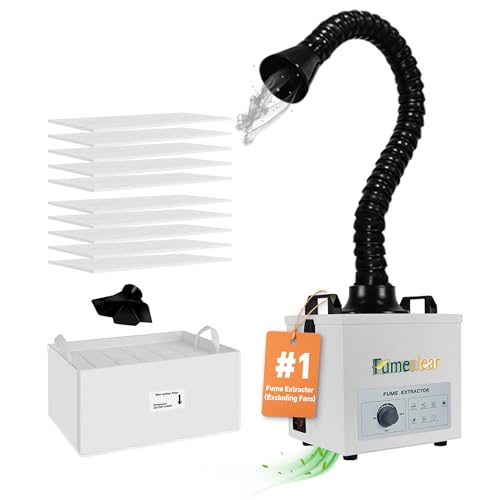
FumeClear Solder Fume Extractor – Powerful 100W Suction 200m³/h, Low-Noise, 3-Stage Filtration System with 12PCS Filters for Laser Welding Smoke Absorption and Desktop Soldering
99.97% Purification Rate: The FumeClear FC100A fume extractor is ideal for small bench soldering. It has a maximum…
As an affiliate, we earn on qualifying purchases.
As an affiliate, we earn on qualifying purchases.
Conclusion
By mastering ventilation and isolation, you’re opening the door to a flawless finishing area—like a well-tuned orchestra, each element working in harmony. With fresh air flowing and dust kept at bay, your workspace becomes a sanctuary of precision and safety. Think of it as crafting a perfect canvas, where every stroke is clear and true. When you control the environment, you’re not just finishing projects—you’re creating masterpieces that breathe and shine.

Ecotez 6 Pack 12 x 9 ft Extra Large Plastic Drop Cloth for Painting – Light & Durable Tarp Cover for Furniture – Plastic Clear Tarp Waterproof – Paint Floor Covering – Painters Drop Cloth Sheeting
FEARLESS PAINTING, NO MORE UNSIGHTLY MARKS: Smooth out your home decor project with our painter’s drop cloth. Serving…
As an affiliate, we earn on qualifying purchases.
As an affiliate, we earn on qualifying purchases.
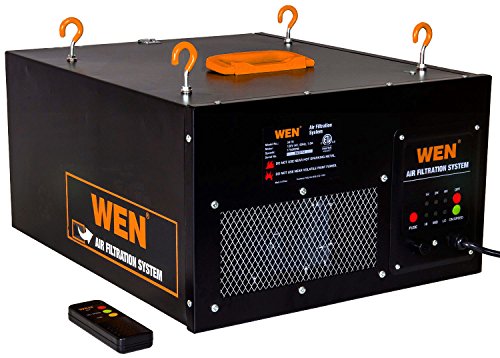
WEN 3410 3-Speed Remote-Controlled Air Filtration System (300/350/400 CFM), Basic w/ RF Remote (400 CFM) , Black
Includes a 1-micron filter and a 5-micron pre-filter, both of which can be easily replaced
As an affiliate, we earn on qualifying purchases.
As an affiliate, we earn on qualifying purchases.