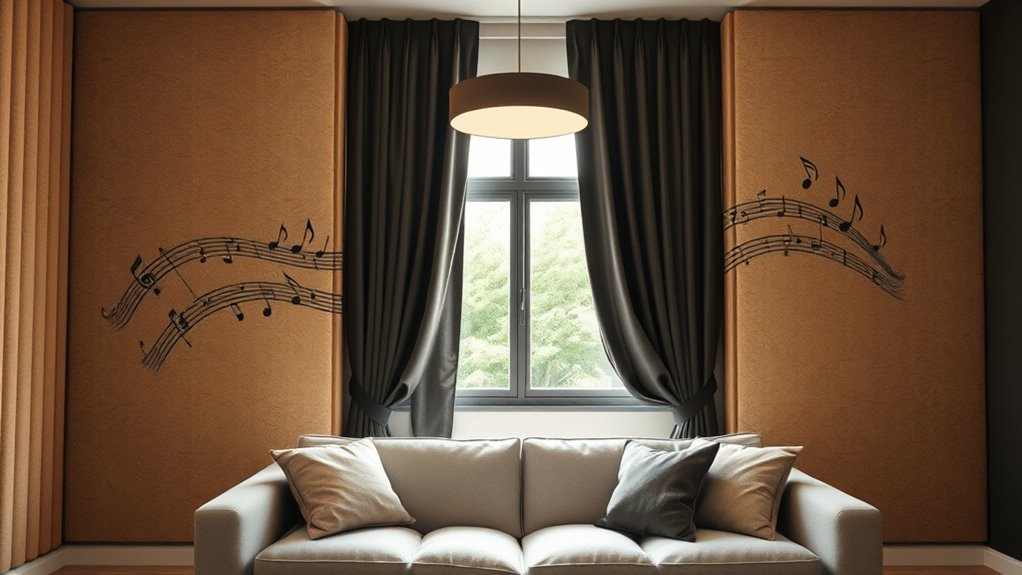

Adding soundproofing helps you create a peaceful space while respecting your neighbors and boosting comfort. You can do this by sealing gaps around doors and windows, installing acoustic panels to absorb noise, and adding insulation within walls or floors to block sound transmission. Combining these simple solutions makes your environment calmer and more private. Taking steps to soundproof your home not only benefits you but also keeps harmony with those nearby, and there’s much more to explore on effective ways to achieve this.
Key Takeaways
- Install acoustic panels and insulation to absorb and block sound, reducing noise transmission to neighbors and creating a peaceful environment.
- Seal gaps around doors, windows, and vents with weatherstripping and sealant to prevent sound leaks and maintain quiet.
- Use layered soundproofing solutions, combining insulation with acoustic panels for enhanced noise reduction and neighbor consideration.
- Choose building materials with soundproofing properties to naturally minimize noise transfer and promote comfort.
- Properly install all soundproofing components to maximize effectiveness and ensure a respectful, tranquil shared space.
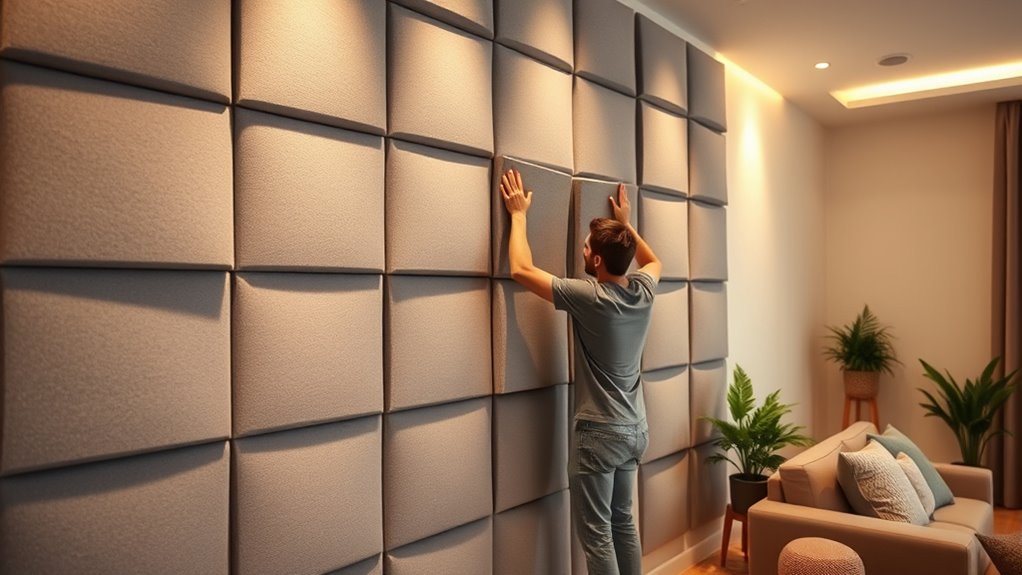
Ever wonder how to transform noisy spaces into peaceful retreats? If you’re tired of hearing every footstep, loud music, or late-night conversations from your neighbors, adding soundproofing might be just what you need. The good news is that achieving a quieter environment doesn’t require a complete overhaul of your home. Simple, effective solutions like installing acoustic panels or using insulation materials can substantially reduce noise transmission. These options are accessible, affordable, and easy to implement, making your space more comfortable and respectful to those around you.
Transform noisy spaces into peaceful retreats with affordable soundproofing solutions.
Acoustic panels are a popular choice because they absorb sound waves, preventing echoes and reducing overall noise levels. They come in various styles and sizes, allowing you to choose designs that blend seamlessly with your decor. Mounting them on walls or ceilings helps trap sound within a room, minimizing the amount that escapes to neighboring spaces. When selecting acoustic panels, look for high-quality options that are designed specifically for sound absorption. They are especially effective in rooms where noise tends to bounce around, such as living rooms, home offices, or entertainment areas.
In addition to acoustic panels, insulation materials also play a vital role in soundproofing. These materials are typically installed within walls, ceilings, or floors to block sound from passing through. Fiberglass, mineral wool, and foam insulations are popular options because they provide excellent sound absorption and are relatively easy to install. When added between wall studs or beneath flooring, insulation materials act as a barrier, dampening noise transmission from one side to the other. Proper installation is key; ensuring there are no gaps or weak points enhances their effectiveness. Combining insulation with acoustic panels creates a layered approach that greatly boosts your space’s soundproofing capabilities.
Beyond these materials, sealing gaps and cracks around windows, doors, and vents is essential for maximum noise reduction. Small openings can let in or let out sound, undermining your efforts. Using weatherstripping, door sweeps, or sealant can block these leaks and make your soundproofing more effective. Remember, the goal isn’t just to block noise but also to create a calming environment where you and your neighbors can enjoy peace. Whether you’re working from home, relaxing, or hosting guests, these measures help you maintain a respectful and comfortable space.
Additionally, choosing appropriate building materials, such as those with soundproofing properties, can further enhance your efforts and make your environment even more tranquil.
Frequently Asked Questions
How Do I Measure the Current Soundproofing Effectiveness?
You can measure your current soundproofing effectiveness by performing a sound level measurement with a decibel tester. First, place the device in the room where noise is noticeable, then record the decibel readings during typical activity or noise. Compare these figures to the ambient noise level outside your space. This decibel testing helps you identify how well your current soundproofing reduces noise transfer and guides improvements.
Are There Temporary Soundproofing Options for Renters?
Yes, as a renter, you can try temporary soundproofing options like renters’ solutions and temporary barriers. Use heavy furniture, rugs, and curtains to absorb sound, or install removable door and window seals. You might also consider portable acoustic panels or foam. These solutions are affordable, non-permanent, and easy to remove when you move, helping you maintain good relations with neighbors while improving your comfort.
What Are the Best Materials for Soundproofing Walls?
You should consider using acoustic panels made from dense materials like foam or mineral wool, which absorb sound effectively. Pair them with soundproofing adhesives to guarantee they stay securely in place. These panels are easy to install and can substantially reduce noise transfer between rooms. For a quick fix, temporary options like mass-loaded vinyl can also be effective, but acoustic panels with proper adhesives deliver the best long-term results.
How Can I Reduce Noise Leakage Through Floors?
Imagine the silence you crave, disrupted by every step above. You can reduce noise leakage through floors by installing floor insulation, which absorbs sound vibrations. Layer acoustic mats underneath your flooring to further dampen noise and prevent it from traveling to neighbors below. These simple upgrades create a barrier that keeps your footsteps and conversations contained, ensuring your space remains peaceful and respectful for everyone around you.
Is Professional Soundproofing Worth the Investment?
Yes, professional soundproofing can be worth the investment if you consider the cost-benefit analysis and installation complexity. It often reduces noise effectively, improving your comfort and neighbor relations. While it costs more upfront, the long-term benefits like better privacy and peace of mind make it worthwhile. However, you should weigh these factors carefully, as some solutions may involve complex installation processes or higher expenses.
Conclusion
By adding soundproofing, you’re creating a peaceful sanctuary where both your comfort and your neighbors’ peace can flourish. It’s like building a cozy fortress that shields you from unwanted noise, turning your home into a haven of tranquility. When you respect your neighbors and invest in soundproofing, you’re nurturing a respectful, harmonious community. Ultimately, your efforts transform your living space into a quiet refuge, where serenity blooms and noise becomes just a distant memory.