
Template routing with guide bushings and bearings helps you attain precise, consistent cuts by guiding your router along a template’s edge. Guide bushings fit into the router and let you follow the template accurately, while bearings on the bits help control the cut’s depth and shape. Using the right combination guarantees clean, professional results every time. If you want to master these tools and improve your woodworking, there’s more to discover below.
Key Takeaways
- Guide bushings and bearings help achieve precise, smooth routing along templates for accurate shape replication.
- Selecting compatible guide bushings and bearings ensures proper fit and optimal control during routing.
- Using bearing-guided bits with guide bushings reduces slippage and enhances safety.
- Proper installation and maintenance of bushings and bearings extend tool lifespan and improve cut quality.
- Combining guide bushings with templates streamlines complex or repetitive routing tasks for efficiency.

Template routing with guide bushings and bearings is an essential technique for achieving precise and consistent cuts in woodworking and manufacturing. When you’re working on complex shapes or repetitive patterns, using templates helps you replicate designs accurately. To get the best results, you need to pay close attention to your template materials and router bit selection. These elements directly influence the quality of your cuts and your overall efficiency.
First, consider the template materials you choose. Durable, stable materials like MDF, plywood, or hard plastics are ideal because they resist wear and deformation over time. MDF is popular due to its affordability and smooth surface, which makes it easy to trace and cut. Plywood offers added strength, especially for larger templates, preventing warping that could compromise your accuracy. Hard plastics, such as acrylic or polycarbonate, provide even greater durability and smoothness, making them excellent for repeated use. When selecting your template material, think about the complexity of your project and how many times you’ll need to reuse the template. The more durable your template material, the more consistent your cuts will be, reducing the need for replacements or adjustments.
Router bit selection is equally crucial. The right bit determines the quality of your cut and how well your template guides the router. For template routing, bearing-guided bits are commonly used because their bearings slide along the template’s edge, ensuring precise control. When choosing bits, consider the type of cut you need—whether it’s a straight cut, rabbets, ogee edges, or decorative profiles. For straight cuts, a straight bit with a bearing guide works perfectly. For decorative edges, select a profiling bit suited to your design, again with a bearing for guided routing. Always match your router bit’s shank size to your tool’s collet, typically 1/4 inch or 1/2 inch, to guarantee stability and safety. Sharp, high-quality bits will produce cleaner cuts and last longer, saving you time and effort. Additionally, staying informed about advancements in automation in business can help you integrate new tools and techniques that improve your workflow and efficiency.
Properly selecting your template materials and router bits not only improves your precision but also enhances safety. Using the right combination minimizes the risk of slips or kickbacks, especially when working with complex or intricate designs. Remember, the quality of your materials and tools directly impacts the final result. Take the time to choose the appropriate template material based on your project’s demands, and invest in quality bits suited for your specific cuts. With careful attention to these details, your template routing will become more accurate, efficient, and professional-looking every time.
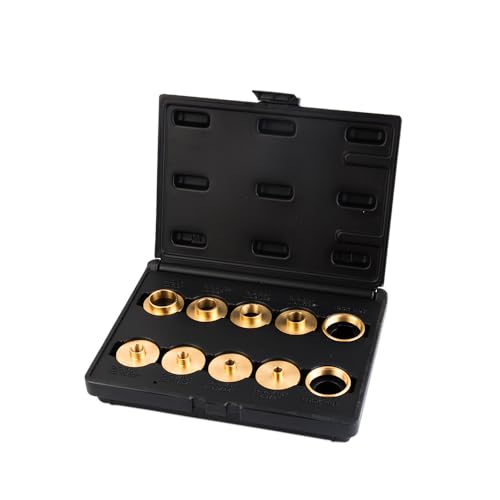
O'SKOOL 10 pcs Brass Router Template Bushing Guides Sets Fit Any Router Sub-base of the Porter Cable style, RA02
10-piece brass router bushing set for precise template routing- Compatible with jigs and woodworking templates; ensures clean, controlled…
As an affiliate, we earn on qualifying purchases.
As an affiliate, we earn on qualifying purchases.
Frequently Asked Questions
How Do I Select the Right Guide Bushing Size for My Project?
To select the right guide bushing size, you need to take into account guide bushing sizing and material compatibility. Measure your router bit diameter accurately, then choose a bushing with a matching inner diameter for a snug fit. Also, verify the material of the guide bushing matches your project’s requirements, like durability or heat resistance. This approach guarantees a precise cut and long-lasting performance, making your routing project smoother and more efficient.
What Safety Precautions Are Necessary When Using Template Routing?
Imagine sparks flying as you carve, and you realize safety’s your top priority. Always wear personal protective equipment like goggles and ear protection to shield your eyes and ears. Keep your workspace tidy, avoiding loose clothing or jewelry that can catch. Make sure the router is unplugged when adjusting or changing bits. Follow safety guidelines diligently, maintaining focus and control, so you prevent accidents and keep your project safe and smooth.
Can Guide Bearings Be Used With Any Router Type?
Yes, you can use guide bearings with many router types, but you should verify your router’s compatibility first. Different routers have varying spindle sizes and mounting options, so not all guide bushing varieties fit every model. Always check your router’s specifications and the guide bushing size to guarantee proper fit. Using compatible guide bearings helps you achieve accurate routing and prevents damage to your equipment.
How Do I Maintain and Clean Guide Bushings for Optimal Performance?
To maintain and clean your guide bushings for peak performance, start with regular wear inspections to identify any damage or excessive wear. Use appropriate lubrication techniques, applying a light coat of lubricant to reduce friction and prevent sticking. Clean the bushings with a soft cloth and mild solvent to remove debris and dust. Proper maintenance ensures smooth routing, prolongs the lifespan of your guide bushings, and keeps your projects precise.
Are There Specific Templates Best Suited for Guide Bushing Routing?
You should choose templates that are compatible with your guide bushing system and made from materials suitable for routing. Look for templates designed specifically for your bushing size and type, ensuring they offer precise and consistent results. Metal or high-quality plastic templates often work best, as they provide durability and accuracy. Always verify template compatibility with your router and guide bushings to achieve smooth, reliable routing performance.
O'SKOOL 10 pcs Brass Router Template Bushing Guides Sets Fit Any Router Sub-base of the Porter Cable style, RA02
10-piece brass router bushing set for precise template routing- Compatible with jigs and woodworking templates; ensures clean, controlled…
As an affiliate, we earn on qualifying purchases.
As an affiliate, we earn on qualifying purchases.
Conclusion
Using guide bushings and bearings in template routing is like having a trusty compass on a journey—you stay on course and achieve precise, smooth cuts every time. By understanding how to set up and use these components correctly, you’ll streamline your projects and avoid mistakes. Keep practicing, and soon it’ll feel as natural as riding a bike. With these tools, your woodworking will become more accurate and enjoyable, turning complex designs into achievable realities.

Wolfride 10Pcs Router Bit Bearing Set Top Bearings for Flush Trim Router Bit|Interior Dia: 3/16” & Outer Dia: 1/2”
Top mounted router bit bearings, interior diameter: 3/16”, outer diameter: 1/2”.
As an affiliate, we earn on qualifying purchases.
As an affiliate, we earn on qualifying purchases.

Stone Coat Countertops Template Material Kit 20 Strips, Create Custom Templates for Kitchen Counters, Showers, Cabinets, and Tables, Ideal for DIY Epoxy Resin and Woodworking Projects
DIY Custom Templates – Utilize our Template Material to create custom templates for your DIY projects. These plastic…
As an affiliate, we earn on qualifying purchases.
As an affiliate, we earn on qualifying purchases.