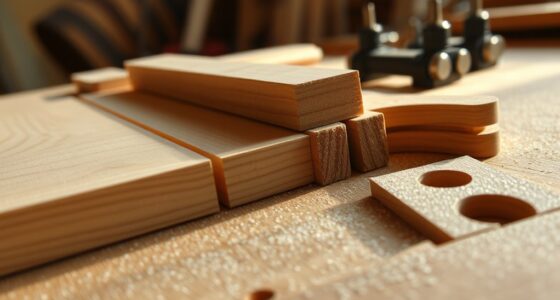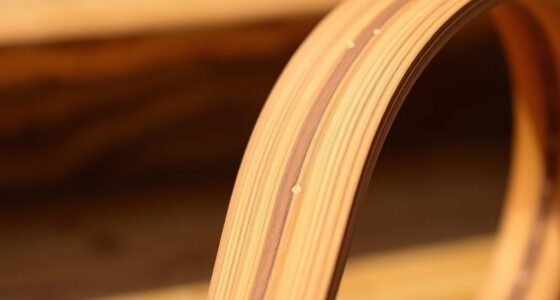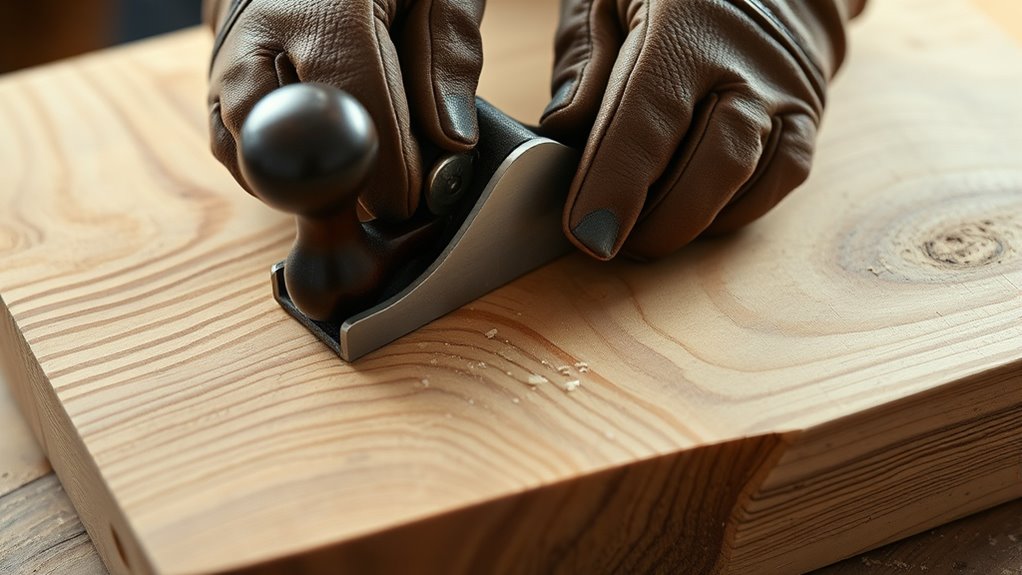

To flatten warped boards with hand planes, first examine the grain direction and work along it for cleaner cuts. Keep your blade sharp for smoother, more effective planing and use steady, even strokes to remove high spots gradually. Adjust your plane’s cutting depth carefully and focus on gradually evening out the surface. Patience and proper technique will help you achieve a flatter board, and if you keep at it, you’ll discover the finer details of successful planing.
Key Takeaways
- Examine and work with the grain, planing along its direction for cleaner, more effective results.
- Keep your plane blade sharp and hone regularly to ensure smooth, controlled shavings.
- Set the plane to a moderate depth and apply steady, even pressure during each pass.
- Focus on high spots and uneven areas, gradually removing warp without gouging the surface.
- Use straightedges or hand feel to check progress frequently, adjusting technique as needed.
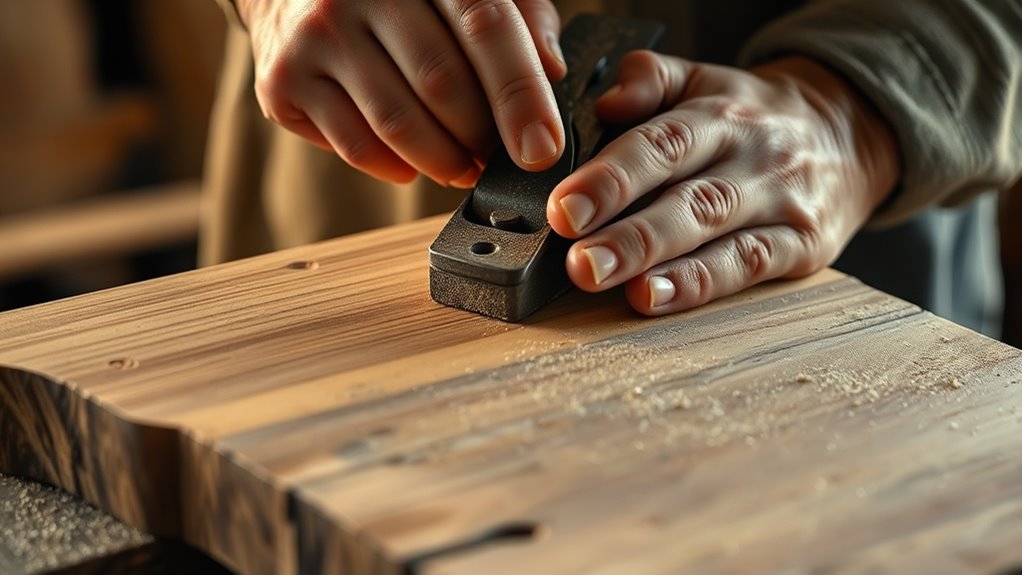
Warped boards can be a hassle, but with the right technique, you can restore their flatness using hand planes. The key lies in understanding how grain orientation affects planing and ensuring your blade is sharp enough to cut smoothly through the wood. Before you start, examine the board carefully to identify the grain direction. Working with the grain makes planing easier and helps prevent tear-out, which can worsen the warping or damage the surface. If the grain runs mainly in one direction, plan your strokes accordingly—always push the plane along the grain for cleaner cuts.
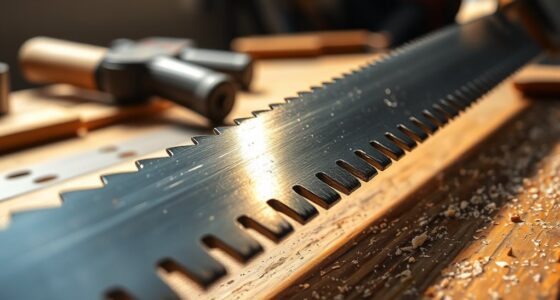
Next, focus on blade sharpening. A sharp blade is essential for effective planing, especially on warped or uneven surfaces. Dull blades require more force, risk tearing the wood fibers, and can lead to uneven results. Spend time honing your blade to a fine edge, ensuring it’s sharp on both sides. Regularly check the blade’s edge during your work, honing or sharpening as needed. A well-sharpened blade allows you to take thin, controlled shavings, which is vital for gradually correcting warps without removing too much material at once.
A sharp blade ensures smooth, controlled shavings for effective warping correction.
When you’re ready to begin, set your hand plane to a moderate cutting depth—too deep could gouge the wood, while too shallow might be ineffective. Start at one end of the board, applying steady, even pressure as you push the plane along the grain. Focus on removing high spots and gradually working toward flatter areas. Keep your strokes smooth and consistent, maintaining the same angle and pressure to avoid creating new dips or ridges. Regularly check your progress by feeling the surface with your hand or using a straightedge to identify remaining warps.
As you work, pay close attention to grain orientation. If you encounter areas where the grain runs against your plane’s direction, switch to a more acute angle or lighten your pressure to prevent tear-out. Using a scraper or sandpaper for stubborn spots can complement your planing efforts, but your main tool should be the hand plane kept in prime condition. Remember, patience is key—rushing can cause more harm than good. Properly sharpening your blade improves cutting efficiency and reduces the effort needed, making the process smoother and more effective. With careful technique, attention to grain, and a sharp blade, you’ll be able to flatten warped boards efficiently, restoring their form and making them ready for your project.

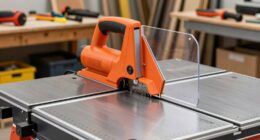
DEWALT 15 Amp 8-1/4 in. Compact Portable Jobsite Table Saw (DWE7485)
24.5 in. of rip capacity for ripping 4x8 plywood or OSB sheets
As an affiliate, we earn on qualifying purchases.
Frequently Asked Questions
Can Hand Planes Fix Severe Warping or Only Minor Imperfections?
Severe warping can be challenging with hand planes alone, but it’s possible if you consider wood moisture and grain direction. You need to work along the grain, taking thin shavings to gradually reduce warping. Keep the wood properly dried, as high moisture levels worsen warping. For minor imperfections, hand planes work well, but for severe warping, you might need additional methods or tools. Patience and attention to grain direction are key.
What Types of Hand Planes Are Best for Flattening Warped Boards?
Is your warped board demanding a luxury spa treatment with fancy planes? Nope, just the right hand planes! Use a jack plane for rough flattening, then a smoothing plane for fine detailing. Pay attention to grain orientation—always plane with the grain to avoid tear-out. Keep your blade sharp; a dull blade will turn your effort into a frustrating mess. With patience, your warped board will straighten out like a pro.
How Do I Prevent New Warping After Flattening With a Hand Plane?
To prevent new warping after flattening with a hand plane, you need to focus on moisture control and proper storage solutions. Keep your wood in a stable environment with consistent humidity levels to avoid expansion and contraction. Store your boards flat and off the ground, ideally in a space with controlled temperature and humidity. This helps maintain your work’s flatness and prevents future warping, ensuring your projects stay true over time.
Is It Necessary to Joint the Edges After Planing a Warped Board?
Your project’s success hinges on perfect edges—so yes, edge jointing is essential after planing a warped board. Edge jointing guarantees your edges are straight and smooth, making your boards fit seamlessly. Proper edge preparation ensures stability and a professional look. Skipping this step can cause gaps and uneven joints, even if your surface is flat. So, always joint the edges for the best, most durable results.
How Long Does It Typically Take to Flatten a Warped Board Manually?
Flattening a warped board manually can take anywhere from 30 minutes to several hours, depending on the warp’s severity and your experience. You should consider wood moisture levels and grain direction, as dry, well-seasoned wood with aligned grain planes easier. Take your time, work gradually, and check your progress often. Consistent planing along the grain helps prevent tear-out and ensures a smoother, flatter surface.

GreenForest Folding Desk with Wheels and Storage Shelf, 24.8 Inch Compact Portable Rolling Desk for Small Spaces, Mobile Foldable Computer Table, Easy Assembly, Pure White
Smooth Mobility and Locking Wheels: 6 swivel casters move effortlessly on any floor. Roll portable workstations from bedroom...
As an affiliate, we earn on qualifying purchases.
Conclusion
Now that you’ve tamed those unruly warped boards with your trusty hand planes, you’ve turned a tangled mess into smooth sailing. Think of your planes as magic wands, transforming crooked timber into flat, usable planks. With patience and steady hands, you’ve guided the wood back into shape, like a sculptor revealing hidden beauty. Keep honing your skills, and soon, warped wood will be just another canvas for your craftsmanship—ready to support your projects with grace.

JYLH JOYSEEKER Foldable Mobile Standing Desk, 27 Inch Small Rolling Laptop Cart Height Adjustment, 90° Tiltable Bedside Table, No Assembly Needed Portable Computer Workstation, White
Foldable & Portable Desk:26.8''x15.7''x0.6'' beveled desktop, 0-90° Tiltable sofaside table, provide a comfortable working condition at home. Only...
As an affiliate, we earn on qualifying purchases.
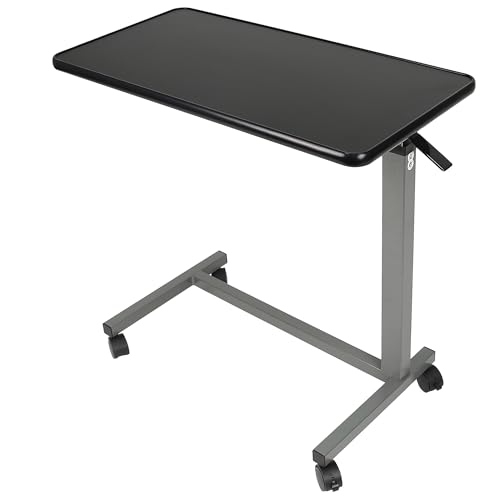
Vaunn Medical Pneumatic Adjustable Overbed Bedside Table with Wheels (Hospital and Home Use)
MULTIPURPOSE OVERBED TABLE - Helps disabled and handicapped individuals and anyone with physical limitations or injuries perform their...
As an affiliate, we earn on qualifying purchases.