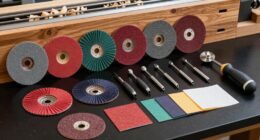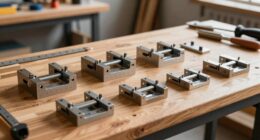

To inspire the next generation of makers through woodworking, focus on teaching essential safety habits, proper tool handling, and workspace organization. Emphasize wearing safety gear, maintaining a tidy work area, and understanding tool maintenance. Encourage confidence by reinforcing good habits early and creating a positive environment for experimentation. When safety becomes second nature, students develop skills and enthusiasm that last. Keep exploring these key principles to foster safe, skilled, and inspired woodworking enthusiasts.
Key Takeaways
- Incorporate safety training early to instill good habits and foster confidence in young woodworkers.
- Use engaging projects that inspire creativity while emphasizing proper tool handling and safety.
- Provide appropriate safety gear and teach its importance to create a secure learning environment.
- Maintain an organized, clutter-free workspace to promote safety and facilitate effective learning.
- Reinforce safety principles continuously to build a foundation for responsible craftsmanship and lifelong skills.
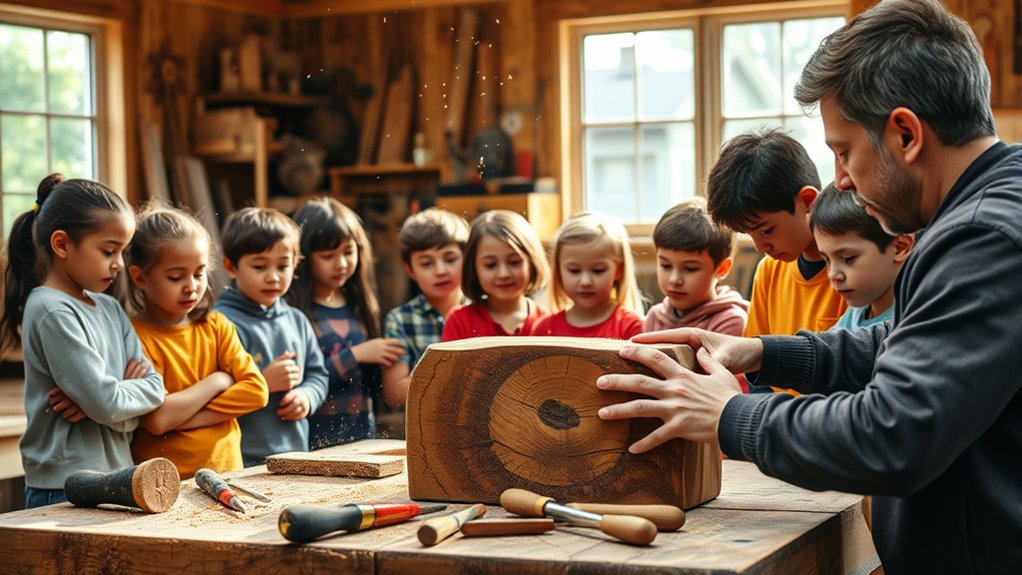
Have you ever wondered how to effectively teach woodworking to beginners? One of the most important aspects is establishing a strong foundation in safety precautions. When you introduce someone to woodworking, you must emphasize that safety isn’t just a quick lesson but an ongoing part of every session. Make sure beginners understand the importance of wearing safety gear like goggles, ear protection, and dust masks. Teach them to keep their workspace clean and free of clutter, which can prevent accidents. Show them how to use tools properly, highlighting the risks of misusing equipment. Reinforcing these safety precautions early on helps build good habits that will serve them well as they progress. Remember, safety isn’t just about avoiding injuries; it’s about creating an environment where beginners feel confident to learn and experiment without fear. Incorporating knowledge about proper tool maintenance can further enhance their safety and project quality, as well-maintained tools are less likely to cause accidents.

DEWALT DPG82-11 Concealer Clear Anti-Fog Dual Mold Safety Goggle, Clear Lens, 1 Pair
DEWALT ToughCoat hard coated lens provides tough protection against scratches.
As an affiliate, we earn on qualifying purchases.
As an affiliate, we earn on qualifying purchases.
Frequently Asked Questions
How Can I Make Woodworking Safe for Young Children?
To make woodworking safe for young children, you should childproof your workshops by securing sharp or dangerous tools and keeping them out of reach. Use age-appropriate tools designed for small hands, ensuring they are safe and easy to handle. Always supervise your kids closely, teach safety rules, and create a designated, clutter-free workspace. This approach helps foster a safe environment where children can enjoy learning woodworking without unnecessary risks.
What Are the Best Beginner-Friendly Woodworking Projects for Kids?
You should start with simple projects like picture frames or wooden coasters, which are easy for kids to handle and teach basic skills. Fun crafts such as painted wooden keychains or small birdhouses also engage their creativity while being safe. Choose projects with minimal tools, use kid-friendly materials, and supervise closely to guarantee safety. These beginner-friendly projects build confidence and spark a love for woodworking early on.
How Do I Introduce Sustainable Woodworking Practices to Students?
To introduce sustainable woodworking practices, start by emphasizing eco-friendly finishes and using recycled materials. Show students how to select responsibly sourced wood and incorporate recycled or reclaimed supplies into their projects. Encourage them to think about waste reduction and energy efficiency. Demonstrate how eco-friendly finishes protect their creations without harming the environment, inspiring them to develop mindful habits that promote sustainability in their future woodworking endeavors.
What Tools Are Essential for Teaching Woodworking in Schools?
Think of your toolbox as a gateway to creativity—essential tools include safety gear like goggles and gloves, which protect your students and foster confidence. A reliable saw, chisels, and a drill spark engagement, turning raw materials into art. With these tools, you create a safe, inspiring environment where students learn craftsmanship and develop skills, making every cut and carve a step toward their future as makers and innovators.
How Can I Encourage Creativity in Young Woodworking Students?
You can encourage creativity in your young woodworking students by challenging them with projects that require creative problem solving and design innovation. Let them explore different materials and techniques, and foster an environment where experimentation is welcomed. Provide constructive feedback and ask open-ended questions to inspire ideas. By emphasizing the joy of inventing and refining their own designs, you help nurture their creative confidence and passion for woodworking.
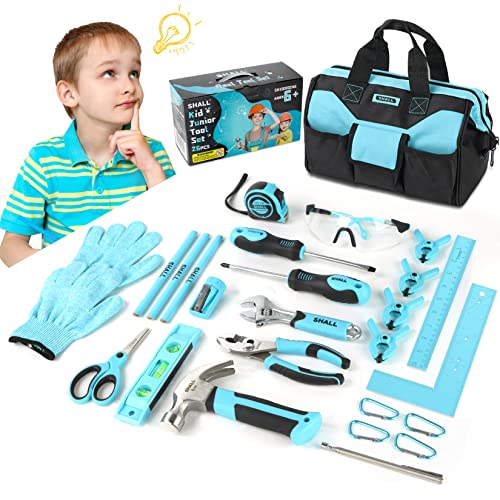
SHALL 26-Piece Kids Size Tool Set, Real Tools Kit for Kids with 12" Tool Bag, Safety Certified Children Learning Tool Set with Hand Tools for Boys & Girls Age 6+, DIY Building, Woodwork & Construction
Kid-Sized Tools : Each real tool in the child tool set is designed to fit children’s little hands;…
As an affiliate, we earn on qualifying purchases.
As an affiliate, we earn on qualifying purchases.
Conclusion
By teaching woodworking, you ignite creativity and build skills that last a lifetime. Imagine guiding a young maker as they craft their first project, feeling their confidence grow with each cut and carve. Did you know that over 70% of adults who learned woodworking early in life continue to pursue it as a hobby? Your mentorship can inspire the next generation of makers, shaping future creators and preserving the craft for years to come.

27-Piece Orange Kids Tool Set with Tool Storage Bag, Real Hand Tool Kit for Boys & Girls, Child Learning Tools for Building, Woodworking and Construction, 6+ Years Old Birthday Boy Easter Basket Gift
【Real Tools for Young Builders】Equip your child with real metal tools,including hammer,wrench,clamps, screwdrivers,designed to fit children’s little hands….
As an affiliate, we earn on qualifying purchases.
As an affiliate, we earn on qualifying purchases.

Dan&Darci 3-in-1 Woodworking Station for Kids – Wood Building Projects Kit for Boys – Real Construction Tools Sets – Boy Tool Set – Gifts Age 8 Year Old – Cool STEM Toys Kits Birthday Gift Ideas
SAFE & FUN WOODWORKING: Introduce your child to the joy of woodworking with the Dan&Darci Woodworking Station! Designed…
As an affiliate, we earn on qualifying purchases.
As an affiliate, we earn on qualifying purchases.