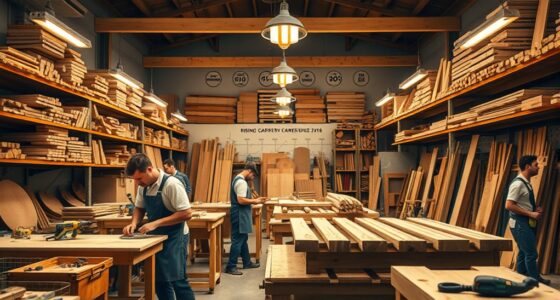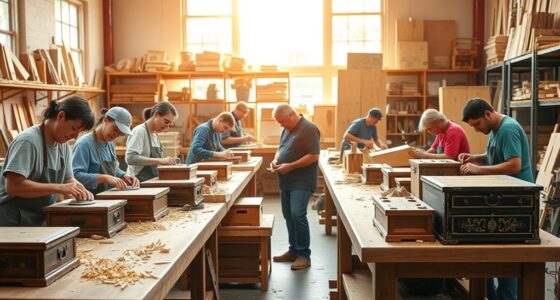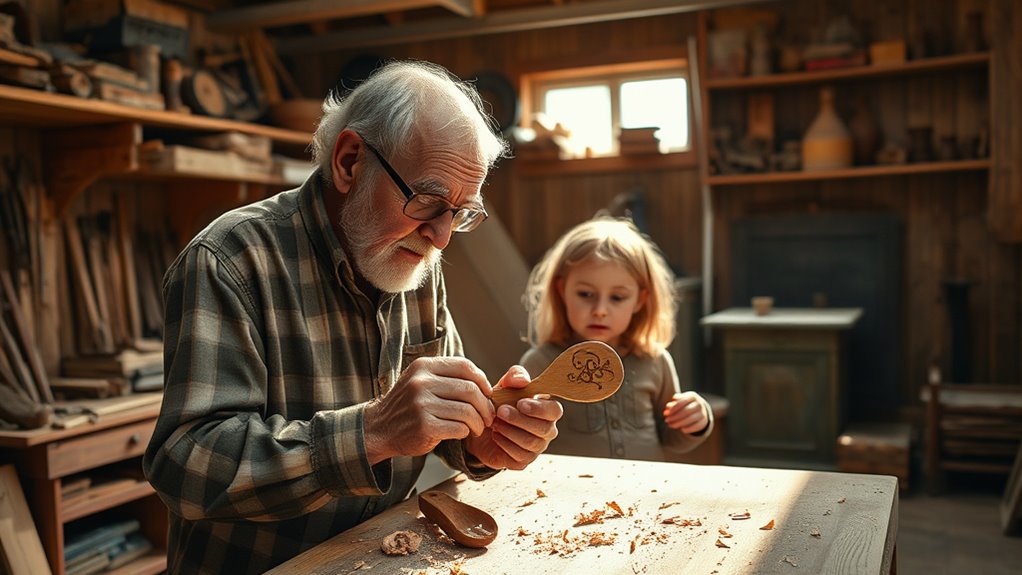

Passing your woodworking skills to the next generation helps create lasting memories and keeps family traditions alive. By sharing stories behind traditional techniques and involving your loved ones in projects, you build pride and a sense of connection. Teaching craftsmanship fosters respect for materials and patience, strengthening family bonds. If you keep exploring these methods, you’ll discover how to preserve your heritage and inspire future generations through meaningful craftsmanship.
Key Takeaways
- Share storytelling about heritage techniques and family history to deepen understanding and emotional connection.
- Involve family members in hands-on projects using traditional tools and methods to foster skill transfer.
- Emphasize patience, craftsmanship, and cultural significance to instill pride and values in younger generations.
- Document and preserve techniques through videos or written records to maintain long-term tradition.
- Create meaningful family rituals around woodworking to strengthen bonds and inspire continued craftsmanship.

Many families find that passing down woodworking skills creates lasting bonds and cherished memories. When you teach your children or grandchildren craft techniques, you’re not just sharing a set of skills—you’re passing on a piece of your family’s history. Heritage techniques, the traditional ways of working with wood that have been handed down through generations, serve as a living connection to your ancestors. These methods often involve specific tools, joinery styles, and finishing touches that carry stories and cultural significance, making every project more than just a piece of wood turned into something functional or beautiful. By blending these heritage techniques into your family’s woodworking, you create a bridge between the past and the present, giving younger family members a sense of pride and identity rooted in tradition. Incorporating goal setting can help guide your family projects and preserve these traditions for future generations.
Storytelling methods are also integral to passing down woodworking skills. As you work together, you naturally share stories—about where the techniques originated, the family history behind certain projects, or funny mishaps that happened along the way. These stories turn a simple lesson into a meaningful experience, enriching the learning process and making it memorable. When you narrate how your great-grandparent crafted furniture with limited tools or how your own father fixed a broken chair, you’re weaving history into each cut and carve. This storytelling not only keeps traditions alive but also helps your family understand the value of patience, craftsmanship, and ingenuity. It encourages younger generations to see woodworking as more than just a hobby; it becomes a way of preserving family legacy and cultural heritage.
As you teach these skills, you’re also fostering a sense of pride and accomplishment in your family members. They learn that craftsmanship isn’t just about making something pretty—it’s about respecting the materials, understanding the history, and appreciating the effort behind each project. Sharing heritage techniques and storytelling methods makes each woodworking session a meaningful tradition, reinforcing the idea that these skills are worth passing on. You help your family see that woodworking is a living art form, one that connects generations through shared knowledge and stories. The lessons extend beyond the workshop, instilling values of patience, creativity, and respect for tradition. In doing so, you ensure that your family’s woodworking heritage continues to inspire and strengthen bonds for years to come.
Frequently Asked Questions
How Do Families Choose Which Projects to Pass Down?
You choose projects based on heirloom preservation and personal significance. Consider which items hold sentimental value or represent family history, like furniture or tools. Think about the skills involved and whether the project can be completed by the next generation. Select projects that teach important techniques while creating meaningful heirlooms. This way, you guarantee the craft is passed down with love and purpose, strengthening family traditions for years to come.
What Safety Tips Are Essential for Young Family Members?
You should always emphasize the significance of wearing safety gear, like goggles and hearing protection, to your young family members. Supervision strategies are vital; always supervise closely and guide them step-by-step. Teach them to keep their workspace tidy and avoid distractions. By setting clear safety rules and modeling proper behavior, you help guarantee their safety while they learn valuable woodworking skills.
How Can Families Adapt Traditions for Modern Tools?
You can adapt family woodshop traditions for modern tools by embracing modern techniques and digital integration. Teach your family members how to safely operate new equipment, incorporating tutorials and online resources. Use digital plans and design software to inspire creativity and precision. By blending traditional skills with modern technology, you keep the craft alive, making it engaging and relevant for the next generation while ensuring safety and efficiency.
What Are Common Challenges in Passing Woodworking Skills?
You might think passing woodworking skills is straightforward, but DIY safety can trip you up if you overlook it, risking injury or bad habits. Choosing the right project becomes tricky—push for complexity too soon or stick with simple tasks, and learning stalls. Balancing safety with engagement is tough, yet essential. Patience and clear guidance help keep the tradition alive, even when challenges seem to loom larger than the woodwork itself.
How Do Families Document Their Woodworking Heritage?
You can document your woodworking heritage by keeping detailed woodworking journals that record techniques, tools, and project details. Additionally, creating family project archives—digitally or physically—helps preserve the history of your work. Engage family members in these efforts to pass down stories and skills, ensuring your woodworking traditions endure. Regularly updating these records makes it easier for future generations to learn and continue your craftsmanship.
Conclusion
As you carry on this family woodshop tradition, imagine your kids wielding tiny saws, accidentally turning a delicate project into firewood. Keep passing down those skills, or soon enough, your heirloom furniture might be replaced by crooked, splintered chaos—proof that neglecting tradition isn’t just lazy, it’s a future disaster. So, embrace the mess, teach with patience, and remember: someday, your masterpieces might just be the kindling for the next generation’s creative sparks.