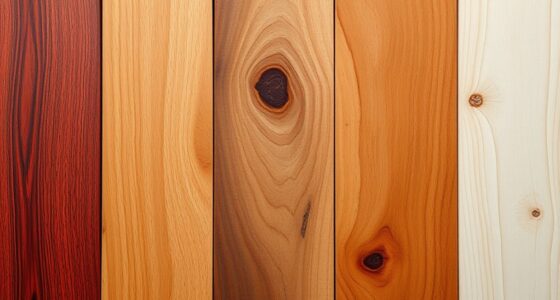
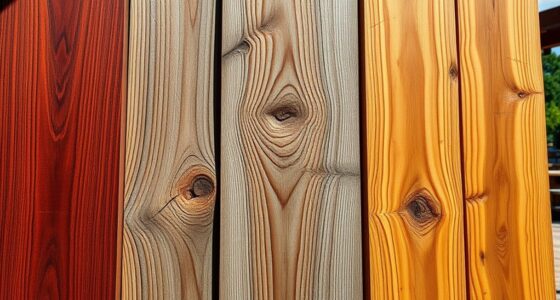
Reclaimed wood tells a story, from old barns and factories to historic homes, preserving cultural heritage and craftsmanship. By choosing salvaged materials, you support sustainability, reduce environmental impact, and add unique character to your project with knots, cracks, and weathered surfaces. Each piece carries a history that enhances its beauty and authenticity. If you continue exploring, you’ll discover even more about how reclaimed wood connects the past with your design today.
Key Takeaways
- Reclaimed wood often originates from historic structures like barns and factories, preserving cultural heritage.
- Each piece carries unique characteristics such as knots, cracks, and weathered surfaces, adding authentic charm.
- Salvaging wood promotes sustainability by reducing demand for new timber and supporting environmentally responsible practices.
- The process involves careful cleaning and sorting to ensure safety, durability, and quality for modern use.
- Using reclaimed wood connects the past with the present, embodying mindful consumption and sustainable design philosophies.

Have you ever wondered how old, weathered wood can find new life in modern design? Reclaimed wood carries stories and history, transforming forgotten materials into stunning, functional pieces. When you choose reclaimed wood, you’re not just getting a unique aesthetic; you’re participating in sustainable forestry practices that prioritize the health of our forests. Instead of relying on freshly cut timber, you’re giving new purpose to wood that has already served its time, reducing the demand for new tree harvesting. This approach helps conserve natural resources and minimizes environmental impact.
Many reclaimed woods come from structures long past their prime—barns, factories, old homes—that stand as testaments to history. Preserving these structures often involves salvaging their wood, which would otherwise be discarded or left to decay. This act of historic preservation keeps the stories alive and maintains a tangible connection to the past. By repurposing these materials, you’re helping to maintain the architectural and cultural heritage that might otherwise be lost forever. Each plank or beam holds a piece of history, whether it’s marked by nail holes, patina, or visible grain patterns that tell of decades or even centuries gone by.
Preserving old structures by salvaging wood helps maintain history and cultural heritage for future generations.
The beauty of reclaimed wood lies in its character. No two pieces are the same, and each one can add warmth and authenticity to your space. Its imperfections—knots, cracks, weathered surfaces—are part of its charm, telling stories that new wood simply can’t replicate. When you incorporate reclaimed wood into your project, you’re making a statement about sustainability and respect for history. It’s a conscious effort to reduce waste and embrace craftsmanship rooted in tradition.
Furthermore, the process of reclaiming wood often involves careful sorting and cleaning, ensuring that the materials are safe and durable for modern use. This careful stewardship aligns with sustainable principles, as it extends the life cycle of existing materials rather than consuming new resources. This process also supports the concept of circular economy, which promotes reuse and recycling to minimize waste. In doing so, you can create a space that’s not only visually appealing but also environmentally responsible. Your choices support a cycle of reuse that respects both nature and history.
In the end, reclaimed woods offer more than just an attractive finish; they embody a philosophy of mindful consumption. By choosing materials rooted in sustainable forestry and historic preservation, you’re contributing to a more sustainable future. You’re giving old wood a second chance, allowing stories to continue while respecting the environment. It’s a way to connect the past with the present, crafting spaces that are meaningful, beautiful, and eco-conscious.
Frequently Asked Questions
How Is Reclaimed Wood Distinguished From New Wood?
You can tell reclaimed wood from new wood by examining the grain pattern and aging characteristics. Reclaimed wood often has a unique, weathered look with irregular grain patterns, knots, and visible wear from its previous life. In contrast, new wood usually has a consistent grain and smooth surface. The aging process gives reclaimed wood a distinct charm and history that new wood simply can’t replicate, making it stand out.
What Are Common Sources of Reclaimed Wood?
You often find reclaimed wood from historic buildings or old barns, like when a renovation project restores a century-old farmhouse. These sources provide unique, weathered planks with rich character. You might also come across wood from shipping pallets, vintage factories, or discarded furniture. By salvaging these materials, you preserve history and add authentic charm to your projects, making each piece a story of its own.
Is Reclaimed Wood More Environmentally Friendly?
Yes, reclaimed wood is more environmentally friendly because it supports sustainable practices by reusing existing materials rather than harvesting new timber. When you choose reclaimed wood, you reduce waste and lower the demand for logging, which benefits ecosystems. Its eco-friendly benefits include conserving natural resources and decreasing carbon emissions. By opting for reclaimed wood, you actively contribute to a greener, more sustainable future while adding character and history to your projects.
How Do Reclaimed Woods Affect Indoor Air Quality?
Reclaimed wood typically improves indoor air quality by reducing indoor pollution, especially when properly treated and sealed. Unlike new wood, it’s less likely to emit volatile organic compounds (VOCs). You can further enhance air quality by using effective air filtration systems. This combination minimizes airborne pollutants, creating a healthier environment. Just make certain that the reclaimed wood has been thoroughly cleaned and treated to avoid any residual contaminants.
What Are the Challenges in Working With Reclaimed Materials?
Dealing with reclaimed materials can be formidable due to unpredictable supply chain complexities and material inconsistencies. You might struggle with sourcing reliable supplies or ensuring uniform quality. It’s essential to stay patient and adaptable, carefully inspecting each piece for durability and defects. By embracing flexibility and meticulous monitoring, you can successfully navigate the nuances of working with reclaimed resources, turning challenges into creative opportunities.
Conclusion
So, next time you walk into a space adorned with reclaimed wood, remember you’re not just admiring a piece of furniture or flooring—you’re gazing into the very soul of history itself. Each salvaged plank holds stories of centuries, storms, and human hands that shaped it. You’re preserving a legacy so rich, so extraordinary, that it’s as if time itself paused just to witness your appreciation. Truly, reclaimed wood is a masterpiece forged by the universe’s greatest artisans—time and history.