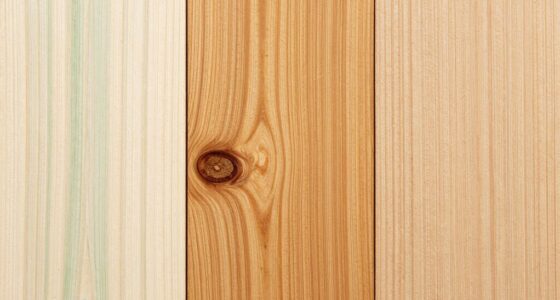
To tell red oak apart from white oak, focus on their grain patterns and color. Red oak has a prominent, coarse grain with an open texture and a warm, pinkish hue, making it look bold and lively. White oak features a tighter, more uniform grain with a smoother texture and subtle, tan tones for a sleek, refined appearance. If you want to master the differences, there’s more to discover below.
Key Takeaways
- The “grain test” involves examining the grain pattern: red oak has open, coarse grains, while white oak has tight, fine grains.
- Red oak’s prominent, irregular grain pattern contrasts with white oak’s straight, uniform grains.
- Visible grain texture and pattern are key indicators, as red oak appears more lively and coarse.
- The test can be performed by closely inspecting the wood surface, preferably with a magnifying glass.
- Grain pattern differences are the most reliable physical way to distinguish red oak from white oak.

When choosing between red oak and white oak, understanding their differences can help you make an informed decision. One of the most noticeable distinctions lies in their grain pattern and color variation. Red oak typically features a more prominent, open grain with a coarse, uneven texture. Its grain pattern is usually straight but can sometimes have wavy or irregular lines, giving it a lively appearance. In contrast, white oak boasts a tighter, more uniform grain pattern that often appears smoother and more refined. The grain in white oak tends to be straighter, with less variation, which can contribute to a more consistent look in finished projects. Additionally, the porosity of white oak makes it more resistant to moisture and decay, which can be a crucial factor in certain applications.
Red oak features a prominent, open grain with a lively, uneven texture, while white oak offers a tighter, smoother, and more uniform grain pattern.
Color variation is another critical factor. Red oak generally has a warm, pinkish hue that deepens with age, making it a popular choice for traditional or rustic styles. Its color tends to be more vibrant and noticeable, which can add warmth and character to your space. White oak, on the other hand, displays a more subdued, tan to light brown color with subtle undertones. Its neutral palette allows it to blend seamlessly with various design styles, from modern to classic. The color variation in white oak is typically less dramatic, offering a more uniform appearance that can be painted or stained to match any aesthetic.
When comparing these woods, consider how their grain patterns and color variations will influence the overall look of your project. Red oak’s prominent grain and richer hues make it ideal for statement pieces like flooring, furniture, or cabinetry where a bold, natural appearance is desired. White oak’s tighter grain and neutral tone lend themselves well to projects that require a sleek, understated finish, or where a more subtle aesthetic is preferred. The differences in grain pattern and color variation also impact how the wood ages and how it responds to stains and finishes, with red oak often emphasizing grain texture more vividly, while white oak provides a more uniform base.
Ultimately, your choice depends on your design goals and personal taste. If you want a lively, warm appearance with visible grain detail, red oak is a strong contender. If you prefer a more understated, versatile look that can be easily customized, white oak might be the better option. By understanding these essential differences—their grain patterns and color variations—you can select the wood that best aligns with your project’s style and your expectations for durability and aesthetic appeal. Recognizing the grain pattern and color variation of each type can significantly influence your final decision and satisfaction with the finished product.

Minwax 70040444 Wood Finish, Red Oak, 1 Quart
RICH EVEN COLOR – Minwax Wood Finish is a deep penetrating, oil-based wood stain that provides beautiful color…
As an affiliate, we earn on qualifying purchases.
As an affiliate, we earn on qualifying purchases.
Frequently Asked Questions
How Does Climate Affect Oak Wood Durability?
Climate impact considerably influences oak wood durability because moisture, temperature, and humidity levels affect how well the wood resists decay and pests. You’ll find that in wetter or more humid environments, oak’s durability factors decrease, making it more prone to rot. Conversely, drier climates help preserve its strength. To guarantee longevity, consider climate conditions when selecting oak for outdoor projects, as they directly impact its performance and lifespan.
Can Red and White Oak Be Used Interchangeably?
You might think red and white oak are interchangeable, but hold on—there’s more beneath the surface. Their wood grain and color variation can dramatically influence your project’s look and durability. Using them interchangeably isn’t always wise, as subtle differences could compromise your design or function. Pay close attention to these traits; otherwise, you risk ending up with unintended surprises. Choose wisely to guarantee your work stands the test of time.
What Are the Environmental Impacts of Harvesting Oak?
When you harvest oak sustainably, you help reduce ecological effects like habitat loss and soil erosion. Sustainable harvesting practices ensure that oak populations remain healthy and resilient, minimizing negative environmental impacts. By choosing responsible suppliers, you support forest management that maintains biodiversity and prevents overexploitation. This way, you can enjoy oak products while safeguarding ecosystems for future generations.
How Do Oak Species Vary in Cost Over Time?
Like a roller coaster, oak species’ costs fluctuate over time, driven by growth patterns and market demand. You’ll notice red oak generally remains more affordable, while white oak’s price can rise due to slower growth and higher demand for its durability. These pricing fluctuations reflect how environmental factors and harvest rates influence supply, making it essential for you to stay informed if you’re planning long-term projects with oak.
Are There Health Concerns With Oak Dust Exposure?
You should be aware that oak dust exposure can pose health concerns, especially if you have dust allergies or respiratory issues. Breathing in oak dust may cause allergic reactions or irritate your respiratory health, leading to coughing, wheezing, or asthma symptoms. To protect yourself, wear proper masks and guarantee good ventilation when working with oak wood. Regular cleaning can also help reduce dust buildup and safeguard your health.

Woodwise White Oak Test Kit
As an affiliate, we earn on qualifying purchases.
As an affiliate, we earn on qualifying purchases.
Conclusion
When choosing between red oak and white oak, remember that white oak resists moisture better, making it ideal for outdoor projects. Did you know that white oak’s tight grain makes it about 30% more resistant to water than red oak? So, if durability matters most, white oak might be your best bet. Ultimately, understanding these differences helps you pick the right wood for your needs, ensuring your project stands the test of time.

VIVIDCOZYTILE Waterproof Peel and Stick Floor Tile, 54 Sq.Ft Earthen Oak Vinyl Wood Flooring, Easy DIY-Install & Durable for Kitchen, Bedroom, Bathroom, RVs, Rental-Friendly (36-Planks 6"x36")
WATERPROOF & DURABLE RIGID CORE: Upgraded with a 1.8mm high-density rigid PVC core, these peel and stick flooring…
As an affiliate, we earn on qualifying purchases.
As an affiliate, we earn on qualifying purchases.

Prepac Simply Modern 6-Drawer Double Dresser for Bedroom, Chest of Drawers, Modern Bedroom Furniture, 52.5” Wide x 16” deep x 29.5” Tall, Oak
ASSEMBLED DIMENSIONS & WEIGHT- Dresser- 52.5 in. W x 29.5 in. H x 16 in. D, Total weight-…
As an affiliate, we earn on qualifying purchases.
As an affiliate, we earn on qualifying purchases.