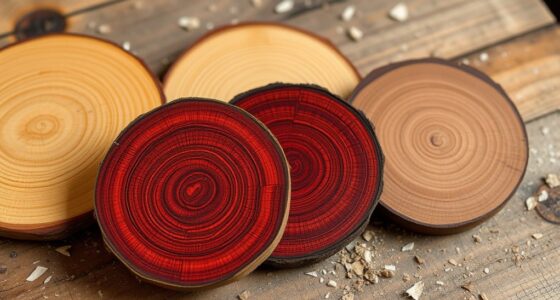
To develop skill with beads and coves in spindle turning, focus on paying close attention to grain patterns to guide your cuts and prevent tear-out. Use your tools carefully, adjusting angles and applying steady, shallow cuts for smooth, consistent shapes. Practice controlling your movements to create even beads and coves, refining your technique with patience. As you improve, you’ll release more finesse and professionalism in your work—keep exploring, and you’ll discover even more effective methods.
Key Takeaways
- Study grain patterns to guide cuts, ensuring smooth beads and coves with minimal tear-out.
- Use proper tool angles and gentle pressure for consistent, even shaping of beads and coves.
- Practice making multiple shallow cuts for better control and refined, symmetrical profiles.
- Focus on steady tool control and symmetry to develop finesse and professional-looking results.
- Finish with careful sanding and sealing to highlight shapes, grain, and craftsmanship.

Turning spindles is a fundamental technique in woodworking that allows you to create smooth, symmetrical shapes on round pieces of wood. Whether you’re crafting furniture legs or decorative accents, mastering the art of developing beads and coves elevates your projects with refined detail. The key to achieving professional results lies in understanding how grain patterns influence shaping and how finishing techniques enhance the final appearance. As you turn, you’ll notice that the grain patterns guide your cuts, helping you achieve consistent curves and smooth progressions. Paying attention to grain direction minimizes tear-out and guarantees the beads and coves look clean and precise. By aligning your cuts with the natural flow of the grain, you preserve the integrity of the wood and produce a more attractive, durable piece.
Developing skill in creating beads and coves requires patience and practice, but it’s also about understanding how different tools interact with the wood’s surface. You’ll typically use gouges and skew chisels to carve these shapes, adjusting your angles and pressure to control the curve’s depth and radius. As you manipulate the tools, keep in mind that gentle, steady cuts produce the most even beads and coves. Consistency is essential, so take your time to develop a steady hand and a keen eye for symmetry. When shaping coves, you’ll often make multiple shallow cuts rather than deep gouges, which helps maintain control and prevents chipping. Beads, on the other hand, require a smooth, rounded profile, so focus on rolling the tool evenly along the spindle to achieve a uniform shape.
Finishing techniques play a pivotal role once the shaping is complete. Sanding and sealing the surface accentuate the carved details, highlighting the grain patterns and adding depth to the beads and coves. You may choose to use oil, lacquer, or wax to enhance the wood’s natural beauty, each providing different levels of sheen and protection. Applying finish in thin, even coats assures the delicate shapes aren’t marred or smudged. Additionally, a careful sanding sequence—progressing from coarse to fine grit—smooths out tool marks and enhances the visual appeal of the finished spindle. The right finishing touches can transform a simple turned piece into a striking feature, emphasizing the craftsmanship behind your work. As you continue practicing, you’ll develop an intuitive sense of how to shape, refine, and finish spindles with finesse, making your woodworking projects stand out with professional-quality detail.

BMWOOD Cryo M2 HSS 1/2" Spindle Gouge with Beech Handle Length12-1/2", Woodlathe Chisels for Woodturning
Made from genuine M2 high-speed steel with hardness 65HRC that's cryogenically treated to increase wear resistance and edge-holding…
As an affiliate, we earn on qualifying purchases.
As an affiliate, we earn on qualifying purchases.
Frequently Asked Questions
What Safety Gear Is Recommended for Spindle Turning?
You should always wear protective eyewear to shield your eyes from flying debris and dust. Respiratory masks are also essential to prevent inhaling fine wood particles and dust, especially when working with harder woods or creating a lot of dust. Additionally, consider using hearing protection and dust masks for added safety. These precautions help keep you safe while spindling and make sure you can focus on developing your skills comfortably.
How Do I Choose the Right Wood for Spindles?
Imagine choosing the perfect canvas for your spindle project. You’d want a wood with a fine, even grain, like maple or cherry, which makes shaping easier and results in a smooth finish. Avoid woods with irregular grain or tendencies to splinter. Consider your finishing techniques, as some woods accept stains and paints better. By selecting the right wood, you set the stage for beautiful, professional-looking spindles that showcase your craftsmanship.
What Are Common Mistakes Beginners Make With Beads and Coves?
You might struggle with bead spacing, making them uneven or too close together, and struggle with cove depth, resulting in inconsistent profiles. To avoid these mistakes, double-check your measurements frequently and use proper gauges. Keep your tool sharp and steady, and don’t rush through each cut. Practice makes perfect, so take your time refining your technique to achieve smooth, evenly spaced beads and well-defined coves.
How Can I Improve My Precision in Turning Detailed Patterns?
Think of your turning tool as a fine brush, precision demands a sharp edge and steady hand. To improve, focus on finishing techniques that refine your control, and regularly sharpen your tools to maintain accuracy. Practice slow, deliberate cuts, and visualize each pattern as a delicate painting. This approach helps you develop consistency, ensuring your beads and coves are symmetrical and detailed, like a master artist perfecting each stroke.
What Maintenance Does a Turning Lathe Require?
To maintain your turning lathe, regularly check and apply proper lathe lubrication to keep parts moving smoothly and prevent wear. Keep the bed and guides clean from dust and debris. Sharpen your tools frequently to ensure precise cuts and prevent strain on the machine. Also, inspect belts and pulleys for signs of wear, replacing them as needed. Proper maintenance keeps your lathe functioning efficiently and extends its lifespan.

PSI Woodworking LCBEAD4 Lathe Woodturning 4pc Bead Cutting HSS Chisel Set
Set includes four bead sizes: 3mm, 6mm, 8mm, 10mm; Blades made M2 High Speed Steel; Hardwood handles with…
As an affiliate, we earn on qualifying purchases.
As an affiliate, we earn on qualifying purchases.
Conclusion
As you master turning spindles with beads and coves, you might find that this technique actually enhances your overall woodworking skills more than you expected. Some believe that focusing on detailed profiles like beads and coves trains your eye for precision and patience, which benefits all your projects. So, keep practicing—this ancient craft isn’t just about creating beautiful spindles; it’s about sharpening your craftsmanship in ways you might not have predicted.

Tried & True Original Wood Finish, 8 oz. – Linseed Oil & Beeswax Blend, Ideal for All Woodwork, Long-Lasting Durability, Food Safe Sealer, Non-Toxic Wood Finish
SUPERIOR BLEND OF LINSEED OIL & BEESWAX: Tried and True wood finish is a superior blend of linseed…
As an affiliate, we earn on qualifying purchases.
As an affiliate, we earn on qualifying purchases.

Micro-Mesh Pen Sanding Kit
Pen, Bottle Stopper or even small goblet finishing just became a bit more enjoyable with the Micro-Mesh Soft…
As an affiliate, we earn on qualifying purchases.
As an affiliate, we earn on qualifying purchases.