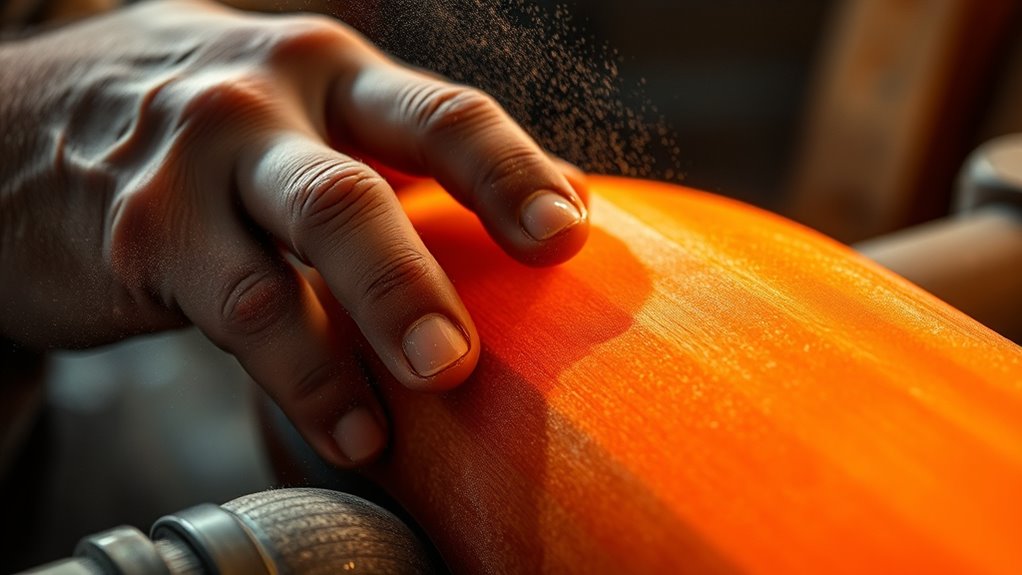

When sanding on the lathe, start with coarse grits like 80-120 to quickly remove imperfections, then gradually switch to finer grits such as 220, 320, or 400 for a smoother finish. Keep the abrasive moving to prevent heat buildup, and use light pressure to avoid burn marks. Monitoring temperature and reducing lathe speed at finer stages helps prevent overheating. For more tips on achieving a perfect finish, there’s plenty more to explore.
Key Takeaways
- Start with coarse grit to remove imperfections, then gradually progress to finer grits for a smooth finish.
- Use light pressure and lift the abrasive frequently to minimize heat buildup during sanding.
- Reduce lathe speed at finer grit stages to control friction and prevent overheating.
- Regularly inspect and replace worn abrasives to maintain cutting efficiency and reduce excessive heat.
- Employ lubricants like water or oil to lower temperature and protect the surface from burn marks.

Sanding on the lathe is a crucial step in achieving a smooth, professional finish on your turned projects. Whether you’re working with wood, acrylic, or other materials, the right abrasive grit and proper heat management are essential to get the best results. As you begin, keep in mind that the abrasive grit you choose will directly influence the surface quality. Starting with a coarser grit, like 80 or 120, helps remove tool marks and rough spots quickly. From there, you progress to finer grits—such as 220, 320, or even 400—to refine the surface further and prepare it for finishing. This gradual increase in grit ensures a smoother, more polished look, but it’s equally important to manage heat during the process.
When you’re sanding on the lathe, the friction generated can cause the material to heat up rapidly. Excessive heat can lead to burn marks, discoloration, and even damage the surface or the tool itself. To prevent this, you should frequently lift the abrasive from the workpiece to check your progress and avoid staying in one spot too long. Light, consistent pressure is key; pressing too hard increases heat and wears out your abrasive faster. Using plenty of lubricant, like water or mineral oil, can help reduce heat and improve the cutting action of the abrasive. For wood, some turners prefer dampening the surface with water or a special lubricant to keep temperatures down and minimize scorching.
Another aspect of heat management involves the condition of your abrasive material. Worn-out or clogged sandpaper becomes less effective, requiring more force and generating more heat. Changing or cleaning your abrasives regularly ensures you maintain ideal cutting efficiency and control. Also, consider the speed of your lathe; higher speeds can increase heat buildup, so dialing down the RPM when sanding finer grits can help keep temperatures in check. Always monitor the workpiece for signs of overheating, such as discoloration or a burning smell, and adjust your technique accordingly. By balancing abrasive grit progression with attentive heat management, you’ll produce a flawlessly smooth surface with less risk of damage. Incorporating appropriate abrasive tools and techniques can further enhance your results and efficiency.
Frequently Asked Questions
How Do I Prevent Tear-Out During Lathe Sanding?
To prevent tear-out during lathe sanding, always follow the grain direction to minimize damage. Use light sanding pressure and avoid pressing too hard, which can cause tear-out and heat buildup. Keep your sanding tools sharp and change grits gradually to reduce stress on the wood. Regularly check your work, and if tear-out occurs, switch to a finer grit or adjust your pressure and grain direction for smoother results.
What Safety Precautions Should I Take When Sanding on a Lathe?
You should always wear personal protective equipment like safety glasses and a dust mask to shield your eyes and lungs. Make certain proper ventilation in your workspace to prevent dust buildup and inhalation hazards. Keep your work area clean and free of clutter, and avoid loose clothing that could get caught. Following these safety precautions helps protect you from dust, debris, and potential injuries while sanding on the lathe.
Can I Use Water-Based Sanding Compounds on a Lathe?
Yes, you can use water-based sanding compounds on a lathe, but you should proceed carefully. Water-based compounds can help reduce heat and dust, making your sanding smoother. However, they may cause the wood to swell or become slippery, so consider using alternative abrasives if needed. Always test a small area first, and verify your lathe can handle the moisture without damage. Proper safety and technique are essential for best results.
How Do I Avoid Burning the Wood While Sanding?
You might find it surprising, but avoiding burning the wood while sanding comes down to proper sanding techniques and grit selection. Keep the lathe speed moderate, apply light pressure, and frequently check your progress. Use progressively finer grits to reduce heat buildup and prevent burning. Remember, patience and gentle passes are key—rushing can cause heat and burn marks, so take your time with each grit to achieve a smooth, burn-free finish.
What Are Signs of Excessive Heat Buildup During Sanding?
You’ll notice signs of excessive heat buildup during sanding if the wood shows discoloration or you smell burning. Discoloration appears as dark or uneven patches, indicating the surface is overheating. The smell of burning is a clear warning, so stop immediately. To prevent this, reduce pressure, keep the tool moving, and switch to finer grits sooner. These steps help manage heat and protect your workpiece.
Conclusion
As you sand on the lathe, remember that choosing the right grit feels like a delicate dance—too coarse, and you risk damage; too fine, and progress slows. It’s a balance between the heat that smooths and the grit that cuts. Embrace the process, knowing that patience turns rough wood into a polished masterpiece. Just like life, sanding is about steady progress, where persistence transforms the rough into the refined.