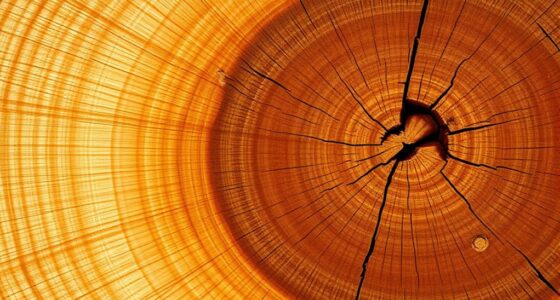
To confirm wood species using end grain patterns, examine the pores, grain tightness, and color of the cross section. Hardwoods often show fine, intricate patterns with small pores, while softwoods display larger, more open pores and resin ducts. Recognizing traits like medullary rays or pore size helps distinguish species accurately. Focus on these features and compare them to reference guides for better identification—if you continue exploring, you’ll uncover even more details to refine your skill.
Key Takeaways
- Examine pore size, distribution, and pattern to differentiate species, such as large pores in pine versus small in oak.
- Observe the presence of medullary rays in hardwoods like oak, which appear as fine, radiating lines.
- Assess end grain color and contrast to aid in species identification, noting darker or richer hues.
- Ensure the cross-section is clean and flat to clearly reveal grain features under magnification.
- Compare observed patterns with reference images or guides for accurate confirmation.
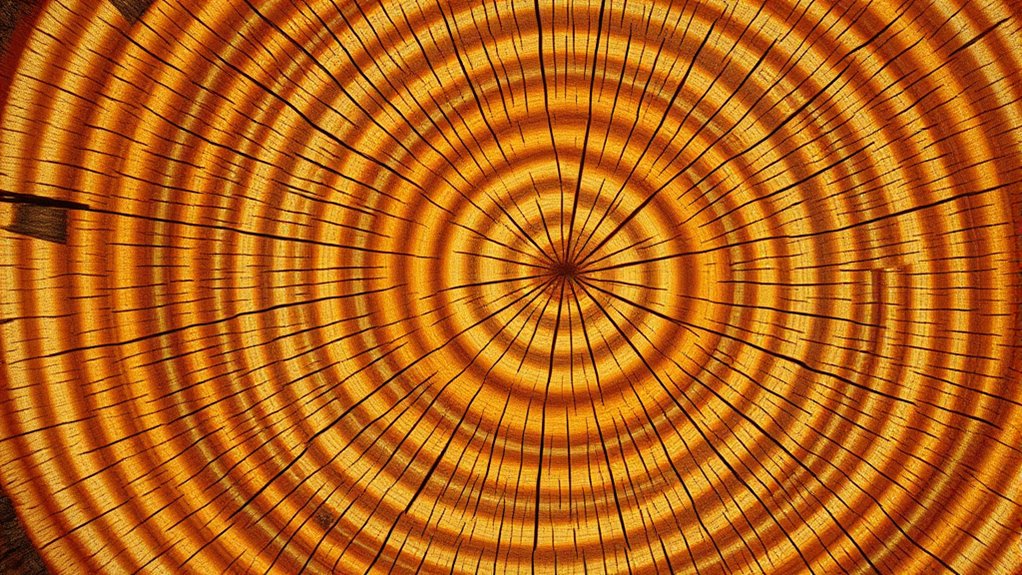
Identifying the exact wood species can be challenging, but examining the end grain patterns offers a reliable clue. When you’re trying to determine a wood’s species, the end grain acts like a fingerprint, revealing distinctive features that aren’t always visible from the surface. This makes end grain analysis an essential tool for grain identification and species verification, especially when dealing with unknown or mixed woods. By closely inspecting the pattern, you can distinguish between hardwoods and softwoods, differentiate species within the same genus, and even detect potential treatments or modifications.
The key to effective grain identification is understanding the characteristic features of different woods. For hardwoods like oak, maple, or cherry, you’ll notice a tight, interlocking grain pattern with fine, consistent lines. Oak, for example, often displays distinctive rays or medullary rays that appear as small, parallel lines radiating from the center. Maple tends to have a more uniform, fine-grained appearance with subtle lines, while cherry shows a smoother, more even pattern with slight variations. Softwoods, such as pine or cedar, usually have larger, more open pores that form irregular, more prominent patterns. Pine, in particular, exhibits large, round resin ducts and a more open grain structure, making it easier to identify at a glance.
Species verification through end grain also involves paying attention to pore size, distribution, and color. In many woods, pores are visible as tiny holes or dots, which can be large or small depending on the species. For example, the distinctive large pores of white oak set it apart from red oak, which has smaller pores. Additionally, the color of the end grain can provide clues; some species have darker, richer hues, while others are paler or more neutral. Taking note of these differences helps confirm the species and ensures you’re working with the right type for your project.
To accurately analyze end grain, you should prepare a clean, flat cut that exposes the wood’s cross-section clearly. Use a magnifying glass or a good light source to examine the pattern closely. Comparing your observations with reference images or established guides can confirm your species verification and refine your grain identification skills. Remember, no single feature tells the whole story—combine pore structure, pattern, color, and other characteristics for the most accurate identification. With practice, you’ll develop a keen eye for interpreting end grain patterns, making your wood identification more precise and reliable every time. Additionally, understanding grain patterns can help prevent costly mistakes by ensuring you select the correct wood for your project.

O'SKOOL Router Lift Systems for 3-1/2" Diameter Motors, 9-1/4'' x 11-3/4'' Plate 5-Piece Insert Ring Kit, RTS05
This router lift features a 3.5" diameter carriage and is compatible with popular 3-1/2” router models such as...
As an affiliate, we earn on qualifying purchases.
Frequently Asked Questions
How Does Moisture Content Affect End Grain Pattern Visibility?
Moisture content considerably influences end grain pattern visibility. When the wood has high moisture, the grain may appear less distinct because water fills the cell structures, reducing grain clarity. As the moisture decreases, the end grain pattern becomes more pronounced and easier to identify. You’ll notice clearer, sharper grain lines with lower moisture content, making it easier to confirm the wood species based on the end grain characteristics.
Can Artificial Finishes Alter the Appearance of End Grain Patterns?
Artificial finishes can definitely alter the appearance of end grain patterns. When you apply finishes like varnish, stain, or lacquer, they can darken, smooth, or obscure the natural details of the end grain. This means you might not see the true wood character as clearly. If you want to preserve the authentic end grain appearance, choose finishes that enhance rather than hide the natural patterns.
Are There Any Safety Precautions When Examining End Grain Patterns?
You should always prioritize safe handling and wear protective gear when examining end grain patterns. Investigating the truth behind the wood’s identity involves close inspection, which can expose you to splinters or dust. Wearing safety glasses, gloves, and a dust mask protects your eyes, skin, and lungs. Always handle tools carefully and work in a well-ventilated area to minimize risks, ensuring a safe and accurate examination process.
How Do Age and Wear Impact End Grain Pattern Identification?
Aging effects and wear patterns can make end grain pattern identification more challenging because they alter the wood’s surface details. Over time, aging causes color changes and subtle shifts in grain visibility, while wear patterns can obscure characteristic features. You should carefully examine multiple areas and compare them to known samples, focusing on less worn sections to accurately identify the wood species despite these changes.
Can End Grain Patterns Vary Within the Same Wood Species?
Ever seen a forest where every tree looks different? Yes, end grain patterns can vary within the same wood species due to grain variation. While species consistency generally keeps patterns recognizable, factors like growth conditions and age introduce subtle differences. So, don’t expect every piece to look exactly the same; instead, look for core characteristics that remain steady across samples. This helps you identify the species despite natural variations.

Paint Sprayer Indoor Outdoor, 1000W Electric Handheld HVLP Spray Paint Gun with 3 Patterns 6 Nozzles, Easy to Clean & Use, Stain Sprayer for House Painting, Furniture, Cabinets, Walls, Doors, Fences
【Powerful 1000W Motor — Fast, Efficient, Reliable】Powered by a robust 1000W aluminum-wrapped copper motor, this paint sprayer delivers...
As an affiliate, we earn on qualifying purchases.
Conclusion
By studying end grain patterns, you hold the key to revealing a wood’s true identity, like a lighthouse guiding you through a foggy forest. These patterns serve as symbols of authenticity, guiding you past superficial appearances to the heart of the wood itself. Trust in this natural compass, and you’ll navigate the world of woodworking with confidence, knowing you’re always connecting with the core truth beneath the surface. Let the patterns lead you home.
Amazon Product B0FVFCW9XP
As an affiliate, we earn on qualifying purchases.

KETIPED Aluminium Router Table Insert Plate,Mini Square Woodworking Benches Router Flip Plate,Multifunctional Trimming Engraving Table,055Red
👍〖Product Material〗:The router workbench insert plate is made of high-quality aluminum alloy material, and the surface is anodized,...
As an affiliate, we earn on qualifying purchases.