
To sharpen carving gouges effectively, focus on maintaining the correct sweep curvature and bevel angles, usually between 25° and 30°. Use sharpening stones or honing guides to keep consistent angles while moving smoothly along the edge. Regularly check your progress and stay aware of the original shape to guarantee precise, smooth cuts. Proper technique improves safety and results, and if you keep going, you’ll discover even more tips for perfecting your sharpening skills.
Key Takeaways
- Maintain the correct sweep curvature by using appropriate sharpening tools and consistent angles during the process.
- Match the original bevel angle, typically between 25° and 30°, for optimal carving performance.
- Use sharpening stones or honing guides to ensure uniform bevels and smooth, even sweeps.
- Regularly check the edge’s sharpness by gently slicing scrap wood to avoid over-sharpening.
- Preserve the gouge’s shape and avoid uneven bevels to ensure precise, safe, and effective carving results.

Sharpening carving gouges is essential for maintaining their cutting performance and ensuring clean, precise cuts. When you keep your tools sharp, you reduce the effort needed to carve and improve the quality of your work. Proper tool maintenance isn’t just about keeping your gouges sharp; it also involves understanding the correct techniques for sharpening sweeps and bevels. This process helps prevent accidents, prolongs the lifespan of your tools, and guarantees you get consistent results every time you carve.
Regular sharpening ensures precise cuts, extends tool life, and guarantees consistent, safe carving results.
Before you start sharpening, it’s crucial to prioritize safety precautions. Always wear safety glasses to protect your eyes from metal filings or shards. Work in a well-ventilated area to avoid inhaling any dust or particles created during sharpening. Use a stable work surface and clamp your gouge securely to prevent slipping. Remember, a sharp tool is safer than a dull one because it requires less force to cut, reducing the chance of slips or injuries. Staying focused and working deliberately will help you avoid accidents and achieve a better edge.
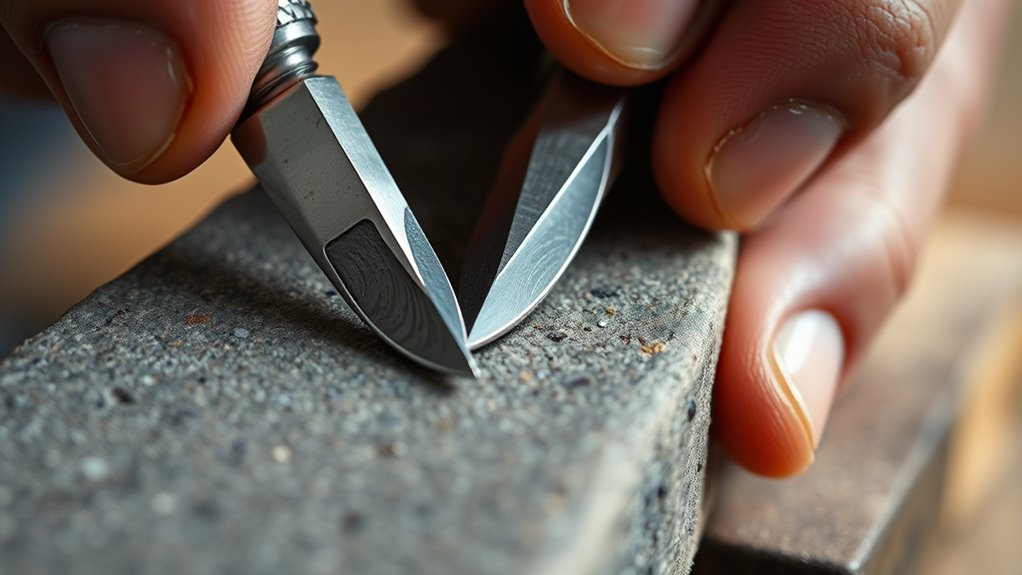
To sharpen the sweep of your gouge, you need to understand the shape of the curve. The sweep refers to the curvature of the cutting edge, and maintaining this shape is vital for carving precision. You’ll typically use a sharpening stone or a honing guide to keep the correct angle. For most gouges, a bevel angle between 25 and 30 degrees offers a good balance for cutting efficiency and durability. As you sharpen, move the tool smoothly along the stone, maintaining a consistent angle and applying even pressure. This consistency ensures the sweep remains smooth and even, which translates into cleaner, more controlled cuts in your work.
When it comes to bevels, focus on matching the original angle of the tool. The bevel is the sloped surface that edges the gouge, and it influences how the tool slices into the wood. To sharpen bevels, you can use a fine-grit stone or a honing guide to keep the angle uniform. It’s important to check your progress frequently, testing the sharpness by gently slicing into a piece of scrap wood. If the edge feels dull or rough, continue sharpening until you achieve a fine, polished edge. Remember, the goal is to create a sharp, durable edge that can handle detailed carving without dulling quickly.
Additionally, being aware of advancements in automation can help you streamline your sharpening process and maintain consistent results more efficiently.
Frequently Asked Questions
How Often Should Carving Gouges Be Sharpened?
You should sharpen your carving gouges regularly to maintain ideal gouge longevity and guarantee clean cuts. Typically, sharpen them after every few uses or when you notice decreased sharpness. Frequent sharpening keeps the edge precise and reduces chunking or tearing. For best results, check the bevel and sweep angles often, and sharpen as needed to keep your tools in top condition, especially if you work intensively or on hard woods.
Can I Sharpen Gouges Without Specialized Equipment?
Sure, you can sharpen gouges without specialized equipment—just like our ancestors used primitive stones and makeshift tools. Historical sharpening methods relied on simple alternatives like sharpening stones, leather strops, or even a piece of sandpaper. While it’s possible, don’t expect perfect results or the precision of dedicated sharpening gear. Use what’s available creatively, but be prepared for some patience and a bit of trial and error.
What Safety Precautions Are Needed During Sharpening?
You should wear protective gear like safety glasses and gloves to shield your eyes and hands while sharpening. Make sure you work in a well-lit, clean sharpening environment to prevent accidents and guarantee precision. Keep your fingers clear of the sharpening stone’s edge, and always stabilize the gouge securely. Avoid distractions, and follow the manufacturer’s instructions for your tools and equipment to stay safe during the process.
How Can I Identify When a Gouge Needs Sharpening?
A dull blade is like a dull tool—inefficient and frustrating. You’ll notice your gouge needs sharpening if it struggles to carve smoothly, leaves ragged cuts, or requires more pressure. Check the blade angles regularly, as dull blades often lose their edge. Using proper honing techniques, like examining the bevel and sweep, helps you identify when sharpening is necessary, ensuring your gouge stays sharp and performs at its best.
What Are Common Mistakes to Avoid When Sharpening Gouges?
When sharpening gouges, avoid creating an uneven gouge angle, which can affect your carving. Be careful not to overheat the blade by pressing too hard or staying too long on sharpening stones, as this dulls the edge. Also, don’t ignore the importance of maintaining consistent bevels; inconsistent bevels can lead to poor cuts. Regularly check your gouge’s edge and keep sharpening stones clean for ideal results.
Conclusion
Mastering the art of sharpening carving gouges isn’t just about technique; it’s about understanding how sweeps and bevels work together to create clean, precise cuts. When you invest time in honing your tools, you’ll notice smoother carvings and less frustration. Like a well-tuned instrument, your gouges will perform better, revealing your true artistic potential. So, keep practicing, stay mindful of your angles, and trust that sharpening truly transforms your carving experience.