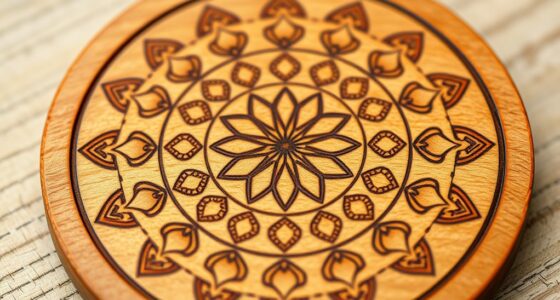
Using simpler, consistent wood for pyrography helps your work look cleaner and more professional. When you choose wood with tight, even grain and a smooth surface, your burns become more uniform and precise. This reduces surprises like uneven lines, warping, or cracking. Simple woods allow you to focus on your design without fighting the material. If you keep exploring, you’ll discover how selecting the right wood can make your projects even more polished and satisfying.

Get business pricing on tools and workshop supplies
- Business-only prices and quantity discounts
- Tax-exempt purchasing
- Multiple users, one account, clear invoices
Key Takeaways
- Simpler woods have uniform grains that burn evenly, resulting in cleaner, more consistent lines.
- Fine textures on simple woods enable greater control and precision in detailed pyrography work.
- Straightforward wood choices reduce the risk of warping or cracking, ensuring a neater finish.
- Less complex grains minimize distractions, allowing the design to stand out more clearly.
- Overall, simple woods provide predictable burning behavior, leading to a polished, professional appearance.

Choosing the right wood is essential for successful pyrography projects because not all woods respond equally to burning. The key to a clean, striking design often lies in selecting wood with a simple, consistent appearance. When you opt for wood that has a straightforward wood grain and a smooth surface texture, your pyrography work becomes more effective and visually appealing. Complex grains or highly textured surfaces can distract from your design and make it harder to achieve clean lines and detailed shading. Simpler woods, with their uniform surface and predictable grain patterns, allow your burned lines to stand out clearly and give your artwork a polished, professional look.
The wood grain plays a significant role in how your pyrography turns out. Woods with tight, even grain patterns tend to burn more uniformly, giving you a cleaner finish. When the grain is intricate or irregular, it can cause uneven absorption of heat, leading to blotchy or inconsistent shading. This can be frustrating because it requires extra effort to fix or cover up mistakes. Conversely, a straightforward grain pattern, like in basswood or birch, offers a predictable surface where your burns will look smooth and consistent. This simplicity helps you focus on your design rather than fighting with the wood’s natural quirks. Additionally, grain pattern is an important factor in ensuring your pyrography results are neat and professional. Recognizing the influence of wood properties can help you select the best materials for your projects. Using woods with a predictable grain also minimizes the risk of warping or cracking during the burning process, ensuring your project remains intact and professional-looking. Furthermore, the compatibility of wood with heat can greatly affect the durability and appearance of your finished piece.
Surface texture also impacts the overall appearance of your pyrography piece. Smooth, fine-grained woods provide a flat, even surface that’s easy to work with and results in crisp lines. A rough or highly textured surface, on the other hand, can cause your burning tool to skip or create uneven lines, which diminishes the clarity of your artwork. When working on a surface with a simple, fine texture, you can achieve greater control and precision. The result is a clean, sharp image that captures the details and depth you aim for. The smoother surface also makes it easier to shade gradually and add fine details, enhancing the overall aesthetic. Additionally, selecting a wood with a fine surface texture helps in achieving sharp, precise lines, which is vital for detailed and intricate pyrography work. Choosing the right surface texture can also reduce frustration and improve your overall experience with the craft.
In the end, choosing a wood with a simple grain and surface texture isn’t about limiting your creativity — it’s about setting a solid foundation for your work. It’s easier to achieve consistent, clean results when your material responds predictably to heat. Simpler woods let your design shine without unnecessary distractions or complications, making your pyrography look more professional and visually striking. By focusing on straightforward wood choices, you make your craft more enjoyable and your finished projects more impressive.
Products Worth Considering

Ring Alarm 14-Piece Wireless Security System Kit

Dyson Cyclone V10 Origin Cordless Vacuum

Dyson V8 Cyclone Cordless Vacuum
As an affiliate, we earn on qualifying purchases.
Frequently Asked Questions
How Do Different Wood Textures Affect Pyrography Results?
Different wood textures greatly impact your pyrography results. Smooth surfaces allow you to create clean, precise lines, while intricate wood grain patterns add depth and character to your design. Surface textures like rough or uneven wood can cause unpredictable burn marks, making detail work challenging. To achieve better results, choose wood with a consistent, smooth surface and simple grain, so your pyrography looks clearer and more professional.
Can I Use Synthetic or Painted Wood for Pyrography?
You should avoid using synthetic wood or painted surfaces for pyrography. Synthetic wood often contains glues and resins that can release harmful fumes when heated, and painted surfaces can produce toxic smoke and unpredictable results. For safety and best results, stick to natural, unfinished wood. The natural surface allows the pyrography tool to create cleaner, more detailed designs, ensuring your artwork looks professional and safe to handle.
Does Wood Age or Weather Impact Pyrography Artwork Longevity?
Wood aging and weathering can impact your pyrography artwork’s longevity, especially through changes in wood color and grain patterns. As wood ages, it may darken or develop cracks, which can obscure your design. Exposure to moisture or sunlight accelerates weathering, causing fading or warping. To preserve your art, choose stable, well-seasoned wood, and keep it protected from harsh conditions, ensuring your pyrography remains vibrant and detailed longer.
Which Wood Types Are Easiest for Beginners to Work With?
They say, “Keep it simple,” and that applies to beginner pyrography. Softwoods like basswood and pine are easiest because their smooth wood grain and minimal color variation make detailed burning easier. These woods are forgiving, allowing you to focus on technique without struggling with uneven textures or unpredictable color changes. Starting with simple, light-colored woods helps you learn faster, giving you confidence to explore more complex projects later.
How Does Wood Moisture Content Influence Pyrography Detail?
Wood moisture content greatly influences pyrography detail, as high moisture levels cause the wood grain to expand and contract, leading to uneven burns. By controlling moisture, you guarantee a smoother, more precise design. When the wood is properly dried, the grain remains stable, allowing your pyrography tool to glide effortlessly and create finer lines. Proper moisture control enhances detail, making your artwork cleaner and more professional-looking.
Conclusion
So, next time you pick a piece of wood for pyrography, consider going for simplicity. A plain, smooth surface lets your design shine without distraction, making your artwork stand out even more. Wouldn’t you agree that sometimes, less really is more? By choosing a straightforward wood, you allow your creativity to take center stage, creating a striking piece that captures attention effortlessly. Keep it simple, and watch your artistry glow.