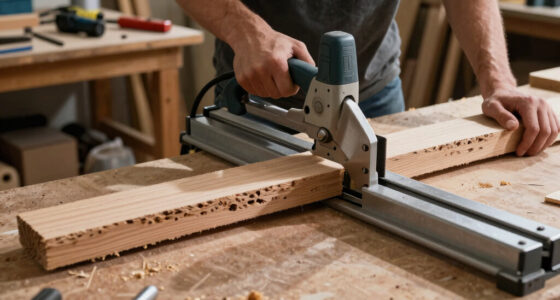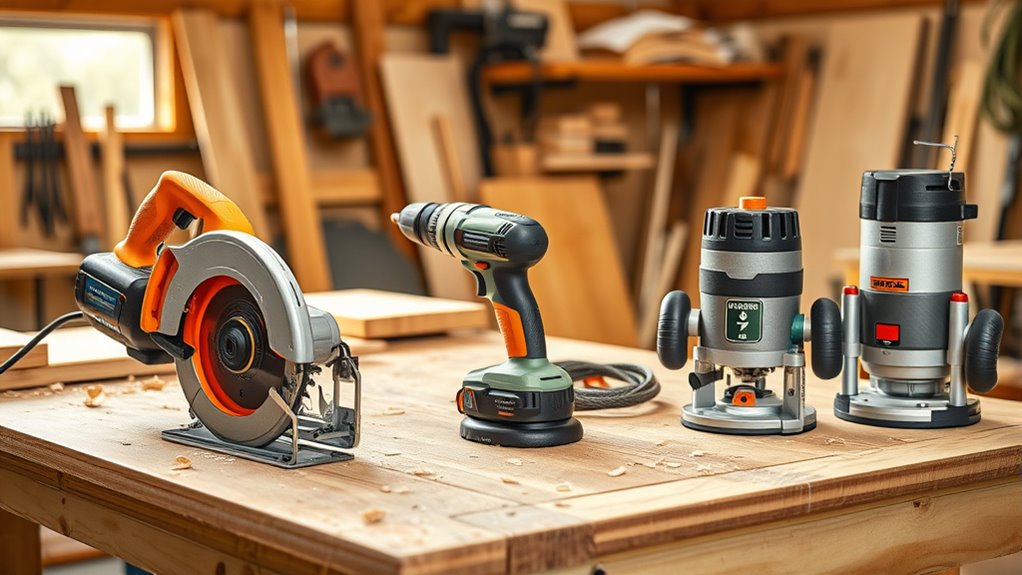

For a flexible woodworking setup, I’d make the DEWALT 20V MAX 3-Tool Brushless Combo Kit my best overall pick because it brings routing, sanding, and jigsaw cuts into one coordinated kit. The DEWALT DW735X planer is the standout for flattening and sizing boards, while the SKIL random orbital sander is a simpler choice for surface prep. These tools serve different jobs, so the main tradeoff is between buying a versatile set and choosing a dedicated machine for a specific task. I also weigh corded power, cordless convenience, dust handling, and how much room each tool asks of a shop. Read on for the full breakdown and recommendations by project and experience level.

Get business pricing on tools and workshop supplies
- Business-only prices and quantity discounts
- Tax-exempt purchasing
- Multiple users, one account, clear invoices
Complete the kit


Key Takeaways
The DEWALT 3-tool kit earns the overall spot through job coverage: its compact router, orbital sander, and jigsaw support more stages of a project than any single-purpose pick.
The DW735X planer is the clearest specialist choice; it handles board thickness work that sanders and routers cannot replace, but it calls for more space and a dedicated workflow.
There are two distinct sander paths: the SKIL corded random orbital is a straightforward starting point, while the DEWALT cordless sanders suit buyers already invested in the 20V battery system.
The Metabo HPT miter saw focuses on repeatable crosscuts and angled cuts, making it more relevant to trim and frame work than to shaping or surface finishing.
Small detail work splits between the SKIL detail sander for corners and the Dremel rotary tool for fine touch-ups; neither is a substitute for a full-size sander or router.


| woodworking power tool | Power source | Motor | Voltage |
|---|---|---|---|
| Skil 5” Random Orbital Sander | Corded electric | — | 120 volts |
| DEWALT 20V MAX XR Brushless 3- | Battery-powered | Brushless | 20 volts |
| DEWALT 20V MAX 3-Tool Brushles | Battery-powered | — | 20 volts |
| SKIL Corded Multi-Function Det | Corded electric | 1.2 amps | — |
| DEWALT DW735X 13-Inch Two-Spee | Corded electric | 15 amps | — |
| DEWALT 20V MAX Brushless Orbit | — | Brushless | 20V MAX |
| Metabo HPT C10FCG2 10-Inch Sin | Corded electric | 15 amps | — |
| Dremel 4300-5/40 Rotary Tool K | Corded | High performance | — |
| TwoWin 800W Compact Wood Route | — | — | 110V–120V |
More Details on Our Top Picks
Skil 5” Random Orbital Sander with Cyclonic Dust Box & 3pc Sanding Sheet
Variable speed and cyclonic dust collection make this Skil a practical choice for smoothing boards and preparing surfaces for finish. Its 2.8 amp motor reaches 13,000 RPM, while the 5-inch disc covers more area than the pointed pad on the SKIL SR232301 detail sander. That makes the Skil better suited to broad panels; the detail sander is easier to guide into corners and narrow profiles. The compact body can help with tight spaces, though its 3.4-pound weight may tire your hand during long sessions. The dust box keeps collection self-contained, but a cord limits movement around large workpieces or a shop without convenient outlets. I’d choose this for general-purpose surface sanding when corded power is welcome and fine detail work is occasional.
Pros:- Variable speed helps adapt sanding to different materials and stages of surface preparation
- Cyclonic dust box collects debris without requiring a separate vacuum
- 5-inch disc covers broader surfaces than a detail sander
- Compact body can reach tighter areas than larger sanding tools
Cons:- Cord restricts movement around large workpieces
- At 3.4 pounds, it may cause fatigue during extended sanding
Best for: Woodworkers who regularly smooth small to medium panels near a power outlet and want variable-speed control
Not ideal for: People sanding large workpieces away from outlets or spending long sessions on overhead surfaces
- Power source:Corded electric
- Voltage:120 volts
- Amperage:2.8 amps
- Maximum rotational speed:13,000 RPM
- Disc diameter:128 mm
- Weight:3.4 pounds
- Dimensions:7.87 × 4.8 × 5.51 inches
- Included sanding sheets:3 pieces
Our verdict“Choose this Skil for versatile, corded sanding on panels and general woodworking surfaces, and choose the SR232301 when corners and fine details take priority.”
DEWALT 20V MAX XR Brushless 3-Speed Cordless Oscillating Multi-Tool Kit
Cordless reach and controlled cutting give this multi-tool a distinct place among the woodworking options here. Its brushless motor, three speed settings, and dual-grip variable-speed trigger help tailor cutting or sanding around trim, joints, and awkward spots where a larger saw cannot fit. The quick-change system avoids wrench-based blade swaps, and the universal adapter supports most accessory brands. Compared with the DEWALT DCK307D1P1 combo kit, this tool concentrates on oscillating tasks rather than supplying a router, jig saw, and orbital sander. That focus is useful for repairs, but its two included blades provide a limited starting selection. The included battery and charger make it ready to work without a separate kit purchase; a listed one-hour charge time still means planning around battery downtime. I’d pick it for precise, occasional cuts and touch-ups rather than primary stock preparation.
Pros:- Cordless design reaches work areas without a nearby outlet
- Three speed settings and variable trigger provide control for different tasks
- Quick-change system makes accessory swaps simpler
- Universal adapter fits most oscillating accessory brands
Cons:- Only two blades are included, so additional accessories may be needed
- One-hour listed charge time can interrupt work if the battery runs flat
Best for: Woodworkers and remodelers who need a portable tool for trimming, flush cuts, and sanding in tight areas
Not ideal for: Buyers seeking a complete set of core woodworking tools or a broad supply of task-specific blades in the box
- Power source:Battery-powered
- Voltage:20 volts
- Motor:Brushless
- Speed settings:3
- Maximum speed:20,000 OPM
- Battery type:Lithium-ion
- Batteries included:1
- Weight:3 pounds
- Included blades:2
Our verdict“Pick this kit for portable repair cuts and detail work; choose the DCK307D1P1 if you need several core woodworking tools instead.”
DEWALT 20V MAX 3-Tool Brushless Combo Kit with Compact Router, Random Orbital Sander, Jig Saw, Batteries, Charger, and Bag
Three complementary cordless tools make this DEWALT kit the broadest starting point in this group: a compact router, random orbital sander, and jig saw cover edge work, surface prep, and curved or straight cuts. The jig saw’s four-position orbital action lets a woodworker adjust its cutting behavior, while the brushless sander has a variable-speed dial for surface control. Compared with the DEWALT DCS356C1 oscillating multi-tool kit, this bundle is better for building a basic woodworking setup, though it lacks that tool’s narrow-access repair role. Two batteries, including a 5.0Ah pack, support longer work sessions, but the kit still requires battery management across three tools. The router’s fixed plastic base is a compromise for buyers who want a more robust base or extensive plunge routing. I’d favor it when a single purchase needs to cover several common shop tasks.
Pros:- Combines a compact router, random orbital sander, and jig saw
- Includes two batteries, including a 5.0Ah XR battery
- Brushless motors power the sander and jig saw
- Router dual LEDs illuminate the cutting area
Cons:- Router uses a fixed plastic base
- Two batteries must be shared among three cordless tools
Best for: New cordless-shop owners who need a router, sander, and jig saw for varied furniture and home woodworking projects
Not ideal for: Woodworkers focused on precision plunge routing or who already own compatible core tools and need a specialized upgrade
- Power source:Battery-powered
- Voltage:20 volts
- Tools included:Compact router, random orbital sander, jig saw
- Batteries included:5.0Ah XR and 2.0Ah compact
- Charger:12V MAX/20V MAX 4 Amp charger
- Router features:Variable-speed dial, fixed plastic base, dual LEDs
- Sander features:Brushless motor, variable-speed dial
- Jig saw feature:Brushless motor, 4-position orbital action
- Included accessory:Contractor bag
Our verdict“Choose this combo when you need several core woodworking tools in one cordless set, and skip it if a sturdier or plunge-capable router is your priority.”
SKIL Corded Multi-Function Detail Sander with Micro-Filter Dust Box, 3 Attachments and 12pcs Sanding Sheets (SR232301)
Interchangeable detail attachments are the reason to choose this Skil over a standard 5-inch sander. Its 4-in-1 format reaches corners, edges, and shaped sections that the Skil SR211601 random orbital sander covers less precisely with its larger disc. The 1.2 amp motor runs at up to 13,500 OPM, and the included 12 sheets let a woodworker start sanding without assembling a separate assortment. A micro-filter dust box handles routine cleanup, while the 1¼-inch port offers a vacuum connection when sanding generates more debris. This is a focused tool: its smaller sanding area makes it slower on broad tabletops than the SR211601, and its cord limits portability. I’d choose it for cabinet details, trim, and small furniture components where access and pad shape matter more than fast coverage.
Pros:- Three extra attachments adapt the sander to different detail shapes
- Micro-filter dust box and vacuum port support dust collection
- Tool-free hook-and-loop sheet changes simplify grit swaps
- Includes 12 sanding sheets
Cons:- Small detail pads cover broad surfaces more slowly than a 5-inch random orbital sander
- Corded operation limits movement around the workpiece
- Hook-and-loop sheet backing may wear with repeated changes
Best for: Cabinetmakers and furniture hobbyists who sand corners, narrow edges, and shaped details
Not ideal for: Woodworkers who mainly flatten or finish large panels and want faster coverage from a broad sanding pad
- Model:SR232301
- Motor:1.2 amps
- Maximum speed:13,500 OPM
- Dust port:1¼ inches
- Detail attachments:3 included
- Sanding sheets:12 included
- Power source:Corded electric
- Sheet attachment:Hook-and-loop
Our verdict“Choose the SR232301 for corners, profiles, and trim, while the SR211601 is the better fit for sanding wider surfaces.”
DEWALT DW735X 13-Inch Two-Speed Thickness Planer
Thirteen-inch capacity and two feed speeds make this planer the heavy-duty stock-preparation pick in the group. Its 15 amp motor and three-knife cutterhead are built for turning rough boards into consistent thickness, a job that sanders such as the Skil SR211601 cannot perform. The slower feed setting produces 179 cuts per inch for a finer surface, while the faster setting reaches 96 cuts per inch when throughput matters more. Infeed and outfeed tables help support boards through the cut, and fan-assisted chip ejection moves debris away from the cutterhead. Those capabilities come with a substantial footprint: at 102 pounds, it is difficult to relocate, and the cord ties it to a suitable outlet. I’d place it in a dedicated shop for milling wider lumber, rather than a small workspace that needs tools put away after every session.
Pros:- 13-inch planing width handles wider boards than compact benchtop options
- Two feed speeds balance surface finish against processing pace
- Three-knife cutterhead supports faster knife changes
- Includes infeed and outfeed tables plus an extra knife set
Cons:- At 102 pounds, it is difficult to move and store
- Corded power requires a suitable shop outlet
- The large footprint can crowd a compact workspace
Best for: Furniture makers and serious hobbyists who regularly thickness boards up to 13 inches wide in a stationary shop
Not ideal for: Small-shop users who need a portable tool or only occasionally prepare narrow stock
- Planing width:13 inches
- Motor:15 amps
- Motor speed:20,000 RPM
- Cutterhead speed:10,000 RPM
- Feed speeds:96 or 179 cuts per inch
- Cutterhead:Three knives
- Power source:Corded electric
- Dimensions:24.58 × 22 × 20.97 inches
- Weight:102 pounds
Our verdict“Choose the DW735X for regular thicknessing of wide lumber in a dedicated shop, and skip it if portability or occasional small-stock work matters more.”
DEWALT 20V MAX Brushless Orbital Sander, Tool Only (DCW210B)
The DCW210B is the cordless sanding pick for woodworkers who want to move between workpieces without managing a power cord. Its 8,000–12,000 OPM variable speed lets you adjust sanding pace for different tasks, while the low-profile body helps keep the pad close to the work for more controlled passes. Compared with the corded SKIL 5” Random Orbital Sander, this DEWALT trades constant corded operation for mobility and a brushless motor. The tradeoff is that this is a tool-only purchase: you need a compatible 20V MAX battery and charger, and dust extraction accessories may add to the setup. Its locking dust bag offers a simpler starting point, though a collector connection is available for longer shop sessions.
Pros:- Variable speed supports different sanding tasks
- Low-profile design helps with controlled sanding
- Replaceable hook-and-loop pad speeds up paper changes
- Locking dust bag provides onboard dust collection
Cons:- Battery and charger are not specified as included
- Dust collector and universal connector are separate accessories
Best for: Woodworkers who already own DEWALT 20V MAX batteries and want a portable random orbital sander for shop or on-site finishing
Not ideal for: New tool buyers without compatible batteries, or woodworkers who want a complete dust extraction setup included
- Model:DCW210B
- Voltage:20V MAX
- Motor:Brushless
- Speed:8,000–12,000 OPM
- Sanding pad:Replaceable 8-hole hook-and-loop pad (DWE64233)
- Dust collection:Locking dust bag; dust port fits DWV010 and DWV012 collectors
- Vacuum hose compatibility:1-1/4 in. hoses with DWV9000 Universal Quick Connector
Our verdict“Choose this sander if cordless mobility matters and you already have a compatible DEWALT battery; choose the corded SKIL sander for a ready-to-run sanding option.”
Metabo HPT C10FCG2 10-Inch Single-Bevel Compound Miter Saw, 15-Amp
The C10FCG2 suits woodworkers who need a miter saw they can carry between a home shop and a job site. At 24.2 pounds, it is easier to move than a larger stationary cutting setup, while its 15-amp motor and 10-inch blade handle common crosscuts and angled trim work. The shadow line helps position cuts, and the included vise steadies stock. Compared with the DEWALT DW735X planer, this saw serves a different stage of the project: it cuts boards to length and angle rather than flattening and sizing their thickness. Its main limitation is the single-bevel design, which tilts left only; users making frequent bevel cuts in both directions may prefer a dual-bevel saw. It is also specified for wood cutting.
Pros:- 24.2-pound weight makes transport easier
- Miter adjustment reaches 52° left and right
- Shadow line aids blade placement
- Included vise helps secure workpieces
Cons:- Single-bevel head tilts left only
- Designed for wood cutting
Best for: DIY woodworkers and trim installers who need a transportable saw for crosscuts, miters, and left-side bevel cuts
Not ideal for: Furniture makers who routinely need bevels in both directions or anyone seeking a saw specified for materials beyond wood
- Model:C10FCG2
- Power source:Corded electric
- Motor:15 amps
- No-load speed:Up to 5,000 RPM
- Blade:10-inch, 40-tooth tungsten carbide
- Miter range:0°–52° left and right
- Bevel range:0°–45° left
- Weight:24.2 pounds
- Included accessories:40-tooth TCT wood blade, dust bag, vise assembly, and 8 mm hex bar wrench
Our verdict“Pick this saw for portable wood crosscutting and miter work, but look for a dual-bevel model if two-way bevel cuts are part of your regular workflow.”
Dremel 4300-5/40 Rotary Tool Kit with LED Light, 5 Attachments & 40 Accessories
For small-scale woodworking, the Dremel 4300-5/40 covers tasks that are awkward for a full-size sander or router: detail sanding, carving, engraving, and light grinding. Its 5,000–35,000 RPM variable speed gives you room to tune the tool to the accessory and material, while the pivot LED helps illuminate a close work area. The kit includes five attachments and 40 accessories, so it offers more task variety out of the box than the TwoWin 800W Compact Wood Router, which is aimed at edging and grooving with router bits. That versatility has limits: a rotary tool is not a substitute for the router when shaping long, consistent edges, and the cord restricts movement. Its compact accessories may also require project-specific additions.
Pros:- Wide variable-speed range suits a variety of accessories
- Pivot LED helps light close detail work
- Five attachments and 40 accessories are included
- Universal 3-jaw chuck accepts compatible accessories
Cons:- Cord limits movement around a workpiece
- May feel heavy during extended use
- Specific projects may call for additional accessories
Best for: Woodworkers who carve, engrave, sand small details, or make fine adjustments to small projects
Not ideal for: Buyers who need to rout long edges, remove substantial material, or work far from an outlet
- Model:4300-5/40
- Power source:Corded
- Motor:High performance
- Speed range:5,000–35,000 RPM
- Chuck type:Universal 3-jaw
- Light:Pivot LED
- Attachments:5
- Accessories:40
Our verdict“Choose the Dremel for detailed carving and finishing tasks; choose the TwoWin router when your work centers on guided edging or grooving.”
TwoWin 800W Compact Wood Router Tool
The TwoWin 800W Compact Wood Router is aimed at woodworkers who want a compact tool for trimming edges, cutting grooves, and similar routing jobs, with bits and guides already in the box. Its transparent base gives a clearer view of the trimming edge, which can help when following a line. The included 15 router bits and guides make this more ready for varied routing tasks than the Dremel 4300-5/40, whose smaller accessories are better suited to detail work than conventional routing. The tradeoff is limited detail about the bits: their shank size is unspecified, so compatibility with other collets or tools is unclear. Its aluminum and plastic construction may also be a less appealing fit for buyers seeking an all-metal router.
Pros:- Includes 15 router bits and guides
- Transparent base helps show the trimming edge
- 30,000 RPM speed supports routing tasks
- Accessory bundle includes wrenches and a wooden organizer
Cons:- Router bit shank size is not specified
- Aluminum and plastic construction may not suit buyers seeking an all-metal tool
Best for: Hobbyist woodworkers who want a compact corded router with included bits and guides for edging, trimming, and grooving
Not ideal for: Woodworkers who need confirmed bit shank compatibility or prefer a router with all-metal construction
- Input power:800W
- Voltage:110V–120V
- Speed:30,000 RPM
- Construction:Aluminum and plastic
- Router bits:15 included; shank size not specified
- Guides:Straight guide and trimming guide
- Other included accessories:Wrenches, carbon brush, wooden organizer, bolts, and screws
Our verdict“Choose this router for a compact, accessory-rich start to edging and grooving, provided the unspecified bit shank size works for your plans.”

How We Picked
I ranked these woodworking power tools by the jobs they can handle, how well their design fits those jobs, and the practical costs of using them in a home workshop. Performance and build matter, but so do control, dust collection, setup demands, portability, and whether a tool needs a compatible battery platform or additional equipment. I gave more weight to tools that solve a recurring workshop need or cover several steps than to narrow accessories with less reach.
The order reflects usefulness across woodworking tasks, not a claim that one machine can replace another. The DEWALT combo kit leads for breadth; the planer and miter saw rank as strong specialists whose value depends on the work at hand. Compact sanders and the rotary tool sit lower because they support finishing and detail work rather than taking on major stock preparation or cutting. A buyer whose projects center on one task may reasonably rank a specialist higher.
| woodworking power tool | Power source |
|---|---|
| Skil 5” Random Orbital Sander | Corded electric |
| DEWALT 20V MAX XR Brushless 3- | Battery-powered |
| DEWALT 20V MAX 3-Tool Brushles | Battery-powered |
| SKIL Corded Multi-Function Det | Corded electric |
| DEWALT DW735X 13-Inch Two-Spee | Corded electric |
| DEWALT 20V MAX Brushless Orbit | — |
| Metabo HPT C10FCG2 10-Inch Sin | Corded electric |
| Dremel 4300-5/40 Rotary Tool K | Corded |
| TwoWin 800W Compact Wood Route | — |
Factors to Consider When Choosing Woodworking Power Tools
I’d start with the work you repeat most, then match the tool to your space, materials, and tolerance for setup. A tool that is powerful on paper may be a poor fit if it is awkward to control or hard to store.
Choose Tools Around Your Project Sequence
Think through a typical project from rough stock to final finish and mark where time or accuracy becomes a problem. A planer changes board thickness; a saw cuts stock to length; a sander prepares surfaces; and a router shapes edges or cuts profiles. These jobs overlap only a little, so buying several finishing tools before addressing a repeated cutting or stock-prep bottleneck can leave the shop unbalanced. If you mostly build from pre-dimensioned lumber, a planer may sit idle while a reliable saw and sander see regular use. For mixed projects, prioritize a tool that solves more than one common step, then add specialists as your work demands them.
Account for Space, Dust, and Setup
Measure storage and working clearance, not just the tool’s footprint. A benchtop planer needs room for boards entering and leaving it, while sanding and routing also require a way to control airborne dust and debris. A dust box can catch some particles close to a sander, but it does not replace workshop extraction or a respirator suited to the material and task. Check how a machine mounts, where its cord or battery sits, and whether changing accessories interrupts your workflow. Buyers with limited space may get more use from compact tools, but should avoid expecting them to do the work of larger machines.
Compare Corded Power With Battery Compatibility
Cordless tools reduce cord management and can be easier to move around a small shop or a job site. Their value rises when you already own compatible batteries and a charger; buying into a new platform for one tool can add cost and storage clutter. Corded tools keep you connected to an outlet and avoid battery changes during extended work, though cord placement can interfere with moving stock or following a cut. Check whether a listed kit includes batteries, since tool-only models assume you have them. Match the power source to where and how long you work instead of treating cordless as automatically more convenient.
Match Control and Capacity to the Material
Capacity numbers matter only when they fit the stock you actually handle. A miter saw’s blade size and cutting range affect the width and thickness it can crosscut, while a planer’s capacity sets limits on board width and depth per pass. For shaping, variable speed and a comfortable grip can make controlled cuts easier, especially when the workpiece is small or the profile is delicate. New users often take an overly aggressive cut to save time, which can increase tear-out, chatter, or the chance of losing control. Favor stable workholding, sharp accessories, and manageable passes over maximum removal in one go.
Decide When a Specialist Is Worth Adding
A dedicated machine earns its place when a task appears often enough that borrowing, outsourcing, or using a workaround slows projects down. A planer can make rough lumber useful, but only if you have a repeatable way to joint one face and manage the resulting shavings. A miter saw speeds repeated crosscuts, though it does not replace a table saw for ripping long boards. A rotary tool can reach tiny details, but it is not a substitute for a router when you need a consistent edge profile across a larger workpiece. Before buying, consider the support equipment, consumables, and safe workholding that the tool’s job requires.
Frequently Asked Questions
Should I buy a combo kit or separate woodworking tools?
A combo kit makes sense when its included tools match several jobs you already do and you can use the shared battery platform. It also reduces the effort of choosing compatible tools one by one. Separate purchases give you more control over capacity and features, which matters when one demanding task dominates your projects. Check the kit contents closely: a bundle can include accessories or batteries you do not need, while a tool-only option assumes you already own compatible power equipment. Let your project list decide whether breadth or specialization matters more.
Can a sander replace a planer when I need boards at a consistent thickness?
No. A sander is mainly for smoothing a surface and removing small amounts of material; it is a slow, imprecise way to make board thickness consistent. A planer is built to reduce stock thickness, but it works best with one face already flat and parallel to the cutter path. If you only buy surfaced lumber, you may not need a planer at all. If you work with rough or reclaimed boards regularly, account for the extra flattening tools and dust handling the process can require. The choice depends on whether your recurring problem is surface finish or stock dimension.
Is a cordless sander a good first sander for a small workshop?
It can be, especially if you already have compatible batteries and value moving freely around the work. For long sanding sessions, a corded model avoids stopping to change or recharge batteries, and may be a simpler fit for a fixed bench. Either way, pay attention to dust collection, pad size, replacement abrasives, and how the tool feels in the positions you use most. A random orbital sander handles broad surfaces better than a detail sander, which is aimed at corners and tighter spaces. Choose based on the surfaces you finish most often, not just the power source.
Do I need a miter saw if I already own a jigsaw?
Not necessarily: the tools serve different cutting needs. A jigsaw can follow curves and make varied cuts, while a miter saw is designed for controlled crosscuts and repeatable angles in stock that fits its capacity. If your projects involve frequent trim, framing, or repeated pieces of the same length, a miter saw can make that work more consistent. For occasional cuts and curved shapes, the jigsaw may cover more of your needs with less dedicated space. Check the stock dimensions and cut types you use before adding a second saw.
What should a beginner buy first for basic woodworking projects?
Start with the operations your first projects actually require, such as cutting stock to size and sanding edges and faces smooth. A versatile kit can cover several tasks, but only if its tools fit your materials and you have a safe way to secure the work. A sander is useful for finishing, yet it cannot correct inaccurate cuts or badly prepared stock. Before moving to specialty tools like a planer or rotary tool, budget for suitable blades or abrasives, eye and hearing protection, and dust control. As your projects repeat, add the machine that removes the biggest bottleneck.
Conclusion
For a workshop that needs coverage across several stages, I recommend the DEWALT 20V MAX 3-Tool Brushless Combo Kit as the best overall pick. The SKIL 5-inch random orbital sander is my best value style of entry for straightforward surface prep, while the DEWALT DW735X is the best premium specialist for buyers who regularly dimension rough lumber. Beginners who want one approachable finishing tool can start with the SKIL sander; those already on DEWALT’s 20V platform may prefer the cordless orbital sander. Choose the Metabo HPT miter saw for repeated angled crosscuts, the SKIL detail sander for corners, the Dremel for fine touch-ups, or the compact TwoWin router for basic edge shaping. Match the pick to the job you do most, and this lineup offers a clear path from a single useful tool to a more complete woodworking shop.