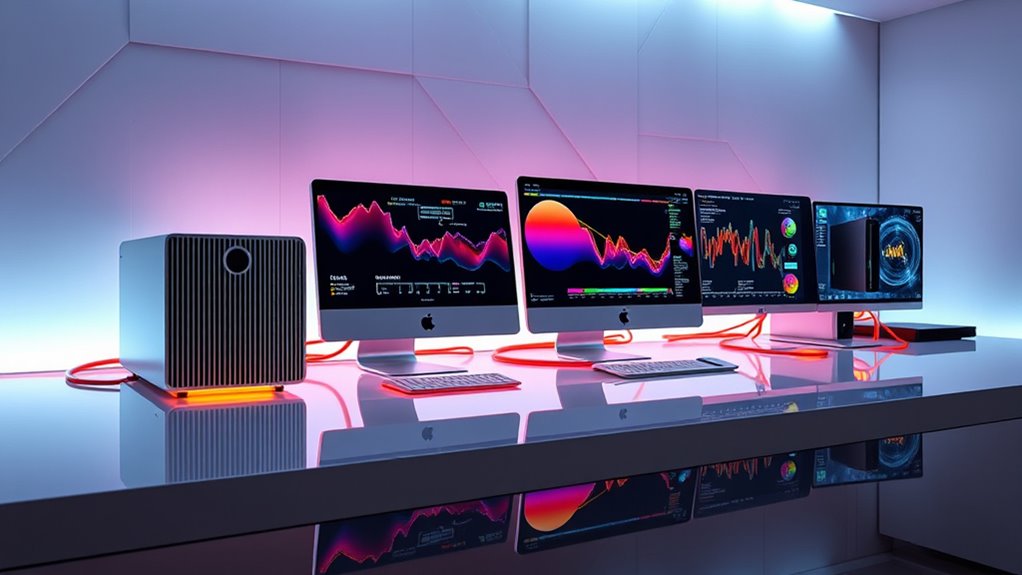

In 2026, choosing the right Mac Studio for machine learning means balancing raw power, storage, and budget. The Apple Mac Studio with M4 Max and 2TB SSD stands out for its exceptional processing capabilities and high-speed Thunderbolt 5, making it ideal for intensive AI tasks. Meanwhile, the Mac Studio with 4TB SSD offers similar core specs but ramps up storage for large datasets and models. Both models deliver top-tier performance, but the main tradeoff lies in price and upgradeability. Here’s a closer look at these two options to help you decide which best suits your machine learning needs.

Get business pricing on tools and workshop supplies
- Business-only prices and quantity discounts
- Tax-exempt purchasing
- Multiple users, one account, clear invoices
Complete the kit


Key Takeaways
- Both Mac Studios feature the M4 Max chip with 16-core CPU and 40-core GPU, ensuring high performance for AI workloads.
- The 2TB storage model is more affordable but may require external drives for large datasets.
- The 4TB version provides ample onboard storage, ideal for large models and datasets, at a higher cost.
- Limited upgrade options after purchase mean choosing the right storage upfront is critical.
- High-speed Thunderbolt 5 connectivity enables swift data transfer, essential for machine learning workflows.
| Apple Mac Studio with M4 Max, 16-Core CPU, 40-Core GPU, 128GB Unified Memory, 2TB SSD |  | Best Overall Power for Machine Learning | Processor: M4 Max, 16-Core CPU, 40-Core GPU | Memory: 128GB Unified Memory | Storage: 2TB SSD | VIEW ON AMAZON | See Our Full Breakdown |
| Apple Mac Studio with M4 Max, 16-Core CPU, 40-Core GPU, 128GB Unified Memory, 4TB SSD | | Best for Large Datasets and Heavy Storage Needs | Processor: M4 Max, 16-Core CPU, 40-Core GPU | Memory: 128GB Unified Memory | Storage: 4TB SSD | VIEW ON AMAZON | See Our Full Breakdown |
| mac studio for machine learning | Processor | Memory | Storage | Connectivity |
|---|---|---|---|---|
| Apple Mac Studio with M4 Max | M4 Max, 16-Core CPU, 40-Core GPU | 128GB Unified Memory | 2TB SSD | Thunderbolt 5 |
| Apple Mac Studio with M4 Max | M4 Max, 16-Core CPU, 40-Core GPU | 128GB Unified Memory | 4TB SSD | Thunderbolt 5 |
More Details on Our Top Picks
Apple Mac Studio with M4 Max, 16-Core CPU, 40-Core GPU, 128GB Unified Memory, 2TB SSD
This Mac Studio excels at demanding machine learning tasks thanks to its powerful M4 Max chip and high memory capacity. It offers a compelling balance of performance and cost, especially for users who need fast processing without the premium of maximum storage. Its compact size and Thunderbolt 5 support make it a solid choice for professional AI workflows. Compared with the 4TB version, it’s more budget-friendly, but it may require external drives for very large datasets. This model is best for users who prioritize processing speed and memory but are okay with limited onboard storage.
Pros:- Exceptional processing power with M4 Max and high core count
- 128GB unified memory supports complex models
- Compact footprint fits well on desks
- Thunderbolt 5 connectivity speeds up data transfers
Cons:- Higher price point may deter budget-conscious users
- Limited upgrade options after purchase
- 2TB SSD might require external storage for very large datasets
Best for: Professional machine learning workflows that require fast processing and large memory buffers
Not ideal for: Users with massive datasets needing onboard storage or those on a tight budget
- Processor:M4 Max, 16-Core CPU, 40-Core GPU
- Memory:128GB Unified Memory
- Storage:2TB SSD
- Dimensions:7.7 inches square
- Connectivity:Thunderbolt 5
Our verdict“A top-tier choice for professionals needing high processing speed and memory, with some compromise on storage flexibility.”
Apple Mac Studio with M4 Max, 16-Core CPU, 40-Core GPU, 128GB Unified Memory, 4TB SSD
This version of the Mac Studio shares the same core performance capabilities as the 2TB model but distinguishes itself through its massive 4TB SSD. It is designed for users working with enormous datasets, large models, or multiple projects simultaneously. The integrated thermal system ensures sustained performance during long AI training sessions. Its compact design remains a plus, but the high price and fixed internal storage limit future flexibility. It makes the most sense for users who need on-device storage rather than relying on external drives for their machine learning data.
Pros:- Same high-performance M4 Max chip as the 2TB model
- Large 4TB SSD ideal for extensive datasets
- Compact design with thermal management for sustained workloads
- Thunderbolt 5 support for fast data transfer
Cons:- Higher price limits accessibility for some users
- Limited upgradeability post-purchase
- Fixed storage capacity may lead to overpaying for those with smaller needs
Best for: AI professionals handling large datasets and models that benefit from onboard storage
Not ideal for: Budget-conscious users or those who prefer flexible upgrade options
- Processor:M4 Max, 16-Core CPU, 40-Core GPU
- Memory:128GB Unified Memory
- Storage:4TB SSD
- Thermal System:Advanced thermal design
- Connectivity:Thunderbolt 5
Our verdict“A smart pick for users who prioritize onboard storage and can justify the premium cost, with tradeoffs in flexibility.”

How We Picked
Our selection process focused on performance, storage capacity, price, and upgradeability, specifically for machine learning workloads. We prioritized models with the latest M4 Max chip, large unified memory, and fast connectivity options like Thunderbolt 5. We compared specifications, user feedback, and the potential for handling intensive AI and data tasks, ensuring these options balance power and value for professional ML use.
Factors to Consider When Choosing Mac Studio For Machine Learning
When selecting a Mac Studio for machine learning in 2026, the key factors include processing power, memory capacity, onboard storage, and future upgrade options. Given the intensive nature of AI workloads, prioritizing the latest M4 Max chip and high RAM makes a significant difference. Storage should match your dataset size, but remember that external drives can supplement onboard space if needed. Connectivity like Thunderbolt 5 is essential for rapid data movement, especially during training phases. Your choice ultimately depends on your dataset size, budget, and need for flexibility.Performance and Processing Power
The M4 Max chip with 16-core CPU and 40-core GPU is the backbone of these Mac Studios, providing the processing muscle needed for training models and running complex algorithms. For machine learning, raw power directly correlates with training speed and efficiency. Choosing the latest chip ensures you’re future-proofed against increasing workload demands.
Memory and Storage Considerations
128GB of unified memory is standard in these models, supporting larger models and datasets in RAM. However, storage is a more critical consideration—if your datasets or models extend beyond 2TB, opting for the 4TB version can save you from external drives and potential workflow interruptions. Remember, onboard storage is fixed, so plan carefully based on current and future needs.
Connectivity and Expandability
Thunderbolt 5 support is a major plus, enabling high-speed connections for external GPUs, fast SSDs, and other peripherals. Since upgradeability post-purchase is limited, selecting the right storage and connectivity options upfront is vital for long-term productivity. External drives can still augment storage but add complexity and cost.
Frequently Asked Questions
Can I upgrade the storage on these Mac Studios later?
Both Mac Studio models feature integrated storage that cannot be upgraded after purchase. This means selecting the right amount of onboard storage from the start is critical, especially for large datasets typical in machine learning projects. External drives can supplement storage, but they won’t match the speed and convenience of onboard SSDs.
Is the 128GB memory sufficient for deep learning models?
For most advanced machine learning and deep learning tasks, 128GB of unified memory will handle large models and datasets comfortably. However, extremely large datasets or multi-model workflows might require even more memory, which these systems do not support. For such cases, consider distributed computing or cloud solutions to complement your Mac Studio.
How does Thunderbolt 5 benefit machine learning workflows?
Thunderbolt 5 provides blazing-fast data transfer speeds, which are essential when moving large datasets between storage devices and your Mac Studio. This reduces wait times during training and data preprocessing, making your workflow more efficient and less prone to bottlenecks. It’s a key feature for demanding AI workloads that involve large data movements.
Are these Mac Studios suitable for future AI projects?
Yes, both options are built with the latest M4 Max chip and support high amounts of RAM and fast connectivity, making them well-suited for evolving AI workloads. However, limited upgradeability means you should choose your specifications carefully now, as future projects might require even more resources.
What is the main difference between the 2TB and 4TB models?
The primary distinction is onboard storage capacity—2TB versus 4TB SSD. The 4TB model offers significantly more space for large datasets and models without relying on external drives, which can streamline workflows. The tradeoff is the higher purchase price, which might not be justified for users with smaller storage needs.
Conclusion
For users prioritizing raw processing power and large memory buffers, the 2TB model offers a compelling balance, especially if external storage solutions are acceptable. Professionals handling massive datasets and who want onboard storage should opt for the 4TB version, despite the higher cost. Budget-conscious buyers or those with less demanding storage needs might find the 2TB model sufficient, while power users and enterprise workflows will benefit most from the 4TB option. Ultimately, your choice should align with your current and future machine learning project scope.
Fall yard work Picks
leaf blowers
As an affiliate, we earn on qualifying purchases.