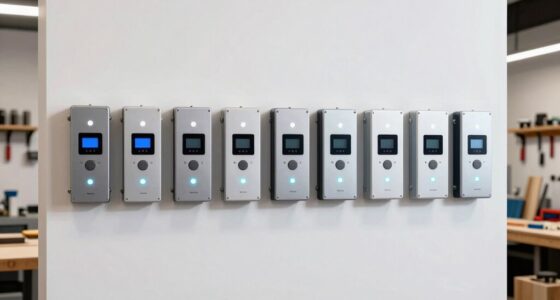
If you’re considering an eero wifi mesh system, you’re likely looking for reliable, easy-to-set-up coverage that can handle your internet demands. The eero Pro 7 Tri-Band Mesh Wi-Fi 7 Router stands out as the best overall choice for its high-speed performance and extensive coverage. For those on a budget, the eero 6+ offers solid coverage and device support at a more accessible price point. Meanwhile, the eero Max 7 provides a great balance of speed and coverage for larger homes. As you evaluate options, consider tradeoffs like coverage area, speed support, and system complexity. Keep reading for a detailed breakdown to find the best fit for your home or office needs.

Get business pricing on tools and workshop supplies
- Business-only prices and quantity discounts
- Tax-exempt purchasing
- Multiple users, one account, clear invoices
Complete the kit


Key Takeaways
- The best eero systems balance coverage, speed, and ease of setup, with the Pro 7 leading in high-performance scenarios.
- Tri-band systems generally outperform dual-band models in handling multiple devices without slowing down.
- Larger homes benefit from 3-pack or 2-pack setups, but the number of nodes should match your coverage needs.
- Price varies significantly; more advanced systems like the eero Pro 7 offer top-tier performance but at a premium.
- Compatibility and future-proofing matter—Wi-Fi 7 models are more capable today and better prepared for future devices.
| Amazon eero Pro 7 Tri-Band Mesh Wi-Fi 7 Router, 3-Pack |  | Best Overall for Large, Future-Proof Homes | Wi-Fi standard: Wi-Fi 7 (IEEE 802.11a/b/g/n/ac/ax/be) | Bands: Tri-band (2.4 GHz, 5 GHz, 6 GHz) | Max supported internet plan: 5 Gbps | VIEW ON AMAZON | See Our Full Breakdown |
| eero Max 7 Mesh WiFi System (3-Pack) |  | Best for Large, High-Performance Homes | Coverage: 7,500 sq. ft. | Number of devices supported: 750+ | Ethernet ports: 2 per unit | VIEW ON AMAZON | See Our Full Breakdown |
| eero Pro 6E Mesh Wi-Fi System (3-Pack) |  | Best for Fast Wi-Fi 6E with Reliable Coverage | Supports internet plans up to: 2.5 Gbps | Coverage: 6,000 sq. ft. | Connects devices: 100+ | VIEW ON AMAZON | See Our Full Breakdown |
| eero 6+ Mesh WiFi System – Supports Internet Plans Up to 1 Gbps |  | Best for Budget-Friendly, Reliable Coverage | Coverage: 4,500 sq. ft. | Supported devices: 75+ | Number of units: 3 | VIEW ON AMAZON | See Our Full Breakdown |
| eero 7 Dual-Band Mesh Wi-Fi 7 Router (3-Pack) |  | Best for High-Speed, Budget-Conscious Large Homes | Coverage: 6,000 sq. ft. | Internet speed support: up to 2.5 Gbps | Number of devices supported: 120+ | VIEW ON AMAZON | See Our Full Breakdown |
| Amazon eero 7 Dual-Band Mesh Wi-Fi 7 Router (2-Pack) |  | Best Overall for Future-Proofing and High-Speed Coverage | Wi-Fi Standard: Wi-Fi 7 | Band: Dual-band | Max Internet Plan Support: 2.5 Gbps | VIEW ON AMAZON | See Our Full Breakdown |
| eero 6 Mesh WiFi Router |  | Best for Budget-Conscious Buyers and Moderate Coverage | Coverage: 1,500 sq. ft. | Wireless Standard: Wi-Fi 6 (802.11ax) | Speed: 900 Mbps | VIEW ON AMAZON | See Our Full Breakdown |
| eero Pro 6E Mesh Wi-Fi System (2-Pack) |  | Best for Large Homes and High-Performance Needs | Supports internet plans up to: 2.5 Gbps | Coverage: 4,000 sq. ft. | Connects: 100+ devices | VIEW ON AMAZON | See Our Full Breakdown |
| eero wifi mesh system | Coverage | Wi-Fi standard |
|---|---|---|
| Amazon eero Pro 7 Tri-Band Mes | — | Wi-Fi 7 (IEEE 802.11a/b/g/n/ac/ax/be) |
| eero Max 7 Mesh WiFi System | 7,500 sq. ft. | — |
| eero Pro 6E Mesh Wi-Fi System | 6,000 sq. ft. | — |
| eero 6+ Mesh WiFi System | 4,500 sq. ft. | Wi-Fi 6 (802.11ax) |
| eero 7 Dual-Band Mesh Wi-Fi 7 | 6,000 sq. ft. | Wi-Fi 7 (Dual-band) |
| Amazon eero 7 Dual-Band Mesh W | Up to 4,000 sq. ft. | Wi-Fi 7 |
| eero 6 Mesh WiFi Router | 1,500 sq. ft. | — |
| eero Pro 6E Mesh Wi-Fi System | 4,000 sq. ft. | — |
More Details on Our Top Picks
Amazon eero Pro 7 Tri-Band Mesh Wi-Fi 7 Router, 3-Pack
The eero Pro 7 stands out for its cutting-edge Wi-Fi 7 support, offering speeds up to 3.9 Gbps and tri-band coverage that easily handles internet plans up to 5 Gbps. It’s designed for large spaces, with a 3-pack covering up to 6,000 sq. ft., making it ideal for expansive homes. Compared to the eero 7 Dual-Band, it provides faster speeds and a more robust smart home hub integration, though it comes with a higher price tag. The built-in Thread, Zigbee, and Matter hubs facilitate smart device management without extra hardware. However, the need for a paid eero Plus subscription for advanced security and features, plus setup requiring an app on a smartphone, could be drawbacks for some users. Overall, this model makes the most sense for those seeking a future-proof system with extensive coverage and smart home support.
Pros:- Supports Wi-Fi 7 with speeds up to 3.9 Gbps
- Massive coverage up to 6,000 sq. ft. with 3 units
- Built-in smart home hub for Thread, Zigbee, and Matter
Cons:- Requires paid subscription for advanced security and features
- Setup depends on a smartphone app, which might be a barrier for some
Best for: Large households with high-speed internet needs and extensive smart home devices
Not ideal for: Small apartments or users with limited budgets, due to its higher cost and complexity
- Wi-Fi standard:Wi-Fi 7 (IEEE 802.11a/b/g/n/ac/ax/be)
- Bands:Tri-band (2.4 GHz, 5 GHz, 6 GHz)
- Max supported internet plan:5 Gbps
- Max wireless speed:3.9 Gbps
- Coverage (3-pack):6,000 sq. ft.
- Supported devices:600+
- Processor:1.5 GHz quad-core
- Security:WPA3 and WPA2
Our verdict“Best for tech-savvy users seeking top-tier coverage, speed, and smart home integration in large homes.”
eero Max 7 Mesh WiFi System (3-Pack)
The eero Max 7 offers exceptional speed and coverage, supporting Wi-Fi 7 with wired speeds up to 9.4 Gbps and wireless speeds around 4.3 Gbps. Its 3-pack extends coverage up to 7,500 sq. ft., making it ideal for large, high-demand households or those with multiple gaming or streaming devices. It supports over 750 devices simultaneously, surpassing the eero Pro 6E in device capacity and speed. While setup is straightforward via the eero app, the system requires a subscription to unlock its full security and management features, adding to the overall cost. The premium price reflects its high performance, but users seeking ultra-fast, extensive Wi-Fi should consider it. This system is designed for users who prioritize speed and capacity over initial affordability.
Pros:- Supports Wi-Fi 7 with wired speeds up to 9.4 Gbps
- Large coverage area of 7,500 sq. ft.
- Supports over 750 devices simultaneously
Cons:- Requires a subscription for full security features
- Higher price point than many competing mesh systems
Best for: Gamer households or large families with many connected devices and high bandwidth demands
Not ideal for: Casual users or small apartments, due to its price and overkill for modest needs
- Coverage:7,500 sq. ft.
- Number of devices supported:750+
- Ethernet ports:2 per unit
- Wireless speed:up to 4.3 Gbps
- Wired speed:up to 9.4 Gbps
- Technology:Wi-Fi 7
- Warranty:3 years
Our verdict“Ideal for tech-heavy homes needing the fastest speeds and maximum device support, despite the premium cost.”
eero Pro 6E Mesh Wi-Fi System (3-Pack)
The eero Pro 6E shines for its support of Wi-Fi 6E, delivering lower latency and faster speeds of up to 1.6 Gbps, suitable for homes with Wi-Fi 6E-compatible devices. Its 3-pack covers a substantial 6,000 sq. ft., supporting over 100 devices, making it a solid choice for busy households. Compared to the eero 6+, it offers higher speed and better future-proofing thanks to the 6 GHz band, though it requires compatible devices to maximize benefits. Setting up via the app is straightforward, and automatic updates keep security current. The main tradeoff involves the need for a subscription for advanced security features, which isn’t included by default. For those with Wi-Fi 6E devices or seeking a reliable, fast network, this system is a practical choice.
Pros:- Supports Wi-Fi 6E for faster speeds and lower latency
- Wide coverage up to 6,000 sq. ft.
- Supports over 100 devices
Cons:- Requires compatible Wi-Fi 6E devices for full speed benefits
- Additional subscription needed for advanced security
Best for: Homeowners with Wi-Fi 6E-compatible devices seeking fast, reliable connections
Not ideal for: Users without Wi-Fi 6E devices or on a tight budget, as the system’s full benefits depend on compatible hardware
- Supports internet plans up to:2.5 Gbps
- Coverage:6,000 sq. ft.
- Connects devices:100+
- Wireless speeds:up to 1.6 Gbps
- Wired speeds:up to 1 Gbps
- Ethernet port:2.5 Gb
- Technology:Wi-Fi 6E
Our verdict“Best suited for users wanting future-ready Wi-Fi 6E performance with reliable large-area coverage.”
eero 6+ Mesh WiFi System – Supports Internet Plans Up to 1 Gbps
The eero 6+ offers a balanced mix of speed and coverage, supporting gigabit plans up to 1 Gbps and covering up to 4,500 sq. ft. with 3 units. It’s an excellent choice for users who want reliable Wi-Fi 6 performance without the premium cost of Wi-Fi 6E or Wi-Fi 7 systems. Its support for over 75 devices makes it suitable for most average households. Compared with the eero Max 7, it’s less powerful but more affordable, making it a good entry point for those not needing the highest speeds. Setup with the app is quick, and it includes a built-in smart home hub compatible with Zigbee and Thread. Limitations include some features requiring a subscription and less coverage for very large homes.
Pros:- Supports gigabit internet speeds
- Coverage up to 4,500 sq. ft. with 3 units
- Includes a smart home hub compatible with Zigbee and Thread
Cons:- Limited to 3 units, less ideal for very large homes
- Some features require a subscription
Best for: Small to medium homes with gigabit internet plans and budget-conscious buyers
Not ideal for: Large households or heavy users needing higher speed or device support, due to its coverage and speed limits
- Coverage:4,500 sq. ft.
- Supported devices:75+
- Number of units:3
- Wi-Fi standard:Wi-Fi 6 (802.11ax)
- Speed rating:AX3000
- Ethernet ports:2 gigabit
- Supported speeds:up to 1 Gbps
Our verdict“Best for households seeking reliable Wi-Fi 6 coverage at an affordable price with decent device support.”
eero 7 Dual-Band Mesh Wi-Fi 7 Router (3-Pack)
The eero 7 Dual-Band system offers solid Wi-Fi 7 performance with speeds up to 1.8 Gbps and supports internet plans up to 2.5 Gbps. Its coverage of 6,000 sq. ft. and support for over 120 devices make it suitable for large households that want fast, reliable Wi-Fi without the premium features of tri-band or Wi-Fi 6E systems. Compared to the eero Max 7, it’s more affordable but supports slightly lower wired and wireless speeds. The system is easy to set up via the eero app, but some advanced security features require a subscription. It’s a good choice for users who need extensive coverage and fast speeds, yet don’t require the latest Wi-Fi standards or maximum device capacity.
Pros:- Supports internet plans up to 2.5 Gbps
- Coverage up to 6,000 sq. ft. with 3 units
- Supports over 120 devices for busy households
Cons:- Requires subscription for full security features
- Limited to dual-band Wi-Fi 7, missing the 6 GHz band
Best for: Large homes with moderate high-speed internet needs on a budget
Not ideal for: Homes with very high bandwidth requirements or those seeking Wi-Fi 6E or Wi-Fi 7 tri-band performance
- Coverage:6,000 sq. ft.
- Internet speed support:up to 2.5 Gbps
- Number of devices supported:120+
- Wireless speed:up to 1.8 Gbps
- Number of units:3
- Wi-Fi standard:Wi-Fi 7 (Dual-band)
- Supported speeds:up to 1.8 Gbps
Our verdict“Great for large homes needing fast Wi-Fi 7 with extensive coverage on a budget, but less future-proof than tri-band options.”
Amazon eero 7 Dual-Band Mesh Wi-Fi 7 Router (2-Pack)
This model stands out for its support of Wi-Fi 7, a significant step up in speed and efficiency compared to the Wi-Fi 6 options like the eero 6. It offers impressive coverage up to 4,000 sq. ft. and can handle 120+ devices, making it ideal for busy households or small offices. The dual-band setup and patented TrueMesh technology ensure reliable connectivity, even when multiple devices are streaming or gaming. Unlike the eero 6, which is limited to Wi-Fi 6 speeds, this system supports internet plans up to 2.5 Gbps, future-proofing your network investments. The main tradeoff is that advanced security features, such as ad blocking and parental controls, require a subscription to eero Plus. Overall, this is a strong pick for those wanting cutting-edge Wi-Fi 7 performance without sacrificing coverage or device capacity.
Pros:- Supports Wi-Fi 7 with speeds up to 1.8 Gbps and multi-link operation
- Wide coverage up to 4,000 sq. ft. and supports over 120 devices
- Backward compatible with all previous eero generations
- Three-year warranty offers long-term reassurance
Cons:- Advanced security features require an optional subscription
- Higher price point compared to Wi-Fi 6 options
Best for: Tech-savvy households planning to upgrade to Wi-Fi 7 for high-speed streaming, gaming, and smart home integration.
Not ideal for: Users with basic internet needs or small apartments who won’t benefit from Wi-Fi 7’s advanced features and might prefer simpler setups.
- Wi-Fi Standard:Wi-Fi 7
- Band:Dual-band
- Max Internet Plan Support:2.5 Gbps
- Wireless Speed:Up to 1.8 Gbps
- Coverage:Up to 4,000 sq. ft.
- Devices Supported:120+
- Ports:2x auto-sensing 2.5 GbE
- Warranty:3 years
Our verdict“Best suited for users seeking a future-ready mesh system that combines high speed, extensive coverage, and device capacity.”
eero 6 Mesh WiFi Router
Compared with the more advanced eero 7 models, the eero 6 provides reliable Wi-Fi 6 performance for smaller homes or budget-minded users. It supports internet speeds up to 900 Mbps and covers about 1,500 sq. ft., making it suitable for apartments or small houses. Its built-in Zigbee smart home hub allows for easy device integration, which is a big plus for smart home enthusiasts. While it doesn’t support Wi-Fi 7 or the highest internet plans, it offers a straightforward, easy-to-setup mesh network that handles over 75 devices comfortably. Its limited Ethernet ports and coverage size may be drawbacks for larger households or those needing more wired connections. Overall, this model makes the most sense for users who want a simple, secure Wi-Fi 6 setup without extra bells and whistles.
Pros:- Supports Wi-Fi 6 for faster speeds and better device capacity
- Includes a built-in Zigbee smart home hub for device connectivity
- Easy setup with the eero app and automatic updates
Cons:- Limited to 2 Ethernet ports, restricting wired device connections
- Coverage may vary depending on environment and layout
- Does not support Wi-Fi 7 or higher internet plans
Best for: Small households or apartments seeking easy, reliable Wi-Fi 6 coverage with integrated smart home features.
Not ideal for: Large homes or high-speed internet users who need more bandwidth and extensive coverage, as it may not support their full needs.
- Coverage:1,500 sq. ft.
- Wireless Standard:Wi-Fi 6 (802.11ax)
- Speed:900 Mbps
- Number of Devices Supported:75+
- Ethernet Ports:2 gigabit
- Processor:1.2 GHz quad-core
- Warranty:1-year limited
Our verdict“Ideal for users wanting a simple, smart-enabled Wi-Fi 6 mesh system for small spaces and moderate device loads.”
eero Pro 6E Mesh Wi-Fi System (2-Pack)
The eero Pro 6E excels at delivering ultra-fast Wi-Fi 6E speeds and broad coverage, making it ideal for large or multi-story homes. Supporting speeds up to 2.3 Gbps and over 4,000 sq. ft. of coverage, it outperforms the eero 6 in both speed and device capacity, supporting more than 100 devices simultaneously. Its TrueMesh technology ensures reliable connectivity across expansive layouts, and the 2.5 Gb Ethernet port allows for fast wired connections. Compared to the eero 7, the Pro 6E may not support Wi-Fi 7’s latest features but offers robust performance now, especially if you have or plan to get Wi-Fi 6E-compatible devices. The main drawback is that full benefits depend on having Wi-Fi 6E devices, and some security features require a subscription. Overall, this system is a solid choice for large, tech-rich homes demanding high throughput and stable connections.
Pros:- Supports Wi-Fi 6E with speeds up to 2.3 Gbps
- Coverage up to 4,000 sq. ft. with reliable TrueMesh tech
- Supports over 100 devices simultaneously
- Includes a 2.5 Gb Ethernet port for fast wired connections
Cons:- Requires Wi-Fi 6E-compatible devices to maximize benefits
- Additional subscription needed for advanced security features
- Higher cost compared to Wi-Fi 6 systems for smaller homes
Best for: Large households or home offices needing high-speed, wide-area coverage with support for over 100 devices.
Not ideal for: Small apartments or users with minimal device counts who don’t need extensive coverage or Wi-Fi 6E benefits.
- Supports internet plans up to:2.5 Gbps
- Coverage:4,000 sq. ft.
- Connects:100+ devices
- Wi-Fi Technology:Wi-Fi 6E
- Wired speeds:up to 1 Gbps
- Wireless speeds:up to 1.6 Gbps
- Ethernet port:2.5 Gb
Our verdict“Best for large, tech-savvy homes needing fast, reliable Wi-Fi 6E coverage and high device capacity.”

How We Picked
In selecting these eero wifi mesh systems, I prioritized performance metrics such as maximum bandwidth, coverage area, and device capacity. Ease of installation and user interface were also key, as these determine how accessible the system is to typical users. Build quality and reliability were considered based on brand reputation and product reviews, while value was assessed by comparing features against price. The ranking reflects a balance of these factors, emphasizing models that deliver high performance without unnecessary complexity or cost. Systems with newer Wi-Fi standards and scalable configurations earned higher positions, ensuring buyers get future-proof solutions.| eero wifi mesh system | Wi-Fi standard |
|---|---|
| Amazon eero Pro 7 Tri-Band Mes | Wi-Fi 7 (IEEE 802.11a/b/g/n/ac/ax/be) |
| eero Max 7 Mesh WiFi System | — |
| eero Pro 6E Mesh Wi-Fi System | — |
| eero 6+ Mesh WiFi System | Wi-Fi 6 (802.11ax) |
| eero 7 Dual-Band Mesh Wi-Fi 7 | Wi-Fi 7 (Dual-band) |
| Amazon eero 7 Dual-Band Mesh W | Wi-Fi 7 |
| eero 6 Mesh WiFi Router | — |
| eero Pro 6E Mesh Wi-Fi System | — |
Factors to Consider When Choosing Eero Wifi Mesh Systems
Choosing the right eero wifi mesh system depends on several important factors that go beyond basic specs. Understanding your home’s size, device load, and internet plan helps determine which features are most critical. Considering future needs can save money and hassle later, especially as Wi-Fi standards evolve. The following factors will help clarify what to look for to match your specific situation.Coverage Area
Assess your home’s size and layout before choosing a system. Larger homes, especially with multiple floors or thick walls, require more nodes or higher-capacity systems like the Pro 7 or Max 7. Underestimating coverage needs can lead to dead zones, while overspending on excess capacity might be unnecessary for smaller spaces. Think about the total square footage and potential interference sources when selecting your setup.
Speed and Wi-Fi Standards
Match your internet plan speed with your mesh system’s capabilities. Systems supporting Wi-Fi 6 or Wi-Fi 7 are better suited for gigabit plans, ensuring you don’t bottleneck your connection. While Wi-Fi 7 offers future-proofing and faster speeds, Wi-Fi 6 remains a reliable choice for most households. Be cautious of systems that promise high speeds but lack sufficient hardware to support your actual plan.
Device Support and Scalability
Consider how many devices will connect simultaneously. High device counts benefit from mesh systems with robust processor power and dedicated bands. If you plan to add smart home devices, security cameras, or multiple users, select a system with ample capacity. Scalability is also worth noting; systems that allow easy expansion prevent needing to replace the entire setup later.
Ease of Use and Management
A user-friendly app and straightforward setup process are essential, especially for non-technical users. Some systems offer advanced features like parental controls and device prioritization, which are valuable but can complicate management. Balance feature set with simplicity to avoid frustration while maintaining control over your network.
Price and Value
Higher-end models deliver top performance but come at a premium. For most users, a mid-range system like the eero 6+ offers excellent value, balancing cost and features. Consider how much you’re willing to invest based on your needs—if you have a large, demanding household, spending more on a premium system can be justified. Conversely, smaller or less demanding homes might not benefit significantly from high-end features.
Frequently Asked Questions
Do I need a Wi-Fi 7 system if I have a gigabit internet plan?
While Wi-Fi 7 systems like the eero Pro 7 provide faster speeds and better future-proofing, they are not strictly necessary for gigabit internet plans today. Wi-Fi 6 systems still handle gigabit speeds effectively and are often more affordable. If you plan to upgrade your internet connection soon or want the latest tech, investing in Wi-Fi 7 makes sense; otherwise, a Wi-Fi 6 system suffices for most users.
Can I expand my eero mesh system later if I need more coverage?
Yes, most eero systems are designed with scalability in mind. You can add additional nodes to extend coverage, provided they are compatible with your existing setup. However, it’s best to choose a system with enough initial capacity to avoid needing frequent upgrades, especially if you anticipate expanding your home or adding more devices later.
Are dual-band eero systems sufficient for busy households?
Dual-band systems like the eero 7 Dual-Band are suitable for smaller or less device-heavy households. However, in busy households with many connected devices, tri-band systems like the eero Pro 7 or Max 7 provide more bandwidth and reduce congestion. If multiple users stream, game, or work simultaneously, opting for a tri-band system is generally a smarter choice.
How important is Wi-Fi 6E or Wi-Fi 7 support for future-proofing?
Supporting Wi-Fi 6E or Wi-Fi 7 ensures your network is ready for the latest devices and higher bandwidth demands. These standards offer faster speeds and less interference, which can be significant as new smart devices and computers adopt these protocols. If you prioritize longevity and cutting-edge tech, choosing a system with Wi-Fi 6E or Wi-Fi 7 support is advisable, but it may come at a higher cost.
What common mistakes should I avoid when choosing an eero system?
A common mistake is underestimating coverage needs or overpaying for features you won’t use. Also, matching your internet plan’s speed with an overly premium system can lead to unnecessary expense. Ensure the system supports your current plan and future upgrades, and select a setup that aligns with your home’s size and device load to avoid bottlenecks or dead zones.
Conclusion
For most users, the eero Pro 7 Tri-Band Mesh Wi-Fi 7 Router offers the best overall performance, especially for large or demanding households. Those on a tighter budget will find the eero 6+ provides excellent value without sacrificing core features. If you seek a premium setup with maximum speed and coverage, the eero Max 7 stands out. Beginners or smaller homes will appreciate the simplicity of the eero 6, while tech enthusiasts aiming for future-proofing should consider Wi-Fi 7 options. Your choice depends on your specific needs, budget, and home size, but these picks cover all the essential bases.