For a CNC vacuum table system, my best overall pick is the PGFUN 500 x 400 mm fixture plate, which offers the largest listed PGFUN work area in this lineup. The Laguna Creator CNC Router Vacuum Hold-Down Kit stands out for buyers prioritizing a router-specific kit, while the 70kPa aluminum-alloy table offers a stated vacuum rating for shoppers focused on that specification. The main tradeoffs are usable table area, compatibility with your machine and vacuum source, and whether a plate, kit, or pod suits your workholding needs. Larger plates can support bigger stock but may not fit every machine, while compact options limit coverage but can suit smaller jobs. Continue reading for the full breakdown and guidance on matching a system to your setup.

Get business pricing on tools and workshop supplies
- Business-only prices and quantity discounts
- Tax-exempt purchasing
- Multiple users, one account, clear invoices
Complete the kit



Key Takeaways
- PGFUN’s 500 x 400 mm plate has the largest listed dimensions among the PGFUN fixture plates here, making it the clearest pick for buyers who need more coverage—provided their machine can accommodate it.
- The PGFUN lineup offers several sizes, including 300 x 300 mm, 400 x 400 mm, and 500 x 300 mm; choosing between them is chiefly a question of machine fit and typical stock shape, not a one-size-fits-all ranking.
- The 70kPa aluminum-alloy table is the only listing that states a vacuum figure in its product name, which helps spec-focused shoppers compare the stated rating but does not by itself establish real-world holding performance.
- The Laguna Creator kit is distinct from the fixture plates and pod because its kit format may suit buyers seeking a router-specific hold-down solution; verify machine compatibility and included components before choosing it.
- The 200 x 200 mm porous vacuum clamp pod is the most compact format listed, making it a candidate for localized workholding rather than covering a large sheet in one setup.
| PGFUN CNC Vacuum Chuck Fixture Plate, 500 x 400 mm | 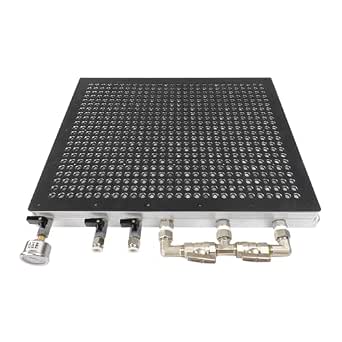 | Best for Large Workpieces | Table size: 500 × 400 mm | Material: 6061-T6 aluminum alloy | Vacuum generator model: CV-25HS | VIEW ON AMAZON | See Our Full Breakdown |
| PGFUN CNC Vacuum Chuck Fixture Plate, 300 × 300 mm |  | Best Value for Mid-Size Beds | Table size: 300 × 300 mm | Material: 6061-T6 aluminum alloy | Item weight: 23.1 pounds | VIEW ON AMAZON | See Our Full Breakdown |
| PGFUN CNC Vacuum Chuck Fixture Plate, 400 × 400 mm |  | Best Balanced Footprint | Table size: 400 × 400 mm | Material: 6061-T6 aluminum alloy | Vacuum generator model: CV-25HS | VIEW ON AMAZON | See Our Full Breakdown |
| CNC Vacuum Table, 70kPa, Aluminum Alloy |  | Best for 3018 Beginners | Workbench size: 300 × 180 × 15 mm | Material: Aluminum alloy | Maximum vacuum pressure: -70 kPa | VIEW ON AMAZON | See Our Full Breakdown |
| PGFUN CNC Vacuum Chuck Fixture Plate, 500 × 300 mm |  | Best for Long, Narrow Parts | Table size: 500 × 300 mm | Material: 6061-T6 aluminum alloy | Vacuum generator model: CV-25HS | VIEW ON AMAZON | See Our Full Breakdown |
| Laguna Creator CNC Router Vacuum Hold-Down Kit |  | Best for Modular Table Setups | Brand: Laguna | Model: Creator | Material: Phenolic resin | VIEW ON AMAZON | See Our Full Breakdown |
| Porous CNC Vacuum Clamp Pod, 200 × 200 mm |  | Best for Monitored, Zoned Clamping | Material: 6061 aluminum alloy | Surface finish: Hard anodized | Size: 200 × 200 mm | VIEW ON AMAZON | See Our Full Breakdown |
| cnc vacuum table system | Material | Table size | Vacuum generator model | Negative pressure port |
|---|---|---|---|---|
| PGFUN CNC Vacuum Chuck Fixture | 6061-T6 aluminum alloy | 500 × 400 mm | CV-25HS | 12 mm |
| PGFUN CNC Vacuum Chuck Fixture | 6061-T6 aluminum alloy | 300 × 300 mm | CV-25HS | 12 mm |
| PGFUN CNC Vacuum Chuck Fixture | 6061-T6 aluminum alloy | 400 × 400 mm | CV-25HS | 12 mm |
| CNC Vacuum Table | Aluminum alloy | — | — | — |
| PGFUN CNC Vacuum Chuck Fixture | 6061-T6 aluminum alloy | 500 × 300 mm | CV-25HS | 12 mm |
| Laguna Creator CNC Router Vacu | Phenolic resin | — | — | — |
| Porous CNC Vacuum Clamp Pod | 6061 aluminum alloy | — | — | — |
More Details on Our Top Picks
PGFUN CNC Vacuum Chuck Fixture Plate, 500 x 400 mm
Among the PGFUN plates here, this 500 × 400 mm surface gives you the most room for larger panels or several smaller parts in one setup. Its independent suction holes close when uncovered or damaged, so unused areas are less likely to undermine holding elsewhere. The replaceable silicone pad also helps protect the fixture during machining. Unlike the compact Daconovo 300 × 180 mm table, this plate has no built-in pump; you need to supply stable vacuum of at least -80 kPa, or -85 kPa for stronger-force work. The larger footprint makes sense only if your CNC bed and vacuum source can support it. Workpieces need a flat, non-deformable back, and dusty materials such as fiberglass or graphite are poor matches.
Pros:- Large working area accommodates broader parts or multiple workpieces.
- Independent suction holes close when uncovered or damaged.
- Replaceable silicone pad helps protect the fixture surface.
- Quick clamping avoids assembling sealing strips or applying adhesive.
Cons:- Requires a separate, strong and stable vacuum supply.
- Needs flat, non-deformable workpiece backs for reliable hold.
- Fine dust from materials such as fiberglass or graphite can clog suction holes.
Best for: CNC owners with a bed large enough for a 500 × 400 mm fixture who routinely hold broad panels or multiple flat parts.
Not ideal for: Owners of compact routers or anyone without a stable high-vacuum source; this plate is larger than the Daconovo and does not include a pump.
- Table size:500 × 400 mm
- Material:6061-T6 aluminum alloy
- Vacuum generator model:CV-25HS
- Negative pressure port:12 mm
- Recommended minimum vacuum pressure:-80 kPa; -85 kPa for strong-force manufacturing
- Recommended workpiece size:At least 100 × 100 mm
- Recommended workpiece height:3–25 mm
- Required bottom flatness:≤ 0.2 mm
Our verdict“Choose this PGFUN plate when your machine can use its large footprint and you already have the vacuum capacity to support it.”
PGFUN CNC Vacuum Chuck Fixture Plate, 300 × 300 mm
This is the most compact of the three larger PGFUN fixture plates, making it a practical fit when a 500 mm-long plate would waste bed space. The 300 × 300 mm aluminum surface retains the lineup’s independent suction holes and replaceable silicone pad, so you still get flexible part placement without sealing strips or adhesive. Compared with the 400 × 400 mm PGFUN, you give up working area but keep the same stated vacuum target of at least -80 kPa. It does not include an integrated pump like the small Daconovo table, so buyers need a suitable vacuum setup of their own. The 23.1-pound item weight and requirement for flat, non-deformable parts also make it less appealing for very small or lightweight machines.
Pros:- Smaller footprint than the 400 × 400 mm and 500 × 400 mm PGFUN plates.
- Independent suction holes help limit vacuum loss when areas are uncovered.
- Replaceable silicone pad protects the table surface.
- Parts can be positioned in different areas of the plate.
Cons:- Requires a strong, stable external vacuum source.
- The 23.1-pound weight may be a burden for smaller CNC beds.
- Fine dust from bakelite, fiberglass, or graphite may clog suction holes.
Best for: Owners of mid-size CNC routers who machine flat parts up to the capacity of a 300 × 300 mm fixture and have an external vacuum source.
Not ideal for: Buyers needing a built-in pump, a larger panel area, or a fixture light enough for a small machine with limited load capacity.
- Table size:300 × 300 mm
- Material:6061-T6 aluminum alloy
- Item weight:23.1 pounds
- Vacuum generator model:CV-25HS
- Negative pressure port:12 mm
- Recommended minimum vacuum pressure:-80 kPa; -85 kPa for strong-force machining
- Recommended workpiece height:3–25 mm
- Maximum back-surface flatness:0.2 mm
Our verdict“Pick the 300 × 300 mm PGFUN if you want the PGFUN hole-and-pad design in a more manageable footprint and can provide the vacuum.”
PGFUN CNC Vacuum Chuck Fixture Plate, 400 × 400 mm
The 400 × 400 mm PGFUN sits between the 300 × 300 mm plate and the 500 × 400 mm version, offering a useful square work area without the largest model’s long reach. It keeps the same independently closing suction holes, quick-clamping setup, and replaceable silicone pad, so the main difference is how much bed space you need. Against the 500 × 300 mm PGFUN, this model trades a narrower, longer layout for a square surface that may suit parts arranged in both directions. Like both alternatives, it relies on your own stable vacuum supply of at least -80 kPa and flat workpiece backs no more than 0.2 mm out of flat. Skip it if your parts are small enough for the 300 × 300 mm model or your router cannot support a 400 mm square fixture.
Pros:- Square 400 × 400 mm area offers more room than the 300 × 300 mm plate.
- Independent suction holes support flexible workpiece placement.
- Replaceable silicone pad helps protect the fixture during through-milling.
- Quick clamping avoids separate sealing strips or adhesive.
Cons:- Requires a separate, stable vacuum source meeting the stated pressure target.
- Flat, non-deformable workpiece backs are needed for secure holding.
- Dust from fiberglass, graphite, or bakelite can clog the suction holes.
Best for: CNC operators who need a square work area for medium-to-large flat parts but do not need the 500 × 400 mm plate.
Not ideal for: Owners of compact CNC machines or buyers whose workpieces fit comfortably on the 300 × 300 mm PGFUN.
- Table size:400 × 400 mm
- Material:6061-T6 aluminum alloy
- Vacuum generator model:CV-25HS
- Negative pressure port:12 mm
- Recommended minimum vacuum pressure:-80 kPa; -85 kPa for strong-force manufacturing
- Recommended minimum workpiece size:100 × 100 mm
- Recommended workpiece height:3–25 mm
- Required workpiece bottom flatness:≤ 0.2 mm
Our verdict“Choose this model if a square 400 mm work area fits your machine and work better than the smaller 300 mm or longer 500 mm options.”
CNC Vacuum Table, 70kPa, Aluminum Alloy
For a 3018 Pro or 3018 Pro Ultra owner, this Daconovo table is the clearest entry point because its 12 W pump is built in and the 300 × 180 mm fixture fits those workbenches directly. The rubber-sealed grid and evenly distributed suction offer a simpler alternative to the larger PGFUN plates, which require an external vacuum supply and more bed area. The tradeoff is capacity: its stated maximum is -70 kPa, below the -80 kPa minimum recommended for the PGFUN fixtures, and the compact surface limits part size. It is also listed for specific 3018 setups rather than broad machine compatibility. I’d favor it for light, flat work in a compatible desktop machine, not for large panels, porous stock, or demanding cuts.
Pros:- Built-in 12 W pump avoids sourcing a separate vacuum generator.
- Designed to fit 3018 Pro and 3018 Pro Ultra T-slot workbenches.
- Rubber-sealed grid provides tool-free workholding.
- Distributed suction can reduce marks from mechanical clamps.
Cons:- Maximum stated vacuum of -70 kPa is lower than the PGFUN plates’ recommended minimum.
- The 300 × 180 mm work surface restricts part size.
- Compatibility is limited to specified 3018-series setups.
Best for: Beginners with a 3018 Pro or 3018 Pro Ultra and flat, small workpieces who want a vacuum table with its pump included.
Not ideal for: Owners of larger CNC routers, users machining large panels, or anyone needing the stronger vacuum target specified for the PGFUN plates.
- Workbench size:300 × 180 × 15 mm
- Material:Aluminum alloy
- Maximum vacuum pressure:-70 kPa
- Power:12 W
- Compatible machines:CNC Series 3018 Pro and 3018 Pro Ultra
- Mounting:3018 Pro T-slot workbench; standard M6 screws
- Package contents:Vacuum table, 2 connecting tubes, user manual, plug, and motor
- Warranty:90-day manufacturer warranty
Our verdict“Choose the Daconovo for a compatible 3018 machine and modest flat parts when an included pump matters more than a larger work area.”
PGFUN CNC Vacuum Chuck Fixture Plate, 500 × 300 mm
The 500 × 300 mm PGFUN gives buyers a longer, narrower layout than the 400 × 400 mm model, which can suit strips, rails, or several parts arranged along one axis. It keeps the same independent suction holes and replaceable silicone pad found on the other PGFUN plates, so choosing this model is mainly a question of workpiece shape and machine-bed proportions. Its listed compatible materials include stainless steel, aluminum alloy, copper, and PVC, though secure holding still depends on a flat, non-deformable underside. Like the 500 × 400 mm version, it needs an external vacuum source capable of at least -80 kPa; the built-in -70 kPa pump on the Daconovo is not equivalent to that stated target. The long footprint is wasted space if your parts are square or small.
Pros:- 500 mm length accommodates long parts better than the square 400 × 400 mm plate.
- Independent suction holes close when uncovered or damaged.
- Replaceable silicone pad helps protect the table during machining.
- Quick clamping does not require sealing strips or adhesive.
Cons:- Requires a strong, stable external vacuum source.
- Long footprint may not suit square parts or smaller CNC beds.
- Dust from materials such as fiberglass, graphite, or bakelite may clog suction holes.
Best for: CNC operators machining long, flat workpieces or arranging multiple smaller parts along a 500 mm axis.
Not ideal for: Buyers with square or compact workpieces, limited bed space, or no external vacuum source that can meet the stated pressure requirement.
- Table size:500 × 300 mm
- Material:6061-T6 aluminum alloy
- Vacuum generator model:CV-25HS
- Negative pressure port:12 mm
- Recommended minimum vacuum pressure:-80 kPa; -85 kPa for strong-force manufacturing
- Recommended minimum workpiece size:100 × 100 mm
- Recommended workpiece height:3–25 mm
- Compatible workpiece materials:Stainless steel, aluminum alloy, copper, and PVC
Our verdict“Choose this PGFUN over the square 400 × 400 mm model when your work is long and your machine and vacuum source can support the plate.”
Laguna Creator CNC Router Vacuum Hold-Down Kit
The Laguna Creator kit suits shops that want to position vacuum hold-down points around a changing work area rather than dedicate a full plate to one footprint. Its individual-seal phenolic pods connect together, so users can expand coverage and mount them either over an MDF spoil board or directly to an aluminum table. Compared with the fixed-size PGFUN 500 × 400 mm fixture plate, this setup is easier to reconfigure for varied stock shapes, but it asks the buyer to handle more setup work: the hose must be cut to length, and the system needs a compressor and venturi connection. It is a practical choice for an I2R CNC table already configured for that arrangement, not a self-contained vacuum unit. I would skip it if plug-and-play operation or a complete table surface is the priority.
Pros:- Each pod has its own vacuum seal for localized workholding.
- Pods can be connected to cover a larger work area.
- Mounts over an MDF spoil board or directly to an aluminum table.
- Includes screws, T-nuts, hose, fittings, and a valve.
Cons:- Requires a separate compressor and venturi connection.
- Hose must be cut to the desired length.
- Pod placement and connections require more setup than a fixed fixture plate.
Best for: I2R CNC owners who machine varied part sizes and want repositionable pods that can mount over a spoil board or directly on the aluminum table.
Not ideal for: Shops without a compressor and compatible venturi, or operators who want a ready-to-run, full-surface vacuum fixture with minimal hose setup.
- Brand:Laguna
- Model:Creator
- Material:Phenolic resin
- Base type:Fixed
- Mounting:MDF spoil board or aluminum table
- Power source:Hand operated
- Included components:Hold-down kit, screws, T-nuts, hose, fittings, and valve
Our verdict“Choose this kit for a configurable I2R table setup, but choose a fixed fixture plate if you want a simpler, dedicated vacuum surface.”
Porous CNC Vacuum Clamp Pod, 200 × 200 mm
This 200 × 200 mm clamp pod is the more self-contained, instrumented option in this group: it includes a vacuum generator, pressure gauge, relief valve, and a reverse-blow cleaning port. Its independent suction zones and smart switches shut off uncovered points while preserving suction elsewhere, which can reduce wasted pump effort when a workpiece covers only part of the pod. Unlike the Laguna Creator kit, it arrives with a generator rather than relying on a separate compressor-and-venturi setup, but its fixed footprint offers less freedom to arrange hold-down points across a larger table. It is intended for flat, non-porous stock thicker than 3 mm, so porous sheets and thin pieces are poor matches. At 17.64 lb, it is also a substantial fixture for a compact work area.
Pros:- Independent suction zones and switches preserve suction at covered points.
- Includes a vacuum generator, pressure gauge, and relief valve.
- Reverse-blow port supports cleaning the suction system.
- Hard-anodized 6061 aluminum resists wear, corrosion, and oxidation.
Cons:- Designed for flat, non-porous workpieces rather than porous stock.
- Workpieces must be thicker than 3 mm; small pieces may need positioning aids or reduced cutting loads.
- The 200 × 200 mm footprint and 17.64 lb weight limit flexibility for larger or frequently rearranged setups.
Best for: CNC operators machining flat, non-porous parts over 3 mm thick who want a compact pod with vacuum monitoring and independently controlled suction zones.
Not ideal for: Users cutting porous materials, stock 3 mm thick or thinner, or larger workpieces that need a broadly distributed fixture surface.
- Material:6061 aluminum alloy
- Surface finish:Hard anodized
- Size:200 × 200 mm
- Suction hole diameter:12 mm
- Recommended operating vacuum:70–80 kPa
- Minimum machining area:100 × 100 mm
- Pressure retention:Over 20 minutes after vacuum pump shutdown
- Minimum workpiece thickness:Over 3 mm
- Included items:Vacuum clamp pod, vacuum generator, clamping screw, air hose fitting, auxiliary pad, and protective rubber pad
Our verdict“Choose this pod for monitored, zoned hold-down on suitable flat stock, but pick a larger fixture plate for broad-area workholding.”

How We Picked
I ranked these options by how clearly their listed format and dimensions serve different CNC workholding jobs. I gave weight to usable work area, product type, stated material or vacuum information, and how easily a buyer can identify a likely fit for a router or fixture setup. A larger plate ranks well for coverage, but size alone does not make it right if it exceeds the machine bed or the vacuum source cannot support the intended work.
The product details supplied do not establish full compatibility, pump requirements, included fittings, or measured holding performance across the lineup, so I do not treat those as confirmed advantages. The ranking instead reflects the distinctions that are visible: the PGFUN plate sizes, the 70kPa table’s stated rating, the Laguna kit format, and the compact porous pod. I favor options with a clear role while noting where buyers need to confirm specifications with the seller or manufacturer before purchase.
| cnc vacuum table system | Recommended minimum vacuum pressure |
|---|---|
| PGFUN CNC Vacuum Chuck Fixture | -80 kPa; -85 kPa for strong-force manufacturing |
| PGFUN CNC Vacuum Chuck Fixture | -80 kPa; -85 kPa for strong-force machining |
| PGFUN CNC Vacuum Chuck Fixture | -80 kPa; -85 kPa for strong-force manufacturing |
| CNC Vacuum Table | — |
| PGFUN CNC Vacuum Chuck Fixture | -80 kPa; -85 kPa for strong-force manufacturing |
| Laguna Creator CNC Router Vacu | — |
| Porous CNC Vacuum Clamp Pod | — |
Factors to Consider When Choosing Cnc Vacuum Table System
Choosing a CNC vacuum table system starts with the job and the machine, not the product label. I would check the footprint, vacuum source, workpiece material, and how much setup flexibility the system allows before settling on a format.
Match the Working Area to Your Machine Bed
Measure the usable bed area, including clearance for clamps, hoses, and any edge stops, rather than relying only on the machine’s advertised cutting envelope. A plate larger than the practical bed area can obstruct movement or force awkward positioning, while a small plate may require repeated setups for sheet work. Leave room for stock that overhangs the vacuum surface if your workflow permits it. Check the product’s actual dimensions and mounting pattern, since nominal size does not confirm that it will bolt onto your machine. For buyers comparing the PGFUN sizes, stock shape matters too: a 500 x 300 mm footprint may suit a long narrow part better than a 400 x 400 mm square footprint. Choose the smallest system that comfortably handles your common jobs if storage and setup space are limited.
Check the Vacuum Source and Plumbing
A vacuum table is only one part of a workholding system; the pump or vacuum source, hose diameter, fittings, and any zoning or sealing components affect the complete setup. Do not assume that a stated vacuum level tells you the airflow available under a leaky or porous workpiece. Ask what pump type and capacity the system requires, and confirm that your existing source can connect to the ports supplied. A mismatch can lead to weak hold-down even when the table itself appears suitable. Also check whether valves, hoses, seals, and connectors are included or must be sourced separately. Planning the plumbing before purchase can prevent a table from arriving without the parts needed to run it.
Choose a Surface Style for Your Material and Cuts
Flat fixture plates, porous surfaces, and clamp-pod formats solve different workholding problems. A porous surface can distribute suction across suitable stock, but porous materials or small parts may need masking, a spoilboard, or a dedicated gasket to reduce leakage. A pod concentrates support in a smaller area and may suit localized jobs, though it can leave less flexibility for large panels. A plate’s format may be easier to understand at a glance, but buyers still need to learn how the workpiece seals against it. Match the surface to your material, part size, and cutting forces instead of assuming that any vacuum system will hold every material equally well. Test a low-risk setup before relying on vacuum alone for a valuable or unusually shaped workpiece.
Plan for Setup Changes and Small Parts
Vacuum hold-down can be convenient for repeatable sheet work, but small parts and narrow profiles often provide too little sealed area for dependable holding. Consider whether the system supports zones, masking, gaskets, or auxiliary mechanical stops for jobs that leave much of the surface uncovered. A large open area can lose suction when a cut breaks through or a part separates, so plan toolpaths and tabs with the workholding method in mind. If you frequently switch between stock sizes, a compact fixture or modular arrangement may be easier to configure than one oversized surface. Ask how the system is secured and how quickly it can be removed or repositioned. These workflow details can matter more than nominal table dimensions for mixed production.
Compare Build Details and Maintenance Needs
Material descriptions can help narrow a shortlist, but they do not replace details about flatness, sealing surfaces, port design, or mounting hardware. Ask how the vacuum path is protected from chips and dust, since debris can affect seals and add cleaning work. Check whether wear surfaces or gaskets are replaceable and whether the table needs a sacrificial layer for through-cuts. A system that is easy to clean and reconfigure may suit frequent job changes better than one that demands careful maintenance after each run. Do not infer durability from material alone; verify the construction and service details relevant to your shop. The best choice is the one whose upkeep fits the time and tools you can dedicate to it.
Spend More Only for a Specific Capability
Before paying for a larger or more specialized system, identify the production problem it solves: extra coverage, a particular mounting arrangement, a stated vacuum specification, or a kit designed around your router. A bigger footprint is useful only when your machine, vacuum source, and workpieces can take advantage of it. A kit may simplify selection, but confirm exactly which parts are included and whether your router model is supported. For occasional small parts, a compact pod or mechanical clamps may be more sensible than a full-bed system. Compare total setup needs, including the vacuum source and accessories, rather than judging the table on its own. This keeps the purchase tied to a real workflow need rather than a feature that may go unused.
Frequently Asked Questions
How do I know whether a vacuum table will fit my CNC router?
Compare the table’s outside dimensions with the router’s usable bed, then check mounting points, available clearance, and hose routing. A nominally compatible size may still interfere with clamps, gantry travel, or tool access. Confirm the mounting method and any adapter requirements with the seller or manufacturer. Also check the machine’s vacuum plumbing and whether the table needs a separate pump. If those details are unclear, do not treat the table dimensions alone as proof of compatibility.
Is the 70kPa figure enough to tell me how well the aluminum-alloy table will hold stock?
No. The figure identifies a stated vacuum level, but holding depends on airflow, seal quality, workpiece area, surface leakage, and how much of the surface remains exposed during cutting. A porous or uneven workpiece may leak more than a flat, sealed one. Ask for pump requirements and any test conditions behind the specification before comparing it with another system. Match the vacuum source and workpiece to the intended job, and use mechanical backup for risky cuts where needed.
Should I choose a larger PGFUN plate or the smaller 200 x 200 mm pod?
Choose based on the size and shape of the parts you hold most often. The PGFUN plates provide larger listed footprints for broader coverage, while the 200 x 200 mm pod is a compact format for localized support. A larger surface can simplify sheet work but takes up more bed area and still needs an effective seal. A pod may be easier to fit into a compact setup, but it is not a direct substitute for a broad hold-down surface. Check how each product mounts and connects before deciding.
Can I use a vacuum table for small parts or porous materials?
Sometimes, but these jobs need more planning than large, flat, nonporous stock. Small parts may not cover enough suction area, and porous materials can let air pass through the workpiece. Mask unused areas, add suitable sealing or a spoilboard where appropriate, and consider tabs or mechanical stops as backup. Toolpaths that break through the stock can also change the seal while cutting. Confirm the system’s surface design and test the setup on scrap before machining a finished part.
What should I confirm before buying the Laguna Creator hold-down kit?
Confirm that the kit is intended for your exact Laguna Creator router configuration and ask for a list of included components. Check whether you need a separate pump, hoses, fittings, or additional sealing materials. Verify the usable holding area and mounting arrangement against your bed and typical workpieces. A router-specific kit can be convenient, but the product name alone does not establish compatibility with every machine revision. If you use a different router, request confirmation before relying on the kit as a fit.
Conclusion
For the best overall, I would start with the PGFUN 500 x 400 mm plate if its footprint fits your machine and suits your stock. The best value in this lineup is a size-matched PGFUN plate: choose among the 300 x 300 mm, 400 x 400 mm, and 500 x 300 mm formats by your bed and part dimensions rather than buying extra area you will not use. For a best premium or router-kit direction, consider the Laguna Creator hold-down kit after confirming machine fit and included parts; the supplied details do not establish a premium build advantage. For beginners, the clearest starting point is a plate with dimensions and mounting requirements that are easy to verify against the machine, paired with a confirmed vacuum source. For specific needs, the 70kPa aluminum-alloy table appeals to shoppers comparing a stated vacuum figure, while the 200 x 200 mm porous pod suits compact, localized workholding. My final recommendation is to verify bed fit, pump compatibility, and sealing needs before choosing any of them.