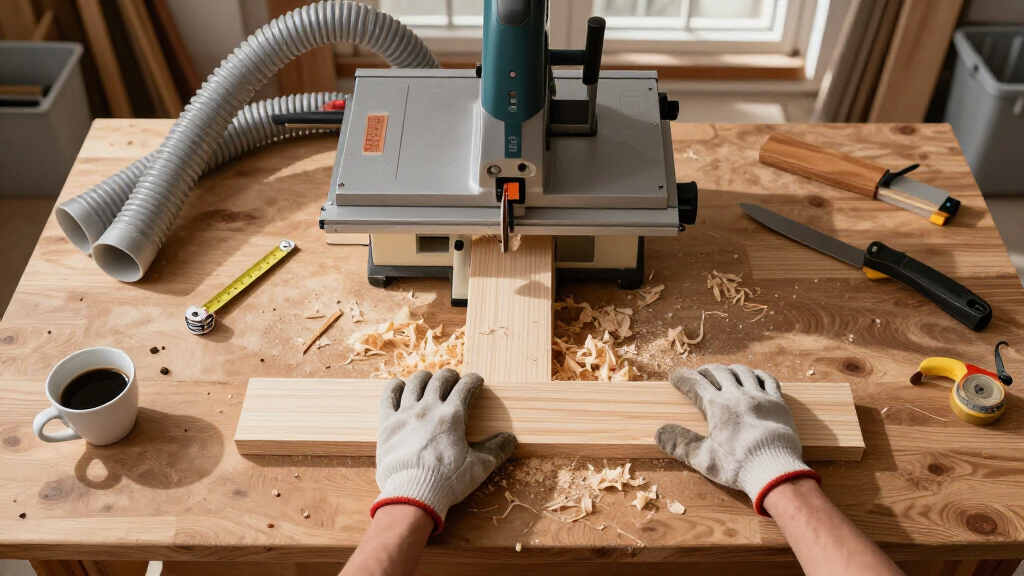

Finding the right woodworking dust collection system can significantly improve your workshop environment by reducing airborne dust and keeping your space cleaner. The best systems offer powerful suction, reliable filtration, and easy installation, but they also come with tradeoffs like size, noise, and price. The POWERTEC 1 HP Dust Collector stands out for its balance of power and portability, while the WEN DC1300 offers high CFM at a more accessible price point. Keep reading to explore these options and learn how to choose the best dust collection system for your workshop needs.

Get business pricing on tools and workshop supplies
- Business-only prices and quantity discounts
- Tax-exempt purchasing
- Multiple users, one account, clear invoices
Complete the kit


Key Takeaways
- Top-performing models combine high CFM ratings with effective micron filtration for cleaner air.
- Size and portability vary widely; consider your workspace layout when choosing a system.
- Budget models often sacrifice some filter quality or capacity for affordability.
- Wall-mounted options save space but may lack the power needed for larger workshops.
- Tradeoffs between noise levels and suction power are common; prioritize based on your environment.


| woodworking dust collection system | Motor Power | Voltage | Airflow |
|---|---|---|---|
| POWERTEC 1 HP Dust Collector w | 1 HP | 120V/240V | — |
| WEN Woodworking Dust Collector | 5.7 amps | — | — |
| WEN DC1300 1,300 CFM 14-Amp Wo | 14 amps | — | 1,300 CFM |
| VEVOR Wall Mount Dust Collecto | — | 120 volts | 560 CFM |
| VEVOR Dust Collector | 1.5 HP | — | 1100 CFM |
| 1100 CFM Dust Collector | 1-1/2 HP | — | — |
| POWERTEC 1 HP Wall Mount Dust | 1 HP | 120V/240V | — |
| Bucktool 1.2 HP Auto-Start Dus | 1.2 HP | 120V | 750 CFM |
More Details on Our Top Picks
POWERTEC 1 HP Dust Collector with 1 Micron Dust Collector Bags and Mobile Base
This system stands out for its combination of power, portability, and filtration, making it ideal for small to medium workshops. Its 1 HP motor delivers a robust 800 CFM of suction, comparable to larger units like the WEN DC1300 but at a more manageable size. The mobile base with casters ensures easy repositioning, a key advantage over fixed systems like the VEVOR Wall Mount. However, its noise levels can be significant at full operation, and it requires a dedicated space for movement and setup. The included 1-micron bag effectively captures fine dust, improving air quality. While it’s limited to single-phase power, this makes it accessible for most residential workshops without special wiring. It’s a solid choice for those needing a balance of power, mobility, and filtration in a compact footprint.
Pros:- Powerful 1 HP motor with high suction capacity
- Portable with easy-to-move casters
- Includes efficient 1-micron filtration bag
- Low noise operation for a system this size
Cons:- Can be noisy at maximum power
- Requires space for mobility and setup
Best for: Home woodworking enthusiasts needing a powerful, portable dust collector that fits in a standard garage or shop.
Not ideal for: Large commercial shops or heavy-duty industrial woodworking, where higher airflow and capacity are required.
- Motor Power:1 HP
- Voltage:120V/240V
- Air Suction Capacity:800 CFM
- Filtration:1 micron
- Base Dimensions:15-1/4″ x 25-1/2″
- Speed:3450 RPM
Our verdict“This system offers a well-rounded solution for small to medium workshops prioritizing portability and effective dust collection.”
WEN Woodworking Dust Collector with 5.7-Amp Motor and 12-Gallon Bag
This model makes the most sense for hobbyists or small workshop setups where budget and space are limited. Its 5.7-amp motor delivers up to 660 CFM, which is adequate for light to moderate woodworking tasks, especially when compared to the more powerful WEN DC1300. The 12-gallon collection bag is generous for its size, but for larger or more frequent projects, it may require frequent emptying—less convenient than the 50-gallon capacity of the WEN DC1300. Its portability, thanks to lockable swivel casters and optional wall mount, offers flexibility, but it’s not designed for heavy-duty, continuous use. Overall, this dust collector balances cost, size, and functionality for small workshops or occasional use.
Pros:- Powerful 5.7-amp motor with good airflow
- Includes large 12-gallon collection bag
- Portable with lockable swivel casters
- Versatile with optional wall mount
Cons:- Limited for larger or frequent projects
- Requires space for storage and operation
Best for: Beginners or hobbyists working on small projects in limited space who need an affordable, easy-to-setup dust collector.
Not ideal for: Heavy-duty professional shops or large-scale projects requiring maximum airflow and capacity.
- Motor Power:5.7 amps
- Air Flow:660 CFM
- Impeller Size:6 inches
- Dust Port Size:4 inches
- Collection Capacity:12 gallons
- Dimensions:34.25 x 13 x 14.2 inches
Our verdict“This pick provides reliable dust collection for small-scale woodworking, especially suited for hobbyists on a budget.”
WEN DC1300 1,300 CFM 14-Amp Woodworking Dust Collector with 50-Gallon Collection Bag and Mobile Base
This system is designed for larger or professional woodworking environments, with a formidable 1,300 CFM airflow and a substantial 50-gallon collection bag. Its 14-amp motor offers sustained power, outperforming smaller units like the POWERTEC in terms of capacity and suction. The dual 4-inch inlets enable simultaneous connection to multiple tools, boosting efficiency for busy shops. The mobile base with swivel casters ensures mobility, though its weight and size make it less suitable for tight spaces or frequent relocation. Its single-speed operation might limit fine-tuning, but the high airflow and large capacity make it a practical choice for serious woodworking operations that demand continuous, high-volume dust collection.
Pros:- High airflow capacity of 1,300 CFM
- Large 50-gallon collection bag reduces downtime
- Dual inlets for multiple tool connections
- Mobile with swivel casters for easy repositioning
Cons:- Heavy and bulky, requiring effort to move
- Limited to indoor use only
- Single speed may not suit all applications
Best for: Professional or large-scale woodworking shops needing high airflow, multiple tool connections, and large capacity.
Not ideal for: Small hobby shops or setups with limited space where mobility and compactness are priorities.
- Airflow:1,300 CFM
- Motor Power:14 amps
- Collection Capacity:50 gallons
- Inlet Size:4 inches
- Impeller Speed:3450 RPM
- Wheels:4 swivel casters
Our verdict“This system is ideal for busy, large workshops that need powerful, continuous dust collection with high capacity and multiple tool hookups.”
VEVOR Wall Mount Dust Collector 1 HP, 560 CFM, 2.5 Micron Filter, 21-Gallon Bag for Woodworking and Workshop
This model excels in situations where space is at a premium or wall mounting is preferred, such as in small workshops or industrial environments. Its 1 HP motor delivers 560 CFM, which is suitable for moderate dust collection needs. The 2.5-micron filter improves air quality by capturing both coarse and fine particles, comparable to the filtration of the POWERTEC but with a more compact footprint. The large 21-gallon bag reduces the frequency of emptying, a plus over smaller portable units. However, wall mounting means less portability, and operation tends to be noisier at around 90dB. It’s best suited for ongoing, medium-sized projects where space efficiency outweighs mobility.
Pros:- Space-saving wall-mount design
- High airflow of 560 CFM
- Effective 2.5-micron filtration
- Large 21-gallon bag for extended use
Cons:- Requires wall mounting space
- Relatively loud at 90dB
- Less suitable for large or heavy-duty projects
Best for: Workshop owners with limited space who need a reliable, wall-mounted dust collector for medium projects.
Not ideal for: Large shops or heavy-duty applications requiring high airflow and mobility.
- Power:1 HP
- Airflow:560 CFM
- Filtration:2.5 microns
- Collection Capacity:21 gallons
- Voltage:120 volts
- Weight:24 pounds
Our verdict“This dust collector is well-suited for small or space-limited workshops needing reliable filtration and moderate airflow.”
VEVOR Dust Collector, 1100 CFM, 2.5 Micron Vortex Cone, 1.5HP, 35-Gallon Dust Collector System with Filter Bag
This VEVOR system offers a substantial airflow of 1,100 CFM and a 35-gallon capacity, making it suitable for demanding workshops with multiple tools in use simultaneously. Its 1.5HP motor provides ample power, comparable to the larger WEN DC1300 but with a different filtration setup using a vortex cone to improve dust separation efficiency. The 2.5-micron filter ensures cleaner exhaust air, though the noise level can be high at elevated RPMs, which might be disruptive in quieter environments. Its heavy build and size demand significant space, but the robust construction and large capacity justify the tradeoff for professional or commercial settings. This unit is designed for those who prioritize airflow and capacity above portability.
Pros:- High airflow of 1,100 CFM
- Large 35-gallon collection capacity
- Effective 2.5-micron filtration
- Durable, overload-resistant construction
Cons:- Noisy operation at high RPM
- Heavy and large, requires ample space
- Customer satisfaction shows mixed experiences
Best for: Professional woodworking shops requiring high airflow, large capacity, and durable build for continuous use.
Not ideal for: Small hobbyists or shops with limited space who need lightweight, portable systems.
- Airflow:1100 CFM
- Motor Power:1.5 HP
- Dust Collection Capacity:35 gallons
- Filtration Micron:2.5 microns
- Speed:3400 RPM
- Material:Q235A, Non-Woven Fabric
Our verdict“This system is best suited for busy, professional workshops that need powerful, high-capacity dust collection, accepting the tradeoff of size and noise.”
1100 CFM Dust Collector, 1-1/2 HP, 2-Micron Filtration, Woodworking
This dust collector stands out for its impressive airflow capacity of 1100 CFM, making it highly effective for managing dust in larger workshop environments. Compared with the WEN DC1300, which offers slightly more CFM but with a bulkier, higher-capacity bag, the 1100 CFM model strikes a balance between power and maneuverability. Its quick-release bags and mobile base streamline maintenance, while the auto-start feature adds convenience during long sessions. However, its size can be a drawback for smaller workshops, and the higher power draw means increased energy use. For someone with a spacious shop needing robust dust collection, this model provides reliable, high-volume airflow with user-friendly features.
Pros:- High airflow capacity of 1100 CFM for effective dust extraction
- Easy maintenance with quick-release filter bags and mobile base
- Auto-start feature reduces setup time during operation
Cons:- Bulky size may be challenging in small workshops
- Higher power consumption compared to smaller models
- Requires proper ducting to maximize airflow
Best for: Large woodworking shops requiring high airflow and easy maintenance
Not ideal for: Small workshops with limited space, where bulk and power consumption are concerns
- CFM:1100
- Motor Power:1-1/2 HP
- Filtration:2-micron
- Bag System:Quick-release with viewing window
- Ports:Dual 4-inch, 6-inch main inlet
- Ducting:Includes flexible hoses and reducers
- Mobile Base:Yes
Our verdict“This model is best suited for spacious workshops demanding powerful dust collection and ease of use.”
POWERTEC 1 HP Wall Mount Dust Collector with 560 CFM and 1 Micron Filter Bags
This wall-mounted unit offers a compact footprint with 560 CFM airflow, making it an ideal choice for small or confined workshops. Unlike the 1100 CFM Dust Collector, it prioritizes space efficiency but at the expense of airflow volume, which may be insufficient for larger or multiple machines running simultaneously. Its reusable 1-micron filter bag and viewing window simplify maintenance, yet the port grate can trap debris, requiring periodic cleaning. This pick makes the most sense for hobbyists or small-shop users who value saving space without sacrificing filtration quality, but it’s less suitable for high-demand environments or larger projects.
Pros:- Compact design ideal for small or tight spaces
- Efficient dust removal with improved airflow design
- Reusable filter bag with viewing window simplifies maintenance
Cons:- Requires regular cleaning to prevent clogging
- Limited airflow capacity may struggle with larger setups
- Port grate can trap debris, reducing efficiency if not maintained
Best for: Home hobbyists and small shop owners with limited space
Not ideal for: Heavy-duty commercial workshops or projects involving multiple large machines simultaneously
- Motor Power:1 HP
- Airflow Capacity:560 CFM
- Voltage:120V/240V
- Motor Speed:3450 RPM
- Inlet Port:4 inches
- Dust Bag:Reusable 1 micron
Our verdict“This wall-mounted collector is perfect for hobbyists and small workshops prioritizing space saving.”
Bucktool 1.2 HP Auto-Start Dust Collector, 750 CFM for Woodworking
This model offers a solid 750 CFM airflow with a 1.2 HP motor, making it suitable for mid-sized workshops that need reliable dust collection across multiple machines. Its auto-start feature simplifies operation, especially when connected directly to power tools, unlike the manual start on some other units. The portability with caster wheels makes it flexible for different work areas. Compared to the POWERTEC 1 HP Wall Mount, it provides higher airflow and more mobility but is bulkier, which could be a concern for very small spaces. Its multiple bag options and hoses make it adaptable for various dust types and volumes, though its size and power requirements might be drawbacks for tiny setups.
Pros:- Powerful 1.2 HP motor with 750 CFM airflow
- Auto-start feature simplifies connection and operation
- Portable design with caster wheels for easy movement
- Includes multiple bag options for different dust types
Cons:- May be too bulky for very small workshops
- Requires a power outlet capable of handling 6.5A
- Setup and connection may take some time due to multiple accessories
Best for: Medium-sized workshops needing mobile, versatile dust collection
Not ideal for: Tiny workshops or users with limited electrical capacity, due to its size and power draw
- Motor Power:1.2 HP
- Airflow:750 CFM
- Voltage:120V
- Full Load Current:6.5A
- Speed:3450 RPM
- Hose Diameter:4 in
Our verdict“This dust collector provides a strong balance of power and mobility for mid-sized workshops needing flexible dust management.”
How We Picked
The selection process focused on evaluating power, filtration effectiveness, capacity, ease of use, and build quality. Systems were rated based on their ability to handle typical woodworking dust loads, ease of installation, and maintenance requirements. We prioritized models that balance performance with value, and included options suitable for different workshop sizes and budgets. The ranking aims to guide buyers toward systems that offer reliable dust collection without unnecessary complexity or expense.Factors to Consider When Choosing Woodworking Dust Collection Systems
Choosing the right woodworking dust collection system involves understanding several key factors beyond just suction power. Size and capacity are crucial—larger systems are better for bigger workshops but may be overkill for small spaces. Filtration quality impacts air cleanliness and health, so look for systems with fine micron filters. Noise levels can vary, making it important to select a model that fits your tolerance and workspace environment. Additionally, consider ease of installation and maintenance to ensure the system remains effective over time. Balancing these factors based on your workshop size, dust load, and budget will help you find the best fit.Power and CFM Ratings
CFM (cubic feet per minute) ratings indicate how much air the system can move, directly affecting dust collection efficiency. Higher CFM systems will handle larger workshops and more dust, but they often come with increased size and noise. For small to medium workshops, models in the 500-900 CFM range typically suffice, while larger spaces benefit from 1000 CFM or more. Matching your workshop’s size and dust load to the system’s capacity prevents underperformance and ensures cleaner air.
Filtration Quality
Effective filtration is vital for health and air quality. Look for systems with micron-rated filters—1 micron or below is ideal for trapping fine dust particles that pose health risks. Some models include multiple filtration stages or vortex cones which improve dust separation and prolong filter life. Cheaper systems might only have basic filters, which can allow fine dust to escape, so investing in higher-quality filters pays off in cleaner air and easier maintenance.
Size, Capacity, and Space Considerations
The physical dimensions and dust capacity of a system influence installation and workflow. Larger capacity units with bigger collection bags or drums are better for frequent use but require more space and may need dedicated installation. Wall-mounted or compact models save space and are suitable for smaller workshops, but they might lack the power needed for intensive use. Assess your space constraints and dust production to choose a system that fits without sacrificing performance.
Noise Levels and Usability
Many dust collectors generate significant noise, which can be disruptive during long sessions. If your workshop is shared or has noise restrictions, consider models with quieter operation or noise-reduction features. Ease of use, including straightforward installation, filter replacement, and mobility, influences how often you’ll actually use the system. A well-designed, user-friendly model encourages consistent operation, maintaining a cleaner workspace over time.
Cost and Long-Term Value
While initial cost is a factor, investing in a higher-quality system often reduces maintenance and replacement costs over time. Cheaper units may lack durability or filtering efficiency, leading to more frequent repairs or upgrades. Consider systems that balance performance with build quality, especially if you plan to use the system regularly. The right investment can pay dividends in both air quality and long-term reliability.
Frequently Asked Questions
How much CFM do I need for my small workshop?
For a small workshop, systems rated around 500-700 CFM generally provide sufficient airflow to keep dust under control. These models are usually compact and quieter, making them easier to integrate into a limited space. However, if you do heavy sanding or plan to run multiple tools simultaneously, opting for a slightly higher rating can ensure better performance. Always match the system’s capacity with your specific dust load for optimal results.
Are wall-mounted dust collectors as effective as standalone units?
Wall-mounted dust collectors can be highly effective for smaller workshops or specific zones within a larger space. They save floor space and can be positioned close to dust sources, improving suction efficiency. However, they often have lower CFM ratings compared to larger standalone units, which may limit their effectiveness for heavy or continuous use. For serious woodworking, combining wall-mounted options with larger units or choosing high-capacity wall models can deliver better overall performance.
What maintenance is required for a dust collection system?
Regular maintenance involves emptying collection bags or drums, replacing filters, and cleaning the impeller or vortex cone if applicable. Filters should be checked frequently and replaced when clogged to maintain suction power. Some systems include easy-access panels or quick-release filters, simplifying upkeep. Neglecting maintenance can reduce efficiency, increase noise, and shorten the lifespan of the system, making routine checks essential for consistent dust control.
Can I use a dust collector for both woodworking and other workshop tasks?
Yes, many dust collection systems are versatile enough to handle various workshop tasks, including sanding, cutting, and grinding. Look for models with adjustable airflow and filtration suited for different dust types. However, some systems are optimized specifically for woodworking dust, which is generally finer and more hazardous. For mixed-use workshops, selecting a system with higher CFM and fine micron filtration ensures better overall air quality and performance across different tasks.
Is a higher CFM always better for dust collection?
Not necessarily. While higher CFM ratings mean more airflow and better dust removal, they also often come with increased size, noise, and power consumption. For smaller workshops or light use, a system with slightly lower CFM can be perfectly adequate and more manageable. Conversely, large workshops with multiple tools in use simultaneously will benefit from higher CFM ratings to ensure effective dust extraction. Matching the system’s capacity to your actual needs prevents unnecessary expense and complexity.
Conclusion
Choosing the right woodworking dust collection system depends heavily on your workshop size, dust production, and budget. For those seeking an all-around performer, the POWERTEC 1 HP Dust Collector offers a balanced mix of power, portability, and filtration. Beginners or hobbyists will appreciate the affordability and simplicity of smaller, wall-mounted models, while professional woodworkers might prioritize high-capacity systems like the WEN DC1300 for serious dust management. For users with limited space, compact options with effective filtration can keep their workshops cleaner without overwhelming the area. Ultimately, consider your specific needs and workflow to select the system that will keep your workspace safe and productive.
As an affiliate, we earn on qualifying purchases.Fall Picks
fall essentials